
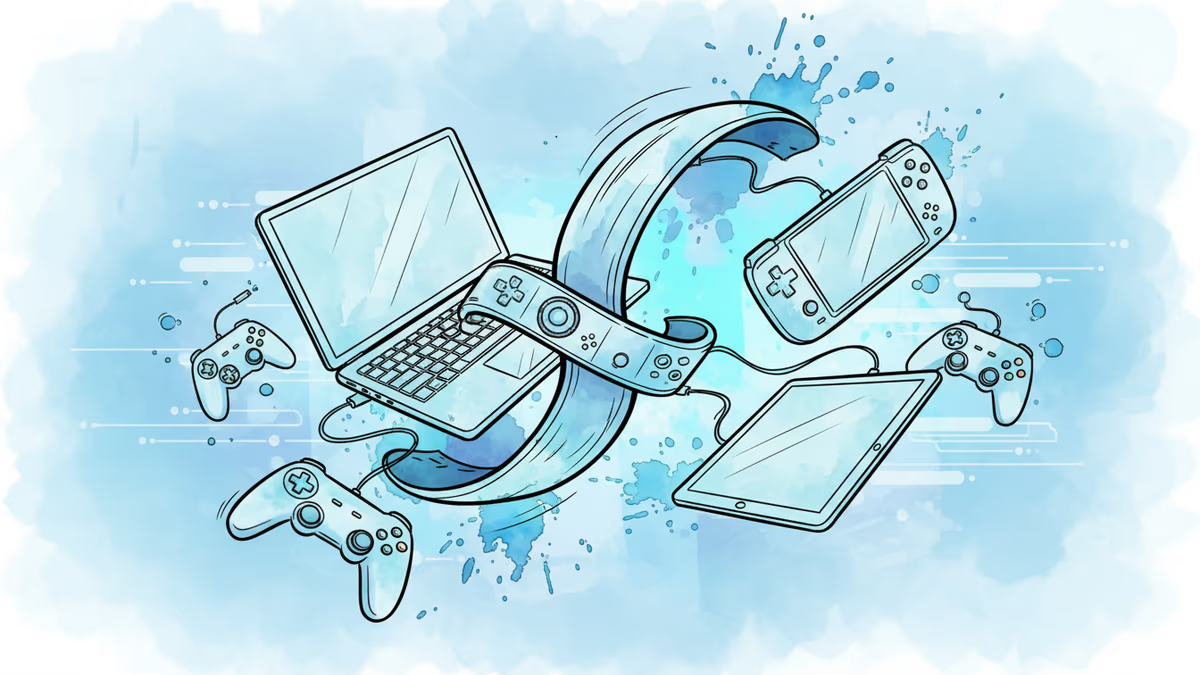
The Gaming Laptop That Refuses to Be Just One Thing
Lenovo's Legion Go Fold represents more than a foldable gaming device – it's a glimpse into a future where the lines between handheld, laptop, and console gaming blur completely.
A gaming device that transforms from 7.7 inches to 11.6 inches at will. Lenovo's Legion Go Fold doesn't just bend screens – it bends our entire concept of what a gaming device should be.
Four Devices, One Identity Crisis
The Legion Go Fold operates on a simple yet radical premise: why choose when you can have everything? Its foldable POLED display serves as the foundation for four distinct form factors. Folded with controllers attached, it's a handheld gaming device. Unfolded, it becomes a tablet. Add a keyboard, and suddenly you've got a laptop. The controllers can attach in any configuration, creating a modular gaming ecosystem that adapts to your needs.
This isn't just clever engineering – it's a fundamental rethink of portable computing. Traditional gaming laptops force compromises: powerful but bulky, with mediocre battery life. Handhelds like the Steam Deck excel at portability but sacrifice screen real estate and typing comfort. The Legion Go Fold promises to eliminate these trade-offs entirely.
The Foldable Gamble

But promises and reality often diverge in the foldable space. Samsung's Galaxy Fold series, now in its fourth generation, still represents less than 2% of global smartphone sales. The culprits? Price, durability concerns, and software that often feels like an afterthought.
Gaming adds another layer of complexity. High-performance graphics generate heat, and heat is the enemy of thin, foldable designs. Battery life becomes even more critical when you're powering both a large display and demanding games. Early foldable phones struggled with screen creases and fragile hinges – imagine the stress of intense gaming sessions on such hardware.
The Ecosystem Question
Perhaps more intriguing than the hardware is what this means for gaming ecosystems. Microsoft has been pushing Xbox Game Pass as a platform-agnostic service, while Valve continues expanding Steam's reach beyond traditional PCs. A device that seamlessly transitions between handheld and laptop modes could be the perfect vessel for these ambitions.
But will developers optimize for such flexibility? Creating games that work equally well on a 7.7-inch handheld screen and an 11.6-inch laptop display requires thoughtful UI design and adaptive interfaces. The gaming industry has been slow to embrace foldables – partly because the market has been too small to justify the investment.
The question isn't whether foldable gaming devices will succeed, but whether we're ready to abandon the comfort of specialized tools for the promise of ultimate flexibility.
Authors
Related Articles

Sony and Microsoft are pulling back from multi-platform strategies, signaling a return to console exclusives. What this means for gamers and the industry.

EA introduces creator marketplace in The Sims 4 with new in-game currency 'Moola.' A bold experiment in virtual economies that could reshape gaming monetization.

Lenovo's Legion Go Fold Concept isn't just a tech demo. It's rethinking what portable gaming could become when you don't have to choose between screen size and portability.
Amazon reveals first look at God of War series. Exploring whether game-to-screen adaptations can overcome their troubled history.
Sony and Microsoft are pulling back from multi-platform strategies, signaling a return to console exclusives. What this means for gamers and the industry.
EA introduces creator marketplace in The Sims 4 with new in-game currency 'Moola.' A bold experiment in virtual economies that could reshape gaming monetization.
Lenovo's Legion Go Fold Concept isn't just a tech demo. It's rethinking what portable gaming could become when you don't have to choose between screen size and portability.
Amazon reveals first look at God of War series. Exploring whether game-to-screen adaptations can overcome their troubled history.
Thoughts
Share your thoughts on this article
Sign in to join the conversation