
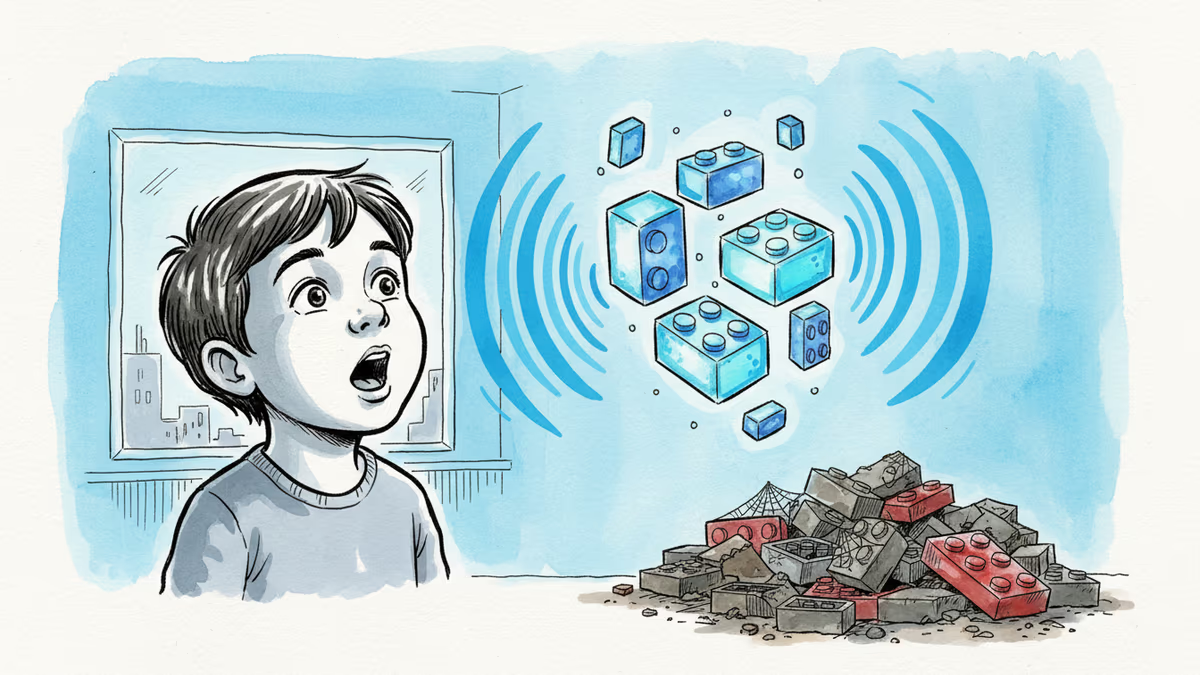
When Lego Bricks Start Thinking for Themselves
Lego's Smart Brick transforms classic building into interactive experiences, but raises questions about imagination and play
$300 for a Brick That Talks Back
The Lego Smart Brick just landed in stores, and it's not your typical 2×4 building block. This tiny computer-microphone-NFC hybrid earned "best in show" at CES 2026 for good reason. Eight Star Wars sets now support it, with three including the brick itself plus charging cradle and cable. The others? They're "Smart Play compatible" – bring your own smart brick.
Place a Darth Vader minifigure on the right spot, and you'll hear the ominous breathing. Build a lightsaber, and it hums to life. It's the kind of magic that makes parents reach for their wallets – and then pause.
The Imagination Paradox
For 67 years, Lego has championed open-ended play. "The brick is the star," they've always said. Kids made their own sound effects, created their own stories, imagined their own worlds. Now the brick talks back.
This creates a fascinating tension. Does responsive technology enhance creativity or constrain it? MIT's Mitchel Resnick argues it depends on design philosophy: "Technology can be a creative amplifier or a creative replacement."
Early parent reviews are split. Some love the engagement boost – kids spend 40% longer in focused play sessions. Others worry about "imagination atrophy." One Reddit parent wrote: "My son used to make elaborate stories. Now he just waits for the brick to tell him what happens next."

The Premium Play Problem
Smart-enabled sets cost 30-50% more than traditional ones. The Millennium Falcon with Smart Brick support: $299. Without: $199. For many families, that's a significant jump.
Lego's strategy is clever though. One Smart Brick works across multiple "compatible" sets, creating a platform approach. Buy the brick once, expand your collection gradually. It's subscription thinking applied to physical toys.
But there's a catch: the charging cradle, the cable management, the inevitable "brick is dead" moments during peak play time. Suddenly, simple becomes complicated.
The Toy Industry's Crossroads
Competitors are watching closely. Hasbro experimented with voice-activated toys but struggled with privacy concerns. Mattel's smart Barbie faced backlash over data collection. Lego's offline-only approach sidesteps these issues – no apps, no internet, no data harvesting.
Yet questions remain. What happens when these bricks break? Can they be repaired, or just replaced? The environmental implications of computerized toys aren't trivial. Traditional Lego bricks last decades; smart bricks have batteries, circuits, planned obsolescence.
In 20 years, will children even know how to play with "dumb" toys?
Authors
Related Articles

Google launches AI-powered JEE practice tests in Gemini, signaling a shift from shortcuts to structured learning. What does this mean for education's future?
Lego's first Pokemon collaboration targets only adult collectors with sets ranging from $60 to $650. Is the toy industry leaving kids behind in pursuit of affluent nostalgia?

Discover why the Lego Smart Brick won Best in Show at CES 2026. Watch the 15-minute immersive VR180 demo and explore the future of smart toys.
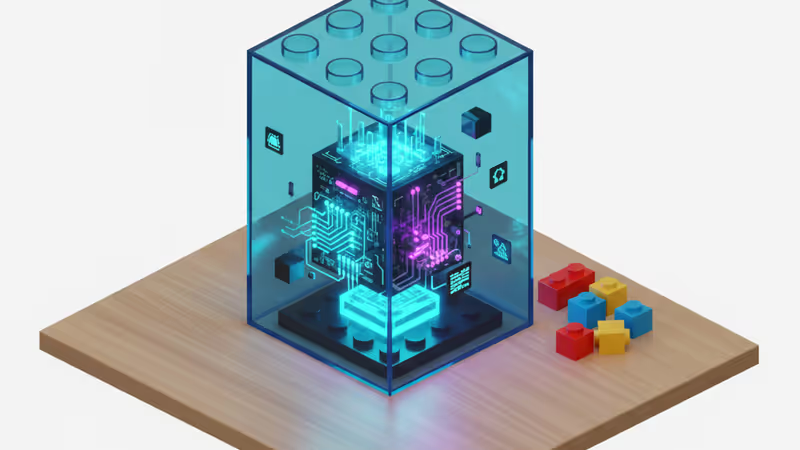
Explore the Lego Smart Brick unveiled at CES 2026. This tiny powerhouse brings Raspberry Pi-like hacking potential to your favorite building blocks.
Google launches AI-powered JEE practice tests in Gemini, signaling a shift from shortcuts to structured learning. What does this mean for education's future?
Lego's first Pokemon collaboration targets only adult collectors with sets ranging from $60 to $650. Is the toy industry leaving kids behind in pursuit of affluent nostalgia?
Discover why the Lego Smart Brick won Best in Show at CES 2026. Watch the 15-minute immersive VR180 demo and explore the future of smart toys.
Explore the Lego Smart Brick unveiled at CES 2026. This tiny powerhouse brings Raspberry Pi-like hacking potential to your favorite building blocks.
Thoughts
Share your thoughts on this article
Sign in to join the conversation