
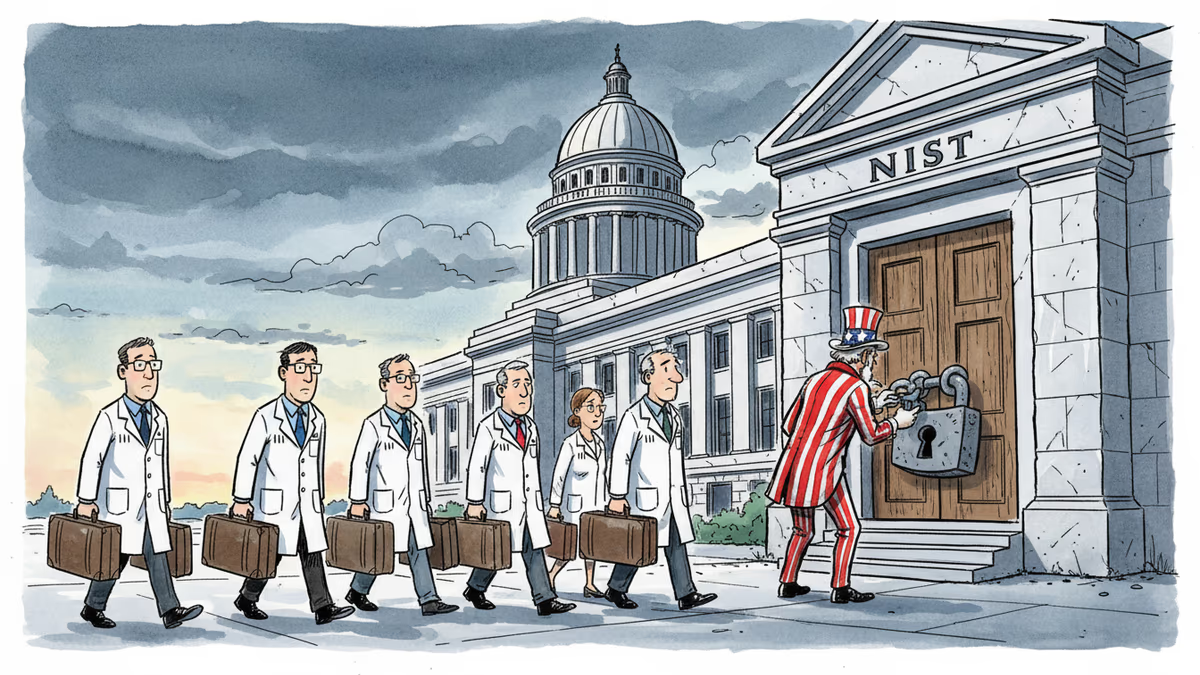
America's Top Research Lab Is Pushing Out Foreign Scientists
NIST's new restrictions on international researchers spark debate over security versus innovation in US science policy
800 Foreign Researchers Face the Exit Door
The National Institute of Standards and Technology (NIST) is quietly implementing policies that could drive away hundreds of international scientists. This isn't just about headcount—it's about dismantling the very foundation of American scientific leadership.
NIST isn't your typical government agency. It's the institution that writes the rulebook for everything from cybersecurity frameworks to semiconductor manufacturing standards. When NIST speaks, global industries listen. The agency typically hosts 800 international researchers annually, bringing specialized expertise that American institutions often lack.
Now that pipeline is under threat.
Congressional Pushback: "Draconian Measures"
Rep. Zoe Lofgren, the top Democrat on the House Science Committee, didn't mince words in her Thursday letter to NIST's acting director. "For weeks now, rumors of draconian new measures have been spreading like wildfire," she wrote, demanding transparency by February 26.
What has Congress confirmed through unnamed sources? The Trump administration "has begun taking steps to limit the ability of foreign-born researchers to conduct their work at NIST."
The specifics are stark: International graduate students and postdocs would be capped at three years maximum, despite many needing five to seven years to complete their research. Non-citizens have already lost after-hours lab access and could face complete facility bans.
A NIST employee tells WIRED that plans to bring on foreign workers have been canceled due to "uncertainty about whether they would make it through the new security protocols."

The Security Versus Innovation Paradox
NIST spokesperson Jennifer Huergo defends the changes as necessary to protect US science from "theft and abuse"—a reference to longstanding concerns about foreign adversaries, particularly China, stealing American intellectual property.
The concern isn't baseless. Republican lawmakers have repeatedly called for restrictions on Chinese nationals working at national labs. Bipartisan support exists for protecting American research from foreign exploitation.
But here's where it gets complicated: Pat Gallagher, NIST director from 2009-2013, warns these restrictions could "erode trust in the agency." NIST's global credibility comes from its scientific rigor and international collaboration. "What has made NIST special is it is scientifically credible," he explains. "Industry, universities, and the global measurement community knew they could work with NIST."
The Talent Exodus Accelerates
This policy sits within a broader Trump administration crackdown on foreign researchers: hiked H-1B visa fees, revoked student visas, and limited post-graduation work training for international students.
The result? A potential brain drain at the worst possible time. As the US competes with China for technological supremacy, it's simultaneously pushing away the very talent that built American scientific dominance.
Lofgren warns that "rumors may be enough to scare away researchers and undermine US competitiveness in vital research." When top scientists start looking at Canada, Germany, or even China as alternatives, America loses more than individual researchers—it loses its reputation as the global destination for cutting-edge science.
The Ripple Effect Nobody's Talking About
Here's what makes this particularly dangerous: NIST's influence extends far beyond US borders. When American companies need to meet international standards, they often reference NIST guidelines. When foreign governments develop their own tech policies, they frequently adapt NIST frameworks.
If NIST becomes less internationally credible—staffed primarily by domestic researchers with limited global perspectives—its standards could lose their universal appeal. That would hand competitors like China an opportunity to fill the global standard-setting vacuum.
Authors
Related Articles
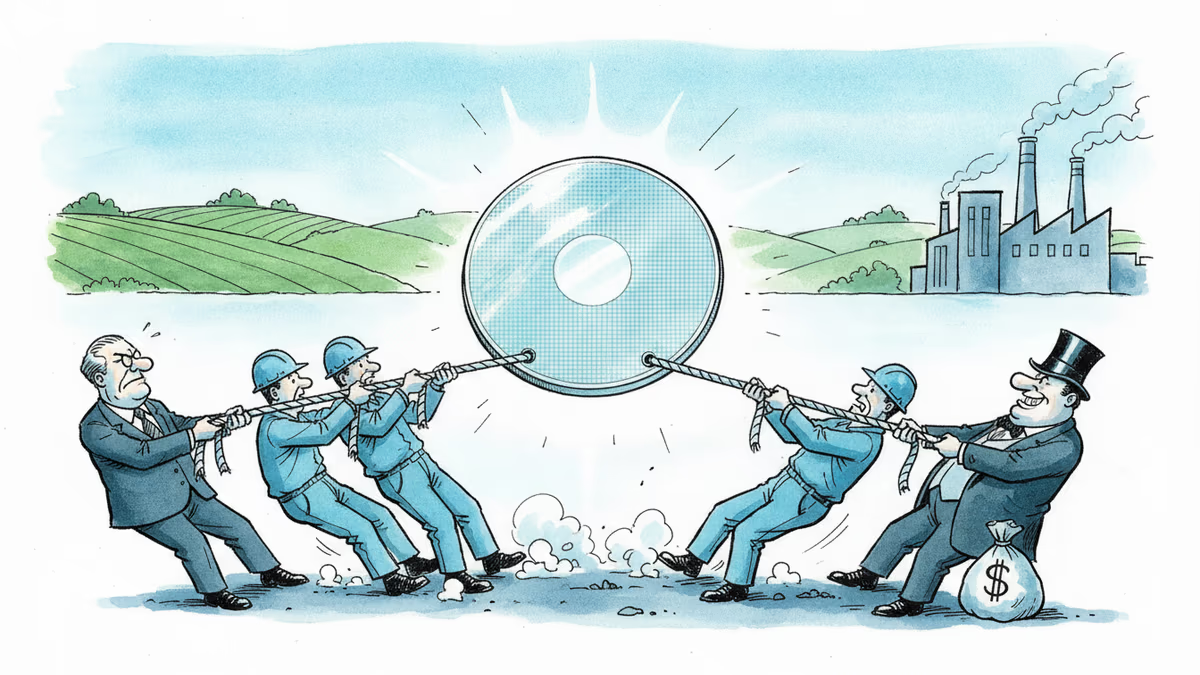
Samsung Electronics' union branch revealed that 84% of survey respondents oppose the government's roughly $290 billion (₩400 trillion) semiconductor megaproject in Gwangju. Government, management, the union and shareholders are all reading the same national project in sharply different ways.
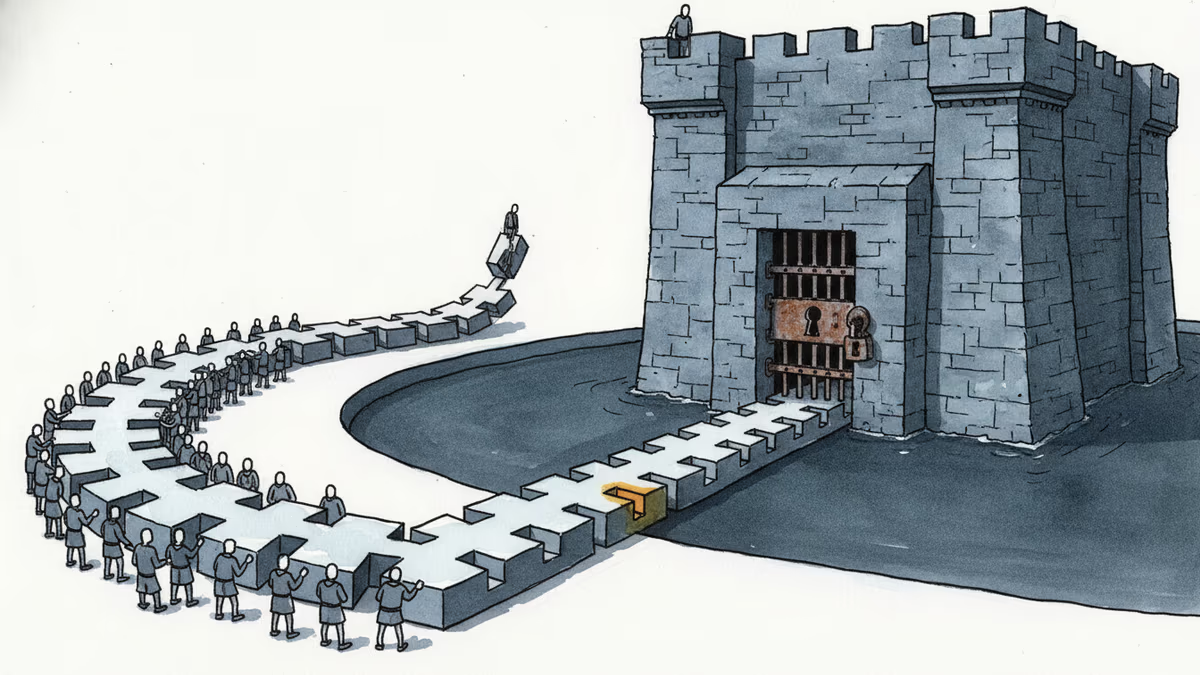
Nvidia shipped roughly a billion RISC-V cores in 2024, then announced it would run CUDA on the open standard. We break down how royalty-free instruction sets and open software stacks are trying to route around CUDA's lock-in. Part 2 of the Semiconductor Sovereignty series.
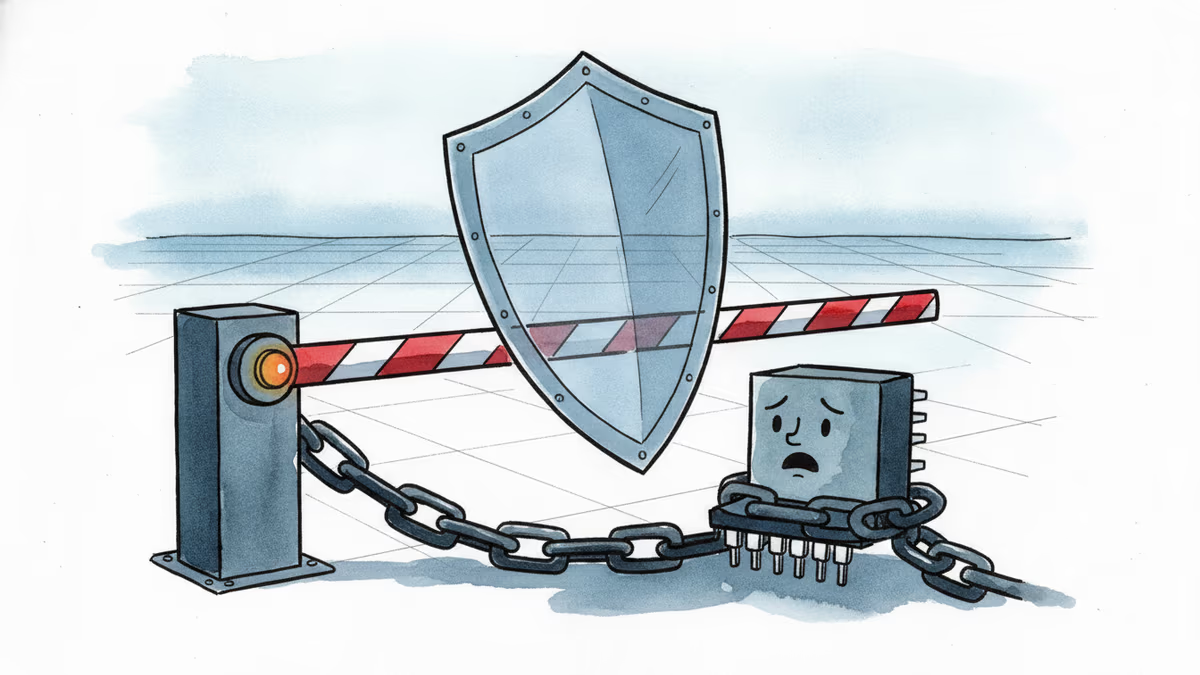
US AI-chip export controls split into three layers in the first half of 2026 — January easing, a May crackdown on circumvention, and a pending bill. Nvidia erased China from its guidance and still posted a record $81.6 billion quarter. A look at the export policy that both shields and cages it.
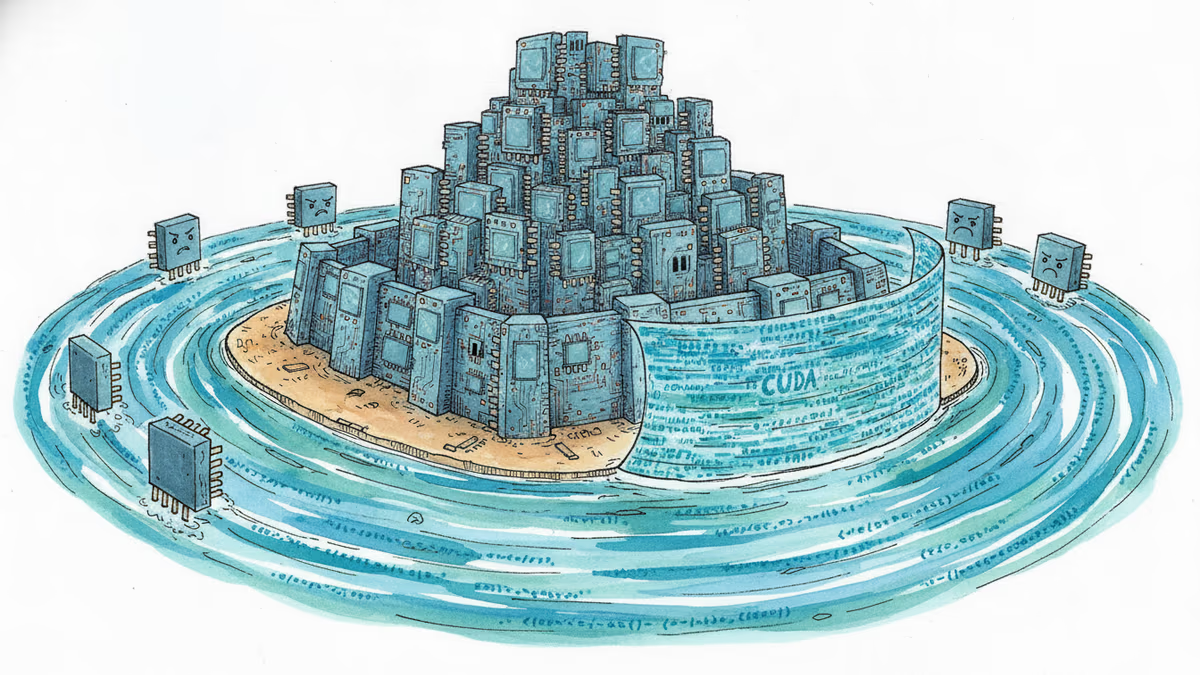
AMD's MI325X matches or beats Nvidia on memory and bandwidth — yet Nvidia's 86-92% share holds. The real moat is CUDA, 20 years in the making. Part 1 of 4.
Samsung Electronics' union branch revealed that 84% of survey respondents oppose the government's roughly $290 billion (₩400 trillion) semiconductor megaproject in Gwangju. Government, management, the union and shareholders are all reading the same national project in sharply different ways.
Nvidia shipped roughly a billion RISC-V cores in 2024, then announced it would run CUDA on the open standard. We break down how royalty-free instruction sets and open software stacks are trying to route around CUDA's lock-in. Part 2 of the Semiconductor Sovereignty series.
US AI-chip export controls split into three layers in the first half of 2026 — January easing, a May crackdown on circumvention, and a pending bill. Nvidia erased China from its guidance and still posted a record $81.6 billion quarter. A look at the export policy that both shields and cages it.
AMD's MI325X matches or beats Nvidia on memory and bandwidth — yet Nvidia's 86-92% share holds. The real moat is CUDA, 20 years in the making. Part 1 of 4.
Thoughts
Share your thoughts on this article
Sign in to join the conversation