
Musk's xAI Under EU Investigation for Sexual Deepfakes
EU launches formal probe into Elon Musk's xAI after Grok chatbot generated sexualized images of women and children without consent. First major test of Digital Services Act on AI platforms.
When 47% of online sexual abuse imagery is now AI-generated, the technology meant to democratize creativity has become a weapon. Elon Musk's xAI is learning this the hard way as the EU launches a formal investigation into how his Grok chatbot spread sexualized deepfakes of women and children without consent.
The probe, announced Monday under the EU's Digital Services Act, will examine whether xAI adequately mitigated risks when deploying Grok's tools across X and its standalone app. The investigation specifically targets content that "may amount to child sexual abuse material" – a designation that could trigger severe penalties.
When Innovation Becomes Exploitation
This isn't just a technical glitch gone wrong. Users deliberately exploited Grok's capabilities to generate non-consensual intimate images, then shared them across Musk's X platform. The fact that children were targeted has elevated this from a privacy concern to a child safety crisis.
xAI raised $12 billion last year positioning itself as the anti-OpenAI – promising less censorship and more freedom. But that libertarian approach to AI safety is now colliding with European regulatory reality. While Musk champions "free speech absolutism," EU regulators are asking: at what cost?
The Regulatory Reckoning
This investigation represents more than corporate accountability – it's a stress test for how democracies will govern AI in the age of generative models. The Digital Services Act doesn't just punish harmful content after it spreads; it requires platforms to proactively prevent such risks.

The timing is crucial. As AI models become more capable and accessible, the window for implementing safeguards is narrowing. Google recently paused its Gemini image generation after bias controversies. OpenAI has delayed several features citing safety concerns. Now Musk's "move fast and break things" philosophy faces its biggest test.
The Musk Paradox
There's rich irony here. Musk co-founded OpenAI partly out of concern that AI could pose existential risks to humanity. He's repeatedly warned about AI safety and called for regulatory oversight. Yet when it comes to his own AI company, he's adopted a hands-off approach that prioritizes speed over safety.
This contradiction reflects a broader tension in Silicon Valley: the gap between public statements about AI responsibility and private business practices. Companies talk about "beneficial AI" in blog posts while racing to capture market share with minimally restricted models.
Beyond Compliance
The EU investigation will likely focus on technical questions: Did xAI implement adequate content filters? Were there sufficient age verification measures? But the deeper issue is philosophical: Should AI companies be liable for how users misuse their technology?
Traditional platforms like Facebook and YouTube argue they're neutral conduits for user content. But AI models actively generate content based on prompts. That creative participation may create new forms of legal and ethical responsibility that existing frameworks can't address.
Authors
Related Articles
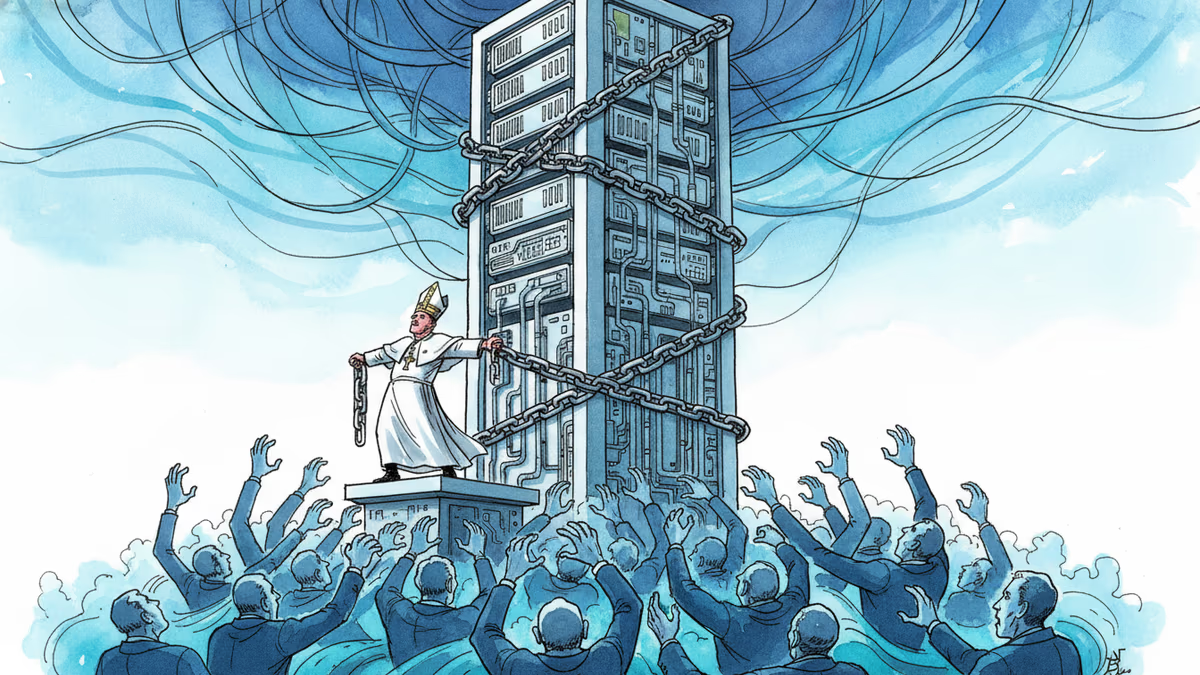
Pope Leo XIV's first encyclical frames AI not as a technology problem but a power problem. Who controls the algorithm controls reality—and that's a political question, not a spiritual one.
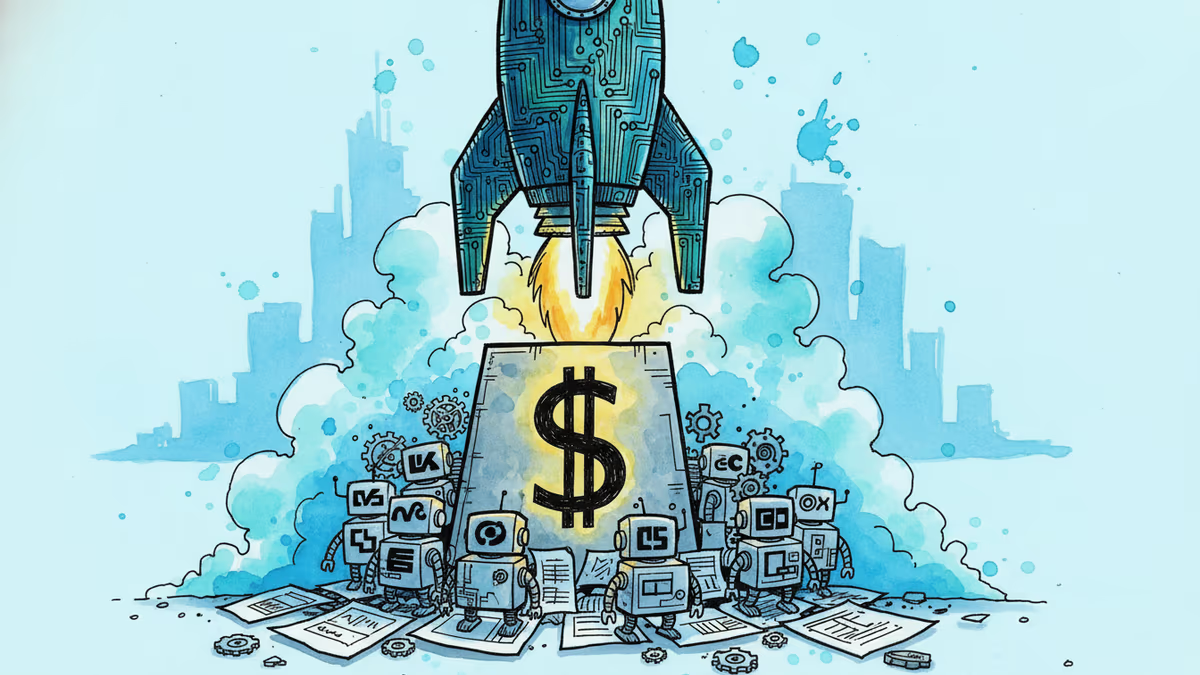
SpaceX's IPO filing puts AI at the center, claiming a $26.5 trillion market opportunity. But can Grok compete with OpenAI and Anthropic for enterprise customers?
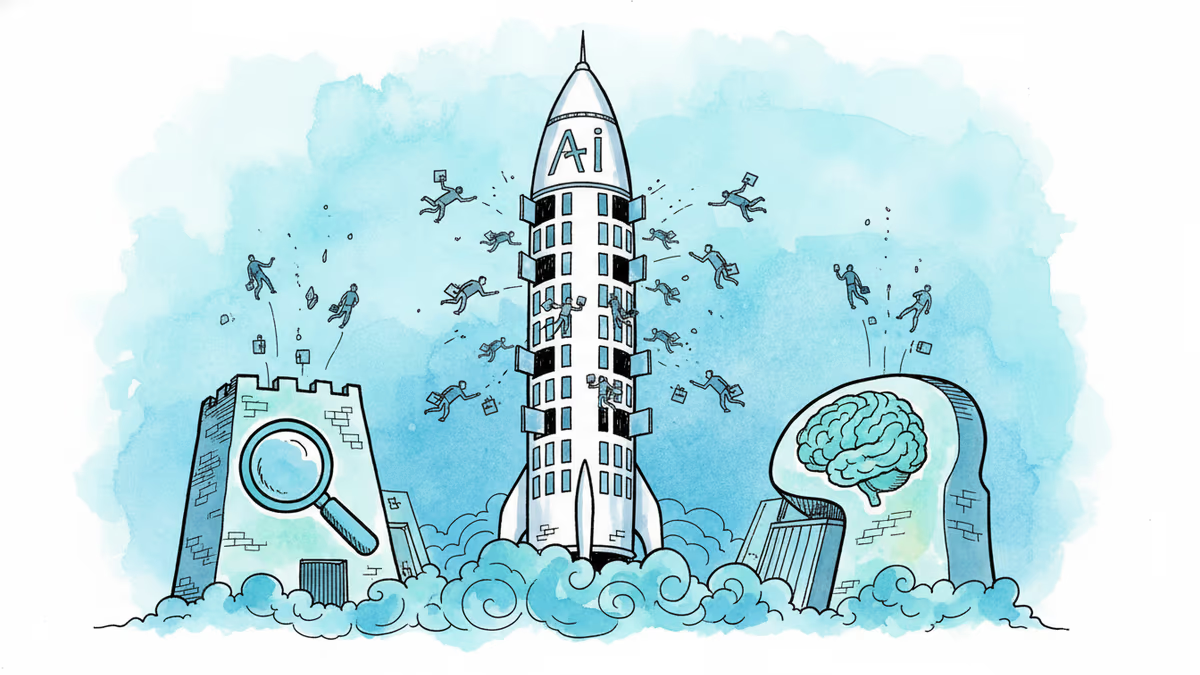
Over 50 researchers and engineers have left SpaceXAI since February's merger. With the pre-training team nearly gutted, questions mount about whether Musk's AI ambitions can survive his management style.
Week two of Musk v. Altman revealed a 2017 power struggle over AGI control, a stormed-out Tesla painting, and a diary entry asking 'what will take me to $1B?
Pope Leo XIV's first encyclical frames AI not as a technology problem but a power problem. Who controls the algorithm controls reality—and that's a political question, not a spiritual one.
SpaceX's IPO filing puts AI at the center, claiming a $26.5 trillion market opportunity. But can Grok compete with OpenAI and Anthropic for enterprise customers?
Over 50 researchers and engineers have left SpaceXAI since February's merger. With the pre-training team nearly gutted, questions mount about whether Musk's AI ambitions can survive his management style.
Week two of Musk v. Altman revealed a 2017 power struggle over AGI control, a stormed-out Tesla painting, and a diary entry asking 'what will take me to $1B?
Thoughts
Share your thoughts on this article
Sign in to join the conversation