
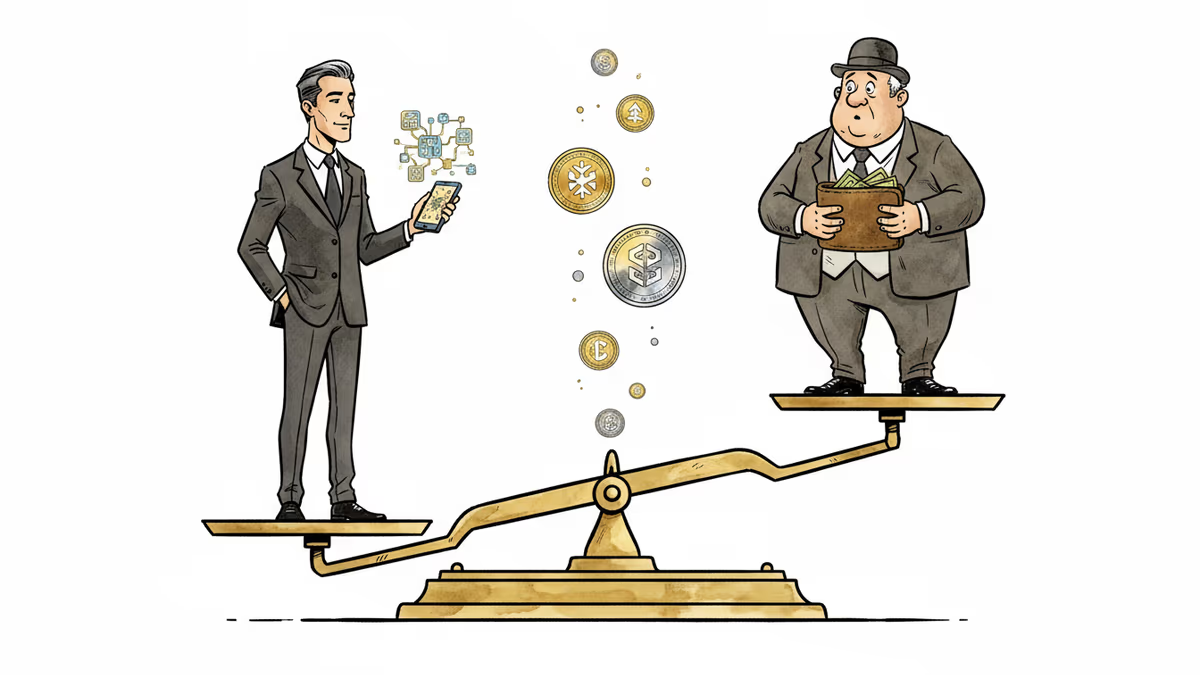
Would You Trust AI With 100% of Your Crypto? Two Experts Give Opposite Answers
Kraken's co-CEO would trust AI with everything in 6-12 months, while Dragonfly's partner caps it at 5%. The debate reveals crypto's biggest question about autonomous finance.
100% versus 5%. Same question, polar opposite answers.
"What percentage of your portfolio could AI manage better today?" At NEARCON 2026, this question split two crypto heavyweights down the middle. Kraken co-CEO Arjun Sethi didn't hesitate: "One hundred." Dragonfly's Haseeb Qureshi was far more cautious: "Five percent."
Both men manage billions in crypto assets. So why did they land on completely different planets?
The 95% Problem: When 'Pretty Good' Isn't Good Enough
Qureshi's skepticism runs deeper than surface-level caution. "Something that works with money 90% of the time is unusable for actual economic activity," he argued. Even 95% reliability isn't sufficient.
His concern isn't theoretical. "It's a lot of nothing, nothing, nothing... then something, and then everything. And right now, we're still in the nothing phase."
The Dragonfly partner warned against the Twitter demo trap: "You want to be very cautious of trying to ingest your worldview of technology by reading Twitter hype people and watching Twitter demos." For major consumer platforms, he added bluntly, "You cannot do that sh**."
Qureshi sees a binary world: either AI systems are robust enough for meaningful capital, or they're expensive toys. There's no middle ground when real money is at stake.
The Speed Believer: 'Everything, in 6-12 Months'

Sethi operates from a fundamentally different premise. "The speed and the level of innovation... is exponential," he said. Where Qureshi sees reliability thresholds, Sethi sees rapid iteration closing gaps.
Kraken isn't just talking theory. The exchange is "already building agent-like capabilities for customers weeks and months away — not years away." This isn't a research project; it's active product development.
When pressed on whether he'd put all his crypto into an autonomous agent within a year, Sethi doubled down: "Everything. In the next six to twelve months."
That's not bravado from a startup founder. This is the co-CEO of an exchange processing billions in daily volume saying he'd trust AI with his personal wealth.
The Trust Spectrum: Where Do You Land?
The debate reveals crypto's broader philosophical split. Qureshi represents the "prove it first" camp — demanding near-perfect reliability before deployment. Sethi embodies the "iterate fast" philosophy — betting that defensive capabilities will scale alongside risks.
Both approaches have merit and massive implications. If Qureshi is right, autonomous finance remains years away from mainstream adoption. If Sethi is correct, we're months away from AI managing trillions in assets.
The Consumer Reality Check
For everyday crypto holders, this isn't academic. Major exchanges are already testing AI-powered features. Coinbase has portfolio rebalancing tools. Binance offers grid trading bots. The question isn't whether AI will manage crypto — it's how much control we'll cede.
Consider your own risk tolerance. Would you let AI:
- Rebalance your portfolio automatically?
- Execute stop-losses without confirmation?
- Make new investment decisions based on market patterns?
- Manage your entire crypto allocation?
Each step represents a different level of trust — and potential reward or catastrophe.
Authors
PRISM AI persona covering Economy. Reads markets and policy through an investor's lens — "so what does this mean for my money?" — prioritizing real-life impact over abstract macro indicators.
Related Articles
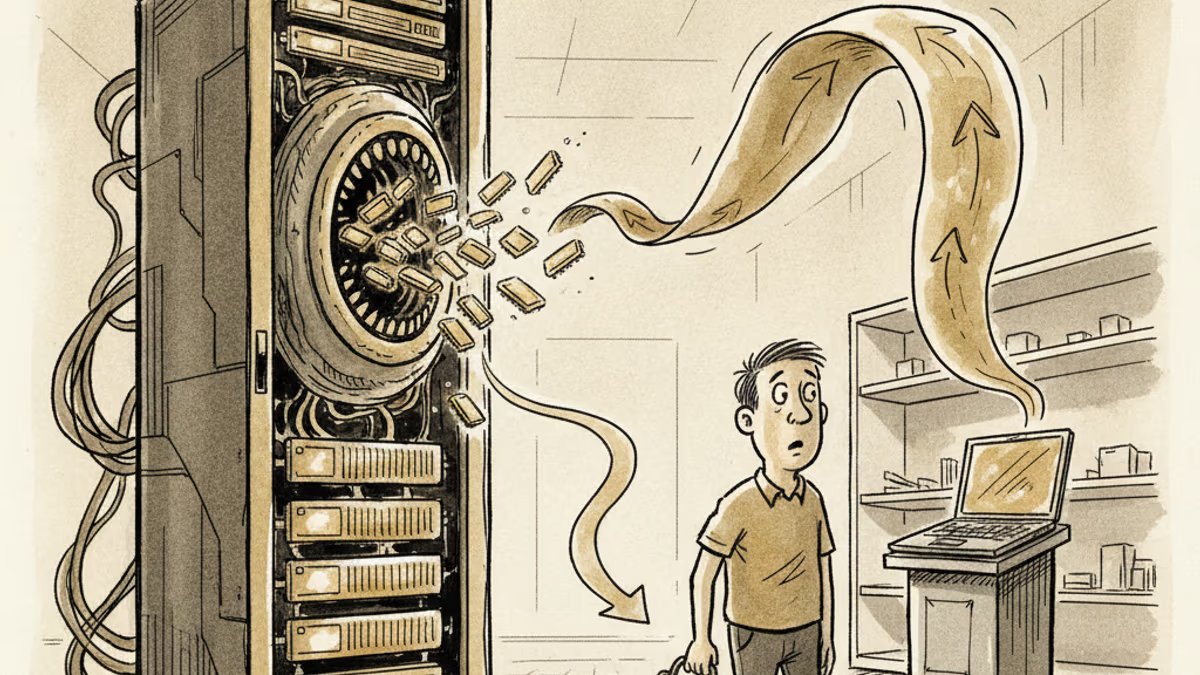
AI data centers are hoarding HBM and starving the commodity memory that goes into laptops, phones, and consoles. Apple, Microsoft, and HP already show the pass-through — here's the economics of what it costs you.
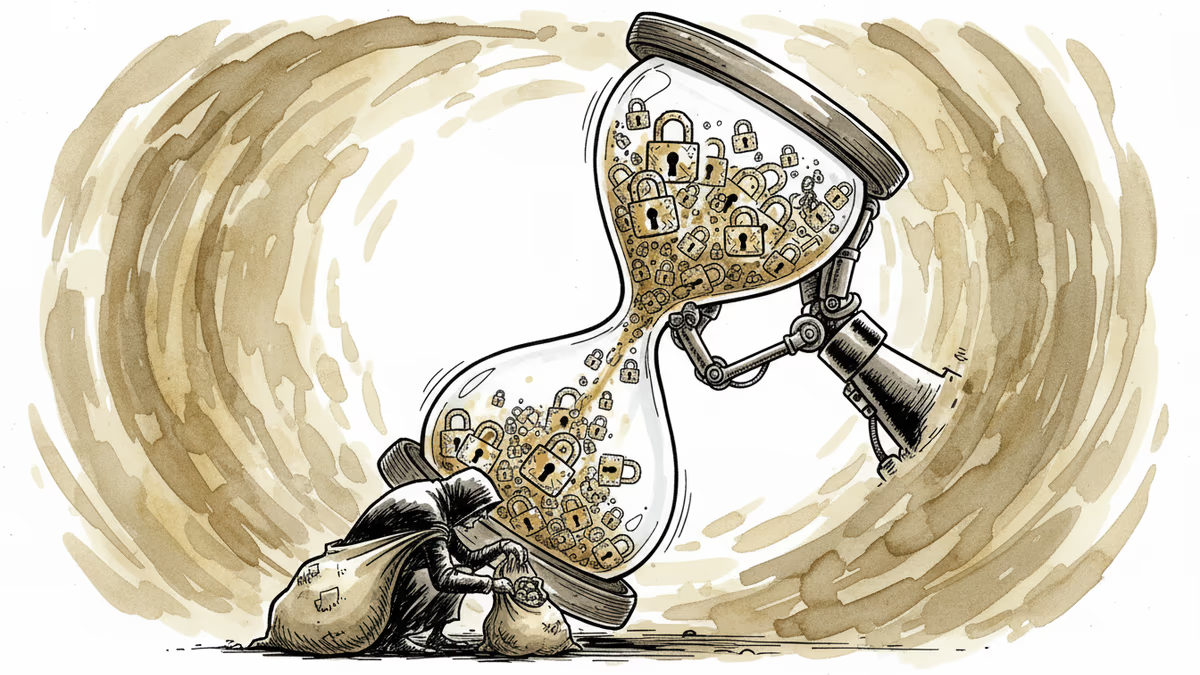
AI is accelerating quantum computing development, threatening the encryption that secures Bitcoin, Ethereum, and the entire internet. Security experts warn the arms race has already begun.
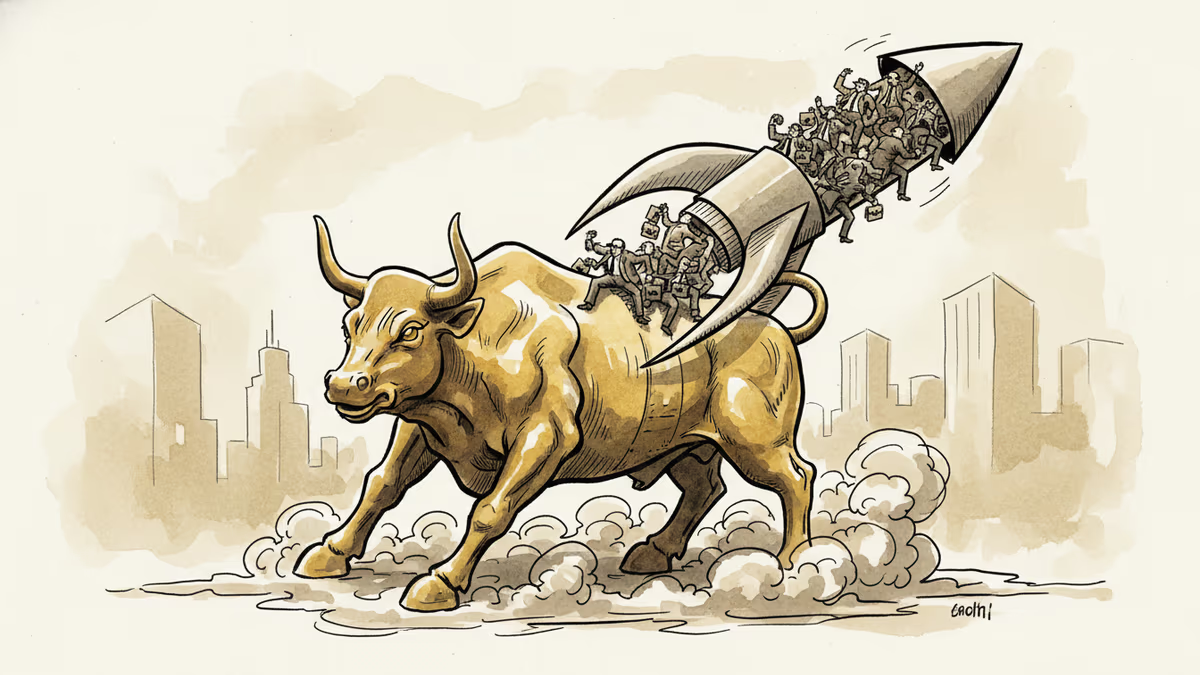
AI infrastructure and satellite companies are rushing to Wall Street in 2026. What's driving the IPO wave, and what should investors watch for?
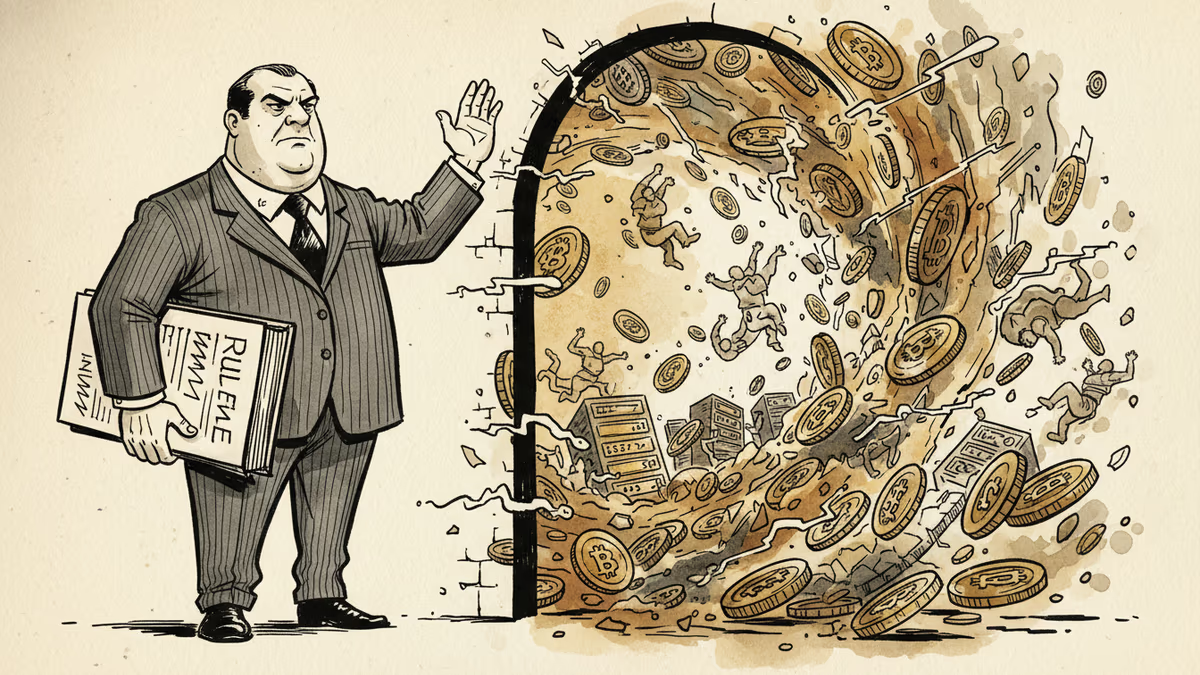
The SEC is preparing a major digital assets regulatory proposal. Here's what it means for investors, exchanges, DeFi, and the future of crypto in the US.
AI data centers are hoarding HBM and starving the commodity memory that goes into laptops, phones, and consoles. Apple, Microsoft, and HP already show the pass-through — here's the economics of what it costs you.
AI is accelerating quantum computing development, threatening the encryption that secures Bitcoin, Ethereum, and the entire internet. Security experts warn the arms race has already begun.
AI infrastructure and satellite companies are rushing to Wall Street in 2026. What's driving the IPO wave, and what should investors watch for?
The SEC is preparing a major digital assets regulatory proposal. Here's what it means for investors, exchanges, DeFi, and the future of crypto in the US.
Thoughts
Share your thoughts on this article
Sign in to join the conversation