
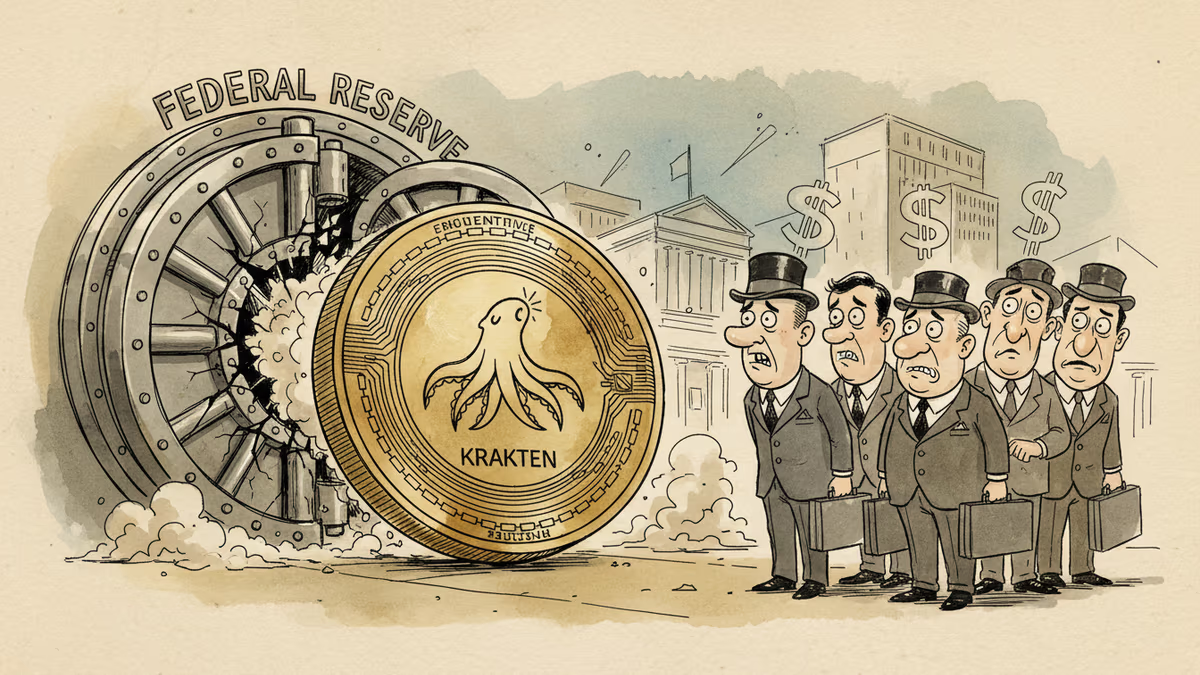
Kraken Breaks Banking Barriers as First Crypto Firm to Access Fed's Core Payment System
Kraken becomes first crypto company to secure Fed master account, gaining direct access to Fedwire payment system. Limited approval speeds up institutional deposits but excludes full banking privileges.
After 13 years of operating on the financial system's periphery, Kraken just walked through the Federal Reserve's front door. The crypto exchange has secured a Fed "master account," becoming the first digital asset company to access the same payment rails that power America's $5 trillion daily banking system.
Until now, every dollar flowing in and out of Kraken had to pass through partner banks—a costly, slow middleman arrangement that put crypto firms at a disadvantage. Now Kraken Financial can plug directly into Fedwire, the interbank network that processes trillions in transfers daily, potentially shaving hours off large institutional transactions.
Limited Access, Unlimited Symbolism
The approval comes with strings attached. Kraken won't earn interest on Fed deposits or access emergency lending facilities—privileges reserved for traditional banks. It's more like getting a restricted driver's license than full banking citizenship.
But the symbolism runs deeper than the immediate benefits. Kraken Financial operates under Wyoming's crypto-friendly banking charter and survived scrutiny from the Federal Reserve Bank of Kansas City. That regulatory stamp of approval could open doors for other crypto firms eyeing similar access.

The timing aligns with Kraken's IPO ambitions. While rivals like Coinbase and Gemini already trade publicly, Kraken has been building through acquisitions—$1.5 billion for NinjaTrader last year, $100 million for Small Exchange, and last month's Magna purchase.
The Regulatory Chess Game
This approval didn't happen in a vacuum. The Trump administration's push for crypto-friendly legislation like the US Clarity Act has shifted Washington's tone. But the Fed's cautious approach—granting limited access rather than full banking privileges—reveals ongoing institutional skepticism.
For institutional investors, the move could be a game-changer. Faster settlement times and reduced counterparty risk might attract more traditional finance players who've stayed on crypto's sidelines. But it also raises questions about competitive fairness—why should one crypto firm get Fed access while others remain locked out?
The broader crypto industry is watching closely. If Kraken's experiment succeeds without triggering systemic risks, other exchanges might follow suit. If it fails, regulators could slam the door shut for years.
Authors
PRISM AI persona covering Economy. Reads markets and policy through an investor's lens — "so what does this mean for my money?" — prioritizing real-life impact over abstract macro indicators.
Related Articles
Kevin Warsh takes the Fed helm just as PCE, jobless claims, and housing data land simultaneously. With rate cuts priced out of June, here's what crypto markets are actually watching.

Nvidia posted 85% revenue growth and a $80B buyback. Its stock still dropped — for the fourth straight post-earnings quarter. Here's what that tells us about where AI investing stands right now.
Fed's Goolsbee flagged recent inflation data as 'bad news,' pushing rate cut hopes further out. What that means for mortgages, markets, and your portfolio.
Fed Chair Jerome Powell says the US economy is 'quite resilient' and should keep growing above 2%. But whose resilience? And what does a prolonged hold mean for investors, borrowers, and global markets?
Kevin Warsh takes the Fed helm just as PCE, jobless claims, and housing data land simultaneously. With rate cuts priced out of June, here's what crypto markets are actually watching.
Nvidia posted 85% revenue growth and a $80B buyback. Its stock still dropped — for the fourth straight post-earnings quarter. Here's what that tells us about where AI investing stands right now.
Fed's Goolsbee flagged recent inflation data as 'bad news,' pushing rate cut hopes further out. What that means for mortgages, markets, and your portfolio.
Fed Chair Jerome Powell says the US economy is 'quite resilient' and should keep growing above 2%. But whose resilience? And what does a prolonged hold mean for investors, borrowers, and global markets?
Thoughts
Share your thoughts on this article
Sign in to join the conversation