

A $7,500 Shower That Saves 80% Water—But Who Can Afford It?
Kohler's new recirculating smart shower system promises luxury and water conservation. But the price tag raises questions about who gets access to green tech.
When Green Tech Meets Sticker Shock
A $7,500 shower system that recycles your bath water? Kohler's new Anthem EvoCycle promises to cut water usage by up to 80% without sacrificing pressure—but the price tag tells a different story about who gets to save the planet in style.
Unlike traditional low-flow showerheads that simply restrict water, this system collects used water in a reservoir at the shower's base, filters it, and sends it back through the showerhead. Add the required $825 water tank base and various fixtures, and you're looking at a $10,000+ bathroom renovation.
The technology is undeniably clever. But it raises an uncomfortable question: Is environmental innovation becoming a luxury good?
The Tesla Playbook: Start Premium, Go Mainstream?
Kohler seems to be following the Tesla strategy—launch with high-end customers first, then scale down to mass market. But there's a crucial difference: cars are status symbols people show off. Shower systems? Not so much.
The math gets interesting when you dig deeper. In drought-prone areas like California, where water restrictions are tightening and utility costs rising, a $7,500 investment might actually pay off. Some homeowners already face $300+ monthly water bills during peak usage.

But for the average American household spending $70 monthly on water, the payback period stretches beyond a decade—assuming the system lasts that long without major maintenance.
The Access Problem: Green Tech's Uncomfortable Truth
Here's what makes this product fascinating and frustrating: it embodies the central paradox of environmental technology. The innovations that could help solve our water crisis are priced for people who probably aren't experiencing water scarcity.
Wealthy homeowners in water-rich suburbs get luxury shower systems. Meanwhile, communities facing actual water stress—from Flint to rural Texas—struggle with basic infrastructure. The technology exists to help everyone use water more efficiently, but the economics ensure only some can access it.
This pattern repeats across green tech: solar panels, electric vehicles, smart home systems. Innovation flows upward to affluent early adopters while environmental challenges hit hardest at the bottom of the income ladder.
Beyond the Bathroom: What This Really Signals
The Anthem EvoCycle isn't just about showers—it's a preview of how we'll adapt to resource scarcity. As water becomes more precious (and expensive), closed-loop systems like this will shift from luxury to necessity.
Smart investors are already watching this space. Water technology stocks have outperformed the broader market by 15% over the past two years. Companies like Xylem and American Water Works are betting big on efficiency innovations.
The question isn't whether these technologies will become mainstream—it's how quickly they can scale down to accessible price points. History suggests it could take 5-10 years for costs to drop significantly.
Authors
Related Articles
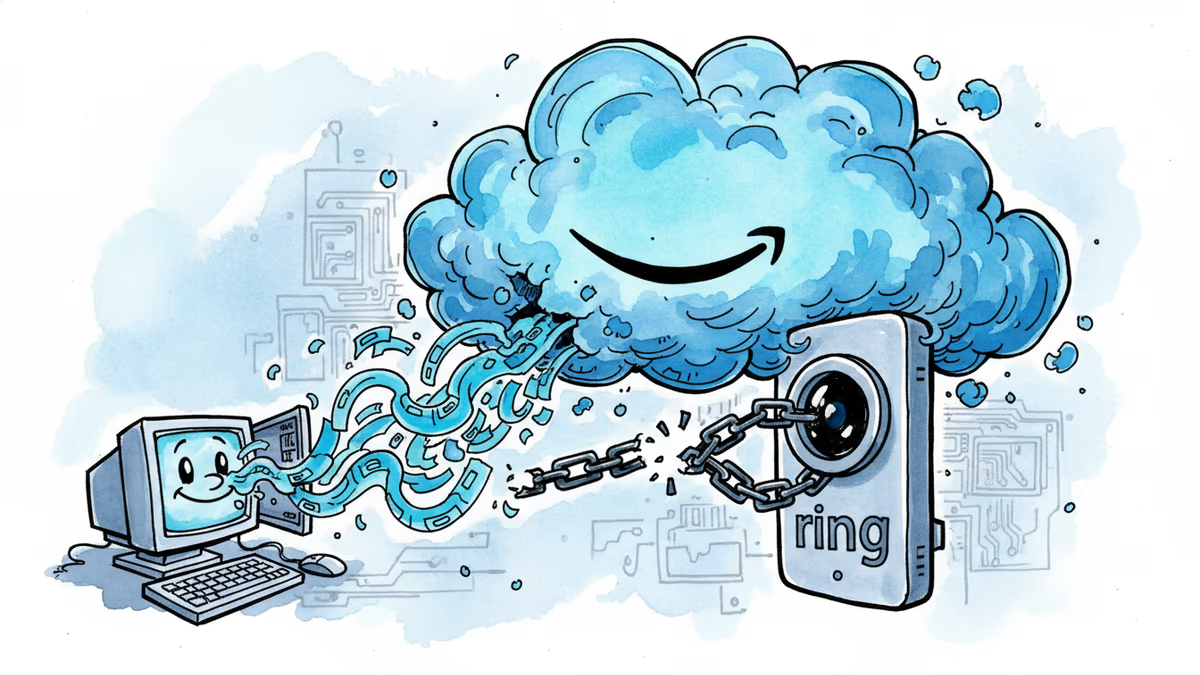
Consumer advocacy group offers $10,000 to integrate Ring doorbells with local servers, bypassing Amazon's cloud entirely. Can smart home devices escape subscription dependency?
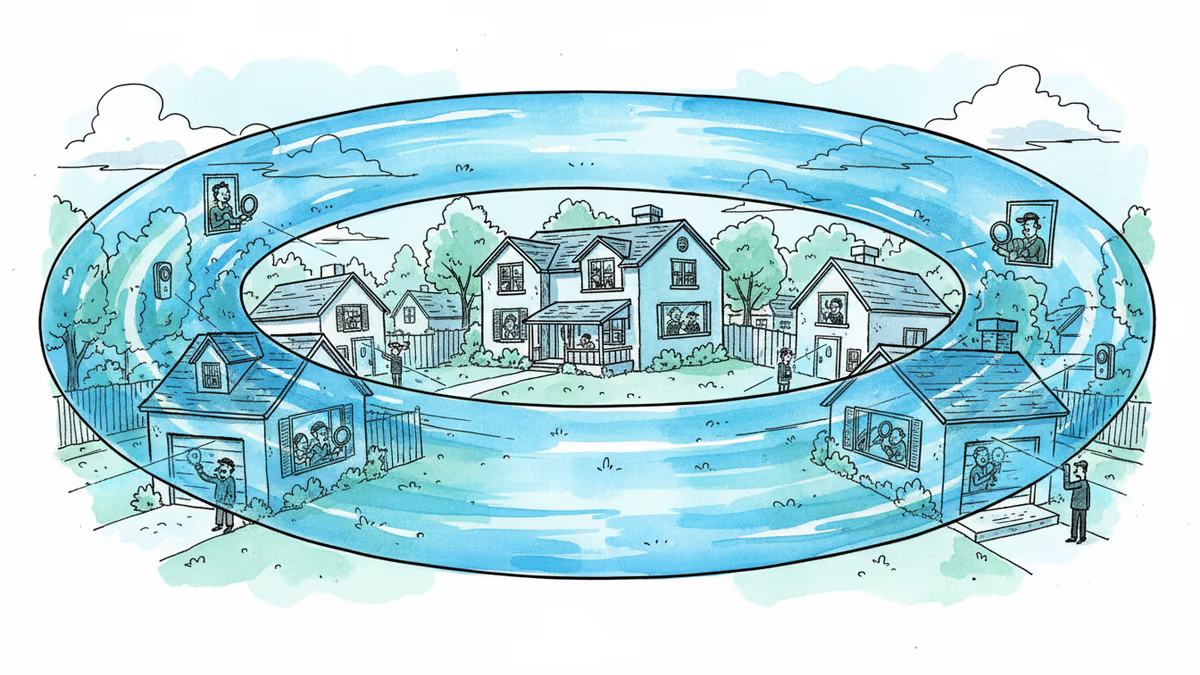
After Super Bowl ad backlash and AI surveillance features, Ring's founder explains himself. But the real issue isn't the ads—it's the technology itself.
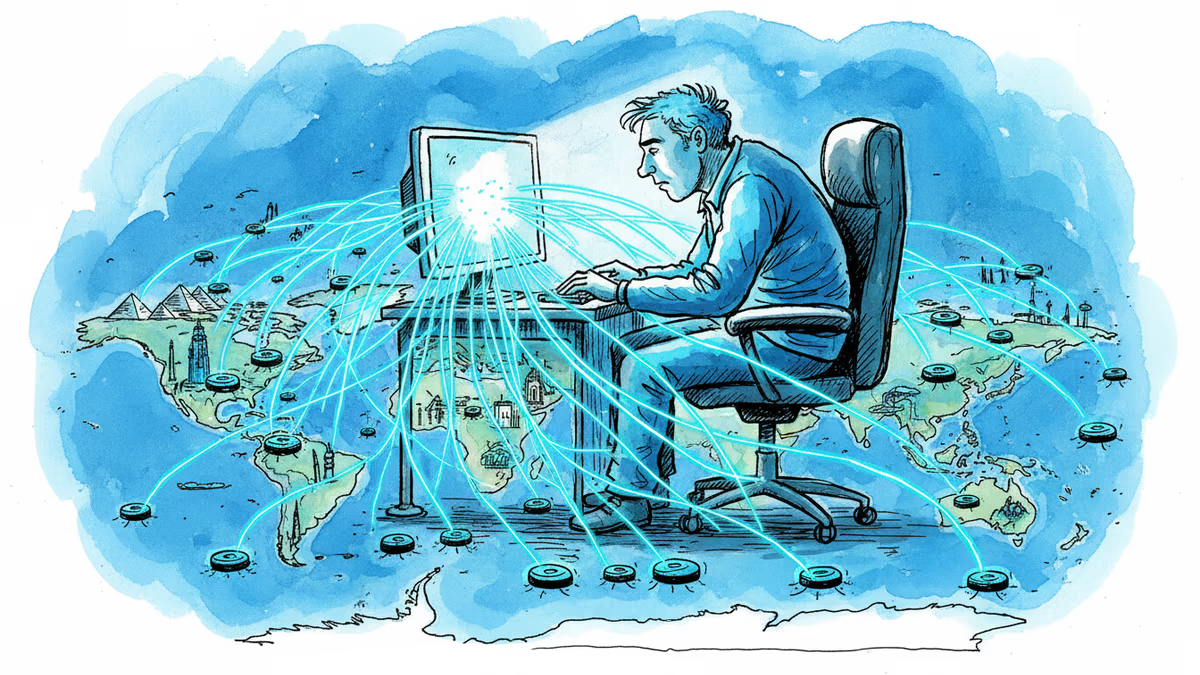
Security researcher discovers DJI robot vacuum vulnerability allowing remote control and surveillance of thousands of devices globally
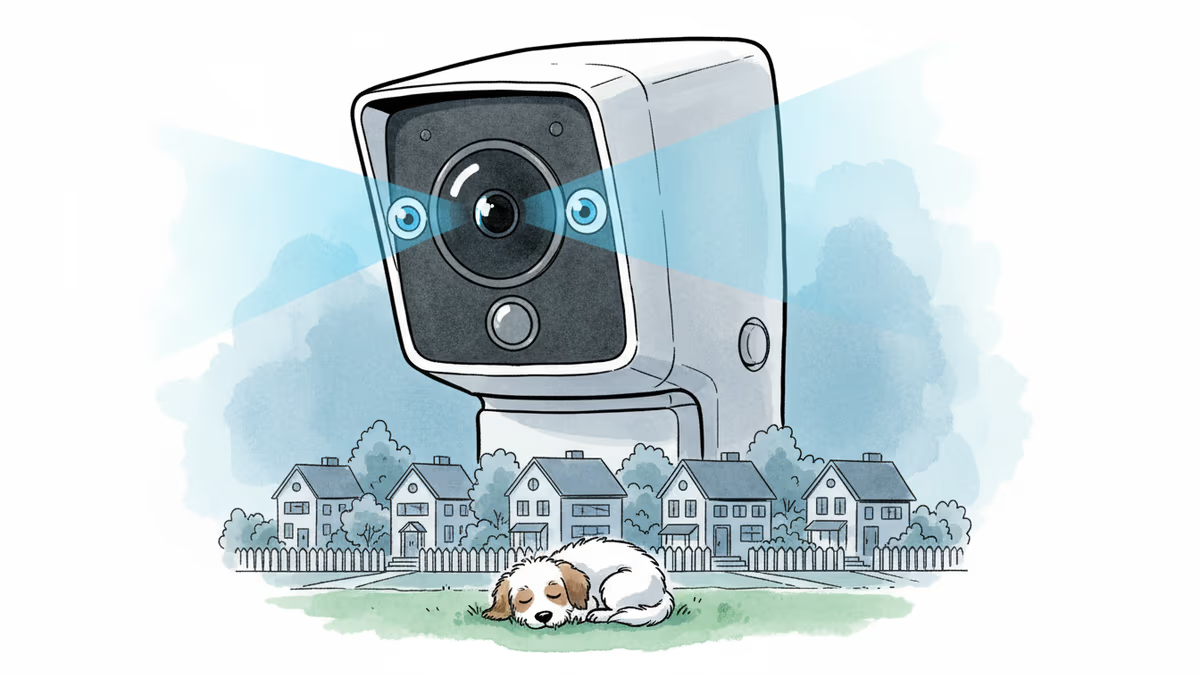
Ring's Super Bowl ad sparked fresh privacy debates about AI surveillance. From finding lost dogs to tracking humans - where do we draw the line?
Consumer advocacy group offers $10,000 to integrate Ring doorbells with local servers, bypassing Amazon's cloud entirely. Can smart home devices escape subscription dependency?
After Super Bowl ad backlash and AI surveillance features, Ring's founder explains himself. But the real issue isn't the ads—it's the technology itself.
Security researcher discovers DJI robot vacuum vulnerability allowing remote control and surveillance of thousands of devices globally
Ring's Super Bowl ad sparked fresh privacy debates about AI surveillance. From finding lost dogs to tracking humans - where do we draw the line?
Thoughts
Share your thoughts on this article
Sign in to join the conversation