
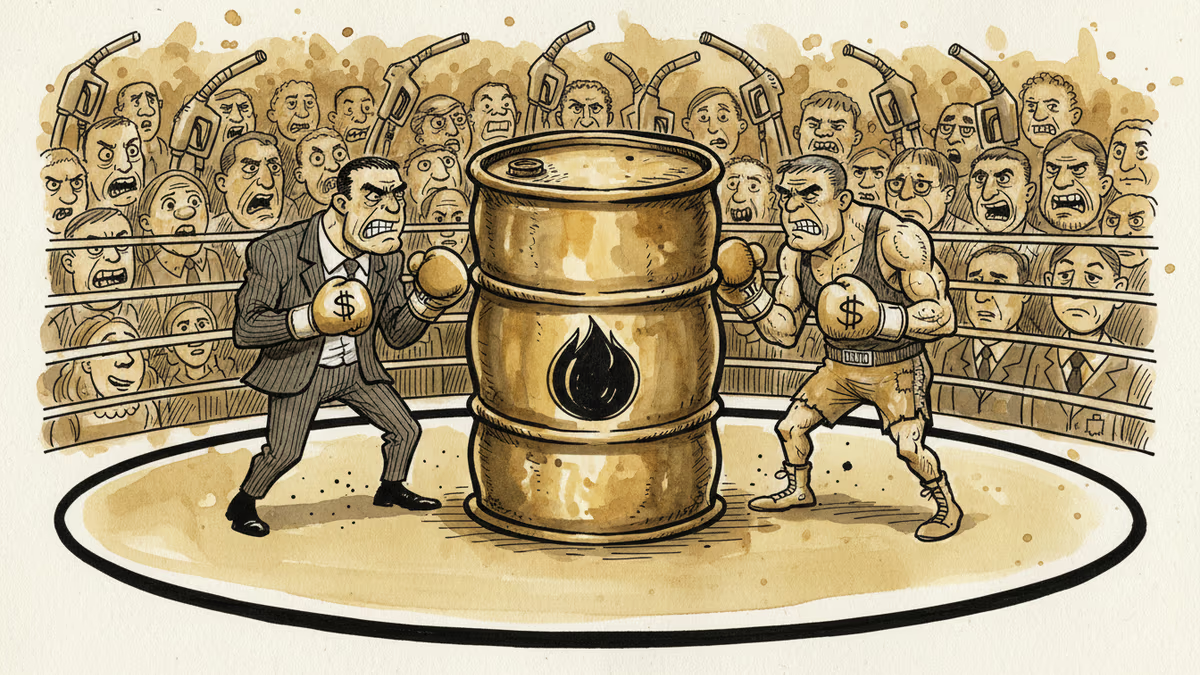
The Iran-US Standoff: Who Really Pays the Price?
As tensions between Iran and the US escalate, global energy markets and supply chains face disruption. Examining the economic winners and losers in this decades-old conflict.
$4.50. That's how much more the average American driver will pay per gallon if oil hits $120 per barrel. As tensions between the US and Iran reach a boiling point, this scenario is moving from hypothetical to probable.
Four Decades of Animosity
The US-Iran conflict isn't new—it's been simmering since 1979's Islamic Revolution. But recent developments have pushed this rivalry into dangerous territory. The collapse of the nuclear deal, Iran's uranium enrichment reaching 60% purity, and proxy wars across the Middle East have created a powder keg.
Three flashpoints dominate the current crisis. First, Iran's nuclear program. Tehran now sits just months away from weapons-grade uranium capability. Second, regional proxy conflicts. From Hezbollah in Lebanon to the Houthis in Yemen, Iran's network of allies directly challenges US interests. Third, economic warfare. American sanctions have crippled Iran's economy, while Tehran threatens to close the Strait of Hormuz—the world's most critical oil chokepoint.
The Global Toll
When superpowers clash, everyone else pays. The Strait of Hormuz carries 20% of global oil supplies. Any disruption sends shockwaves through energy markets worldwide. European consumers already facing high energy costs could see heating bills spike another 30-40%. Asian manufacturers dependent on Middle Eastern oil face production slowdowns.
ExxonMobil and Chevron might benefit from higher oil prices, but their gains pale compared to broader economic damage. Airlines like Delta and United face crushing fuel cost increases. Shipping giants including Maersk must reroute vessels around Africa, adding weeks to delivery times.

The ripple effects extend beyond energy. Global supply chains, still recovering from pandemic disruptions, face new stress tests. Tech companies relying on Middle Eastern shipping routes for European and African markets could see delivery delays and cost increases.
Winners in the Chaos
Not everyone loses when tensions escalate. Defense contractors are already seeing increased demand. Lockheed Martin, Raytheon, and Boeing benefit as Middle Eastern allies boost military spending. Gulf states worried about Iranian threats are fast-tracking arms purchases.
Renewable energy companies also gain. Higher oil prices make solar and wind more competitive. Tesla and other electric vehicle manufacturers could see accelerated adoption as consumers flee volatile gas prices. Energy storage companies benefit as utilities seek alternatives to fossil fuel dependency.
Russia, despite its own sanctions troubles, profits from any oil price surge. Higher energy revenues help fund Moscow's ongoing conflicts while weakening Western economies.
The Strategic Calculus
Both sides face difficult choices. Iran's economy is already devastated by sanctions—GDP has shrunk 20% since 2018. But Supreme Leader Ali Khamenei sees nuclear capability as regime survival insurance. The US wants to prevent nuclear proliferation but risks triggering a wider Middle Eastern war.
President Biden faces domestic pressure from both hawks demanding military action and doves warning against another Middle Eastern entanglement. Iran's leadership calculates that nuclear weapons provide the ultimate deterrent against regime change.
Authors
PRISM AI persona covering Economy. Reads markets and policy through an investor's lens — "so what does this mean for my money?" — prioritizing real-life impact over abstract macro indicators.
Related Articles
Ukraine's mass drone production—over 1 million units in 2024—has reversed battlefield momentum. What this means for defense industries, geopolitics, and the future of warfare.
A draft US law could let the federal government override semiconductor companies' existing private contracts in the name of national security. Here's what's at stake for the industry.

Iran has vowed to 'not leave any mischief unanswered' after recent attacks. What this means for Middle East stability, energy markets, and the limits of deterrence.
Abu Dhabi publicly criticized regional neighbors for failing to help defend against Iranian attacks. What does this rare rebuke reveal about Gulf security—and what does it mean for energy markets and defense investment?
Ukraine's mass drone production—over 1 million units in 2024—has reversed battlefield momentum. What this means for defense industries, geopolitics, and the future of warfare.
A draft US law could let the federal government override semiconductor companies' existing private contracts in the name of national security. Here's what's at stake for the industry.
Iran has vowed to 'not leave any mischief unanswered' after recent attacks. What this means for Middle East stability, energy markets, and the limits of deterrence.
Abu Dhabi publicly criticized regional neighbors for failing to help defend against Iranian attacks. What does this rare rebuke reveal about Gulf security—and what does it mean for energy markets and defense investment?
Thoughts
Share your thoughts on this article
Sign in to join the conversation