

KEPCO US Power Grid Solutions 2026: Strategic Partnership in South Carolina
KEPCO signs an MOU with Columbia, SC to test KEPCO US power grid solutions 2026. The partnership focuses on ADMS and BEMS for the city's 2036 renewable goal.
The world’s largest power market is turning to South Korean expertise to power its green future. With a goal to reach 100% renewable energy by 2036, a major U.S. city is now a testing ground for next-generation smart grid technology.
Testing KEPCO US Power Grid Solutions 2026 in Columbia
The state-run Korea Electric Power Corp. (KEPCO) announced on Wednesday that it has signed a memorandum of understanding (MOU) with the city of Columbia, South Carolina. According to Yonhap, the agreement, signed on January 13, 2026, aims to develop and implement power distribution grid solutions specifically tailored for the American market.

Advanced Management for a Greener Grid
Under this partnership, KEPCO will deploy its advanced distribution management system (ADMS) and building energy management system (BEMS) in Columbia. The city is currently racing toward a 2036 deadline to fully transition its electricity supply to renewable sources. KEPCO’s systems are expected to provide the necessary infrastructure to manage these intermittent energy sources efficiently.
KEPCO views this project as a critical opportunity to expand its presence in the United States, which remains the world’s most significant energy market. By proving its technology in Columbia, the company intends to create a scalable model for other American municipalities.
Authors
Related Articles

China aims to expand its west-to-east power transmission network to 420GW by 2030, with renewables making up 30% of output, per NDRC guidelines.
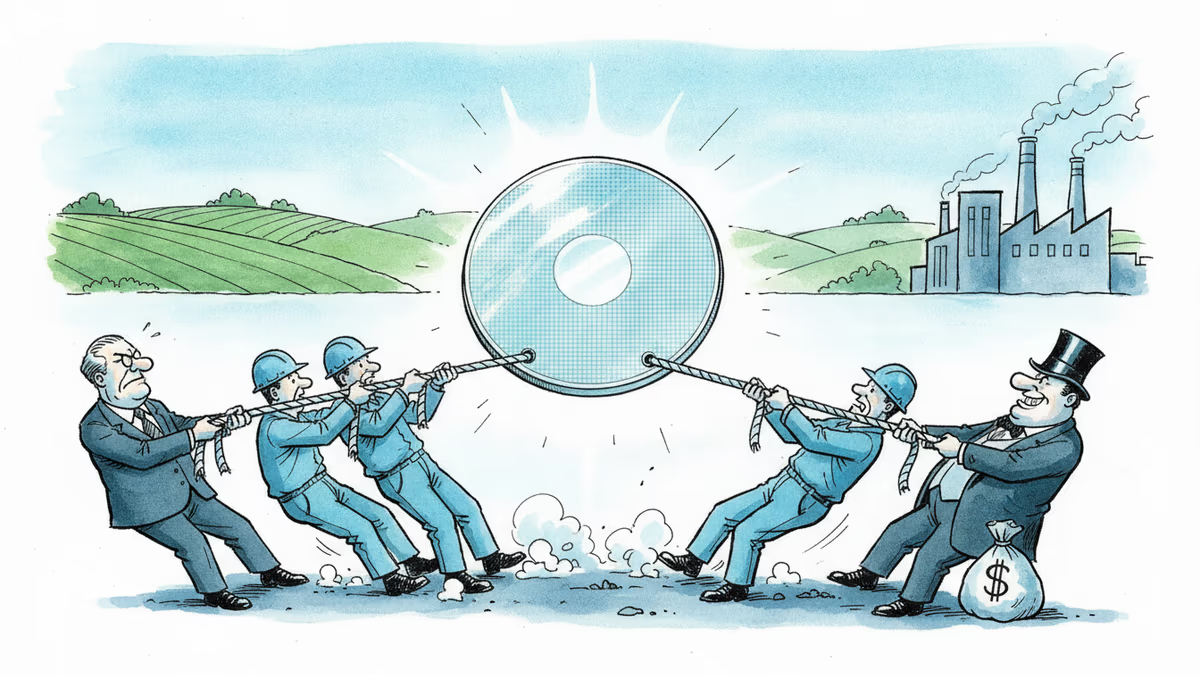
Samsung Electronics' union branch revealed that 84% of survey respondents oppose the government's roughly $290 billion (₩400 trillion) semiconductor megaproject in Gwangju. Government, management, the union and shareholders are all reading the same national project in sharply different ways.
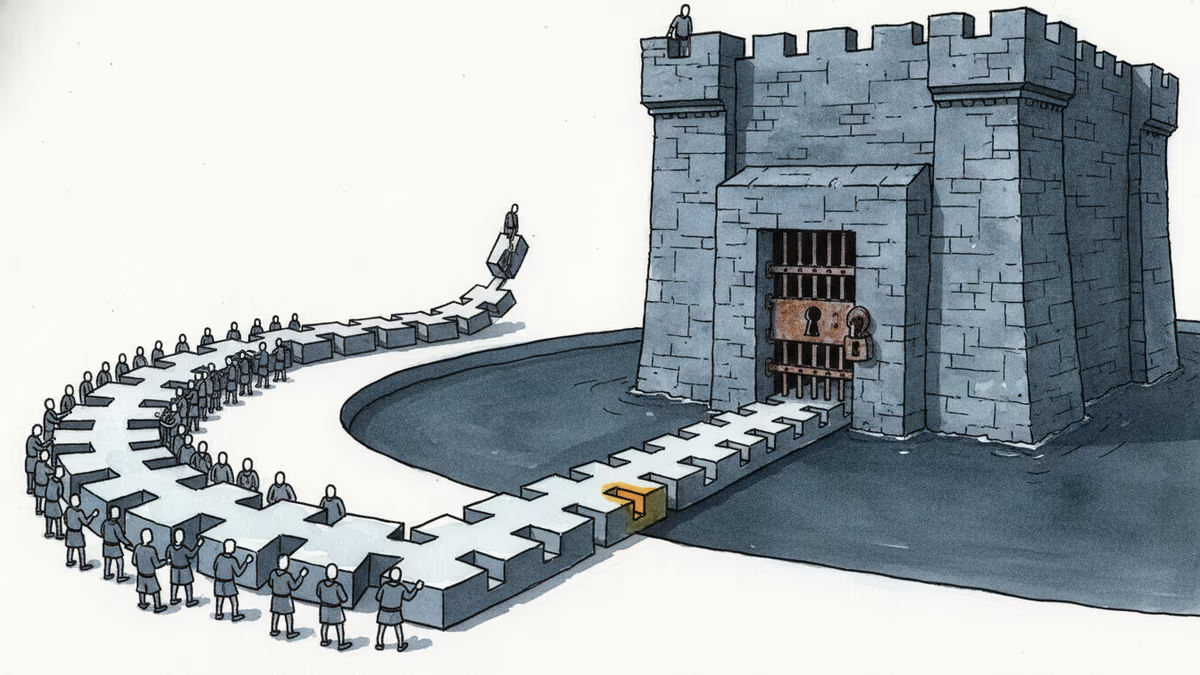
Nvidia shipped roughly a billion RISC-V cores in 2024, then announced it would run CUDA on the open standard. We break down how royalty-free instruction sets and open software stacks are trying to route around CUDA's lock-in. Part 2 of the Semiconductor Sovereignty series.
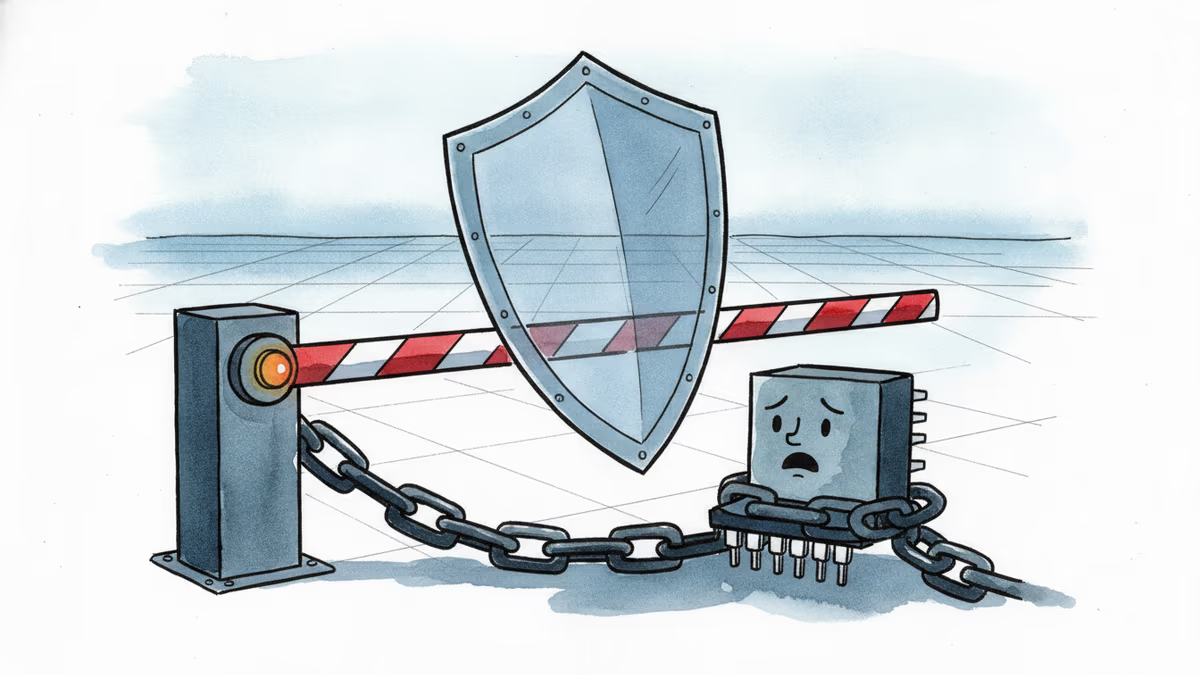
US AI-chip export controls split into three layers in the first half of 2026 — January easing, a May crackdown on circumvention, and a pending bill. Nvidia erased China from its guidance and still posted a record $81.6 billion quarter. A look at the export policy that both shields and cages it.
China aims to expand its west-to-east power transmission network to 420GW by 2030, with renewables making up 30% of output, per NDRC guidelines.
Samsung Electronics' union branch revealed that 84% of survey respondents oppose the government's roughly $290 billion (₩400 trillion) semiconductor megaproject in Gwangju. Government, management, the union and shareholders are all reading the same national project in sharply different ways.
Nvidia shipped roughly a billion RISC-V cores in 2024, then announced it would run CUDA on the open standard. We break down how royalty-free instruction sets and open software stacks are trying to route around CUDA's lock-in. Part 2 of the Semiconductor Sovereignty series.
US AI-chip export controls split into three layers in the first half of 2026 — January easing, a May crackdown on circumvention, and a pending bill. Nvidia erased China from its guidance and still posted a record $81.6 billion quarter. A look at the export policy that both shields and cages it.
Thoughts
Share your thoughts on this article
Sign in to join the conversation