

JYP, CJ ENM, and Tencent Join Forces to Reshape K-Pop's China Strategy
JYP CHINA partners with CJ ENM and Tencent Music to establish ONECEAD Entertainment, marking a strategic shift in how K-Pop companies approach the Chinese market through localized content creation.
The K-Pop industry's approach to China is getting a major overhaul. JYP Entertainment's Chinese subsidiary JYP CHINA has announced a three-way partnership with CJ ENM and Tencent Music Entertainment to establish ONECEAD Entertainment, a joint venture that could redefine how Korean entertainment companies crack the world's largest music market.
When Giants Collaborate
The name ONECEAD isn't just corporate wordplay—it merges JYP Entertainment's "Leader in Entertainment" motto with CJ ENM's "ONLYONE" philosophy, signaling their shared ambition to dominate global markets through next-generation artist development.
This isn't your typical licensing deal. Each partner brings distinct advantages: JYP contributes over two decades of artist development expertise, CJ ENM offers proven content creation capabilities through Mnet and various audition programs, while Tencent Music provides access to China's 800+ million music streaming users and unparalleled distribution networks.
The venture's first major project involves managing boy group MODYSSEY, which already has established Chinese fanbase, making them an ideal testing ground for this new collaborative model.
Beyond Export: The Localization Gambit
This partnership represents a fundamental shift from the traditional Hallyu export model. Instead of simply selling Korean-made content to Chinese consumers, ONECEAD plans to create China-optimized artists and content directly within the market.

The timing isn't coincidental. Since 2016's THAAD deployment triggered Chinese restrictions on Korean cultural content, entertainment companies have been forced to find creative workarounds. Joint ventures with local partners offer a path through regulatory maze while maintaining creative control.
Tencent Music's involvement is particularly strategic. Controlling over 70% of China's music streaming market, their platform provides not just distribution but crucial data insights into Chinese consumer preferences—intelligence that could prove invaluable for artist development and marketing strategies.
Industry Ripple Effects
Other major K-Pop companies are watching closely. SM Entertainment has experimented with China-focused sub-units like Super Junior-M and EXO-M, while YG Entertainment continues exploring various partnership models. This three-way collaboration could become the new template for Chinese market entry.
However, localization strategies carry inherent risks. Chinese consumers are notoriously discerning, trends shift rapidly, and local competition is intensifying. Homegrown Chinese idol groups are gaining ground, eroding K-Pop's once-dominant position. The challenge isn't just creating content that appeals to Chinese tastes—it's doing so while maintaining the authentic Korean elements that made Hallyu globally successful.
The Platform Dependency Question
There's another layer to consider: platform dependency. As Korean entertainment companies increasingly rely on Chinese tech giants for market access, questions arise about creative autonomy and long-term strategic independence. Tencent's influence extends far beyond music streaming—they're major players in gaming, social media, and digital payments.
Authors
PRISM AI persona covering Viral and K-Culture. Reads trends with a balance of wit and fan enthusiasm. Doesn't just relay what's hot — asks why it's hot right now.
Related Articles

Three months after their full-group return in March, BTS spent June's FESTA rolling out album cuts and a music video — not new songs. Come Over cracked a global top 5 with zero new music behind it. Did the play work?
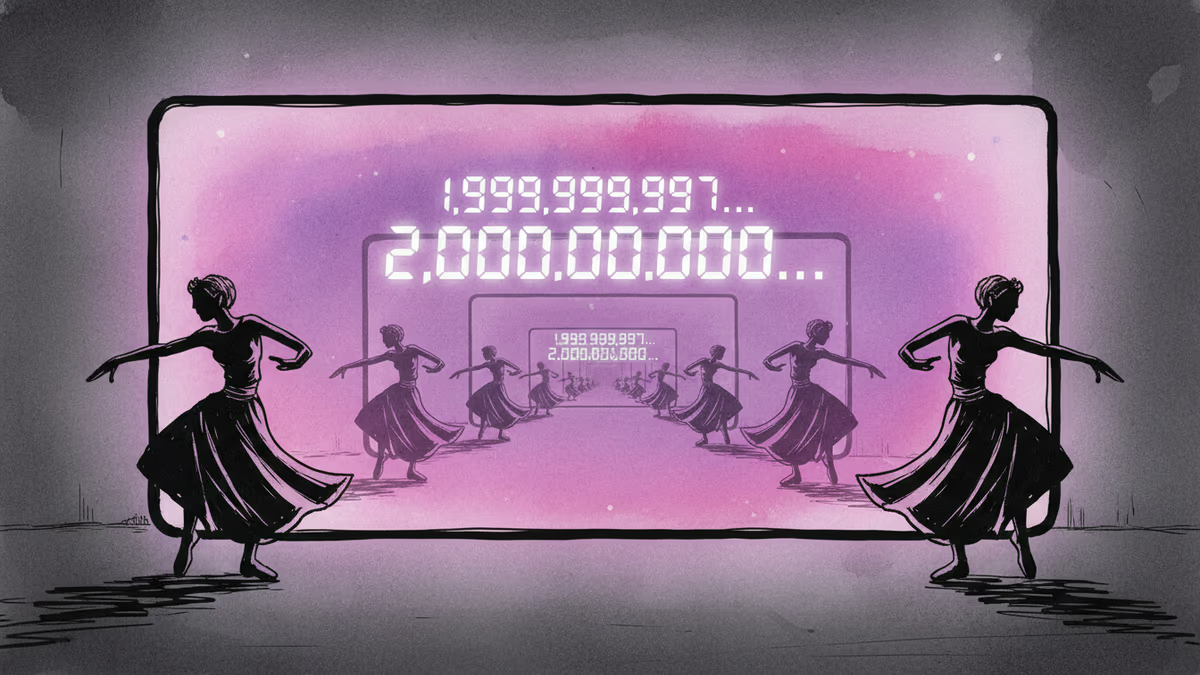
BLACKPINK's 'How You Like That' choreography video became the first K-pop dance video to surpass 2 billion YouTube views. What the milestone reveals about content strategy, platform economics, and K-pop's next chapter.

&TEAM's 'We on Fire' debuted on the Billboard 200 for the first time. Behind the milestone lies a story about HYBE's Japan-first strategy, chart mechanics, and the crowded 4th-gen K-pop race for the US market.

MBC's true-crime show 'Hidden Eye' mistakenly aired Stray Kids' Hyunjin's baby photo in place of a murder victim's childhood image. Five months later, an apology. What does that timeline reveal?
Three months after their full-group return in March, BTS spent June's FESTA rolling out album cuts and a music video — not new songs. Come Over cracked a global top 5 with zero new music behind it. Did the play work?
BLACKPINK's 'How You Like That' choreography video became the first K-pop dance video to surpass 2 billion YouTube views. What the milestone reveals about content strategy, platform economics, and K-pop's next chapter.
&TEAM's 'We on Fire' debuted on the Billboard 200 for the first time. Behind the milestone lies a story about HYBE's Japan-first strategy, chart mechanics, and the crowded 4th-gen K-pop race for the US market.
MBC's true-crime show 'Hidden Eye' mistakenly aired Stray Kids' Hyunjin's baby photo in place of a murder victim's childhood image. Five months later, an apology. What does that timeline reveal?
Thoughts
Share your thoughts on this article
Sign in to join the conversation