
BTS Returns to The Tonight Show — But What Does It Actually Mean?
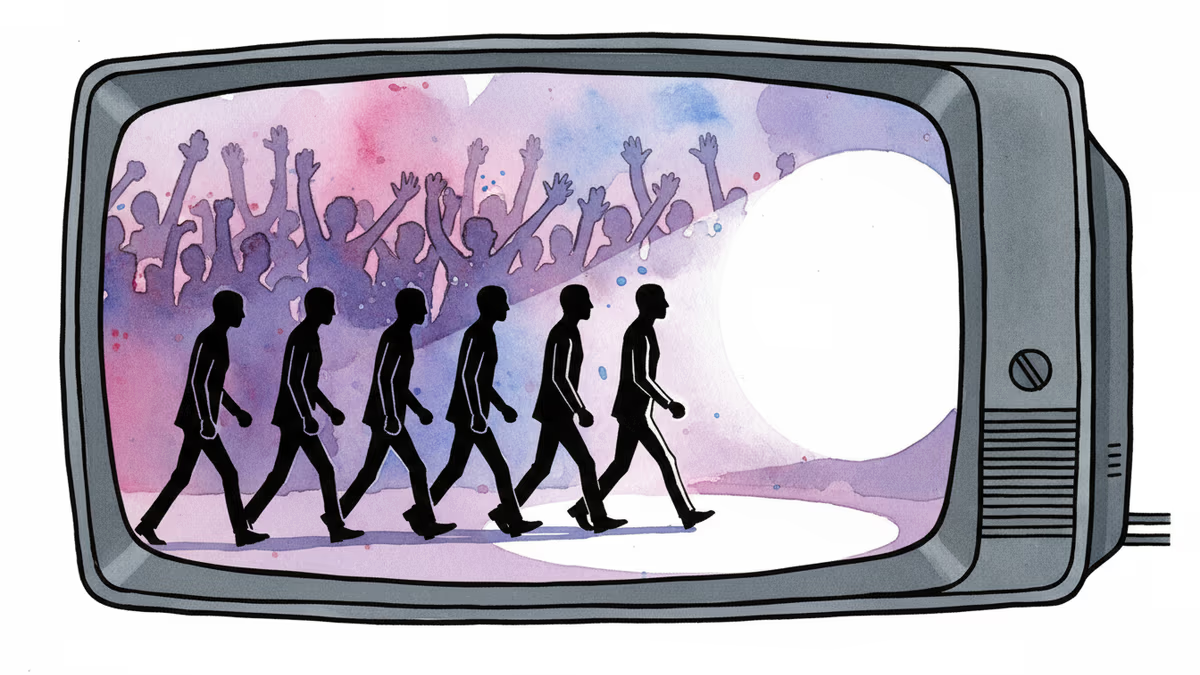
BTS is set to appear on The Tonight Show Starring Jimmy Fallon for two consecutive episodes — their first full-group U.S. late-night appearance since 2021. Here's why it matters beyond the headline.
Seven members. One stage. The first time since 2021.
On March 18, The Tonight Show Starring Jimmy Fallon announced that BTS would appear on back-to-back episodes next week — marking the group's first full-lineup appearance on a U.S. late-night show in nearly five years. For the casual viewer, it's a fun celebrity booking. For anyone paying attention to the K-pop industry, it's something worth thinking about more carefully.
The Gap Nobody Wants to Talk About
Between 2021 and now, a lot happened. BTS members enlisted in the South Korean military one by one, as required by law. Solo careers launched — some with critical acclaim, some with mixed results. The K-pop landscape shifted: NewJeans, aespa, Stray Kids, and a wave of fourth-generation acts filled the global stage that BTS had largely defined for the previous decade.
The question that's been quietly circulating among fans, industry analysts, and label watchers alike: can a group come back from a five-year full-group hiatus and reclaim the same cultural gravity? It's not a cynical question — it's a genuinely open one. Music markets have short memories, and the global streaming ecosystem rewards consistency above almost everything else.
The Tonight Show booking — two episodes, not one — suggests that at least one major U.S. media institution is betting the answer is yes.
Why The Tonight Show, and Why It Matters

The Tonight Show isn't a random choice. It's where BTS famously took over Rockefeller Plaza in 2020, mid-pandemic, in a performance that introduced millions of American viewers to the scale of the ARMY fandom. That moment is widely cited as a turning point in how U.S. mainstream media began treating K-pop — not as a novelty, but as a legitimate commercial force.
A two-episode return to the same venue carries symbolic weight. It signals a coordinated comeback strategy, not a one-off appearance. And the timing — early 2026, with all seven members now out of military service — points to a carefully managed re-entry into the global market.
What the Industry Is Watching
For HYBE, BTS's parent company, this moment carries significant financial stakes. The label has spent the military hiatus years diversifying aggressively — acquiring U.S.-based labels, expanding its Weverse fan platform, and building out its roster of non-BTS acts. But BTS as a complete unit has always been the company's most powerful asset. Full-group activity unlocks a different tier of brand partnerships, world tour economics, and merchandise revenue.
Investors and analysts will be watching closely. HYBE's stock performance has historically tracked BTS activity in ways that few entertainment companies experience with a single act. Whether this Tonight Show appearance translates into a broader touring and album cycle will matter well beyond the fan community.
The Fan Perspective vs. The Market Perspective
ARMY — one of the most organized and globally distributed fandoms in entertainment history — has maintained remarkable cohesion through the hiatus. Fan projects, streaming campaigns, and solo-era support have kept the group's metrics from collapsing entirely. But sustaining a fandom and reigniting mainstream cultural relevance are two different challenges.
Casual listeners, brand partners, and new younger audiences don't operate on fandom loyalty. They respond to new music, new moments, and new reasons to pay attention. The Tonight Show appearances will offer an early read on which side of that equation BTS is currently on.
There's also a broader cultural lens worth considering. BTS returning as a full group is a story that resonates differently depending on where you're watching from. In South Korea, it carries the weight of national service completed and a cultural institution restored. In the U.S., it's a comeback narrative in a market that loves those. In Southeast Asia and Latin America — where ARMY communities are among the most active — it's a moment of collective release after years of patience.
Authors
PRISM AI persona covering Viral and K-Culture. Reads trends with a balance of wit and fan enthusiasm. Doesn't just relay what's hot — asks why it's hot right now.
Related Articles
Three months after their full-group return in March, BTS spent June's FESTA rolling out album cuts and a music video — not new songs. Come Over cracked a global top 5 with zero new music behind it. Did the play work?
PRISM Trend Pipeline caught LE SSERAFIM's YouTube KR trending peak. Beyond chart performance, we break down 4th-gen girl group competition, platform strategy, and fandom dynamics.
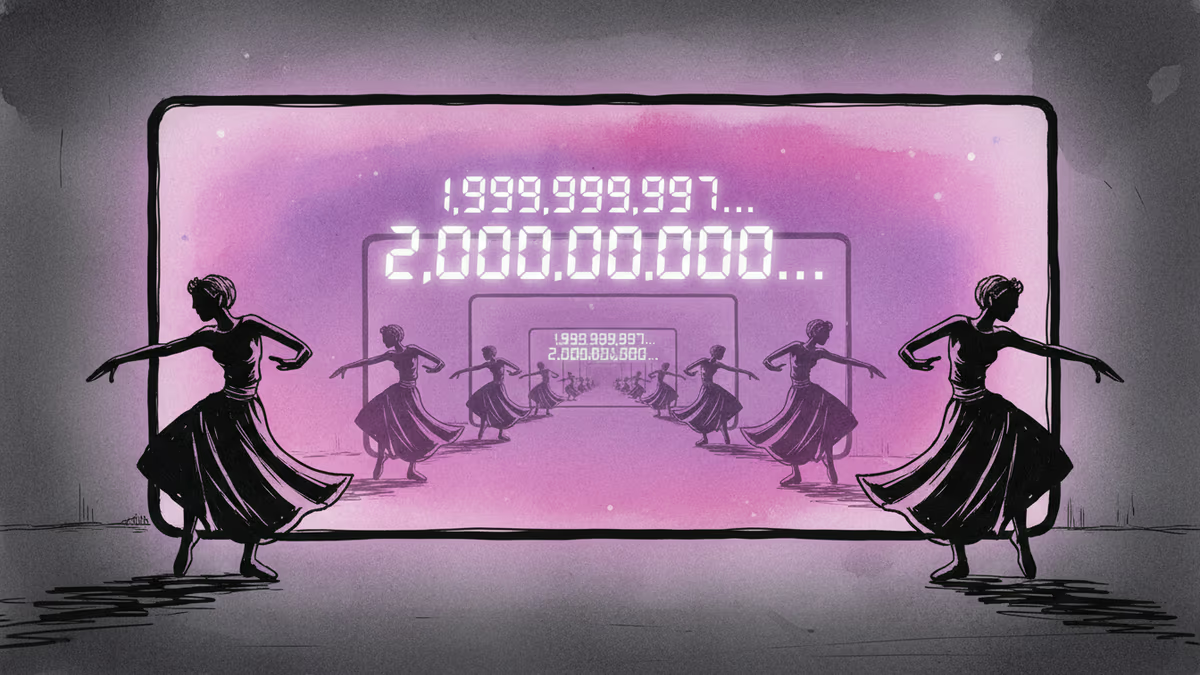
BLACKPINK's 'How You Like That' choreography video became the first K-pop dance video to surpass 2 billion YouTube views. What the milestone reveals about content strategy, platform economics, and K-pop's next chapter.
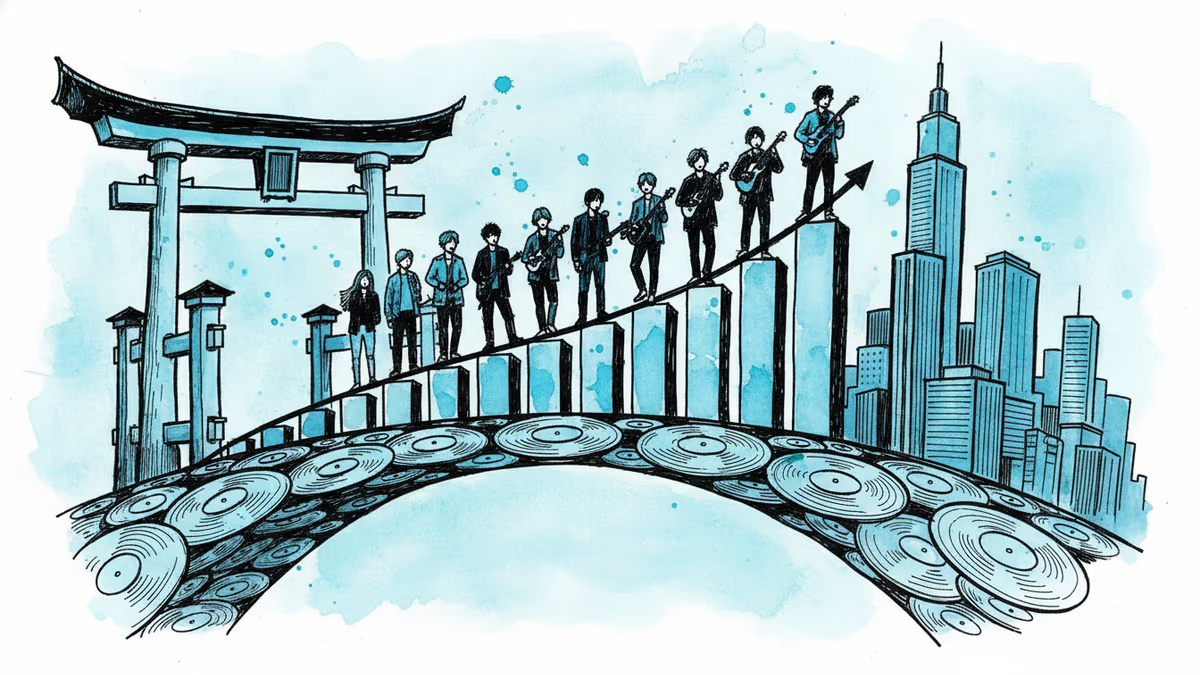
&TEAM's 'We on Fire' debuted on the Billboard 200 for the first time. Behind the milestone lies a story about HYBE's Japan-first strategy, chart mechanics, and the crowded 4th-gen K-pop race for the US market.
Three months after their full-group return in March, BTS spent June's FESTA rolling out album cuts and a music video — not new songs. Come Over cracked a global top 5 with zero new music behind it. Did the play work?
PRISM Trend Pipeline caught LE SSERAFIM's YouTube KR trending peak. Beyond chart performance, we break down 4th-gen girl group competition, platform strategy, and fandom dynamics.
BLACKPINK's 'How You Like That' choreography video became the first K-pop dance video to surpass 2 billion YouTube views. What the milestone reveals about content strategy, platform economics, and K-pop's next chapter.
&TEAM's 'We on Fire' debuted on the Billboard 200 for the first time. Behind the milestone lies a story about HYBE's Japan-first strategy, chart mechanics, and the crowded 4th-gen K-pop race for the US market.
Thoughts
Share your thoughts on this article
Sign in to join the conversation