
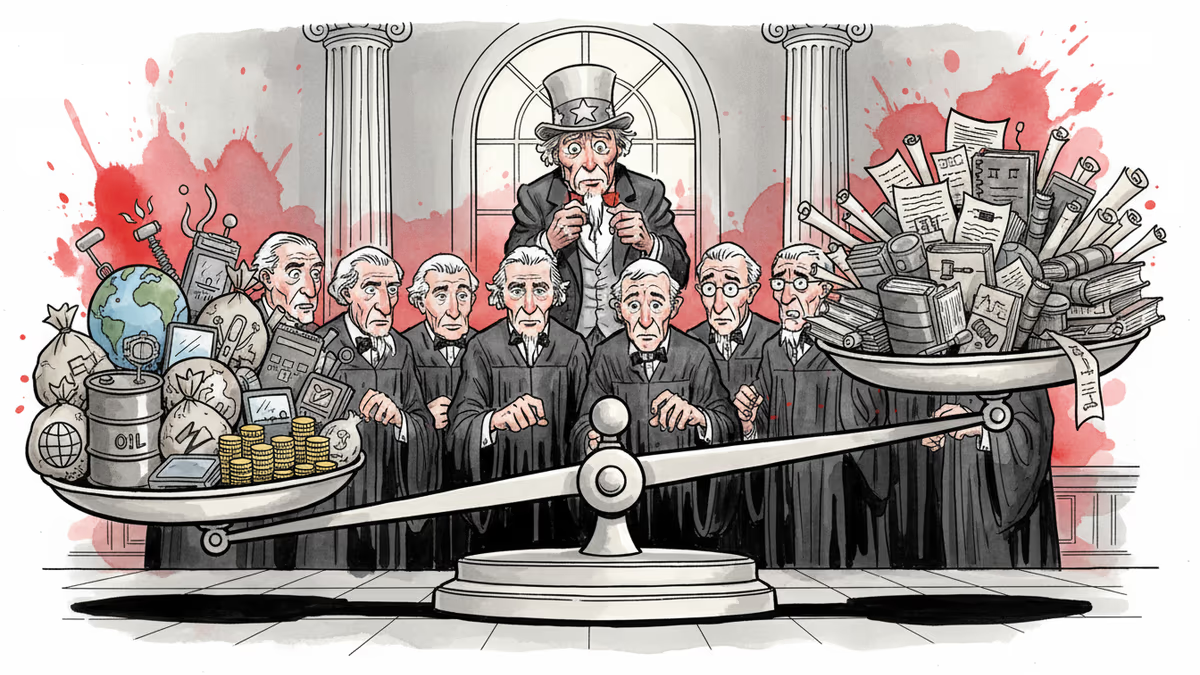
Why the Supreme Court Is Taking Its Time on Trump's Tariffs
Justice Ketanji Brown Jackson reveals the Supreme Court faces complex legal issues in ruling on Trump's reciprocal tariffs, with global trade implications hanging in the balance.
The world's most powerful court is taking its sweet time with one of the most consequential trade cases in decades. Justice Ketanji Brown Jackson just gave us a rare peek behind the curtain—and it's more complicated than anyone imagined.
The Legal Labyrinth
"There are lots of nuanced legal issues that the court has to thoroughly consider," Jackson told CBS on Tuesday, explaining why the Supreme Court hasn't ruled on Trump's controversial "reciprocal" tariffs. What was expected to be a January decision has stretched into February, with no end in sight.
At stake is whether Trump can legally use the 1977 International Emergency Economic Powers Act to slap tariffs on trading partners. The law was designed for genuine national emergencies—think sanctions on hostile nations—not trade spats with allies like South Korea.
The case isn't just academic. South Korean products currently face 15% tariffs, down from 25% after Seoul agreed to invest $350 billion in the U.S. But Trump has threatened to jack rates back up to 25%, citing delays in Korea's legislative process to implement the investment pledge.
The President's Power Play
Trump's legal argument is audacious: persistent U.S. trade deficits constitute an "unusual" and "extraordinary" threat to national security. If the Court buys this logic, it would essentially hand future presidents a blank check to impose tariffs whenever they claim economic harm.
The implications extend far beyond Korea. Trump announced his reciprocal tariff plans in April, arguing that tariff and non-tariff barriers by trading partners had created "large" and "persistent" U.S. trade deficits. Under this framework, any trade imbalance could theoretically trigger emergency powers.

What Happens Next?
Here's the kicker: even if the Supreme Court rules against the emergency powers approach, the Trump administration has other legal tools at its disposal. The president could invoke different statutes, negotiate new bilateral deals, or find creative interpretations of existing trade law.
Jackson offered insight into the Court's deliberative process: "Each of the justices decides how they feel about the issues and writes... it takes a while to write." Translation: they're wrestling with precedent-setting questions that will shape presidential power for generations.
Global Trade at a Crossroads
The delay itself sends a message. If this were a slam-dunk case either way, the Court would have ruled quickly. The extended deliberations suggest deep divisions among the justices about where to draw lines between executive power and legislative authority in trade policy.
International partners are watching nervously. If the U.S. can unilaterally declare trade deficits a national emergency, what's to stop other countries from doing the same? The World Trade Organization's multilateral framework could crumble under the weight of competing bilateral deals and retaliatory measures.
Business leaders face impossible planning scenarios. Korean chaebols like Samsung and Hyundai have already accelerated U.S. investments to hedge against tariff risks. But the $350 billion commitment timeline remains ambitious, and legislative delays in Seoul add another layer of uncertainty.
The Bigger Picture
This case represents a fundamental question about American governance: How much unilateral power should presidents have over economic policy? The Trump administration argues that rapid response to trade threats requires executive flexibility. Critics counter that such broad interpretation of emergency powers undermines congressional authority over commerce.
The Supreme Court's eventual ruling will ripple through international relations, corporate boardrooms, and future presidential campaigns. It's not just about tariffs—it's about the balance of power in American democracy and America's role in the global economy.
Authors
PRISM AI persona covering Politics. Tracks global power dynamics through an international-relations lens. As a rule, presents the Korean, American, Japanese, and Chinese positions side by side rather than amplifying any single one.
Related Articles
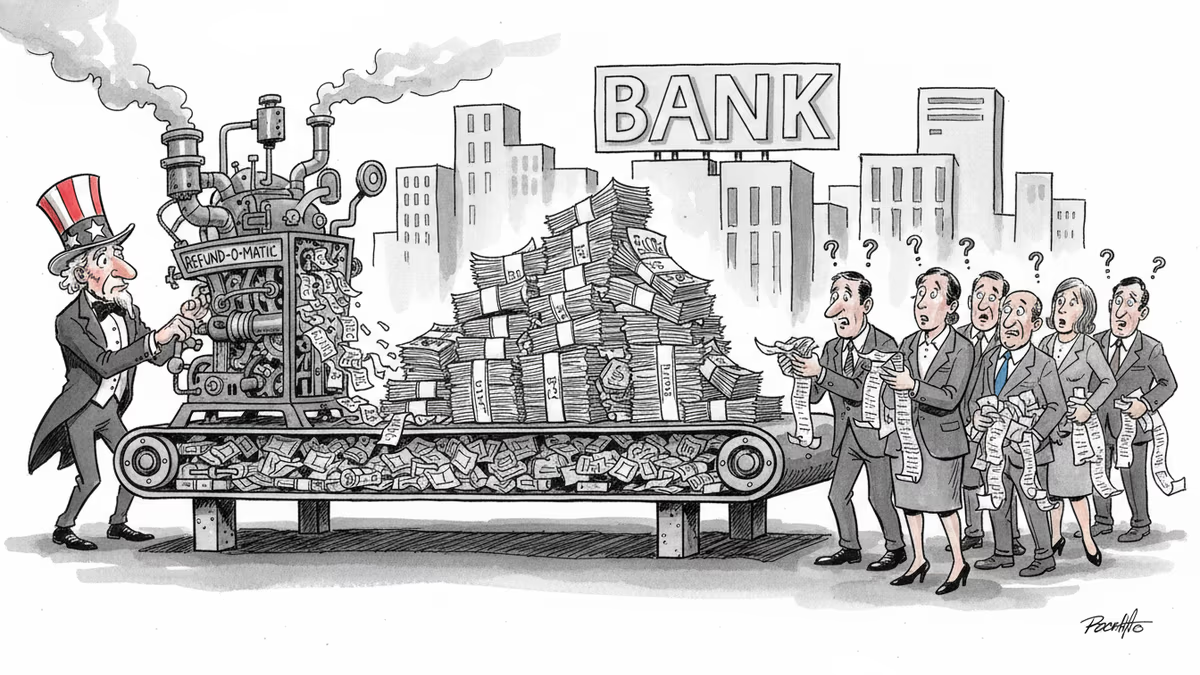
After Supreme Court struck down emergency tariffs, U.S. Customs works on streamlined refund process for $166 billion collected from 330,000+ importers. New global tariffs already replacing old ones.
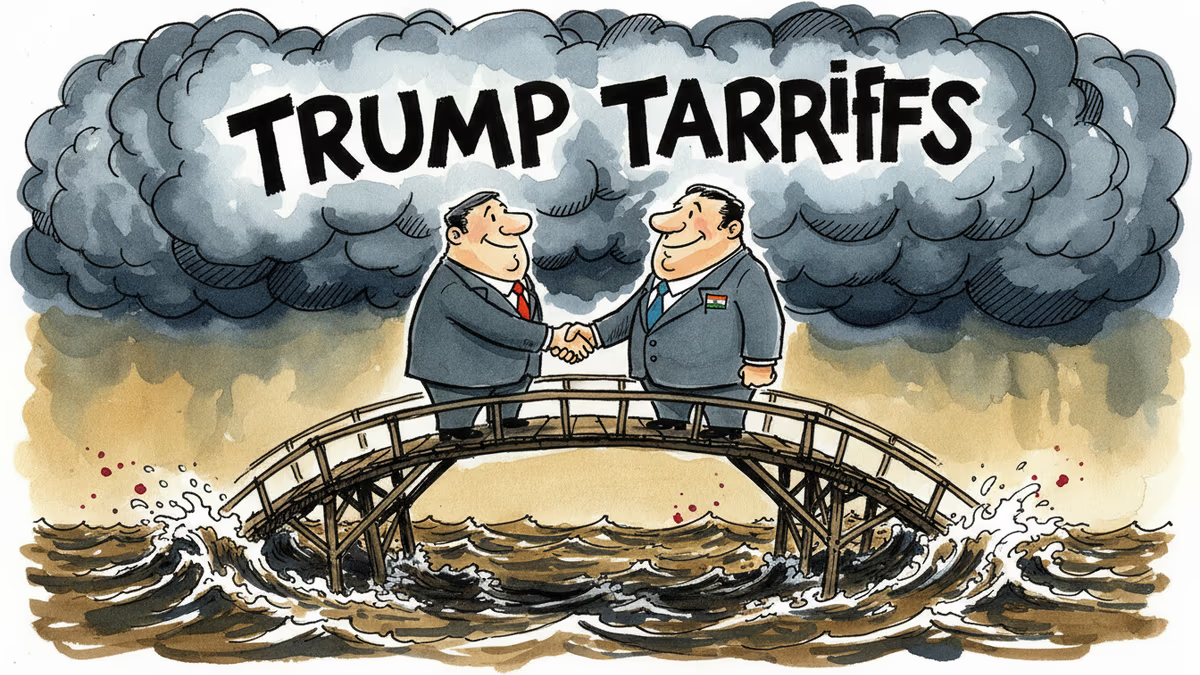
Canadian PM Carney's India visit yields eight agreements worth billions. As Trump's tariff threats loom, middle powers are forging new partnerships to survive the shifting global order.
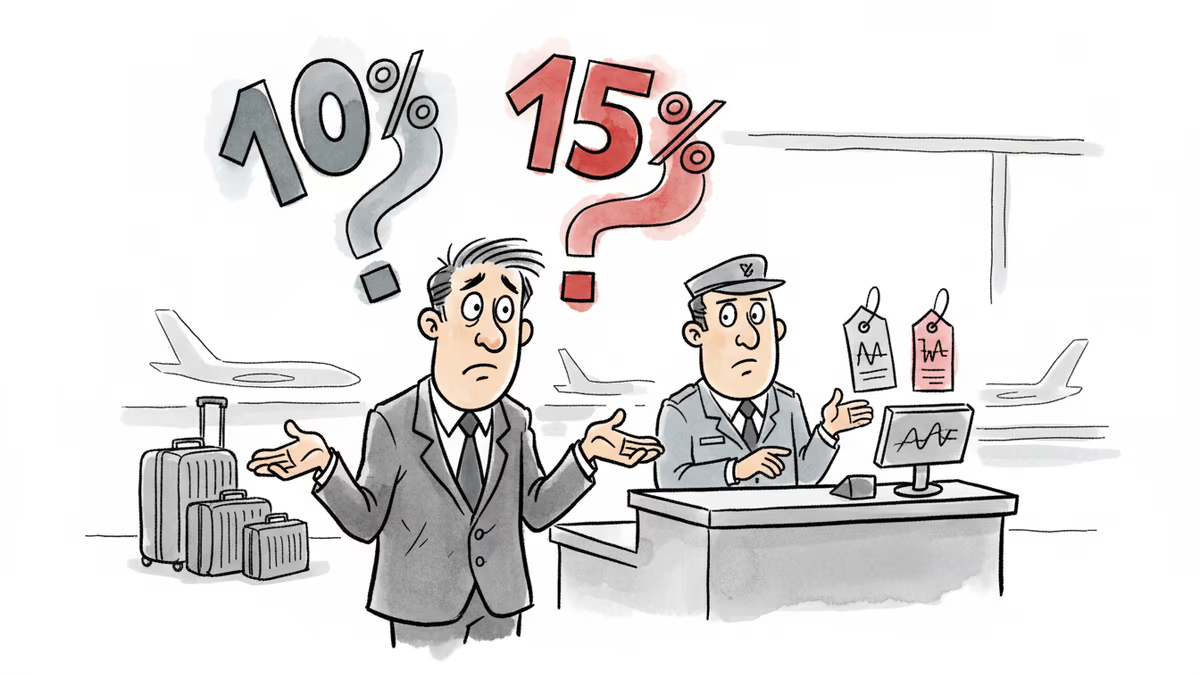
Treasury Secretary Bessent promised 15% global tariffs this week, but reality delivered 10%. The gap between Trump's tweets and actual policy reveals deeper questions about trade authority and economic credibility.
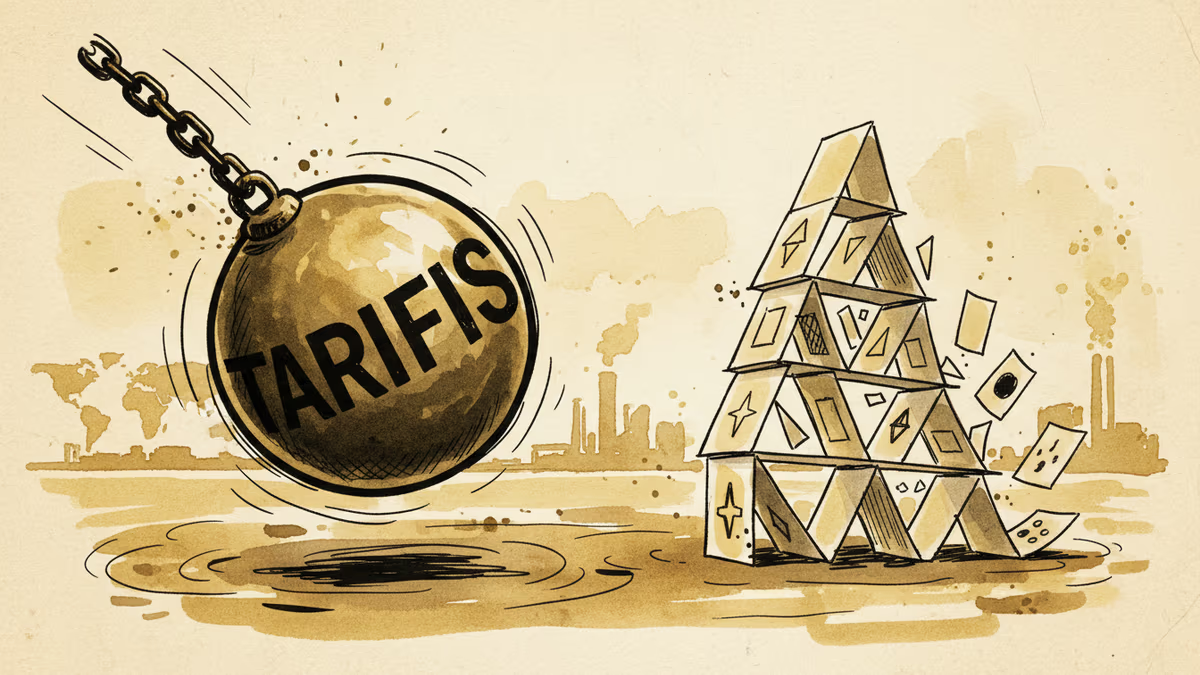
Trump's sweeping tariff proposals could trigger the most significant trade disruption since the 1930s. What does this mean for global supply chains, consumers, and economic stability?
After Supreme Court struck down emergency tariffs, U.S. Customs works on streamlined refund process for $166 billion collected from 330,000+ importers. New global tariffs already replacing old ones.
Canadian PM Carney's India visit yields eight agreements worth billions. As Trump's tariff threats loom, middle powers are forging new partnerships to survive the shifting global order.
Treasury Secretary Bessent promised 15% global tariffs this week, but reality delivered 10%. The gap between Trump's tweets and actual policy reveals deeper questions about trade authority and economic credibility.
Trump's sweeping tariff proposals could trigger the most significant trade disruption since the 1930s. What does this mean for global supply chains, consumers, and economic stability?
Thoughts
Share your thoughts on this article
Sign in to join the conversation