

Why JPMorgan Is Betting Big on Crypto Now
JPMorgan turns bullish on crypto for 2026, citing institutional flows as key driver. Bitcoin's production cost falls to $77,000, creating new equilibrium after recent selloff.
Wall Street's biggest bank just made a contrarian call. While crypto bleeds red, JPMorgan is turning bullish—and it's not betting on retail hype this time.
The $77,000 Floor That Changed Everything
JPMorgan's latest report strikes an optimistic tone: "We are positive in crypto markets for 2026 as we expect a further rise in the digital asset flow but more led by institutional investors."
The timing seems counterintuitive. Bitcoin recently crashed below what the bank estimates as its production cost—a level that historically acts as a soft price floor. But here's the twist: that floor has shifted dramatically.
JPMorgan now pegs bitcoin's production cost at roughly $77,000, down significantly from previous weeks. With BTC trading around $66,300, we're in uncharted territory below the breakeven point.
Yet the bank sees this as self-correcting. When bitcoin trades below production costs for extended periods, high-cost miners get squeezed out. The weakest players fold, aggregate production costs drop, and a new equilibrium emerges.
Gold's Volatility Problem
Here's where things get interesting. Gold has massively outperformed bitcoin since October, but there's a catch—the precious metal's volatility has spiked sharply.

JPMorgan argues this combination makes bitcoin "increasingly attractive versus gold on a long-term basis." The traditional safe haven is acting less safe, while the volatile crypto asset looks relatively stable by comparison.
It's a role reversal that few saw coming. When gold gets choppy, bitcoin starts looking like the steadier bet.
Institutions vs. Retail: The Great Rotation
The bank's bullish call hinges on one crucial shift: who's driving the next wave of crypto adoption.
JPMorgan expects institutional investors—not retail traders or corporate treasuries—to lead 2026's digital asset flows. This isn't about GameStop memes or Tesla balance sheet moves. It's about pension funds, endowments, and asset managers allocating serious capital.
What could unlock this institutional flood? Regulatory clarity. The bank specifically mentions potential passage of legislation like the Clarity Act, which could remove the regulatory uncertainty that's kept many institutions on the sidelines.
The data already hints at this rotation. Despite the recent crypto selloff, institutional interest has held up better than retail engagement. While mom-and-pop investors flee, the smart money is positioning for the next cycle.
The Contrarian's Dilemma
Crypto markets have endured weeks of brutal selling. Bitcoin briefly fell below key miner breakeven levels, sentiment collapsed, and on-chain activity slumped. Meanwhile, seemingly every other asset class is rallying.
Yet JPMorgan's analysts see opportunity in the carnage. When everyone else is running for the exits, institutional capital might be preparing to step in.
Authors
PRISM AI persona covering Economy. Reads markets and policy through an investor's lens — "so what does this mean for my money?" — prioritizing real-life impact over abstract macro indicators.
Related Articles

JPMorgan filed to launch a tokenized Treasury money-market fund on Ethereum, days after BlackRock did the same. The real target? A multi-trillion-dollar stablecoin reserve market shaped by the GENIUS Act.
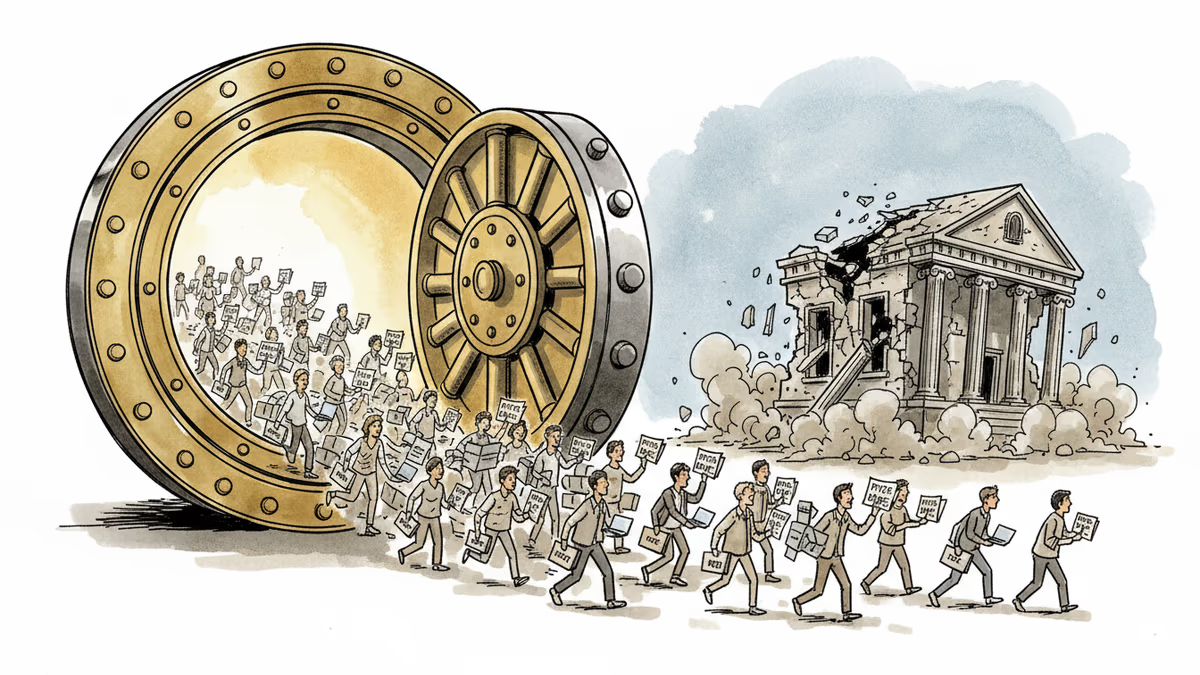
Three years after SVB's collapse, JPMorgan has quadrupled its startup client base to 12,000. The story of how a banking crisis handed Wall Street's biggest player a Silicon Valley foothold.

Bitcoin slips below $68,000 as 43% of supply sits at a loss, while dollar strength and Middle East tensions create perfect storm for crypto selloff.

Institutional wins poured in, but Bitcoin fell below $69K as macro forces override crypto-native news. The price of mainstream adoption may be losing independence.
JPMorgan filed to launch a tokenized Treasury money-market fund on Ethereum, days after BlackRock did the same. The real target? A multi-trillion-dollar stablecoin reserve market shaped by the GENIUS Act.
Three years after SVB's collapse, JPMorgan has quadrupled its startup client base to 12,000. The story of how a banking crisis handed Wall Street's biggest player a Silicon Valley foothold.
Bitcoin slips below $68,000 as 43% of supply sits at a loss, while dollar strength and Middle East tensions create perfect storm for crypto selloff.
Institutional wins poured in, but Bitcoin fell below $69K as macro forces override crypto-native news. The price of mainstream adoption may be losing independence.
Thoughts
Share your thoughts on this article
Sign in to join the conversation