
The $25 Lunch That Helped Hide a Predator's Empire
How Jeffrey Epstein cultivated friendships with U.S. customs officers through small gifts and favors, creating a network that facilitated his crimes for years after his 2008 conviction.
Christmas Cannoli and Steel Drums
On Christmas Eve 2016, Jeffrey Epstein texted customs officer James Heil: "Just landed with your xmas cannolis." Hours later, Heil replied: "Thank you, old friend, the family's thrilled! (Including the mother-in-law!)"
This wasn't just holiday cheer between acquaintances. Recently released Department of Justice documents reveal that federal prosecutors spent over a year investigating how Epstein cultivated relationships with U.S. Customs and Border Protection officers in the Virgin Islands—relationships that may have helped facilitate his crimes for years after his 2008 sex trafficking conviction.
The Island's Open Doors
Epstein's private pilot, Larry Visoski, told the FBI that when customs officers questioned passengers too rigorously, Epstein would personally intervene and argue with them. But he also worked to keep certain officers friendly. The strategy was methodical: collect contact information, extend invitations, offer small favors.
CBP officer Glen Samuel performed steel drum concerts at Little Saint James as a side gig. When Epstein asked about payment in 2015, an associate replied: "Mr. Samuel says he does not intend to charge you. He considers you a friend."
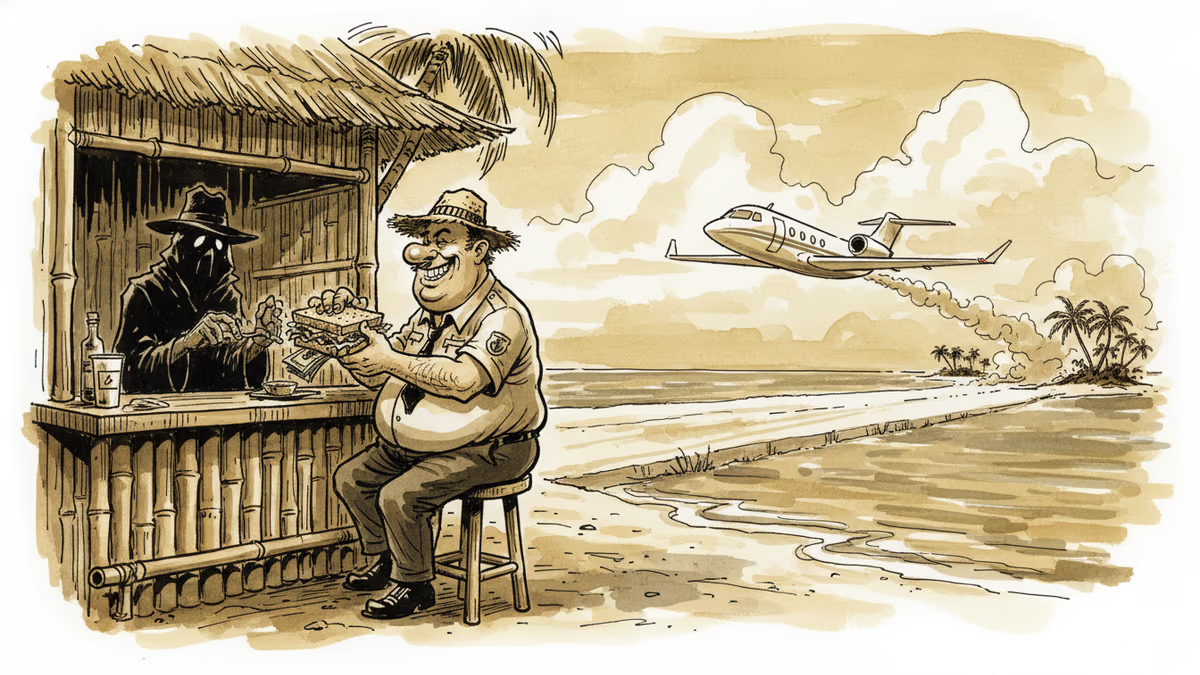
Officer Tim Routch visited the island once to inspect palm trees for mites—part of his job preventing invasive species. He had lunch at Epstein's tiki bar afterward, a meal he estimated cost under $25. "I thought it was 'pretty cool' to have lunch at the home of a billionaire," he later told the FBI.
The Ethics of Small Favors
"To talk about whether the sandwich was less than $20 misses the point," says Kathleen Clark, a government ethics expert at Washington University. Federal ethics rules do have exceptions for gifts under $20, but "the point was that it was a way for [Epstein] to ingratiate himself with them."

Clark argues this ingratiation strategy is "how he got away with" trafficking children. The genius wasn't in grand corruption—it was in making government employees feel good about him through seemingly innocent gestures.
Investigation Without Prosecution
In 2020, federal grand juries issued subpoenas seeking financial records for four CBP officers connected to Epstein. The subpoenas specifically cited statutes for "conspiracy to defraud the US government." TransUnion, Google, and credit reporting agencies were compelled to provide information about the officers' finances and communications.
Yet none of the officers were ever charged. At least one retired with full pension benefits, suggesting investigators ultimately found no prosecutable wrongdoing. The line between inappropriate relationships and criminal conduct proved elusive.
The Predator's Playbook
Routch, who has since become a novelist, reflects on his encounter with Epstein: "He was polite, he was a nice guy, he was easy—well that's the facade. That's how dangerous people are. They put this facade about them."
The documents reveal a pattern: Epstein's interactions with these officers occurred years after his 2008 guilty plea to sex crimes in Florida. He continued operating, continued flying passengers in and out of the Virgin Islands, and continued cultivating relationships that smoothed his path.
System Vulnerabilities
Epstein's pilot told investigators that some passengers were college students with school letters explaining their travel. Others carried foreign passports that might raise questions. When scrutiny increased, Epstein had friendly contacts to complain to—officers like Heil, who served as a "professionalism service manager" and would follow up on Epstein's concerns about other agents.
The investigation files show Epstein texting Heil about a "nasty" supervisor in Newark, complaining about document reviews and system "glitches." Heil would respond within minutes, promising to "speak to him."
Authors
Related Articles
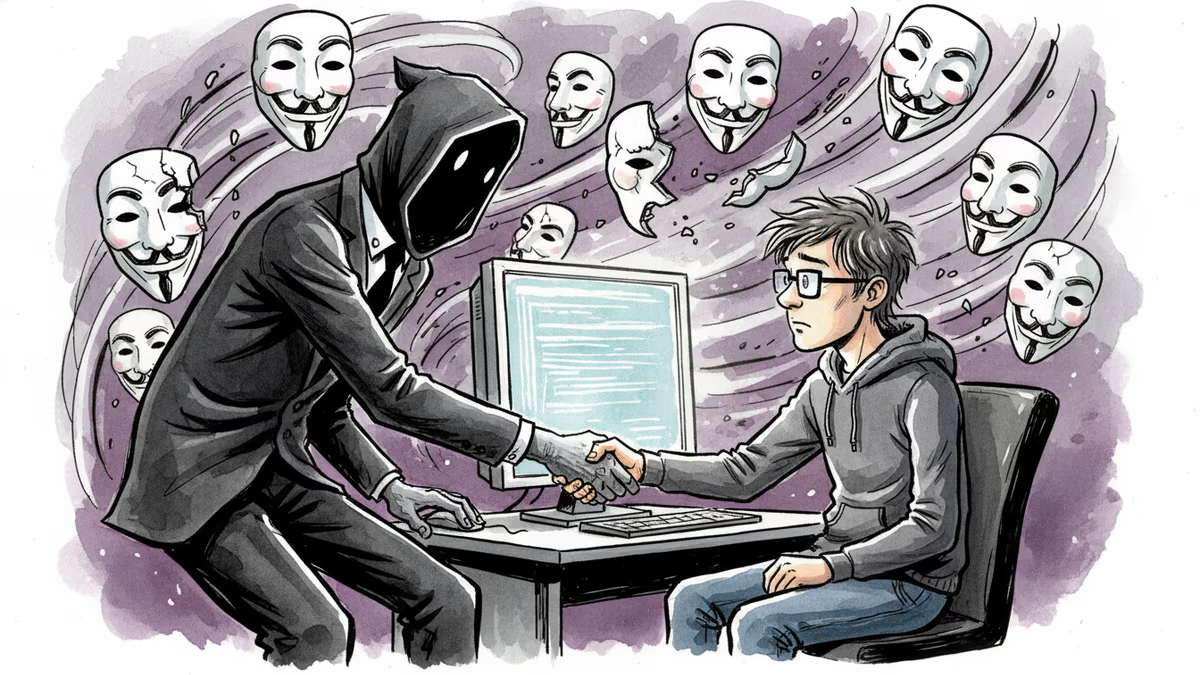
Newly released documents show Jeffrey Epstein's connection to 4chan founder Christopher Poole. What does this reveal about power, influence, and internet culture?
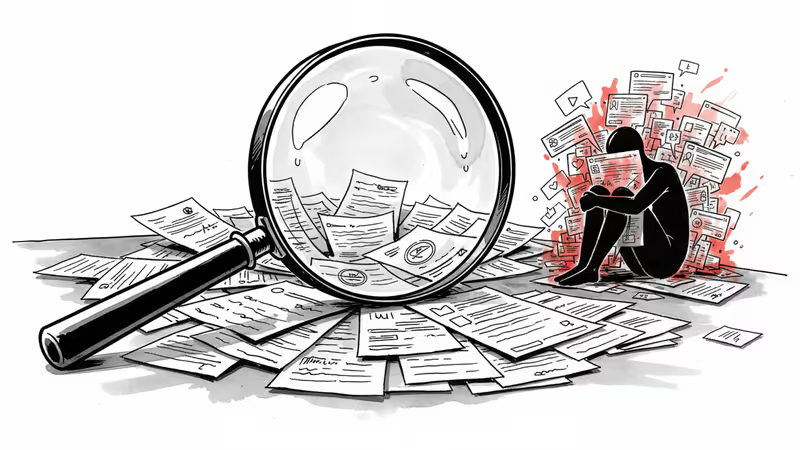
Elon Musk's name appears 1,500 times in newly released Jeffrey Epstein documents. Despite his claims of minimal contact, emails show ongoing correspondence in 2012-2013
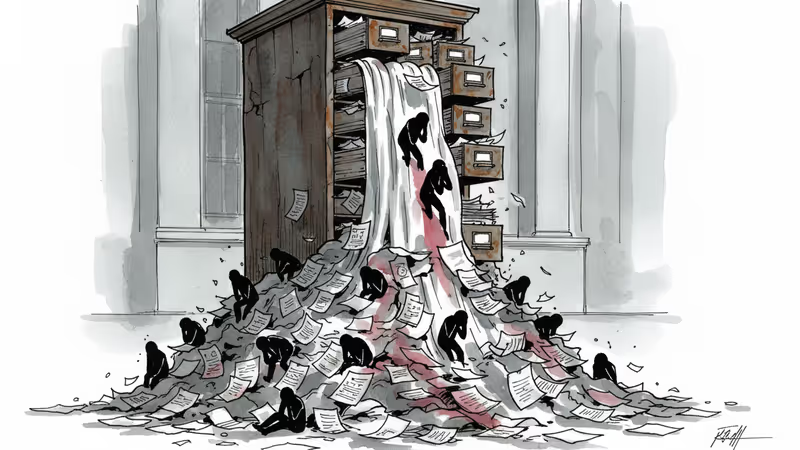
The Department of Justice failed to properly redact nude photos and names of 43 victims in the Epstein files release, raising serious questions about government information handling capabilities.
Newly released DOJ documents reveal connections between convicted sex offender Jeffrey Epstein and tech titans like Bill Gates, Elon Musk, and Google's Sergey Brin.
Newly released documents show Jeffrey Epstein's connection to 4chan founder Christopher Poole. What does this reveal about power, influence, and internet culture?
Elon Musk's name appears 1,500 times in newly released Jeffrey Epstein documents. Despite his claims of minimal contact, emails show ongoing correspondence in 2012-2013
The Department of Justice failed to properly redact nude photos and names of 43 victims in the Epstein files release, raising serious questions about government information handling capabilities.
Newly released DOJ documents reveal connections between convicted sex offender Jeffrey Epstein and tech titans like Bill Gates, Elon Musk, and Google's Sergey Brin.
Thoughts
Share your thoughts on this article
Sign in to join the conversation