
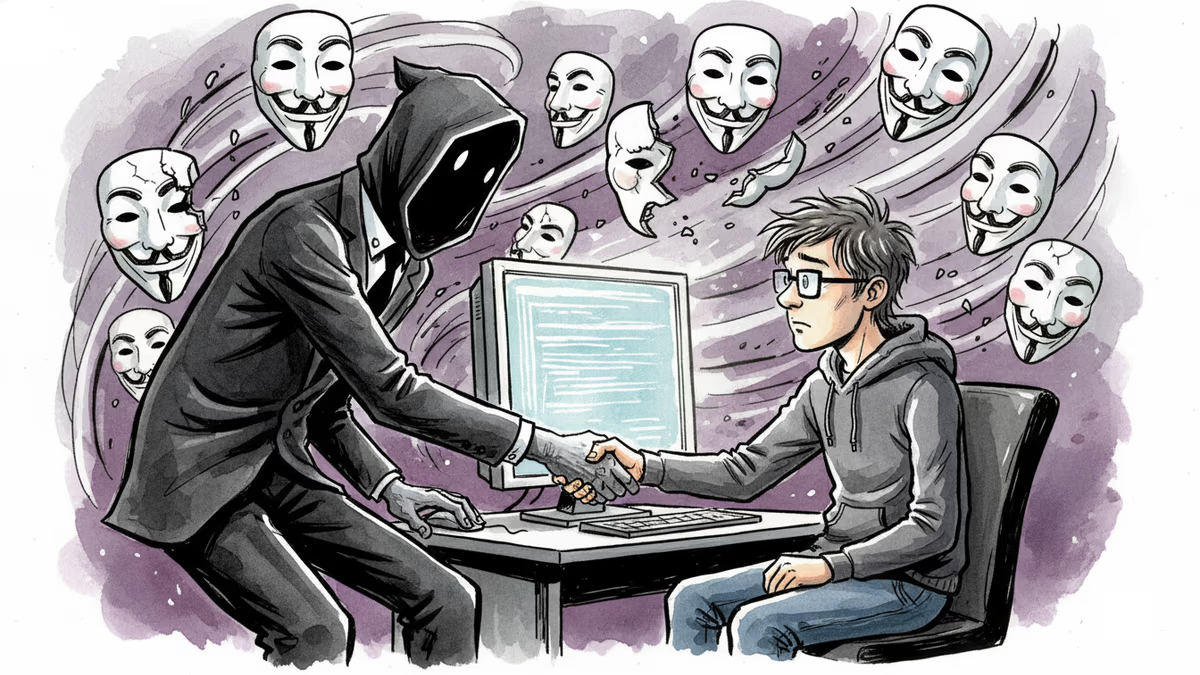
The Epstein Files Reveal a Dark Corner of Internet History
Newly released documents show Jeffrey Epstein's connection to 4chan founder Christopher Poole. What does this reveal about power, influence, and internet culture?
3.5 million documents dropped last week. Buried in the pile: an email that rewrites a chapter of internet history.
October 24th, 2011. Jeffrey Epstein exchanges emails with Boris Nikolic, a biotech venture capitalist who'd later become backup executor of Epstein's will. The topic? A meeting Nikolic had arranged between Epstein and Christopher Poole — better known as "moot," the teenager who created 4chan in 2003.
"Did you like moot?" Nikolic asked. Epstein's response was telling: "I liked him a lot. I thought he was very bright. I drove him home."
Thirteen years later, we're finally seeing the receipts.
The Underground King Meets the Power Broker
4chan wasn't just another message board. It was the primordial soup of internet culture — birthplace of memes, launching pad for Anonymous, and breeding ground for digital chaos that would reshape politics and society.
Poole, who started the site at 15, was struggling to keep it afloat in 2011. Server costs alone hit $20,000 monthly. Ad revenue couldn't cover it, especially when advertisers fled from 4chan's reputation for hosting controversial content.
Enter Epstein, with his pattern of "investing" in young, influential technologists. Just as he'd cultivated relationships with MIT and Harvard researchers through millions in donations, he saw opportunity in the architect of internet's wild west.
The Silicon Valley Playbook

This wasn't unusual for Epstein. His strategy was consistent: identify brilliant young minds with influence, offer financial support, build relationships. The MIT Media Lab scandal showed how this worked in academia. Now we see how it extended into internet infrastructure.
Nikolic's role as intermediary is crucial. As Bill Gates' former science advisor, he had credibility in tech circles. His introduction legitimized what might otherwise seem like an odd pairing between a financier and a forum founder.
Poole sold 4chan in 2015 and joined Google, where he now leads the Maps team. He hasn't commented on these revelations.
The Influence Economy
Here's what makes this story bigger than one meeting: it reveals how power operates in the digital age. Platform creators — especially those running "problematic" sites like 4chan — face constant funding pressures. Traditional investors often won't touch them.
That creates opportunities for actors with different motivations. Epstein wasn't just looking for financial returns. He was building a network of influence across technology, science, and media.
Consider the implications. 4chan has shaped internet culture for two decades. From Anonymous operations to political memes that influenced elections, the platform's impact extends far beyond its user base. Having a relationship with its creator meant having a window into — potentially influence over — digital culture itself.
The Accountability Gap
This raises uncomfortable questions about platform governance. We debate content moderation policies and algorithmic bias, but rarely examine the financial relationships that shape these platforms from the beginning.
Who funds the internet's infrastructure? What do they want in return? These aren't just academic questions — they're fundamental to understanding how digital power operates.
The tech industry's response has been predictably muted. No major platform has implemented transparency requirements for early-stage funding relationships. The assumption remains that what happens between consenting adults in business is private.
Authors
Related Articles
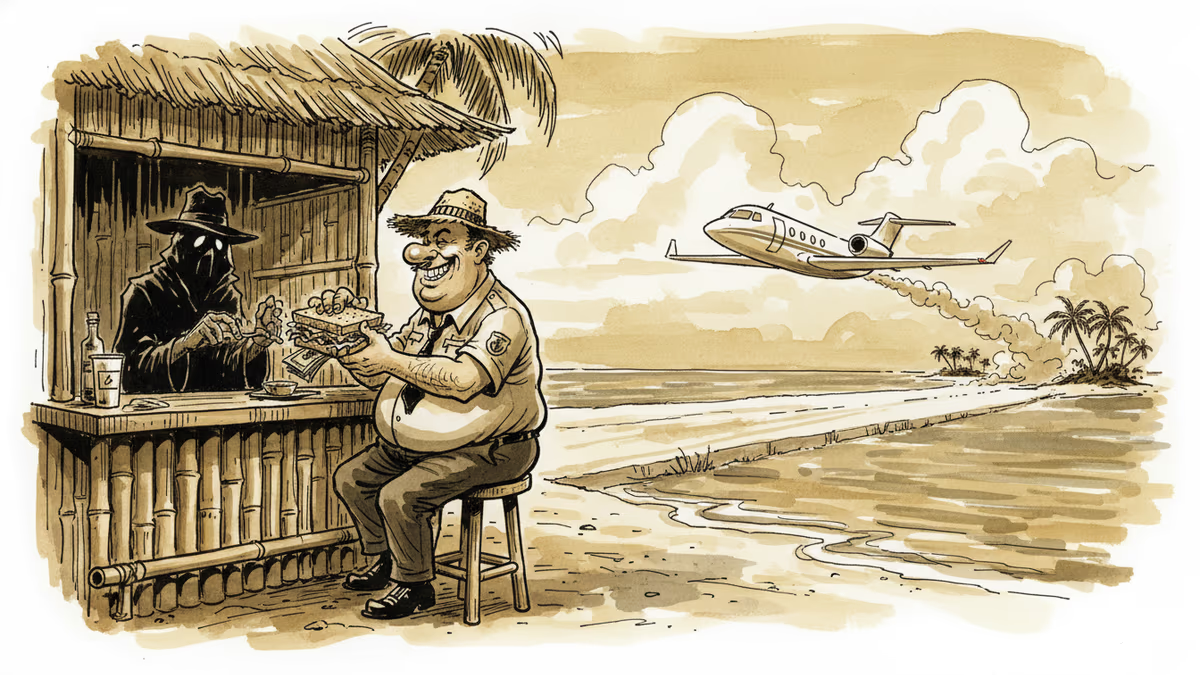
How Jeffrey Epstein cultivated friendships with U.S. customs officers through small gifts and favors, creating a network that facilitated his crimes for years after his 2008 conviction.

Elon Musk's name appears 1,500 times in newly released Jeffrey Epstein documents. Despite his claims of minimal contact, emails show ongoing correspondence in 2012-2013

The Department of Justice failed to properly redact nude photos and names of 43 victims in the Epstein files release, raising serious questions about government information handling capabilities.
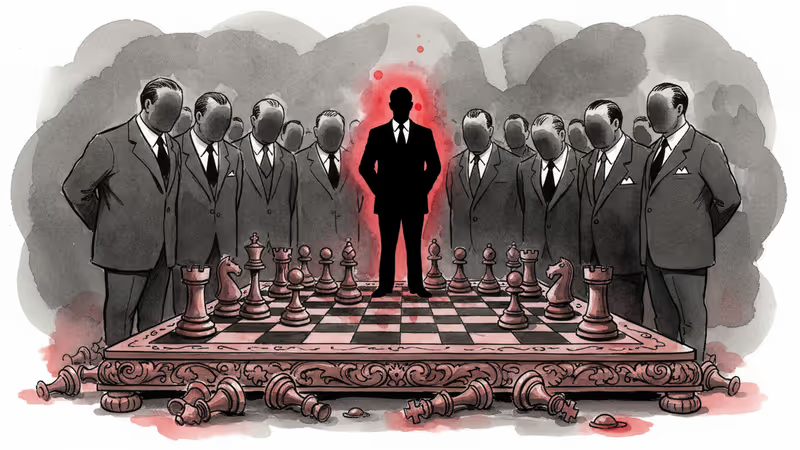
Newly released DOJ documents reveal connections between convicted sex offender Jeffrey Epstein and tech titans like Bill Gates, Elon Musk, and Google's Sergey Brin.
How Jeffrey Epstein cultivated friendships with U.S. customs officers through small gifts and favors, creating a network that facilitated his crimes for years after his 2008 conviction.
Elon Musk's name appears 1,500 times in newly released Jeffrey Epstein documents. Despite his claims of minimal contact, emails show ongoing correspondence in 2012-2013
The Department of Justice failed to properly redact nude photos and names of 43 victims in the Epstein files release, raising serious questions about government information handling capabilities.
Newly released DOJ documents reveal connections between convicted sex offender Jeffrey Epstein and tech titans like Bill Gates, Elon Musk, and Google's Sergey Brin.
Thoughts
Share your thoughts on this article
Sign in to join the conversation