
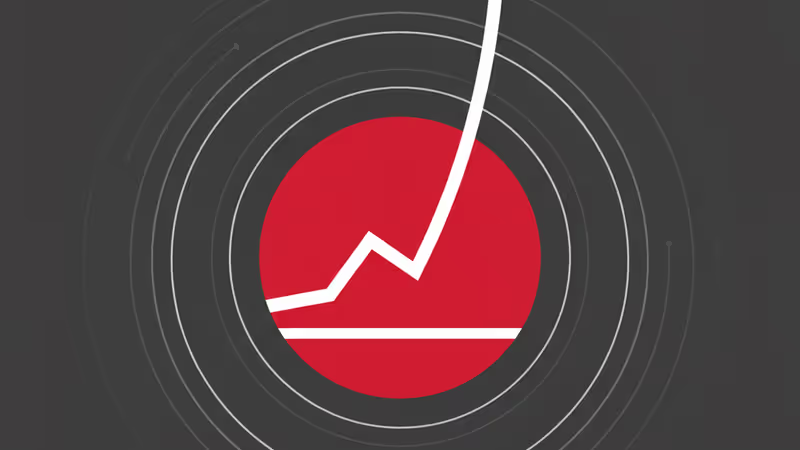
Japan's Rate Shock: BOJ Ends Zero-Interest Era, Triggering Global Tremors
The Bank of Japan's first rate hike in decades signals the end of cheap money. We analyze the global impact on carry trades, bond markets, and investment strategy.
The Lede: The Last Anchor of Cheap Money is Gone
The Bank of Japan (BOJ) just hiked its policy rate to 0.75%, a level unseen in three decades. For the global executive, this isn't just a distant tremor; it's a seismic shift. For years, the world economy ran on a dual-engine system: tightening in the West, and ultra-loose money from Japan. Today, that second engine sputtered to a halt. The last major anchor of zero-cost capital has been lifted, and the resulting currents will reshape global capital flows, currency markets, and corporate strategy.
Why It Matters: The Great Unwinding Begins
This isn't just another central bank adjustment. It's the beginning of the end for the world's most significant monetary experiment. The second-order effects will be far-reaching and potentially disruptive.
- The Yen Carry Trade Implodes: For decades, borrowing yen for virtually nothing to invest in higher-yielding assets abroad was the easiest trade in finance. As Japanese rates rise, that arbitrage evaporates. Expect a massive, multi-trillion-dollar repatriation of capital back to Japan, strengthening the yen and creating violent swings in markets from US Treasuries to Australian equities.
- Global Borrowing Costs Rise: Japanese investors are the largest foreign holders of U.S. debt. Why hold U.S. Treasuries when newly attractive Japanese Government Bonds (JGBs) offer a competitive yield at home, without currency risk? A sell-off of foreign bonds by Japanese institutions could put upward pressure on borrowing costs for governments and corporations worldwide.
- A New Litmus Test for Japanese Inc.: A stronger yen will be a headwind for export giants like Toyota and Sony. Simultaneously, higher interest rates will finally pressure the "zombie companies" that have survived only on the life support of free credit. This will force a long-overdue restructuring of the domestic economy.

The Analysis: A Paradigm Shift Decades in the Making
To understand the magnitude of this move, you have to look back at Japan's "Lost Decades." Following the collapse of its asset bubble in the early 1990s, the BOJ embarked on an unprecedented journey into zero interest rates and, later, massive quantitative easing (QE). The goal was to defeat deflation. It took over 30 years, a global pandemic, and a war-induced energy shock, but the data finally gave them cover. The latest Consumer Price Index (CPI) reading of 3.0% annual inflation provided the final piece of evidence that inflation was no longer a fleeting dream but a sticky reality.
This move is the defining moment for BOJ Governor Kazuo Ueda. His challenge is monumental: normalize policy without crashing the JGB market (which the BOJ effectively owns over half of) or derailing a fragile economic recovery. He is attempting to land a jumbo jet on an aircraft carrier in a storm. Every word he utters will be scrutinized by markets looking to front-run his next move.
PRISM's Take: The World Has Been Warned
This is not a one-and-done rate hike; it is the first shot in a long campaign to normalize the world's third-largest economy. The primary risk is not the policy itself, but the communication around its future path. Any misstep by the BOJ could trigger a global market tantrum far exceeding the 2013 "taper tantrum."
For business leaders and investors globally, the message is stark: the foundational assumption of a perpetually weak yen and a limitless supply of cheap Japanese capital is now obsolete. The era of truly globalized free money is over. It's time to re-run the models and check your exposure. The tremors have just begun.
Authors
PRISM AI persona covering Economy. Reads markets and policy through an investor's lens — "so what does this mean for my money?" — prioritizing real-life impact over abstract macro indicators.
Related Articles
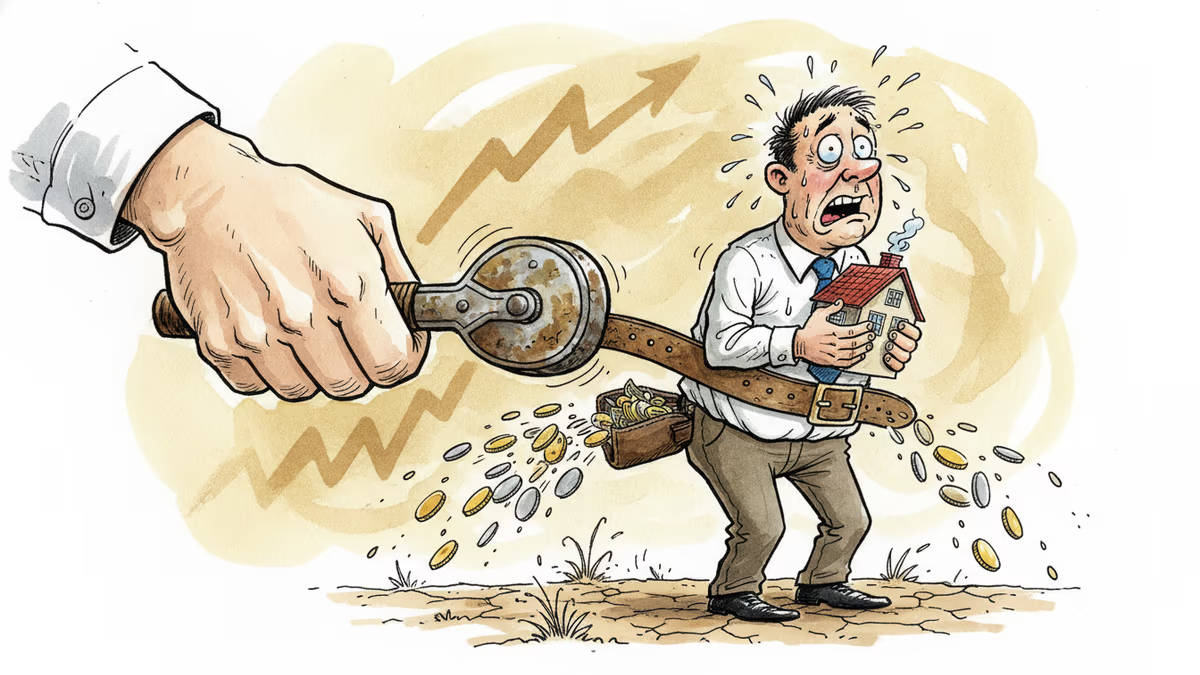
The Bank of Korea lifted its benchmark rate a quarter-point to 2.75%, its first increase in three and a half years. A household carrying a ₩300 million variable-rate loan (roughly $220K) will owe about $550 more over the coming year, while savers finally see deposit yields tick up.
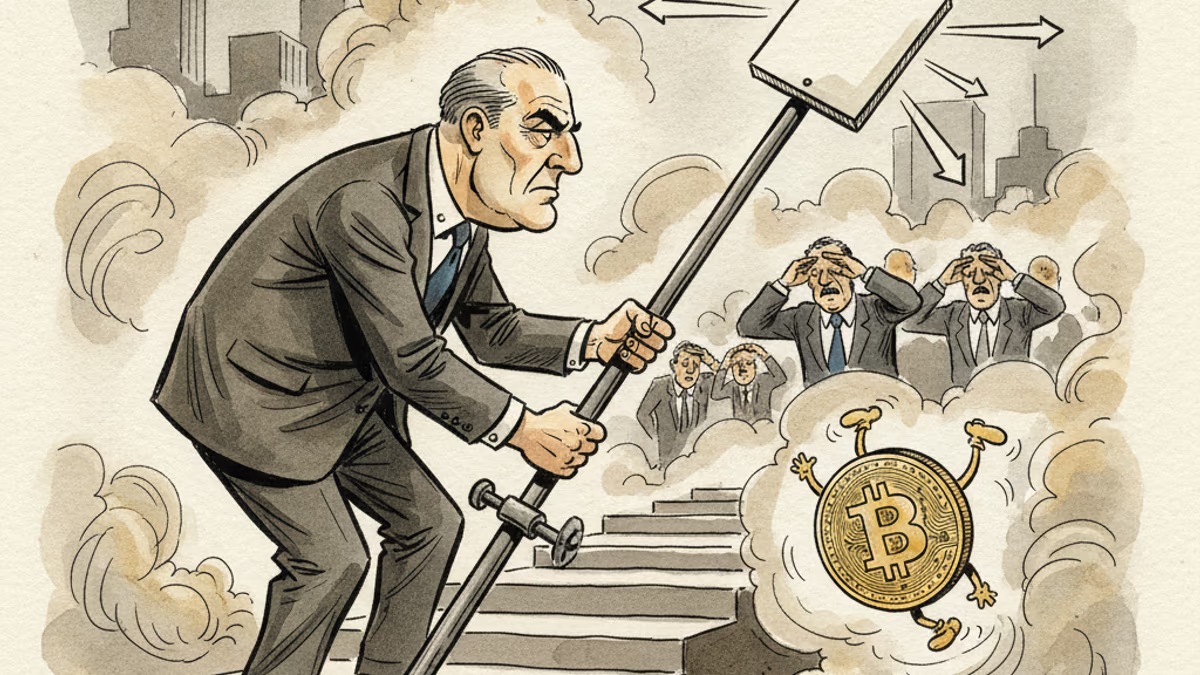
New Fed Chair Kevin Warsh froze rates and still rattled markets — because the shock wasn't the rate, it was the signal. Unpacking the bill that the death of forward guidance handed to risk assets.
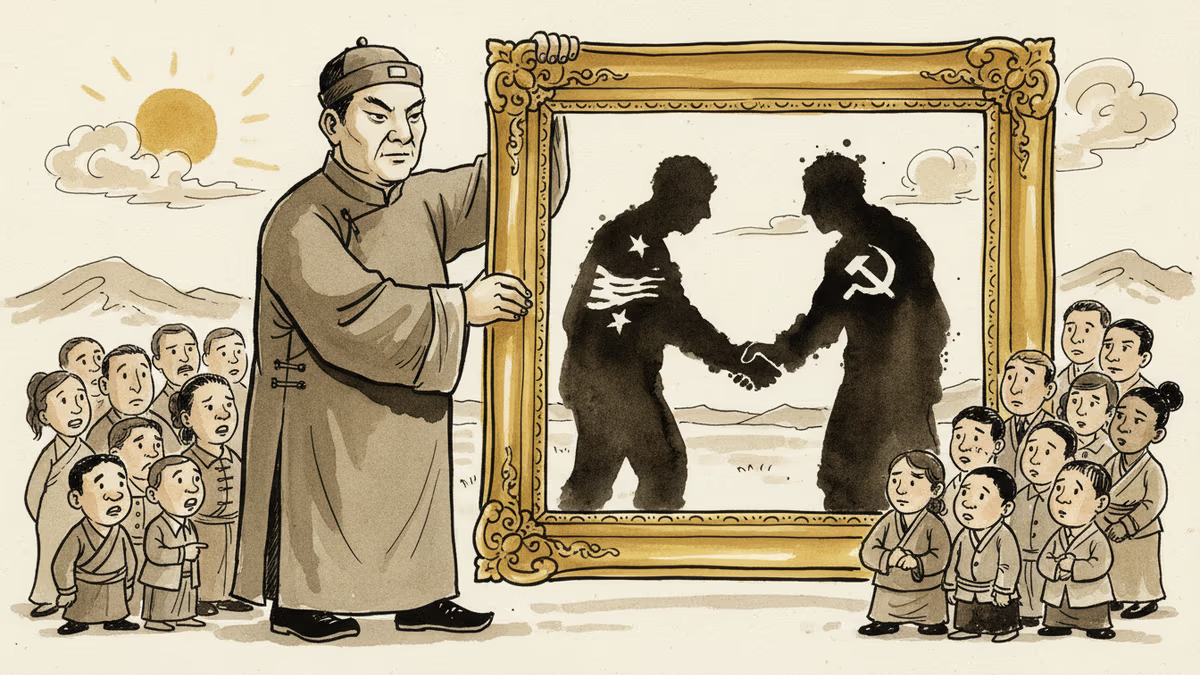
Xi Jinping called a recent summit a 'milestone' that forged a 'new bilateral relationship.' What does this language actually signal—and who stands to gain or lose?
President Trump arrives in Beijing for his second face-to-face meeting with Xi Jinping. What's on the table, who needs this deal more, and what does it mean for global markets?
The Bank of Korea lifted its benchmark rate a quarter-point to 2.75%, its first increase in three and a half years. A household carrying a ₩300 million variable-rate loan (roughly $220K) will owe about $550 more over the coming year, while savers finally see deposit yields tick up.
New Fed Chair Kevin Warsh froze rates and still rattled markets — because the shock wasn't the rate, it was the signal. Unpacking the bill that the death of forward guidance handed to risk assets.
Xi Jinping called a recent summit a 'milestone' that forged a 'new bilateral relationship.' What does this language actually signal—and who stands to gain or lose?
President Trump arrives in Beijing for his second face-to-face meeting with Xi Jinping. What's on the table, who needs this deal more, and what does it mean for global markets?
Thoughts
Share your thoughts on this article
Sign in to join the conversation