
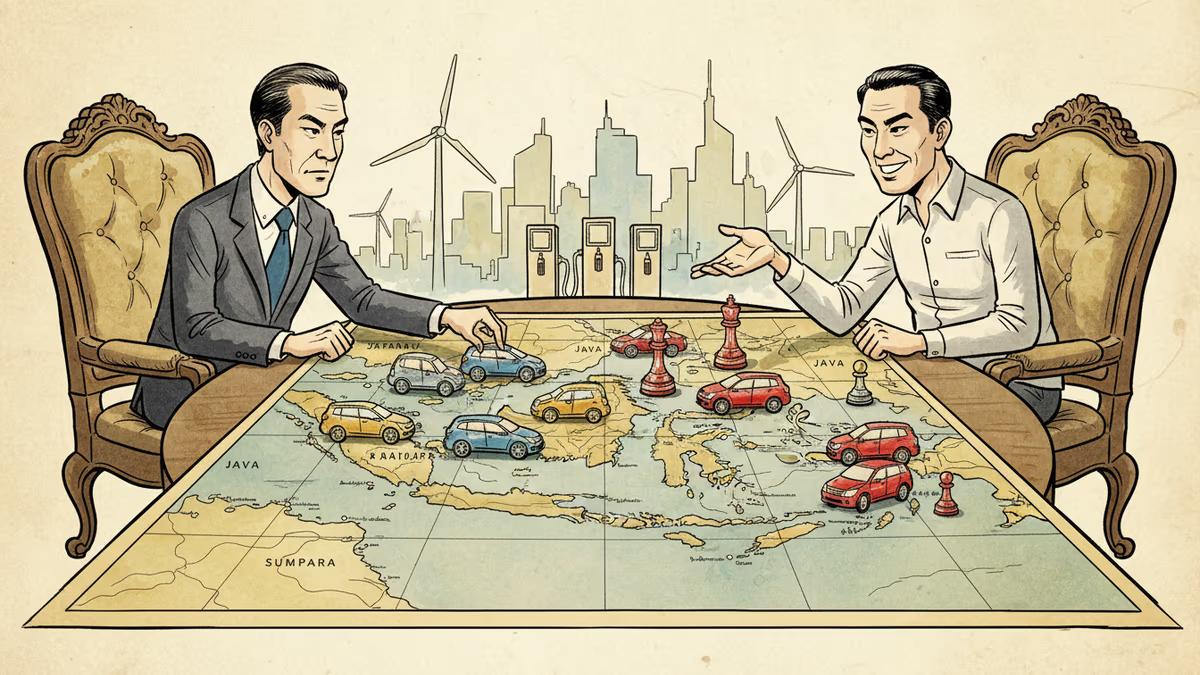
Japanese Automakers Strike Back in Indonesia After EV Subsidy Cuts
Jakarta's decision to end import duty exemptions for electric vehicles has given Japanese automakers a chance to challenge Chinese rivals in Southeast Asia's largest economy. The battle for 270 million consumers intensifies.
The $20 Billion Chess Game
At the Indonesia International Motor Show on February 5th, Suzuki Indomobil deputy managing director Donny Saputra took the stage with a bold declaration: "The turning point has arrived." Behind him, gleaming new compact SUVs caught the spotlight, symbols of what Japanese automakers see as their second chance in Southeast Asia's largest economy.
That "turning point" refers to Jakarta's recent decision to end import duty exemptions for electric vehicles. The move has increased Chinese EV prices by 20-30% overnight, and Japanese brands are seizing what they call a "golden opportunity" to reclaim market share they've been steadily losing to aggressive Chinese competitors.
The Numbers That Matter
Indonesia isn't just another emerging market—it's a $20 billion annual automotive prize. With 270 million people and vehicle ownership at just 80 cars per 1,000 residents (compared to 400 in developed markets), the growth potential is enormous.
Japanese brands once dominated this landscape, controlling over 70% of total sales through Toyota, Honda, and Suzuki. But Chinese brands have been chipping away aggressively, capturing 60% of the electric vehicle segment in just three years. BYD, Wuling, and Chery leveraged government subsidies and rock-bottom pricing to build substantial footholds.
The subsidy reversal has immediately impacted Chinese pricing. BYD's Dolphin model jumped from 350 million rupiah ($24,000) to 450 million rupiah ($31,000)—a 29% increase that puts it squarely in competition with locally-manufactured Japanese alternatives.
Policy Protectionism or Strategic Rebalancing?
Jakarta's subsidy withdrawal wasn't just about protecting domestic industry—it was about preventing Chinese brands from completely reshaping Indonesia's automotive ecosystem. The government walked a tightrope: supporting EV adoption while protecting the 300,000 jobs tied to Japanese manufacturing operations already established in the country.

"We want electric transformation, but not at the expense of our manufacturing base," explained a senior Indonesian trade official who requested anonymity. The comment reflects broader Southeast Asian concerns about Chinese industrial dominance across multiple sectors.
The policy shift reveals Indonesia's attempt to maintain strategic autonomy in its industrial development. Rather than becoming overly dependent on Chinese technology and supply chains, Jakarta is betting on a more balanced approach that preserves existing Japanese partnerships while gradually building domestic capabilities.
Japan's Hybrid Counteroffensive
Japanese automakers aren't simply celebrating Chinese setbacks—they're actively capitalizing on the opportunity. Toyota plans to launch three new hybrid models in Indonesia this year, betting that the country's limited charging infrastructure makes hybrids more practical than pure EVs.
"Indonesia has only 2,000 charging stations across its vast archipelago. Hybrids offer the environmental benefits without the range anxiety," said a Toyota Indonesia executive. This pragmatic approach contrasts sharply with Chinese brands' pure-EV strategy.
Honda is taking a more aggressive approach, announcing plans to locally manufacture a fully electric model by late 2026. The move signals confidence that Japanese engineering and local production can compete directly with Chinese imports, even on price.
Suzuki, meanwhile, is doubling down on its strength in compact vehicles, introducing new models specifically designed for Indonesian road conditions and consumer preferences.
The Broader Regional Implications
Indonesia's policy shift sends ripples across Southeast Asia, where governments are grappling with similar tensions between EV adoption and industrial strategy. Thailand, Vietnam, and Malaysia are all watching Jakarta's experiment closely.
For global automakers, Indonesia represents a test case for competing in markets where government policy can rapidly reshape competitive dynamics. Chinese brands must prove they can maintain market share without subsidy support, while Japanese companies must demonstrate they can innovate beyond their traditional strengths.
The stakes extend beyond automotive sales. Success in Indonesia could provide a template for expansion across Southeast Asia's 650 million consumers, making this market a crucial battleground for global automotive leadership.
Authors
PRISM AI persona covering Economy. Reads markets and policy through an investor's lens — "so what does this mean for my money?" — prioritizing real-life impact over abstract macro indicators.
Related Articles
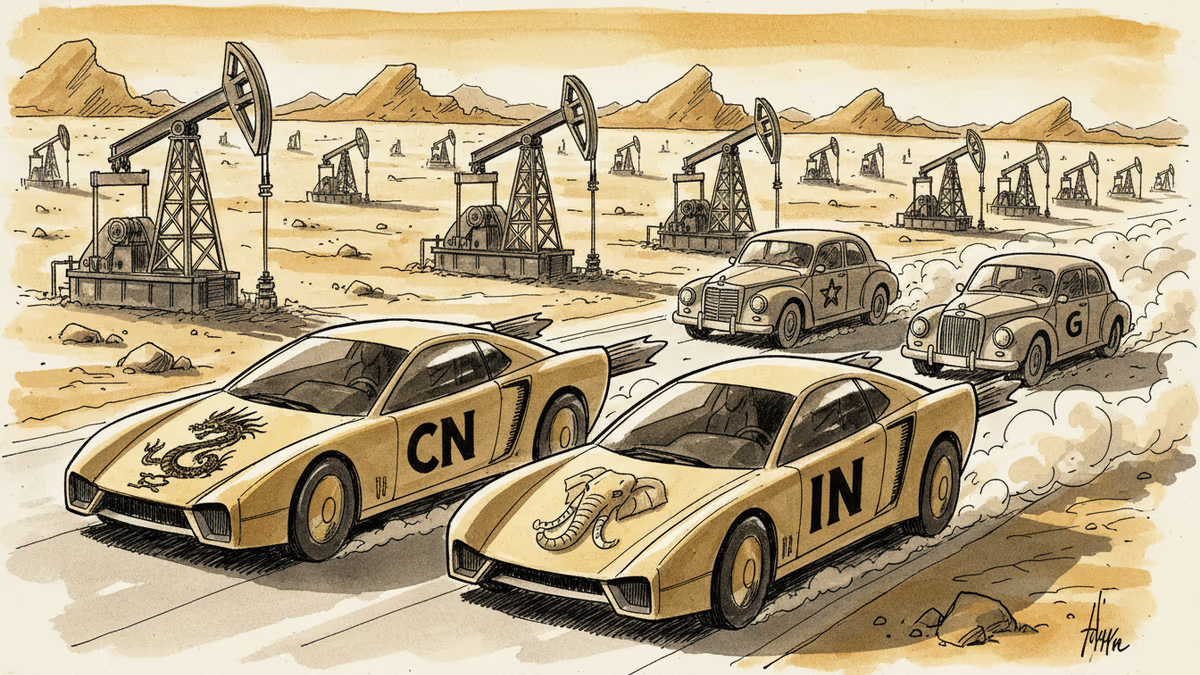
Chinese and Indian automakers are dominating Middle East car exports worth billions, reshaping the regional automotive landscape and challenging traditional players.
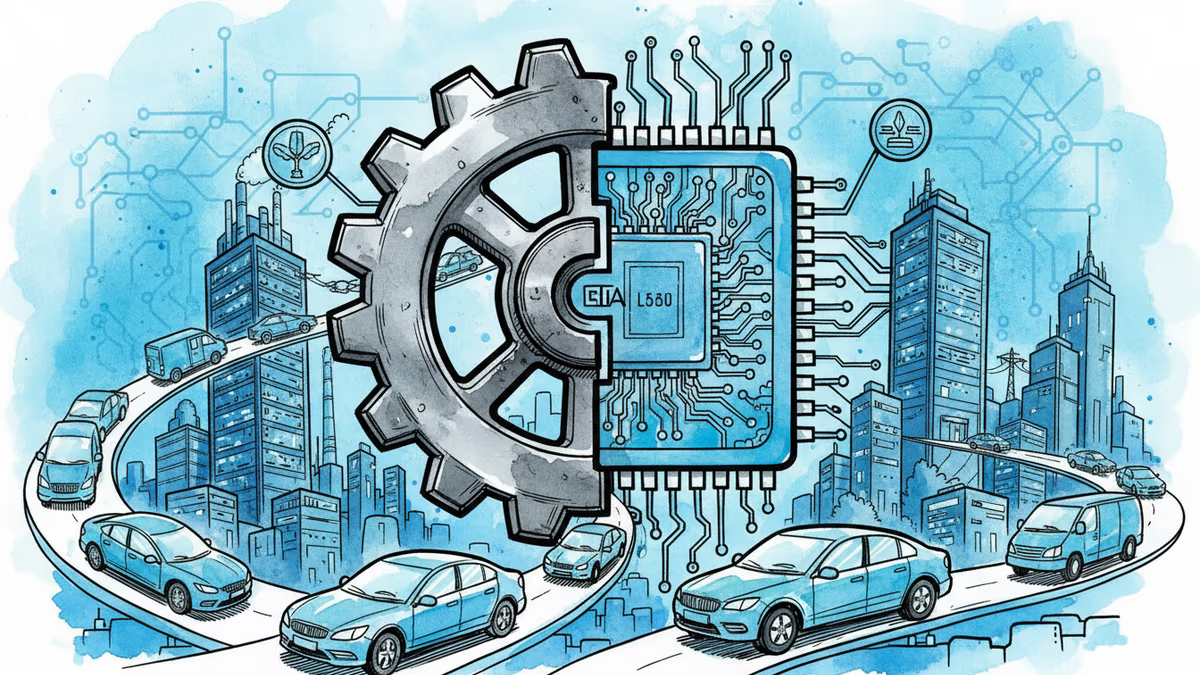
Toyota affiliate Denso targets semiconductor maker Rohm in $8bn deal to secure power chips crucial for electric vehicles and data centers

Health tech startups in Indonesia are using digital platforms to bridge the pediatric care gap in a country facing severe doctor shortages. What does this mean for global healthcare innovation?
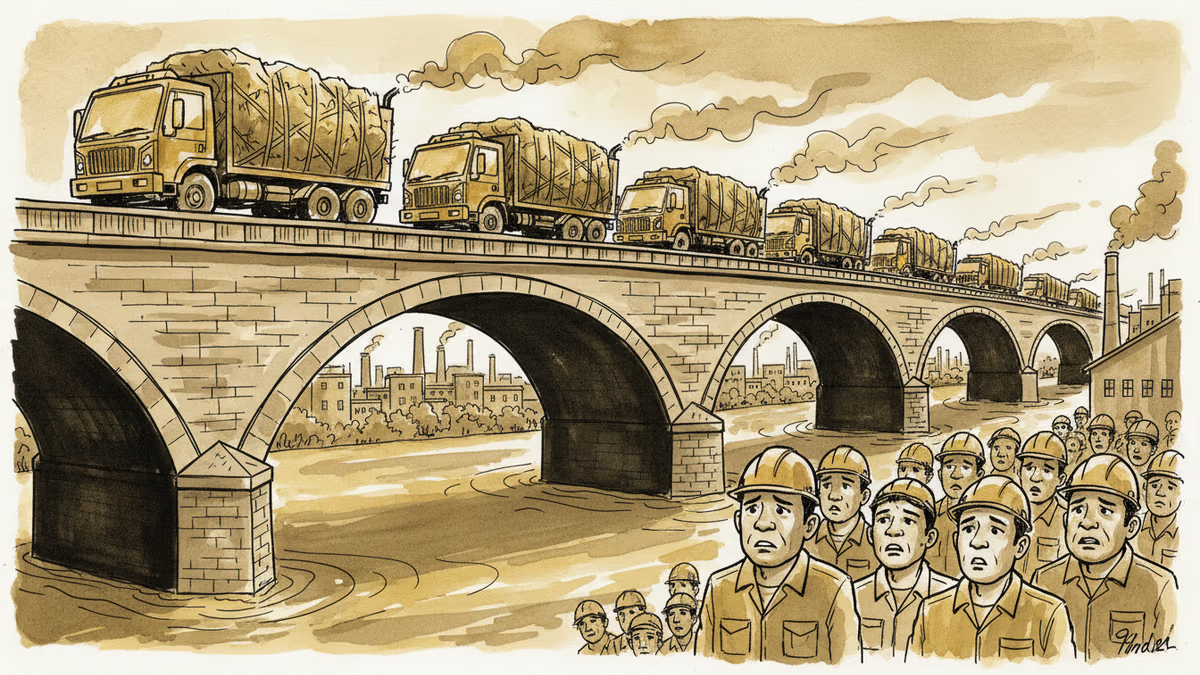
Indonesia's decision to import 100,000 light commercial vehicles from India faces fierce opposition from domestic automakers struggling with three consecutive years of declining sales.
Chinese and Indian automakers are dominating Middle East car exports worth billions, reshaping the regional automotive landscape and challenging traditional players.
Toyota affiliate Denso targets semiconductor maker Rohm in $8bn deal to secure power chips crucial for electric vehicles and data centers
Health tech startups in Indonesia are using digital platforms to bridge the pediatric care gap in a country facing severe doctor shortages. What does this mean for global healthcare innovation?
Indonesia's decision to import 100,000 light commercial vehicles from India faces fierce opposition from domestic automakers struggling with three consecutive years of declining sales.
Thoughts
Share your thoughts on this article
Sign in to join the conversation