

Japan Under Siege: Cyberattacks Paralyze Asahi, Leak Data of 2.3 Million from ASKUL & Huis Ten Bosch
A wave of cyberattacks hits Japan, impacting giants like Asahi, ASKUL, and Huis Ten Bosch. The breach exposed data of over 2.3 million people and caused a 20% sales drop for Asahi, signaling a new era of operational sabotage.
A wave of sophisticated cyberattacks has struck major Japanese corporations, disrupting operations at beverage giant Asahi and exposing the personal data of nearly 2.3 million people. The incidents at office supplier ASKUL and theme park Huis Ten Bosch highlight a troubling escalation in cyber threats targeting the nation's commercial infrastructure.
According to reports this month, ASKUL Corporation confirmed on December 12th that a cyberattack in October resulted in a data breach affecting over 730,000 individuals. On the same day, news broke of a potential leak at the Huis Ten Bosch theme park in Nagasaki, possibly compromising the personal information of more than 1.54 million customers and employees.

The attack on Asahi Group Holdings demonstrates a critical shift in tactics. Instead of just stealing data, the attackers crippled the company's core systems, leading to a staggering 20%+ year-over-year decline in beer business sales for November. It's a stark reminder that cyberattacks can inflict direct, bottom-line damage comparable to a physical disaster, grinding production and sales to a halt.
These back-to-back security failures have sent a shockwave through Japanese industry. The attackers aren't just targeting customer databases; they're hitting the operational technology (OT) that powers manufacturing and logistics. Japanese authorities and the affected companies are currently investigating the full scope of the damage and attempting to identify the threat actors behind the coordinated assaults.
Authors
Related Articles
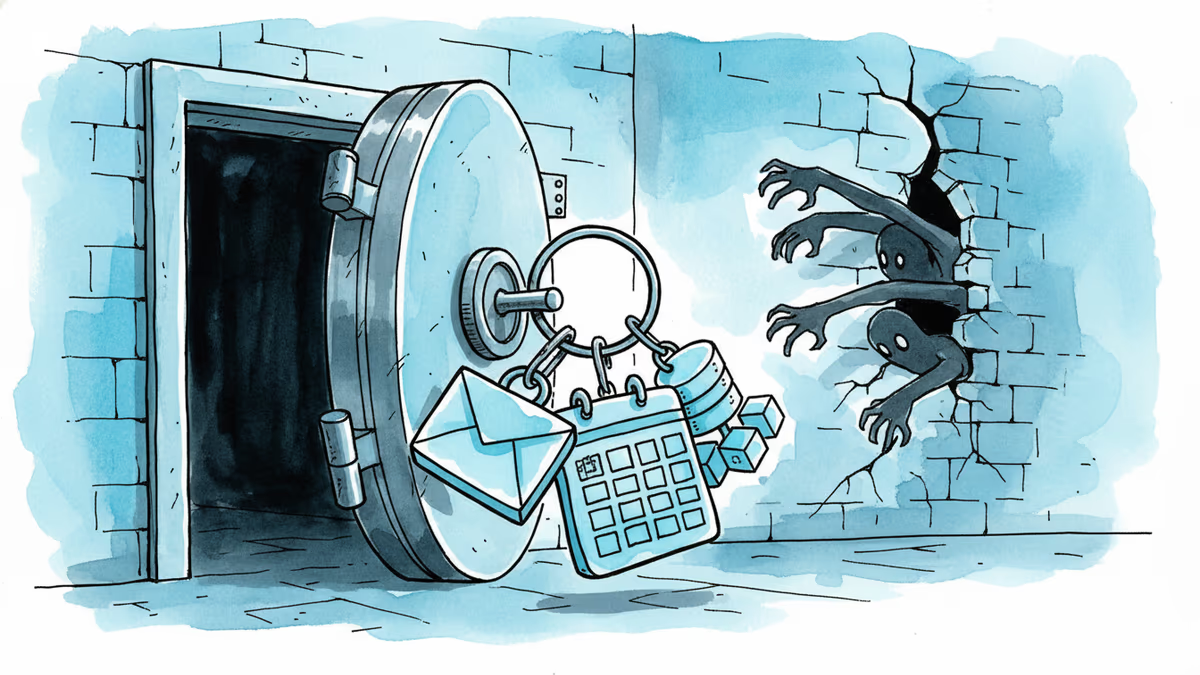
A critical vulnerability in Starlette—downloaded 325 million times per week—puts millions of AI agent servers at risk, exposing stored credentials for email, databases, and third-party services.
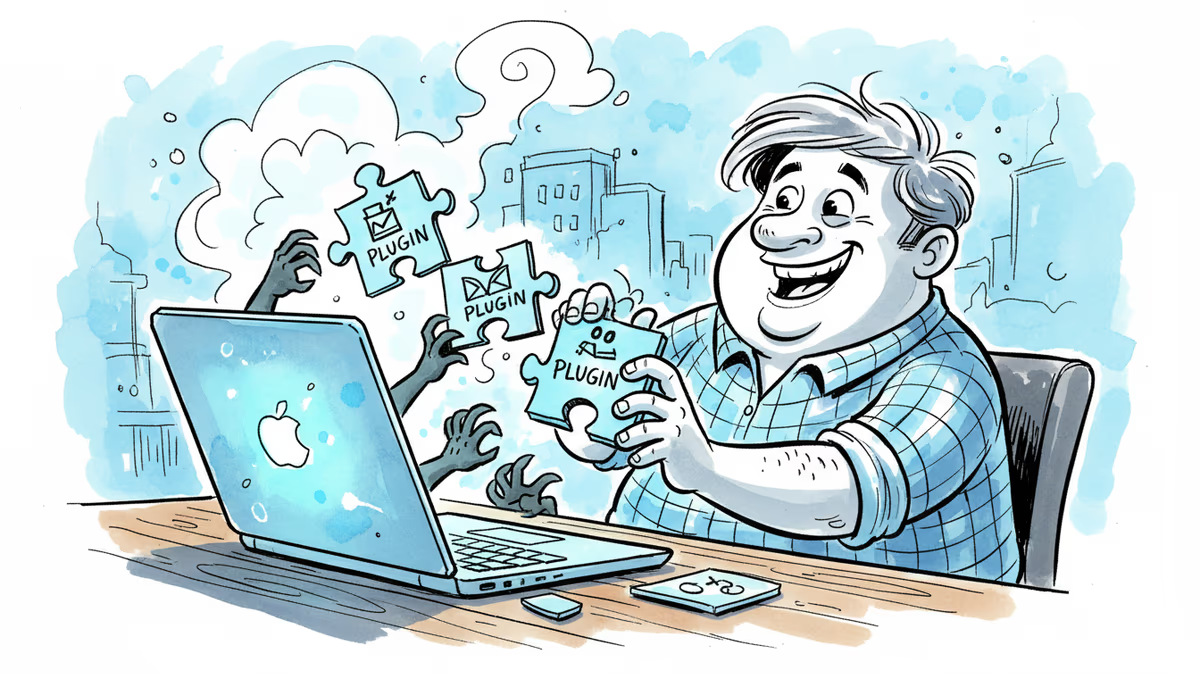
GitHub confirmed hackers stole data from 3,800 internal repositories via a poisoned VS Code extension. Here's why developer tools are now the most dangerous attack surface in tech.
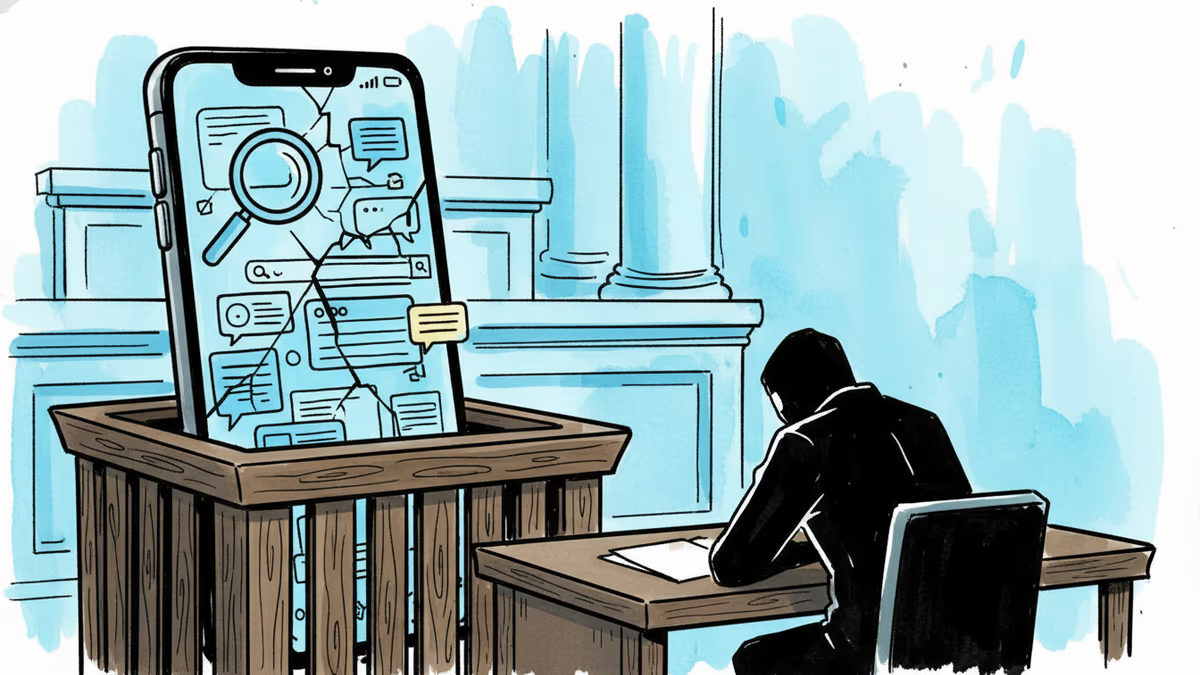
A Utah woman was sentenced to life in prison partly because of her Google searches and deleted texts. The Kouri Richins case reveals how digital footprints have become the courtroom's most reliable witness.
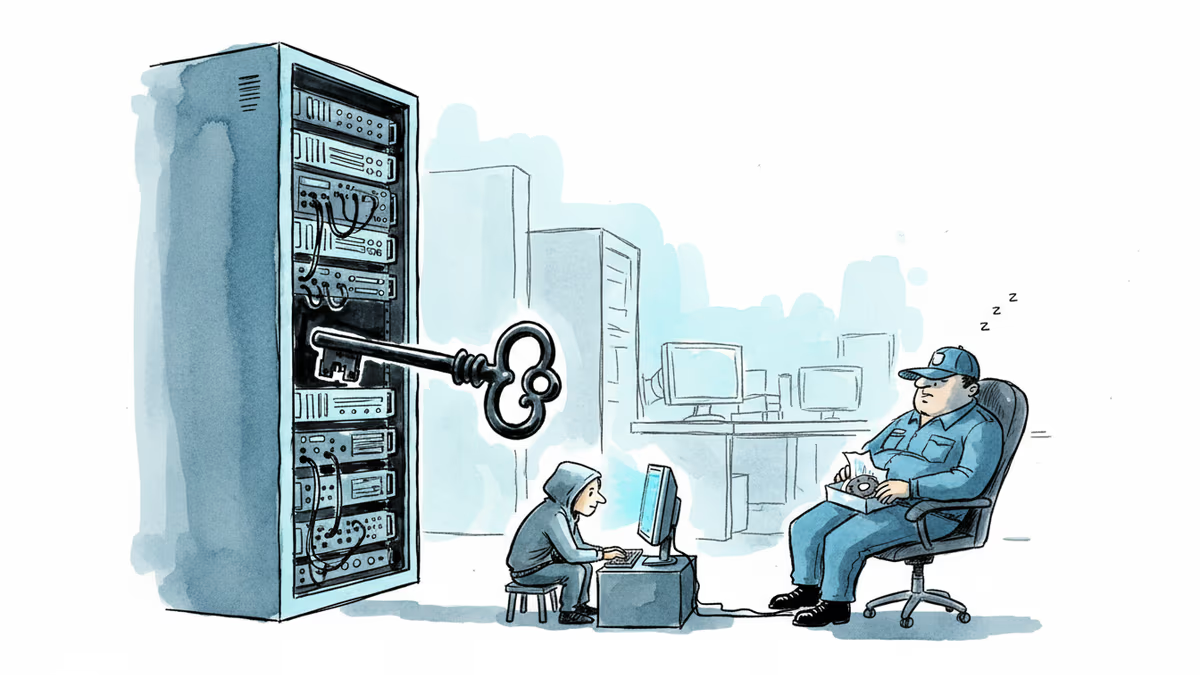
Dirty Frag gives low-privilege users root access on virtually every Linux distro. The exploit code leaked three days ago. Microsoft says attackers are already experimenting with it.
A critical vulnerability in Starlette—downloaded 325 million times per week—puts millions of AI agent servers at risk, exposing stored credentials for email, databases, and third-party services.
GitHub confirmed hackers stole data from 3,800 internal repositories via a poisoned VS Code extension. Here's why developer tools are now the most dangerous attack surface in tech.
A Utah woman was sentenced to life in prison partly because of her Google searches and deleted texts. The Kouri Richins case reveals how digital footprints have become the courtroom's most reliable witness.
Dirty Frag gives low-privilege users root access on virtually every Linux distro. The exploit code leaked three days ago. Microsoft says attackers are already experimenting with it.
Thoughts
Share your thoughts on this article
Sign in to join the conversation