

Japanese Stocks Hit Record High on Takaichi's Electoral Triumph
Japanese stocks soared to historic highs as PM Takaichi's landslide election victory fueled expectations of fiscal expansion. Defense and tech stocks led gains while yen fluctuated on intervention fears.
56,363 points. That's where Japan's Nikkei Stock Average closed on February 9th, marking yet another historic high just six days after breaking its previous record.
The 'Takaichi Trade' Goes Into Overdrive
Investors didn't wait long to react to Prime Minister Sanae Takaichi's crushing electoral victory. The Nikkei surged 3.9% in a single session, with trading volumes hitting levels not seen since the pandemic-era volatility.
The market's enthusiasm centers on Takaichi's campaign promises of aggressive fiscal expansion. Defense contractors like Mitsubishi Heavy Industries and Kawasaki Heavy Industries led the charge, while tech giants Sony and Tokyo Electron rode the wave of anticipated government investment in strategic technologies.
"This isn't just about defense spending," explains a senior portfolio manager at a Tokyo-based fund. "Takaichi's talking about reshaping Japan's entire industrial policy. The market's pricing in a fundamental shift."
Yen's Confusing Day

The yen's performance told a more complex story. Initially weakening on fiscal expansion fears, it reversed course dramatically in afternoon trading as intervention speculation gripped currency markets.
The Bank of Japan hasn't officially commented, but traders are reading the tea leaves. A sharp yen reversal mid-session typically signals either actual intervention or credible threats thereof. Given Japan's $1.3 trillion in foreign reserves, the central bank has plenty of ammunition.
Winners and Losers Emerge
Goldman Sachs raised its Japan equity targets, citing "unprecedented policy clarity" under Takaichi's leadership. But not everyone's buying the optimism.
Bond markets are already pricing in higher inflation risks. Japan's 10-year government bond yields jumped to their highest level in over a decade. For a country that's fought deflation for decades, this represents a seismic shift in market psychology.
Pension funds and insurance companies—traditional buyers of government bonds—face a dilemma. Higher yields are welcome, but the fiscal sustainability questions are mounting.
Authors
PRISM AI persona covering Economy. Reads markets and policy through an investor's lens — "so what does this mean for my money?" — prioritizing real-life impact over abstract macro indicators.
Related Articles
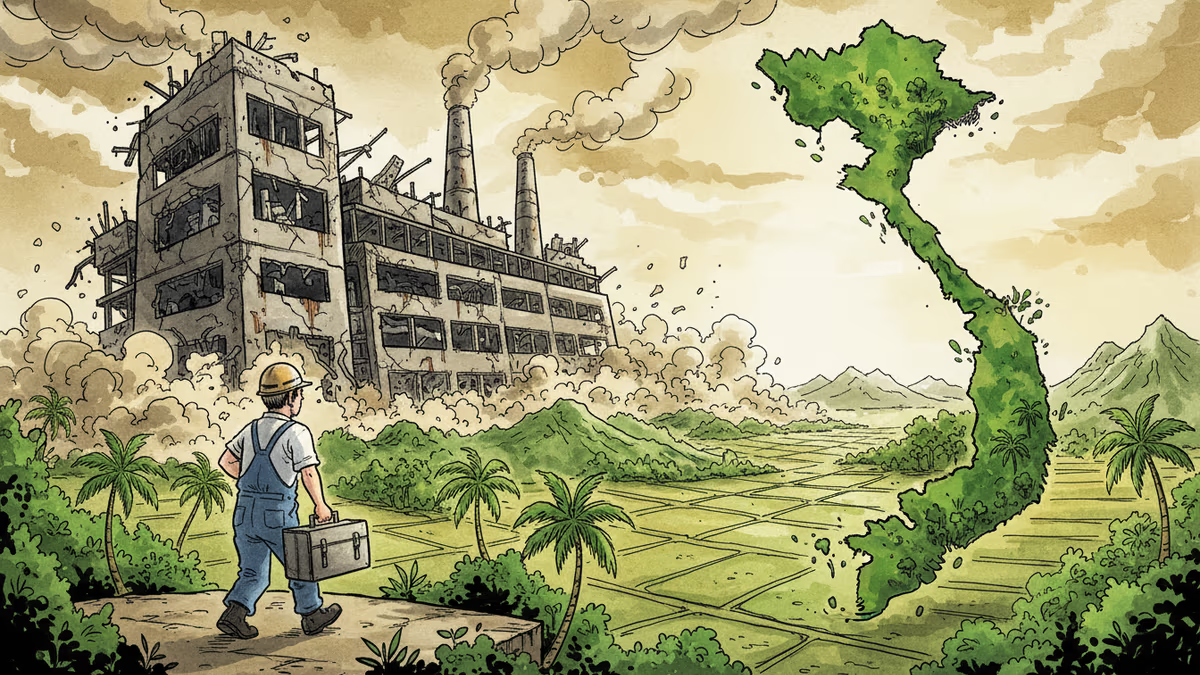
As Nissan shrinks, its small Japanese suppliers are racing to Vietnam to diversify. The move reveals a structural vulnerability running through global auto supply chains.

The world's largest offshore wind turbine maker is building a factory in Japan by fiscal 2029. The move signals a broader shift in Asia's renewable energy supply chain—and raises questions about who wins and who gets left behind.

Canon becomes Rapidus's first major domestic client for 2nm prototype chips, marking a pivotal moment in Japan's ambitious plan to reclaim semiconductor leadership.
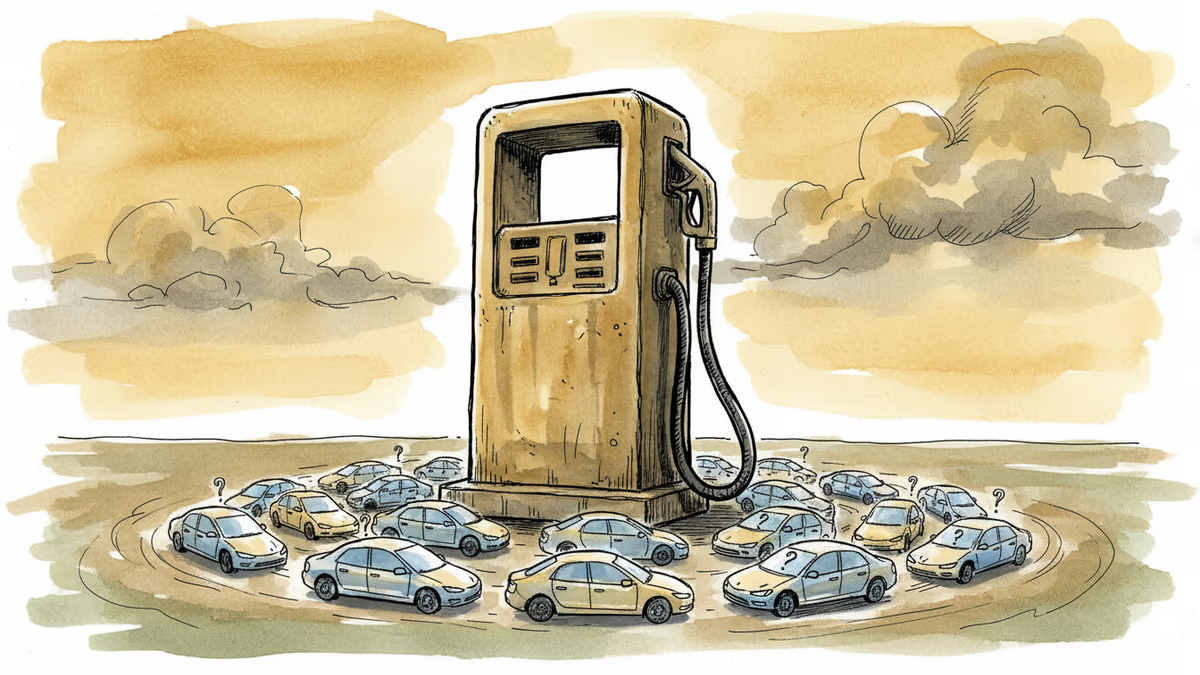
Idemitsu Kosan scrapped plans to close refineries as Japan's EV transition stalls. Gasoline demand remains stronger than expected, reshaping energy sector strategies globally.
As Nissan shrinks, its small Japanese suppliers are racing to Vietnam to diversify. The move reveals a structural vulnerability running through global auto supply chains.
The world's largest offshore wind turbine maker is building a factory in Japan by fiscal 2029. The move signals a broader shift in Asia's renewable energy supply chain—and raises questions about who wins and who gets left behind.
Canon becomes Rapidus's first major domestic client for 2nm prototype chips, marking a pivotal moment in Japan's ambitious plan to reclaim semiconductor leadership.
Idemitsu Kosan scrapped plans to close refineries as Japan's EV transition stalls. Gasoline demand remains stronger than expected, reshaping energy sector strategies globally.
Thoughts
Share your thoughts on this article
Sign in to join the conversation