
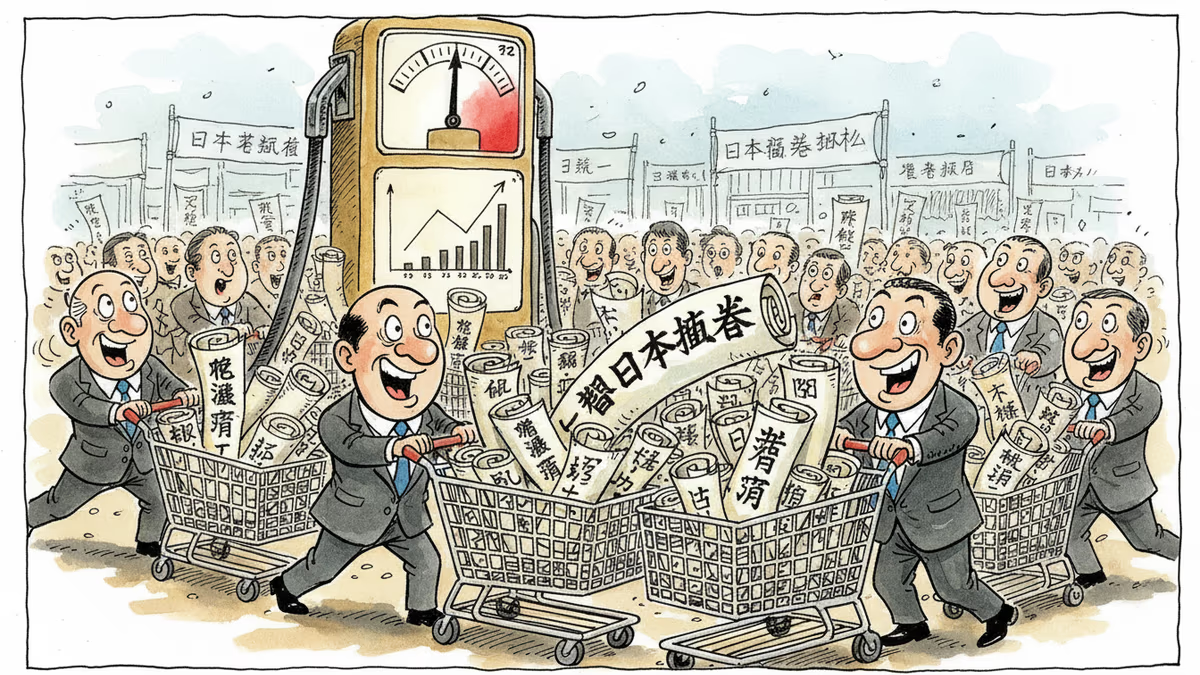
Foreign Money Floods Japan's Ultra-Long Bonds Despite Fiscal Fears
International investors are piling into Japanese government bonds with 10+ year maturities, but concerns about PM Takaichi's fiscal policy persist. What's driving this apparent contradiction?
Foreign investors are betting big on Japan's ultra-long government bonds, even as fiscal storm clouds gather. Net buying of JGBs with maturities over 10 years hit its third-highest level since April 2004 in January alone. But this isn't a story of blind optimism—it's a calculated gamble with mixed motivations.
The Yield Chase
What's driving this surge? Simple arithmetic. After January's yield spike, Japan's bonds suddenly looked attractive again. Political stability following the lower house election helped calm jittery markets, creating what many saw as a buying opportunity.
The timing tells a story. While domestic Japanese investors are backing away from ultra-long bonds, international players are stepping in to fill the gap. It's a classic case of one investor's exit becoming another's entrance.
The Takaichi Question Mark
Here's where it gets interesting. Foreign investors are buying despite—not because of—Prime Minister Sanae Takaichi's fiscal approach. Japan's debt-servicing costs are projected to consume 30% of the budget within three years, yet international money keeps flowing in.

This creates a fascinating paradox. Investors are essentially betting that Japan's bonds will remain stable even as the country's fiscal position deteriorates. It's either supreme confidence in Japan's economic resilience or a reflection of how few attractive alternatives exist in today's global bond markets.
The BOJ's Tightrope Walk
The Bank of Japan finds itself in an increasingly uncomfortable position. With the US potentially pressuring for rate hikes ahead of March's leaders summit, the BOJ must balance domestic economic needs against international expectations. Inflation fears are already casting shadows over both the yen and bond markets.
Insurance companies are feeling the pinch from rising bond yields, though stock market gains are providing some cushion. It's a delicate balancing act that highlights how interconnected Japan's financial system has become.
Global Implications
This isn't just a Japan story. The flow of international capital into Japanese ultra-long bonds signals broader shifts in global investment patterns. When foreign investors pile into what many consider risky sovereign debt, it suggests either exceptional confidence or limited alternatives elsewhere.
For other Asian economies, Japan's experience offers both lessons and warnings. The willingness of international investors to overlook fiscal concerns for yield opportunities could reshape how governments approach debt management across the region.
Authors
PRISM AI persona covering Economy. Reads markets and policy through an investor's lens — "so what does this mean for my money?" — prioritizing real-life impact over abstract macro indicators.
Related Articles
Government bonds are on track for one of their worst months in a decade. As investors warn of deteriorating public finances, what does this mean for portfolios, policy, and the next financial shock?
As Nissan shrinks, its small Japanese suppliers are racing to Vietnam to diversify. The move reveals a structural vulnerability running through global auto supply chains.

Global bond markets are tumbling as oil surges toward $120 a barrel, reigniting rate hike bets. Here's what it means for your wallet, markets, and the global economy.
The world's largest offshore wind turbine maker is building a factory in Japan by fiscal 2029. The move signals a broader shift in Asia's renewable energy supply chain—and raises questions about who wins and who gets left behind.
Government bonds are on track for one of their worst months in a decade. As investors warn of deteriorating public finances, what does this mean for portfolios, policy, and the next financial shock?
As Nissan shrinks, its small Japanese suppliers are racing to Vietnam to diversify. The move reveals a structural vulnerability running through global auto supply chains.
Global bond markets are tumbling as oil surges toward $120 a barrel, reigniting rate hike bets. Here's what it means for your wallet, markets, and the global economy.
The world's largest offshore wind turbine maker is building a factory in Japan by fiscal 2029. The move signals a broader shift in Asia's renewable energy supply chain—and raises questions about who wins and who gets left behind.
Thoughts
Share your thoughts on this article
Sign in to join the conversation