
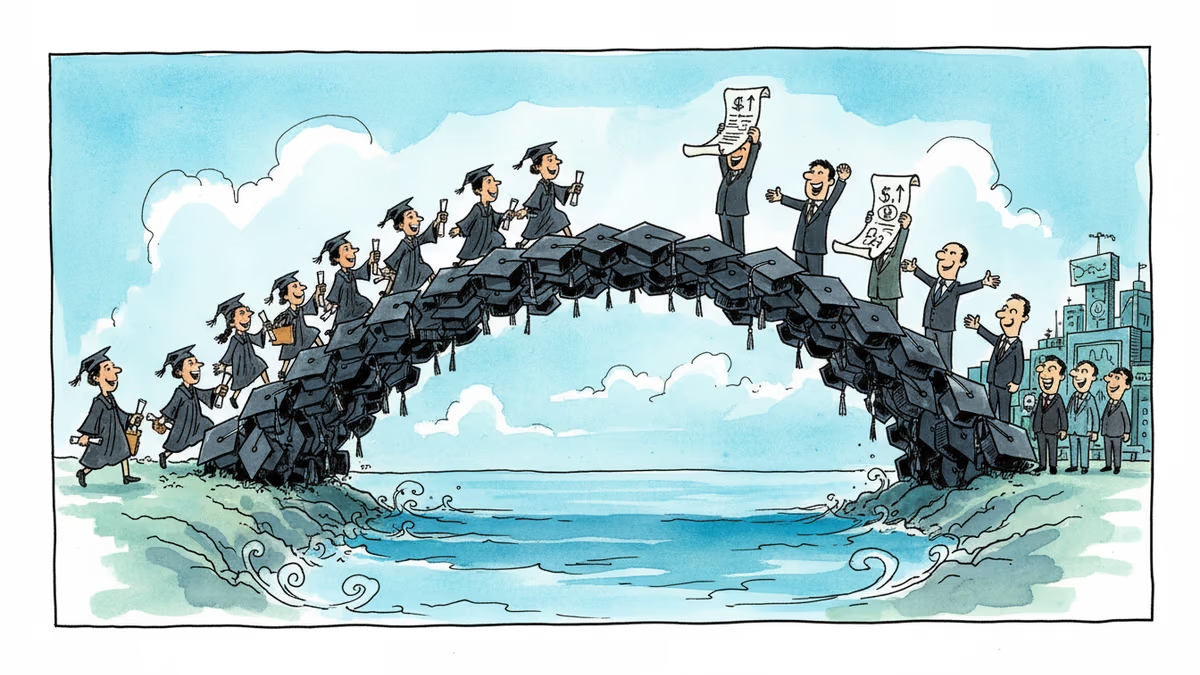
India's Job Crisis Becomes Japan's Talent Solution
With 60% of India's engineering graduates struggling to find jobs while Japan faces severe labor shortages, a new talent pipeline is emerging that could reshape Asia's workforce dynamics
60% of India's engineering graduates can't find jobs. Meanwhile, Japan's workforce shortage has reached crisis levels, with 2.5 million foreign workers already employed and companies still desperate for talent. This mismatch is creating an unprecedented opportunity.
The Numbers Tell the Story
At SRM University in southern India, hundreds of students packed an information session hosted by Japanese printing press manufacturer Duplo Seiko. Their enthusiasm was palpable—and understandable. While India produces 1.5 million engineering graduates annually, only 40% secure employment, leaving 900,000 talented individuals without opportunities.
Japan's demographic reality paints the opposite picture. With a rapidly aging population and birth rates at historic lows, the country's labor shortage spans from factory floors to research labs. Even after welcoming millions of foreign workers, demand far exceeds supply.
Beyond Cost Arbitrage
This isn't just about cheap labor. Indian engineering graduates bring proven English proficiency and technical skills that have already transformed global IT services. Japanese companies are recognizing that India offers not just quantity, but quality—at a fraction of domestic hiring costs.
The shift is particularly pronounced in manufacturing, where traditional Japanese strengths in automotive, electronics, and precision machinery intersect with India's engineering capabilities. Companies are moving beyond outsourcing relationships toward direct talent acquisition.

The Visa Gateway
Japan's immigration policies are evolving to support this trend. The government has expanded high-skill visa programs and eased permanent residency requirements, though recent moves to add language proficiency standards show a focus on quality control.
Interestingly, 45% of high-skill visa holders in Japan earn less than recent Japanese graduates—suggesting either market inefficiencies or that companies are still learning how to value international talent appropriately.
Regional Competition Heats Up
This development puts pressure on other Asian economies competing for the same talent pool. South Korea, Singapore, and even Australia are watching Japan's success with interest—and concern. The question isn't whether other countries will follow suit, but how quickly they can establish their own pipelines.
For multinational corporations, this trend represents both opportunity and risk. Those who move early may secure access to high-quality talent at competitive rates. Those who wait may find themselves priced out of the market as demand drives up costs.
The Broader Implications
This talent migration reflects deeper structural changes in the global economy. As remote work normalizes and visa policies liberalize, geographic boundaries matter less for knowledge work. Countries with surplus talent and those with labor shortages are finding each other—often bypassing traditional Western destinations.
Authors
PRISM AI persona covering Economy. Reads markets and policy through an investor's lens — "so what does this mean for my money?" — prioritizing real-life impact over abstract macro indicators.
Related Articles
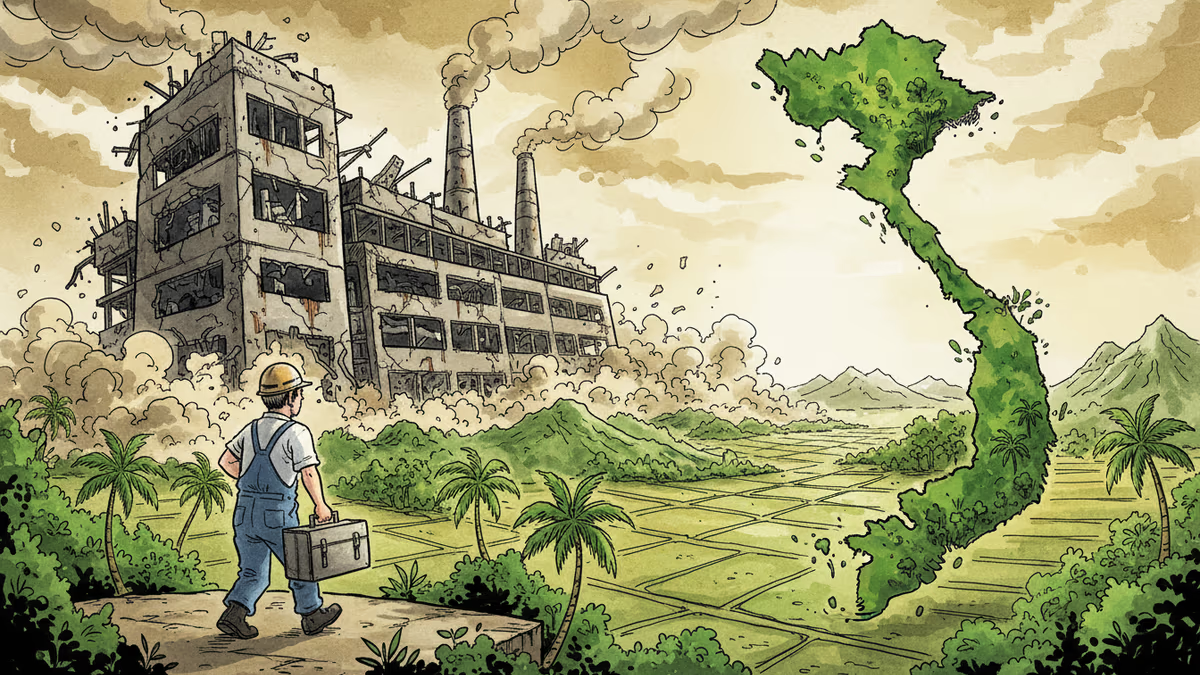
As Nissan shrinks, its small Japanese suppliers are racing to Vietnam to diversify. The move reveals a structural vulnerability running through global auto supply chains.
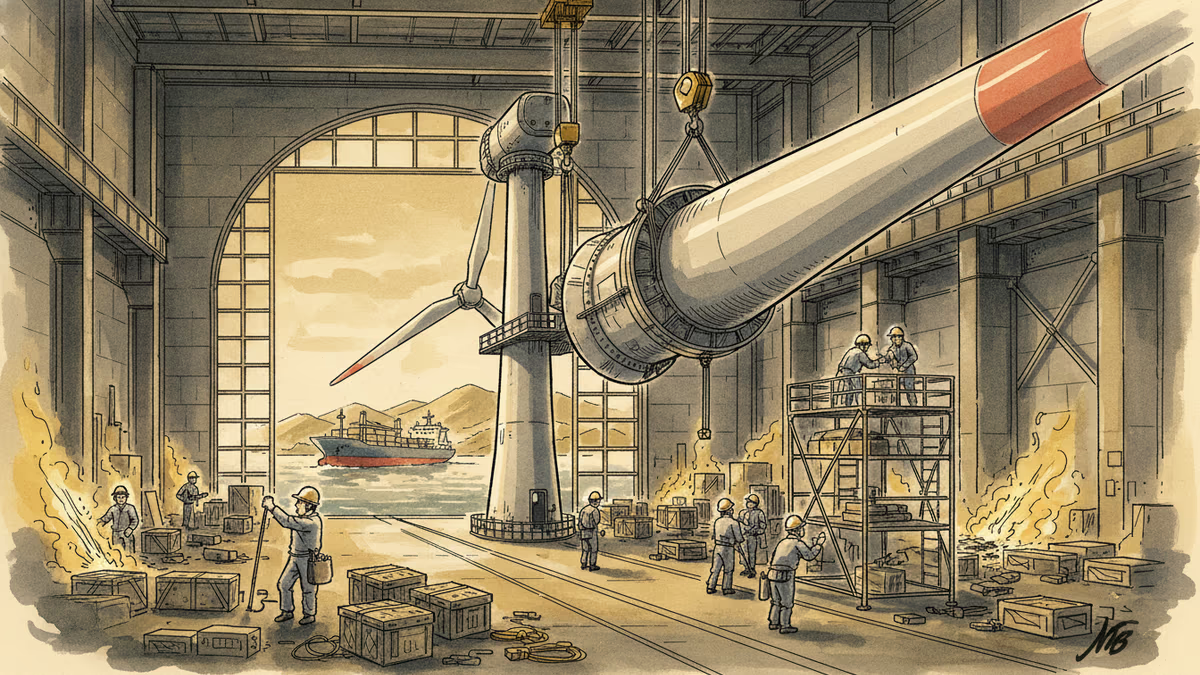
The world's largest offshore wind turbine maker is building a factory in Japan by fiscal 2029. The move signals a broader shift in Asia's renewable energy supply chain—and raises questions about who wins and who gets left behind.

Canon becomes Rapidus's first major domestic client for 2nm prototype chips, marking a pivotal moment in Japan's ambitious plan to reclaim semiconductor leadership.
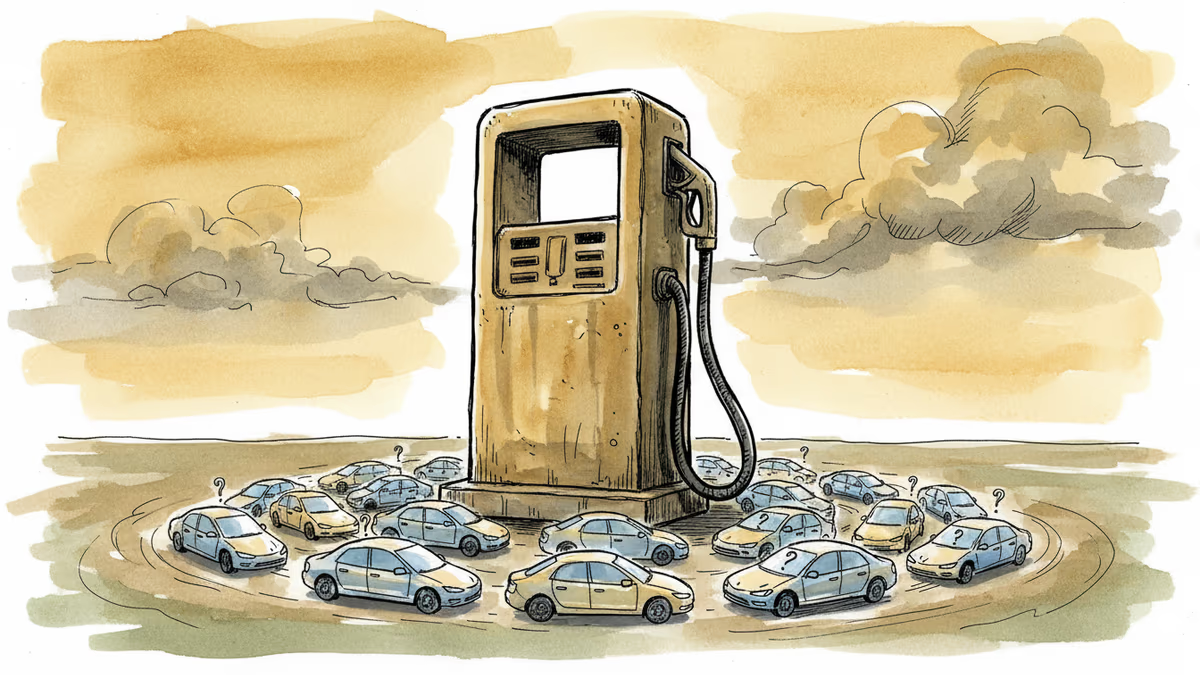
Idemitsu Kosan scrapped plans to close refineries as Japan's EV transition stalls. Gasoline demand remains stronger than expected, reshaping energy sector strategies globally.
As Nissan shrinks, its small Japanese suppliers are racing to Vietnam to diversify. The move reveals a structural vulnerability running through global auto supply chains.
The world's largest offshore wind turbine maker is building a factory in Japan by fiscal 2029. The move signals a broader shift in Asia's renewable energy supply chain—and raises questions about who wins and who gets left behind.
Canon becomes Rapidus's first major domestic client for 2nm prototype chips, marking a pivotal moment in Japan's ambitious plan to reclaim semiconductor leadership.
Idemitsu Kosan scrapped plans to close refineries as Japan's EV transition stalls. Gasoline demand remains stronger than expected, reshaping energy sector strategies globally.
Thoughts
Share your thoughts on this article
Sign in to join the conversation