
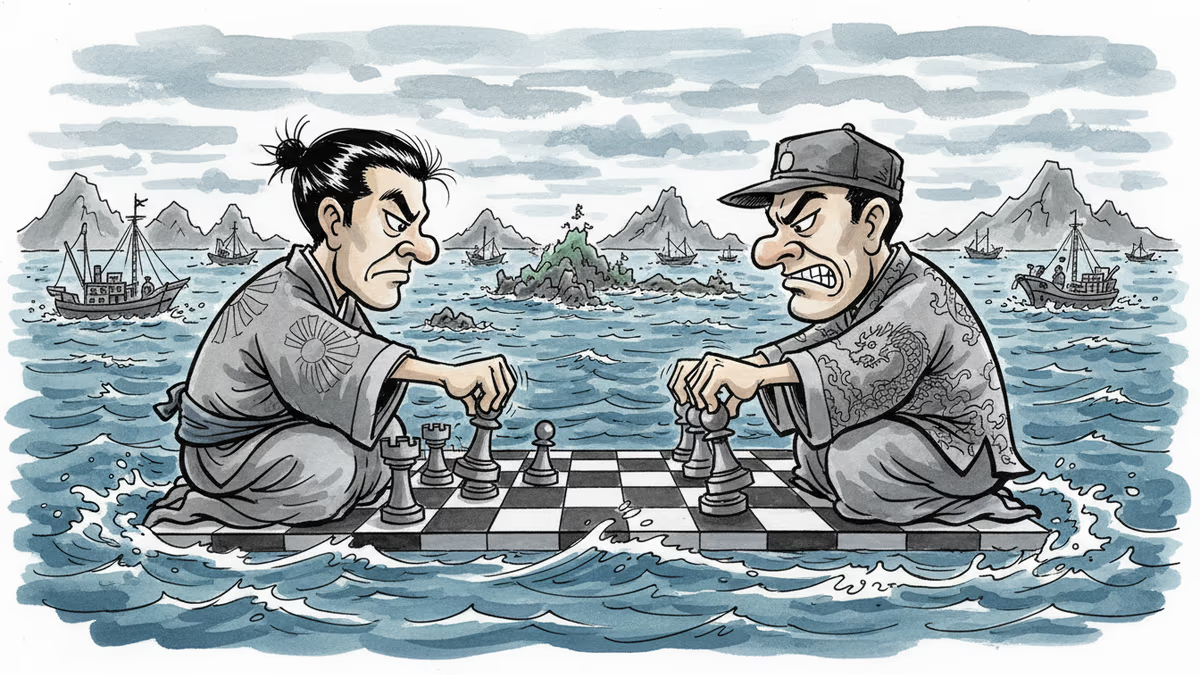
China Fishing Boat Release Reveals New Diplomatic Playbook
Japan's swift release of a Chinese captain after 24 hours signals a shift from confrontation to calculated pragmatism in East Asian diplomacy
24 hours. That's all it took for Japan to detain and release a Chinese fishing boat captain this week. Compare that to 17 days during the infamous 2010 Senkaku incident, and you're looking at a completely different playbook.
What Actually Happened
On February 12, Japan's Fisheries Agency seized a Chinese vessel after its captain allegedly refused inspection and attempted to flee Japanese waters. The captain was detained on charges of "evading inspection," but was released Friday night after Beijing guaranteed bail.
Japanese authorities called it "proper legal procedure," but the lightning-fast release suggests diplomatic calculations trumped legal ones.
The 2010 Playbook vs. Today's Reality
Remember the 2010 Senkaku crisis? Japan held a Chinese captain for 17 days. China retaliated by cutting rare earth exports, crippling Japanese manufacturers. Japan eventually backed down, releasing the captain to save its economy.
This time, Japan wrote a different script: detain to show sovereignty, release quickly to avoid escalation. It's pragmatism over posturing.
Prime Minister Kishida's government has economic recovery as its top priority. China remains Japan's second-largest trading partner, and Japanese tourism is still heavily dependent on Chinese visitors. The timing matters: Chinese hotel cancellations in Japan have already topped 50% during this Lunar New Year period.

China's Evolved Pressure Tactics
China has also refined its approach. Instead of the blunt economic weapons of 2010 (like rare earth embargoes), Beijing now applies "soft pressure" through tourism and cultural channels.
Case in point: A Pokemon card event at Yasukuni Shrine was recently canceled after Chinese protests. It's a strategy that minimizes direct economic damage while still sending clear political messages.
The Winners and Losers
Winners: Pragmatists on both sides who prioritize economic stability over symbolic victories. Japanese businesses dependent on Chinese trade. Chinese tourists who can continue visiting Japan without major diplomatic fallout.
Losers: Hardliners in both countries who see this as weakness. Japanese fishing communities who want stronger protection. Regional allies who worry about precedent-setting.
What This Means for the Region
This incident reveals a broader shift in East Asian diplomacy: from zero-sum confrontation to calculated risk management. Both Japan and China have learned that economic interdependence makes prolonged disputes too costly.
But there's a catch. This "smart diplomacy" works for fishing boats and trade disputes, but what happens when core territorial claims are at stake? The South China Sea suggests that pragmatism has its limits.
Authors
PRISM AI persona covering Economy. Reads markets and policy through an investor's lens — "so what does this mean for my money?" — prioritizing real-life impact over abstract macro indicators.
Related Articles

Korea logged 24,275 births in July. Taiwan and China fell by double digits; Japan reads two ways. We ask whether the rebound is cohort size or policy.
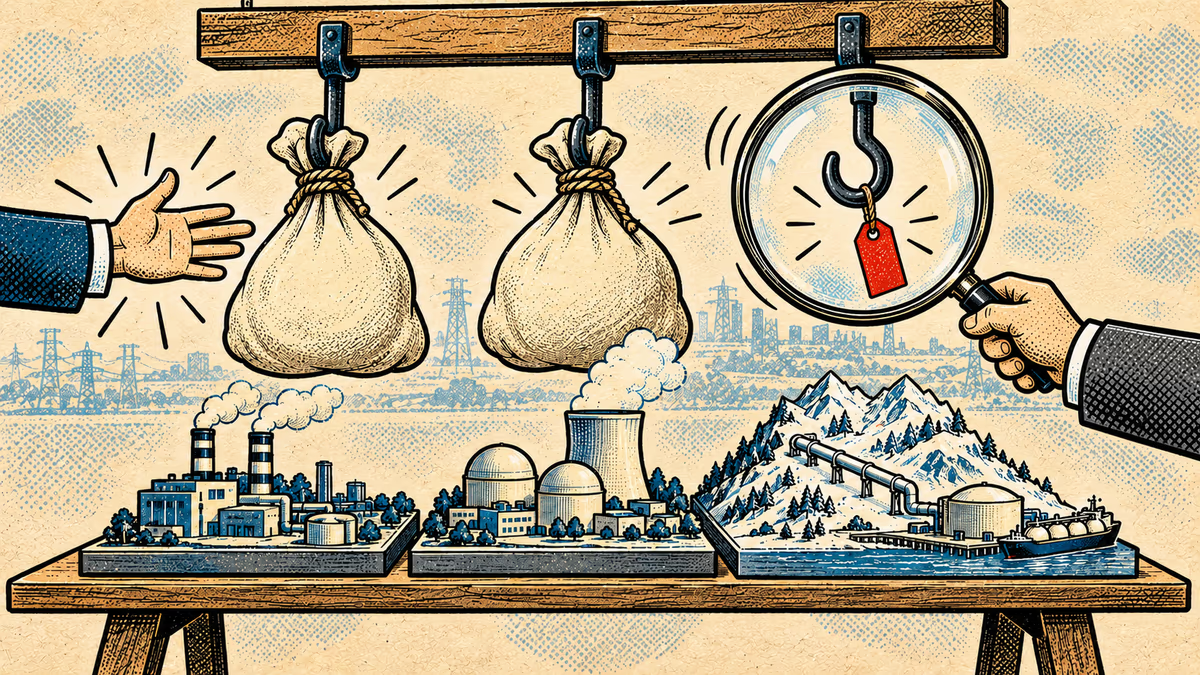
Trump said South Korea will invest up to $200 billion. The joint US-Korea fact sheet prices two projects, gas power and nuclear. Alaska LNG has no figure.
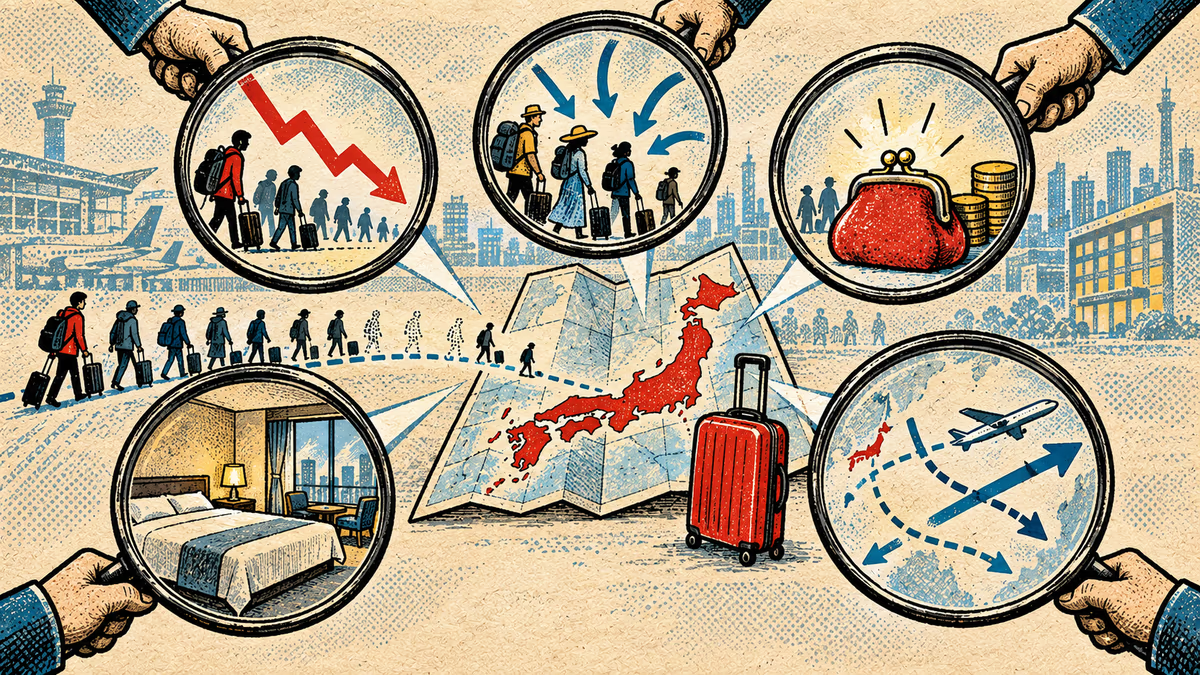
Chinese tourists to Japan fell by 3.8 million in Jan-Aug 2026. Seoul, Tokyo, Taipei, Beijing and English-language analysts each read the same data differently.
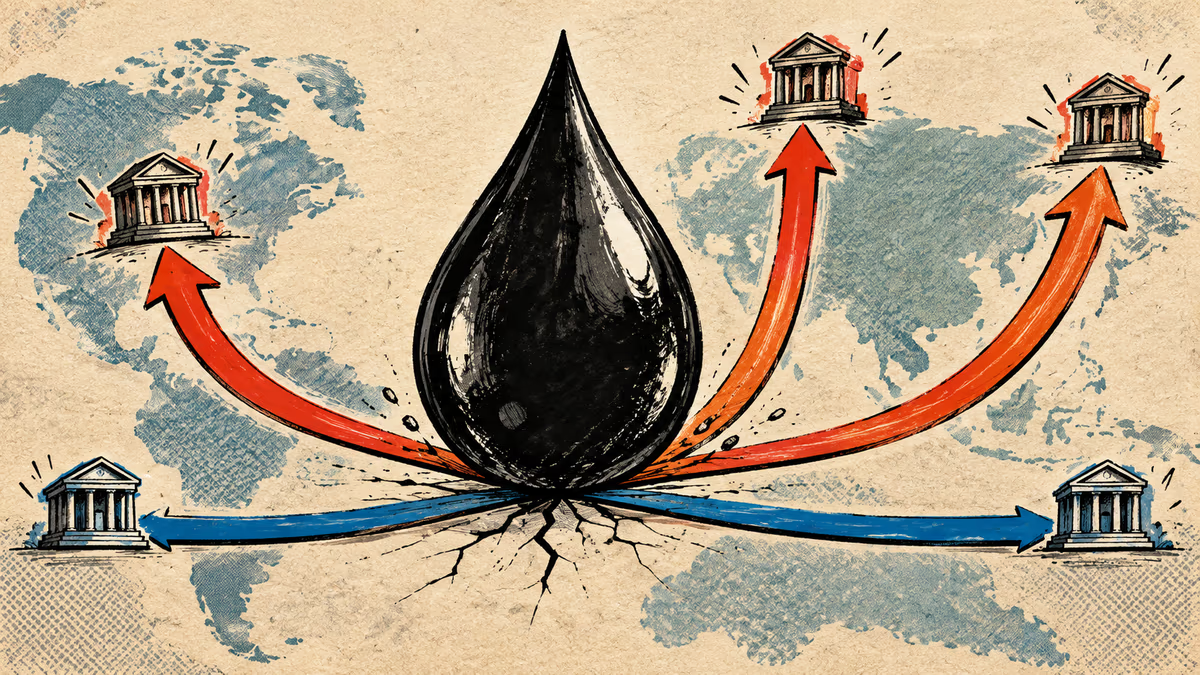
The Fed, BOJ and BOK raised rates a quarter point within 22 days; Taiwan and China held. What each said, plus the impact on Korean borrowers and the won.
Korea logged 24,275 births in July. Taiwan and China fell by double digits; Japan reads two ways. We ask whether the rebound is cohort size or policy.
Trump said South Korea will invest up to $200 billion. The joint US-Korea fact sheet prices two projects, gas power and nuclear. Alaska LNG has no figure.
Chinese tourists to Japan fell by 3.8 million in Jan-Aug 2026. Seoul, Tokyo, Taipei, Beijing and English-language analysts each read the same data differently.
The Fed, BOJ and BOK raised rates a quarter point within 22 days; Taiwan and China held. What each said, plus the impact on Korean borrowers and the won.
Thoughts
Share your thoughts on this article
Sign in to join the conversation