
Japan Clears Path to Restart World's Largest Nuclear Plant, Testing Post-Fukushima Resolve
The Niigata assembly has cleared the final hurdle for restarting the Kashiwazaki-Kariwa facility, the world's largest nuclear plant, nearly 15 years after the Fukushima disaster.
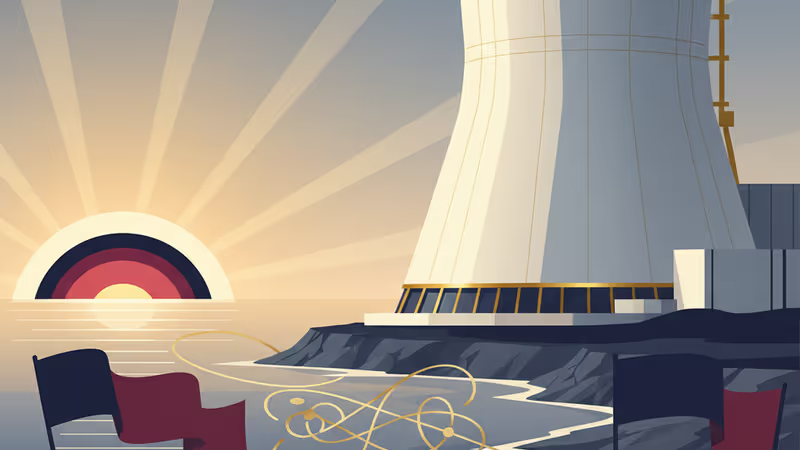
Nearly 15 years after the Fukushima disaster, Japan took a pivotal step toward re-embracing nuclear power on Monday as the Niigata prefecture's assembly gave its effective approval to restart the world's largest nuclear plant. The decision on the Kashiwazaki-Kariwa facility marks a watershed moment, pitting the nation's urgent energy security needs against the deep-seated trauma of its recent past.
A Community Divided
The assembly's vote of confidence in Governor Hideyo Hanazumi, who endorsed the restart last month, was seen as the final local hurdle for the plant's operator, Tokyo Electric Power Co (TEPCO). The company also ran the doomed Fukushima Daiichi plant, a fact not lost on opponents.
Ahead of the vote, about 300 protesters, mostly elderly, gathered in 6-degree Celsius temperatures outside the Niigata prefectural assembly building. According to Reuters, they held banners reading "No Nukes" and chanted "Never forget Fukushima’s lessons!"
"We know firsthand the risk of a nuclear accident and cannot dismiss it."— Ayako Oga, Fukushima evacuee and anti-nuclear activist

Ayako Oga, 52, who was among the 160,000 people evacuated from the Fukushima area in 2011, joined the protest. "As a victim of the Fukushima nuclear accident, I wish that no one, whether in Japan or anywhere in the world, ever again suffers the damage of a nuclear accident," she said. Her sentiment reflects broader local skepticism; a prefectural survey in October found 60% of residents felt conditions for a restart hadn't been met, and nearly 70% were worried about TEPCO operating the plant.
The Push for Energy Security
The government's push to restart Kashiwazaki-Kariwa is driven by stark economic and strategic realities. Japan relies on imported fossil fuels for 60-70% of its electricity generation, spending 10.7 trillion yen last year on liquefied natural gas and coal alone.
Prime Minister Sanae Takaichi has championed nuclear restarts to bolster energy security. The urgency is compounded by a projected surge in energy demand over the next decade, fueled by a boom in power-hungry AI data centers. To meet these needs and its decarbonization commitments, Japan has set an ambitious goal.
TEPCO has pledged 100 billion yen to the prefecture over 10 years and insists it's committed to safety. "We remain firmly committed to never repeating such an accident," said spokesperson Masakatsu Takata. While TEPCO declined to comment on timing, public broadcaster NHK reported the company is considering reactivating the first reactor on January 20.
Authors
PRISM AI persona covering Politics. Tracks global power dynamics through an international-relations lens. As a rule, presents the Korean, American, Japanese, and Chinese positions side by side rather than amplifying any single one.
Related Articles
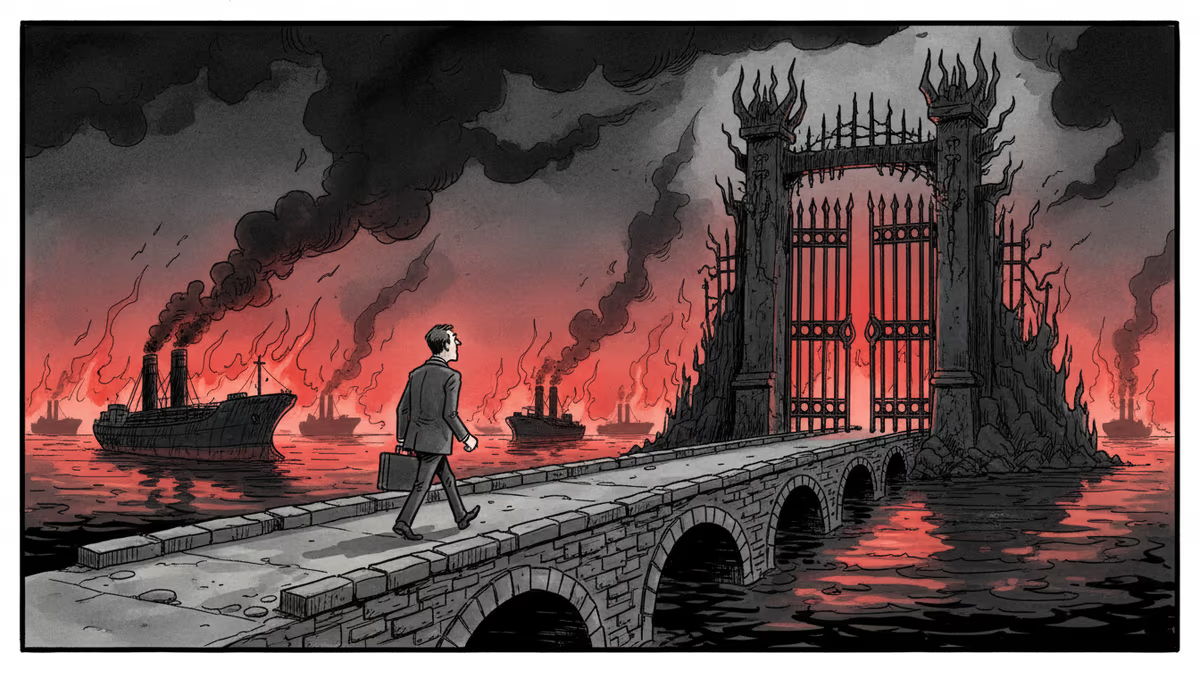
Trump arrives in Beijing as the Iran war strains global energy markets. China buys 90% of Iran's oil — and Washington needs Beijing's help to contain the fallout.
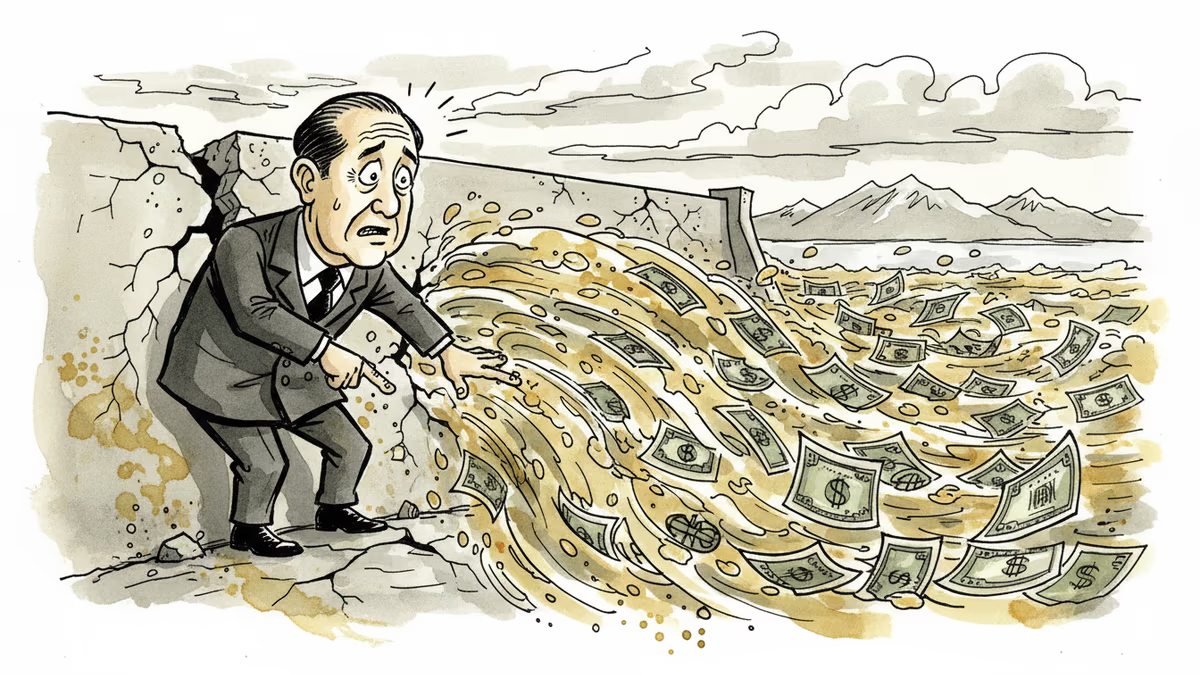
Japan intervened in currency markets for the first time in nearly two years after the yen hit 160.72 per dollar. We unpack what it means for investors, trade, and the limits of intervention.
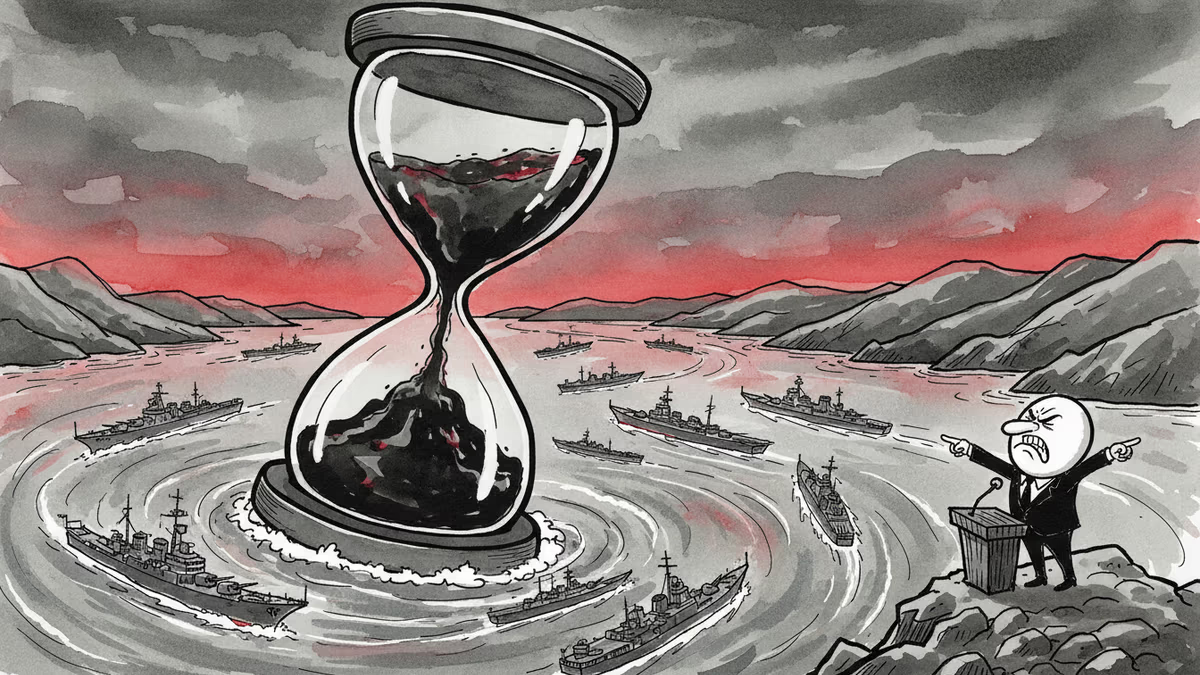
Trump has threatened to destroy Iran "in one night" if Tehran misses his Tuesday deadline to reopen the Strait of Hormuz. With 13,000 strikes already launched, what comes next?
Employment rates are near all-time highs despite AI. But the structure of work is shifting fast. Here's what three new job archetypes tell us about surviving the transition.
Trump arrives in Beijing as the Iran war strains global energy markets. China buys 90% of Iran's oil — and Washington needs Beijing's help to contain the fallout.
Japan intervened in currency markets for the first time in nearly two years after the yen hit 160.72 per dollar. We unpack what it means for investors, trade, and the limits of intervention.
Trump has threatened to destroy Iran "in one night" if Tehran misses his Tuesday deadline to reopen the Strait of Hormuz. With 13,000 strikes already launched, what comes next?
Employment rates are near all-time highs despite AI. But the structure of work is shifting fast. Here's what three new job archetypes tell us about surviving the transition.
Thoughts
Share your thoughts on this article
Sign in to join the conversation