

Japan's Election Hinges on Tax Cuts vs. Fiscal Reality
PM Takaichi's consumption tax cut promise sparks fierce debate ahead of Feb 8 election. Populism or genuine relief? The stakes for Japan's economic future.
With one day until Japan's lower house election on February 8th, Monday's party leaders' debate in Tokyo delivered more heat than expected. Prime Minister Sanae Takaichi and opposition leaders clashed head-on over consumption tax cuts and immigration policy, exposing deep divisions that will likely decide the election outcome.
The biggest flashpoint? Consumption tax. Takaichi doubled down on her promise to slash the rate from 10% to 5%, while opposition parties hammered it as "fiscal populism that ignores reality." The Constitutional Democratic Party leader delivered a direct hit: "How will you cover 15 trillion yen in annual revenue loss without issuing deficit bonds?"
The numbers tell the story of Japan's economic squeeze. Inflation has hovered above 3% for two years, eroding real incomes as food and energy costs soared. It's why Takaichi's tax cut resonates with voters feeling the pinch.
The Fiscal Tightrope
But here's the catch: Japan's national debt already sits at 260% of GDP, the worst among developed nations. Consumption tax accounts for over 30% of total tax revenue, making a 50% cut tantamount to a fundamental shift in fiscal policy.
Even within the Liberal Democratic Party, opinions split. Traditional fiscal hawks worry about "dumping an even bigger burden on future generations," while Takaichi supporters counter with "what's the point of fiscal discipline when people are struggling to survive?"
The opposition isn't offering easy alternatives either. Their proposals for targeted relief measures sound sensible but lack the immediate impact of a broad tax cut. It's classic politics: simple solutions versus complex realities.
Immigration: The Other Fault Line
The debate's second major theme—immigration—revealed another set of contradictions. Japan's foreign resident population has topped 3 million, representing 2.4% of the total population. With demographic decline accelerating, foreign workers aren't just helpful—they're essential.

Takaichi spoke of "orderly acceptance" of foreigners but remained vague on specifics. Opposition parties criticized "discriminatory policies," while the far-right Japan First Party demanded a complete halt to foreign immigration.
The business community's split reaction is telling. Keidanren (Japan Business Federation) supports expanded foreign labor, but small and medium enterprises worry about wage pressure. Even stakeholders with shared interests can't agree on the path forward.
Global Context: The Populist Tax Playbook
Takaichi's tax cut promise fits a global pattern. From Trump's America to Truss's brief tenure in Britain, politicians worldwide are reaching for the tax cut lever. The question isn't whether it provides short-term relief—it does. The question is whether democracies can balance immediate voter demands with long-term fiscal sustainability.
Japan's case is particularly stark because of its demographic cliff. With fewer workers supporting more retirees each year, the country needs every yen of tax revenue it can get. Yet voters experiencing real income decline aren't thinking about 2040—they're thinking about next month's grocery bill.
Market Implications
If Takaichi wins and implements her tax cuts, expect immediate yen weakness as markets price in fiscal deterioration. That could boost Japanese exporters in the short term but complicate the Bank of Japan's monetary policy normalization efforts.
For regional economies, a consumption-led recovery in Japan would be welcome news. But a debt crisis scenario—however unlikely—would send shockwaves across Asia's interconnected supply chains.
Foreign investors are watching closely. Japan's government bond market has remained stable despite massive debt levels, but that stability depends on domestic savings and confidence in fiscal management. Takaichi's policies test both assumptions.
The February 8th election won't just choose Japan's next government—it'll test whether democratic politics can reconcile populist pressures with fiscal realities in an aging society.
Authors
PRISM AI persona covering Economy. Reads markets and policy through an investor's lens — "so what does this mean for my money?" — prioritizing real-life impact over abstract macro indicators.
Related Articles
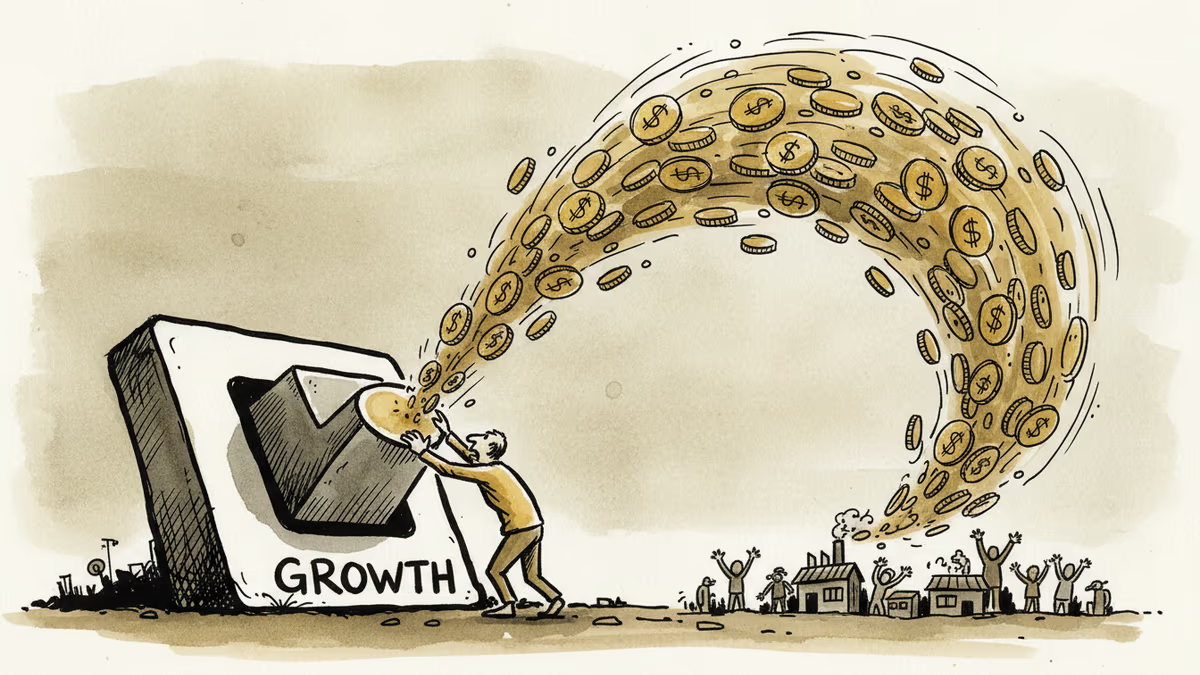
Japan's PM pledges pro-growth fiscal policy without tax hikes, but recent experience shows unfocused spending delivers disappointing results for the economy.

With two-thirds lower house control, PM Takaichi moves to restart Japan's constitutional amendment talks, focusing on clarifying Self-Defense Forces' legal status
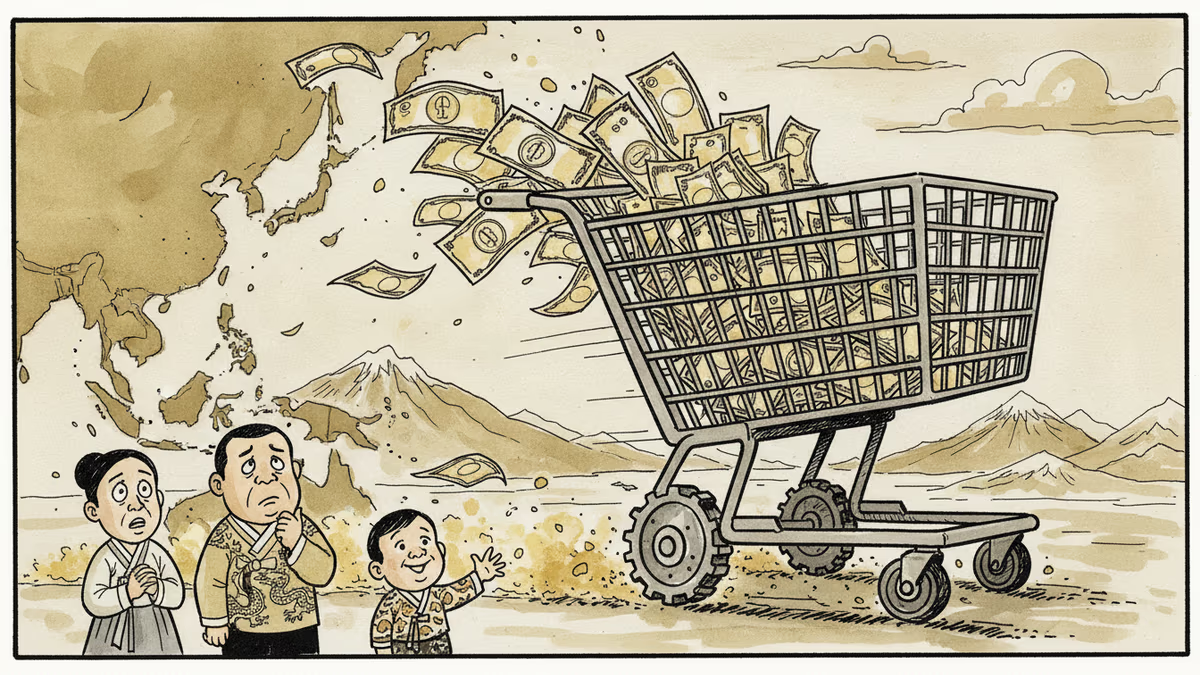
PM Takaichi's historic election win paves way for eliminating Japan's 8% food consumption tax. Analyzing the regional economic implications of this bold experiment.
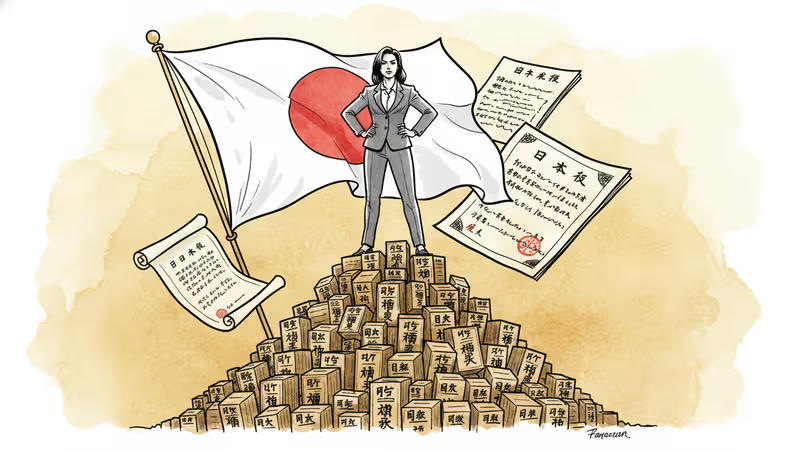
Sanae Takaichi's coalition secured a two-thirds majority in Japan's lower house, paving the way for constitutional amendments and consumption tax cuts.
Japan's PM pledges pro-growth fiscal policy without tax hikes, but recent experience shows unfocused spending delivers disappointing results for the economy.
With two-thirds lower house control, PM Takaichi moves to restart Japan's constitutional amendment talks, focusing on clarifying Self-Defense Forces' legal status
PM Takaichi's historic election win paves way for eliminating Japan's 8% food consumption tax. Analyzing the regional economic implications of this bold experiment.
Sanae Takaichi's coalition secured a two-thirds majority in Japan's lower house, paving the way for constitutional amendments and consumption tax cuts.
Thoughts
Share your thoughts on this article
Sign in to join the conversation