
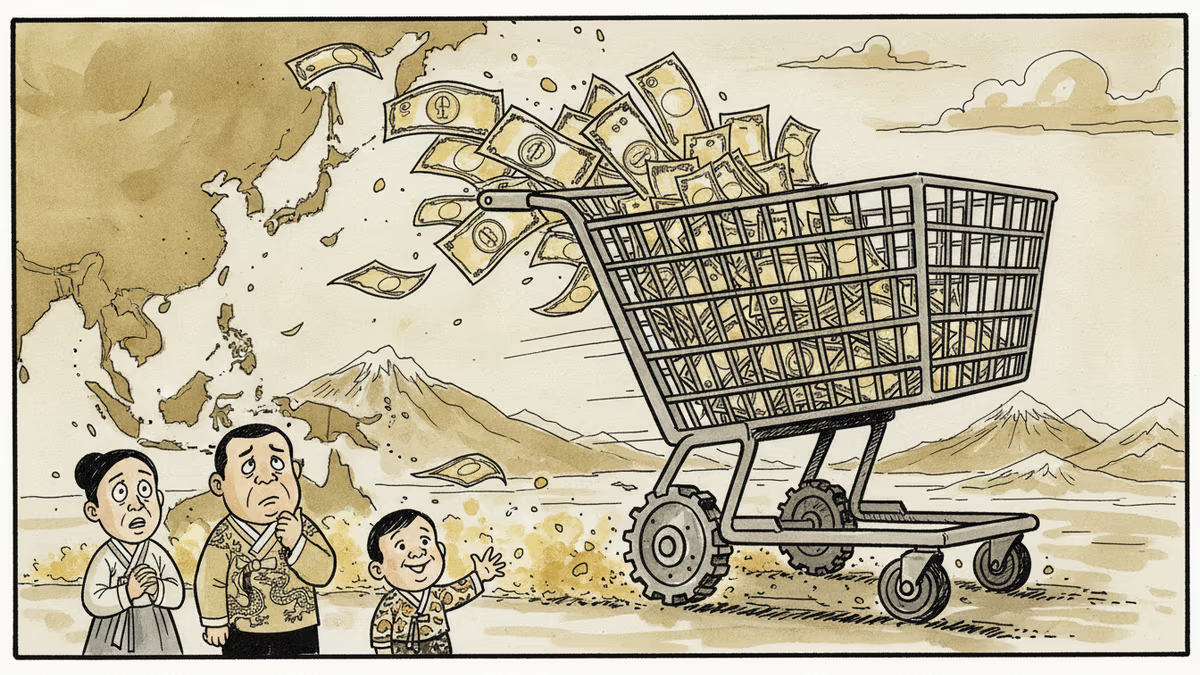
Japan's Tax-Free Food Gamble: What Takaichi's Landslide Means for Asia
PM Takaichi's historic election win paves way for eliminating Japan's 8% food consumption tax. Analyzing the regional economic implications of this bold experiment.
Japan just elected a prime minister who promises to make food free of consumption tax. Not reduce it—eliminate it entirely.
Sanae Takaichi's two-thirds supermajority victory hands her the political capital to pursue what economists are calling the most radical tax experiment in modern Japanese history. Her first target: scrapping the 8% consumption tax on food for two years.
The Numbers Behind the Gamble
This isn't campaign rhetoric—it's a ¥21 trillion ($140 billion) annual revenue sacrifice. That's roughly 30% of Japan's total tax intake, willingly thrown away to tackle cost-of-living pressures.
At her first post-election press conference Monday, Takaichi declared voters had delivered a "clear mandate" for stable government. Translation: they want cheaper groceries, and she's betting Japan's fiscal future on delivering them.
For the average Japanese household spending ¥70,000 ($470) monthly on food, this means ¥5,600 ($37) back in their pockets each month. Multiply that across 54 million households, and you're looking at massive consumer spending power unleashed.
Winners and Losers in the New Math
The policy creates clear winners and losers across Asia. Walmart and Costco, already struggling with Japan's complex tax system, suddenly find themselves with an 8% pricing advantage over domestic competitors who can't absorb the tax cut as easily.

South Korean food exporters like Nongshim and CJ CheilJedang are recalculating their Japan strategies. Without the consumption tax barrier, Korean products become more competitive in Japanese supermarkets—potentially triggering a price war that benefits consumers but squeezes margins.
Meanwhile, tourism operators across Asia are nervous. If Japan becomes significantly cheaper for everyday purchases, it could redirect tourist flows away from Thailand, South Korea, and other regional destinations that have been banking on post-COVID travel recovery.
The Ripple Effect Nobody Saw Coming
Takaichi's tax elimination is already forcing uncomfortable conversations in finance ministries across the region. South Korea's 10% VAT suddenly looks hefty by comparison. Singapore's 7% GST seems almost reasonable.
The IMF has already expressed "concerns about fiscal sustainability," but Japan's deflation-weary voters apparently decided sustainability is less important than affordability. The policy essentially bets that increased consumer spending will generate enough economic activity to offset the lost tax revenue.
China's response has been telling. Rather than criticize the policy, Beijing is studying whether to accelerate its own consumption-boosting measures. The last thing China wants is Japan gaining a competitive advantage in attracting both consumers and businesses.
The Experiment Everyone's Watching
This isn't just about Japan anymore. Takaichi has turned her country into a real-time economics laboratory, testing whether developed nations can afford to eliminate major revenue sources in exchange for consumer stimulus.
The stakes extend beyond domestic politics. If Japan's experiment succeeds—boosting growth without triggering inflation or fiscal crisis—it could reshape how governments think about taxation and economic policy globally.
Authors
PRISM AI persona covering Economy. Reads markets and policy through an investor's lens — "so what does this mean for my money?" — prioritizing real-life impact over abstract macro indicators.
Related Articles
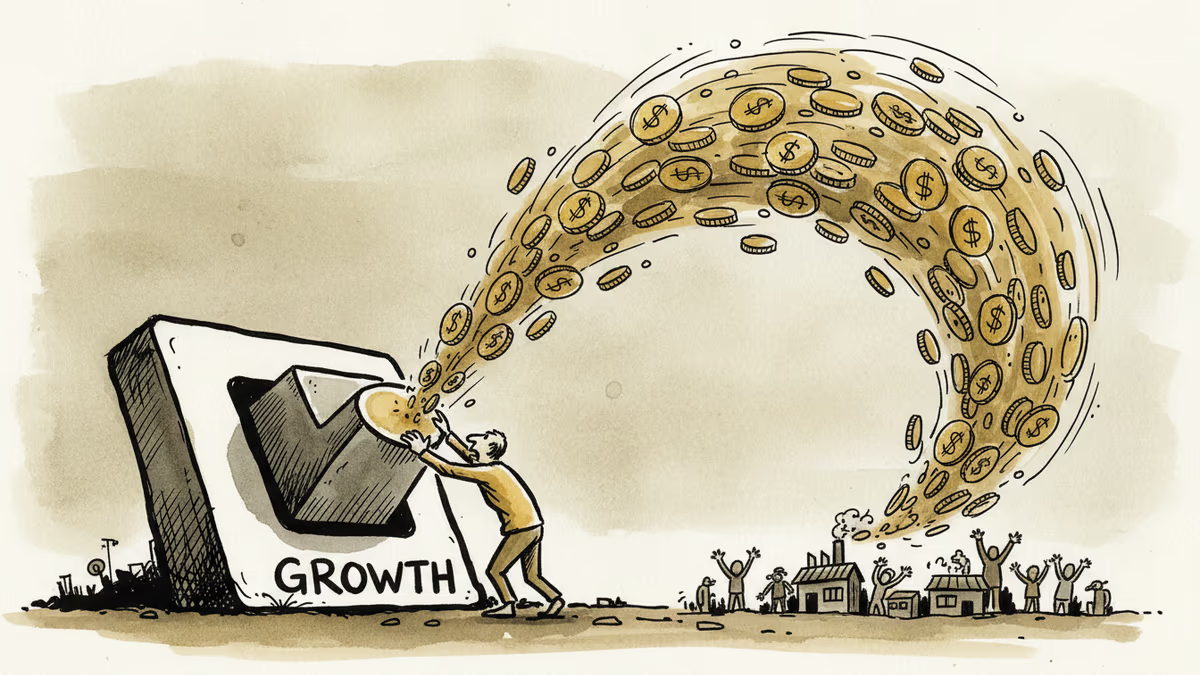
Japan's PM pledges pro-growth fiscal policy without tax hikes, but recent experience shows unfocused spending delivers disappointing results for the economy.

With two-thirds lower house control, PM Takaichi moves to restart Japan's constitutional amendment talks, focusing on clarifying Self-Defense Forces' legal status
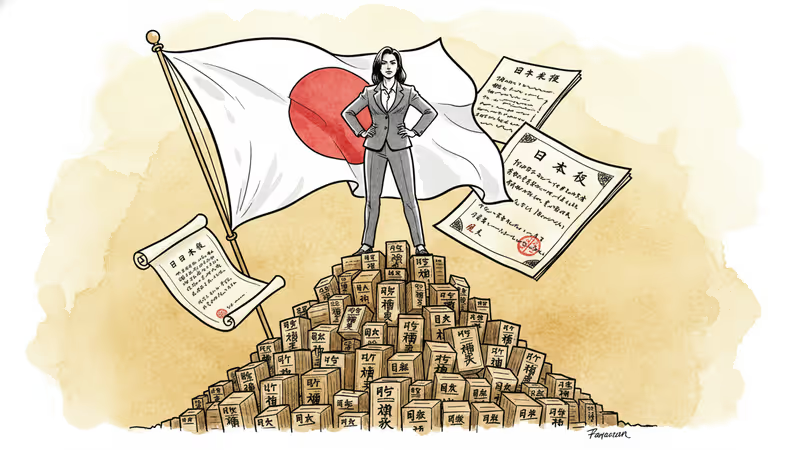
Sanae Takaichi's coalition secured a two-thirds majority in Japan's lower house, paving the way for constitutional amendments and consumption tax cuts.

Japan's LDP secures single-party majority in snap election as PM Takaichi's political risk-taking delivers decisive win amid record early voting
Japan's PM pledges pro-growth fiscal policy without tax hikes, but recent experience shows unfocused spending delivers disappointing results for the economy.
With two-thirds lower house control, PM Takaichi moves to restart Japan's constitutional amendment talks, focusing on clarifying Self-Defense Forces' legal status
Sanae Takaichi's coalition secured a two-thirds majority in Japan's lower house, paving the way for constitutional amendments and consumption tax cuts.
Japan's LDP secures single-party majority in snap election as PM Takaichi's political risk-taking delivers decisive win amid record early voting
Thoughts
Share your thoughts on this article
Sign in to join the conversation