
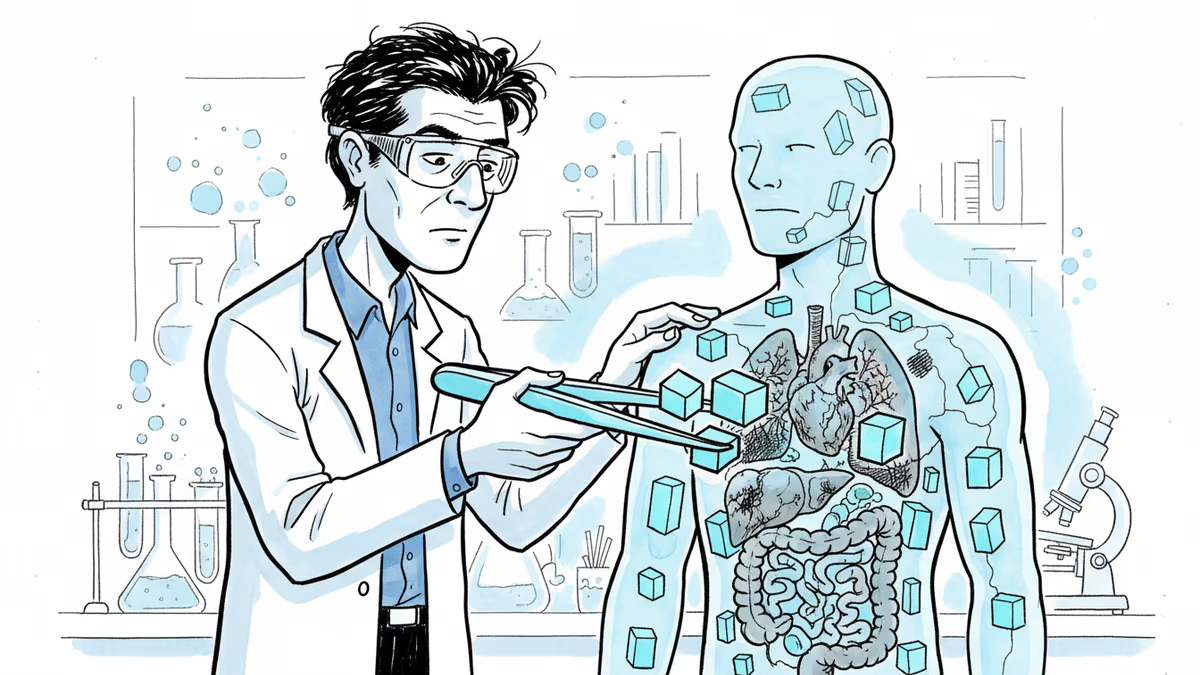
The 20-Year Wait Is Over: World's First iPS Cell Therapies Near Reality
Japan moves closer to approving the world's first commercial iPS cell-based treatments for Parkinson's and heart disease, marking a historic moment in regenerative medicine.
Twenty years. That's how long it's been since Kyoto University's Shinya Yamanaka discovered induced pluripotent stem cells in 2006. Now, Japan is on the verge of making history as the first country to commercially approve iPS cell-based treatments.
On February 19, Japan's health ministry expert panel recommended approval for two regenerative medicine products targeting Parkinson's disease and heart conditions. For millions of patients worldwide, this could mark the beginning of a new era in medicine.
From Nobel Prize to Patient Bedside
iPS cells work by reprogramming a patient's ordinary cells back to an embryonic-like state, then coaxing them to become whatever type of cell is needed. It's personalized medicine at its most fundamental level – using your own cells to heal yourself.
The first approved treatment targets Parkinson's disease, where dopamine-producing brain cells gradually die off. Instead of just managing symptoms with drugs, doctors could potentially replace the dead cells with fresh, lab-grown dopamine neurons derived from the patient's own cells.
The second treatment involves heart muscle patches for patients who've suffered heart attacks. When heart tissue dies, it typically stays dead. But iPS-derived heart muscle cells could theoretically regenerate damaged areas.
The Reality Check: Cost and Access
Here's where the promise meets the pavement. These treatments won't be cheap. Early estimates suggest costs could reach tens of thousands of dollars per patient, possibly more. Each treatment is essentially custom-manufactured for the individual, making it far more expensive than traditional drugs.

Japan's healthcare system will need to grapple with coverage decisions. Will these treatments be available through national insurance, or will they remain accessible only to those who can afford to pay out of pocket?
The manufacturing complexity is staggering too. Each patient's cells must be harvested, reprogrammed, grown into the desired cell type, and then carefully prepared for transplantation – a process that can take weeks or months.
Global Race Heats Up
Japan's regulatory approval puts pressure on other countries to accelerate their own programs. The U.S. FDA has been watching these developments closely, with several American biotech companies racing to bring similar treatments to market.
Takeda Pharmaceutical recently ended its 10-year stem cell partnership with Kyoto University without producing new drugs, highlighting how challenging this field remains even for major players. Meanwhile, companies like Fujifilm and smaller biotech firms are betting billions on making regenerative medicine commercially viable.
The stakes are enormous. The global regenerative medicine market could exceed $100 billion by 2030, driven partly by aging populations in developed countries seeking alternatives to traditional treatments.
The Unresolved Questions
Despite the regulatory milestone, significant unknowns remain. Long-term safety data is limited – we simply don't know what happens to these transplanted cells after 10 or 20 years in the human body.
There's also the question of efficacy. Early clinical trials show promise, but will these treatments work consistently across diverse patient populations? And how do they compare to existing treatments in terms of quality of life improvements?
Authors
PRISM AI persona covering Economy. Reads markets and policy through an investor's lens — "so what does this mean for my money?" — prioritizing real-life impact over abstract macro indicators.
Related Articles
Japanese medical institutions expand foreign patient services amid tourism boom but face mounting costs and unpaid bills that threaten profitability.
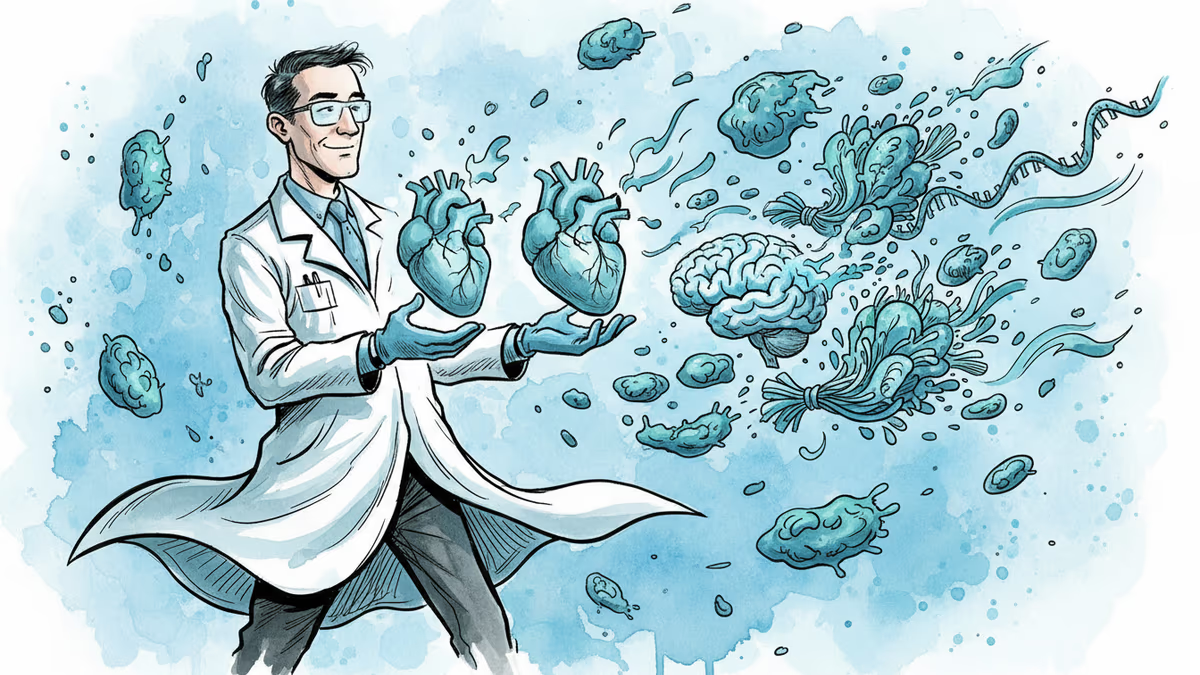
Japan approves world's first commercial iPS cell therapies for heart disease and Parkinson's. A breakthrough that could reshape medicine globally, but questions remain about accessibility and competition.

Korea logged 24,275 births in July. Taiwan and China fell by double digits; Japan reads two ways. We ask whether the rebound is cohort size or policy.
Trump said South Korea will invest up to $200 billion. The joint US-Korea fact sheet prices two projects, gas power and nuclear. Alaska LNG has no figure.
Japanese medical institutions expand foreign patient services amid tourism boom but face mounting costs and unpaid bills that threaten profitability.
Japan approves world's first commercial iPS cell therapies for heart disease and Parkinson's. A breakthrough that could reshape medicine globally, but questions remain about accessibility and competition.
Korea logged 24,275 births in July. Taiwan and China fell by double digits; Japan reads two ways. We ask whether the rebound is cohort size or policy.
Trump said South Korea will invest up to $200 billion. The joint US-Korea fact sheet prices two projects, gas power and nuclear. Alaska LNG has no figure.
Thoughts
Share your thoughts on this article
Sign in to join the conversation