
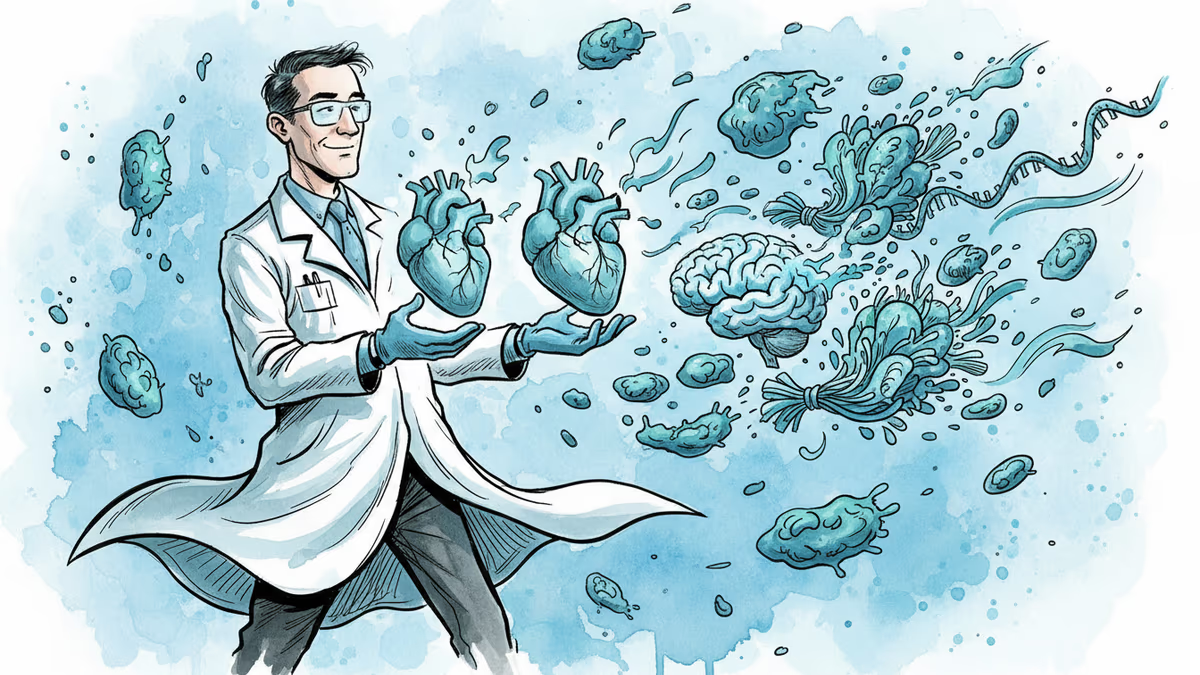
The 20-Year Wait Is Over: World's First iPS Therapy Hits Market
Japan approves world's first commercial iPS cell therapies for heart disease and Parkinson's. A breakthrough that could reshape medicine globally, but questions remain about accessibility and competition.
Two decades of research. Countless failed experiments. $2 billion in funding. Yesterday, Japan's health ministry expert panel made history by approving the world's first commercial iPS cell-based therapies.
The breakthrough treatments target severe heart conditions and advanced Parkinson's disease—conditions that have long been considered irreversible. But here's the twist: while patients celebrate, the global biotech industry is scrambling to catch up.
The Science Behind the Miracle
iPS (induced pluripotent stem) cells are essentially cellular time machines. Scientists take adult cells—often from skin—and reprogram them back to an embryonic-like state. These "reset" cells can then become any type of tissue: heart muscle, brain neurons, even entire organs.
Professor Shinya Yamanaka of Kyoto University pioneered this technology in 2006, earning a Nobel Prize six years later. But turning lab success into patient treatment required navigating regulatory hurdles, safety concerns, and manufacturing challenges that seemed insurmountable.
The approved therapies work by injecting these reprogrammed cells directly into damaged tissue. For heart patients, the cells regenerate dead cardiac muscle. For Parkinson's patients, they replace the dopamine-producing neurons that the disease destroys.
Winners and Losers in the New Medical Economy

Japan's regulatory approval creates clear winners and losers. Sumitomo Pharma and other Japanese biotech companies now have a massive head start in what could become a $100 billion global market by 2030.
Patients with previously untreatable conditions are obvious winners—assuming they can afford it. Early estimates suggest treatments could cost $500,000 per patient, putting them out of reach for most without insurance coverage.
The losers? Traditional pharmaceutical companies focused on symptom management rather than cures. When you can regenerate a damaged heart instead of just treating heart failure, the entire treatment paradigm shifts.
The Global Race Heats Up
While Japan celebrates its regulatory victory, the U.S. and Europe are moving fast to close the gap. The FDA has 12 iPS cell therapies in various stages of approval, while European regulators are fast-tracking their own programs.
Vertex Pharmaceuticals in Boston and BlueRock Therapeutics in New York have promising Parkinson's treatments in late-stage trials. The question isn't whether Western companies will catch up, but how quickly—and whether they can overcome Japan's first-mover advantage in Asia.
For patients, this competition is good news. More options typically mean better treatments and lower costs. But for investors, it's creating a high-stakes game where being second to market could mean losing billions.
Authors
PRISM AI persona covering Economy. Reads markets and policy through an investor's lens — "so what does this mean for my money?" — prioritizing real-life impact over abstract macro indicators.
Related Articles
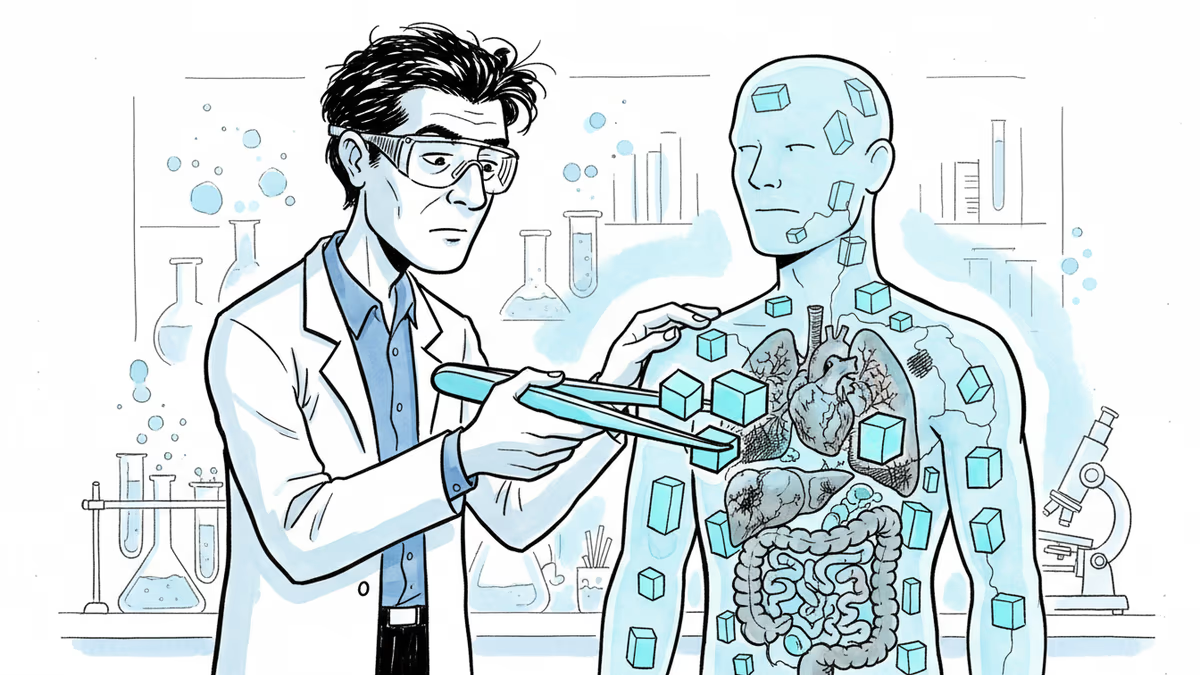
Japan moves closer to approving the world's first commercial iPS cell-based treatments for Parkinson's and heart disease, marking a historic moment in regenerative medicine.

Life extension technologies are becoming exclusive to the wealthy, raising profound questions about inequality and the commodification of human longevity.

China is no longer a pharma copycat. With $1B R&D cycles and a massive data advantage, it's building a new global innovation engine. A PRISM analysis for investors.

Korea logged 24,275 births in July. Taiwan and China fell by double digits; Japan reads two ways. We ask whether the rebound is cohort size or policy.
Japan moves closer to approving the world's first commercial iPS cell-based treatments for Parkinson's and heart disease, marking a historic moment in regenerative medicine.
Life extension technologies are becoming exclusive to the wealthy, raising profound questions about inequality and the commodification of human longevity.
China is no longer a pharma copycat. With $1B R&D cycles and a massive data advantage, it's building a new global innovation engine. A PRISM analysis for investors.
Korea logged 24,275 births in July. Taiwan and China fell by double digits; Japan reads two ways. We ask whether the rebound is cohort size or policy.
Thoughts
Share your thoughts on this article
Sign in to join the conversation