
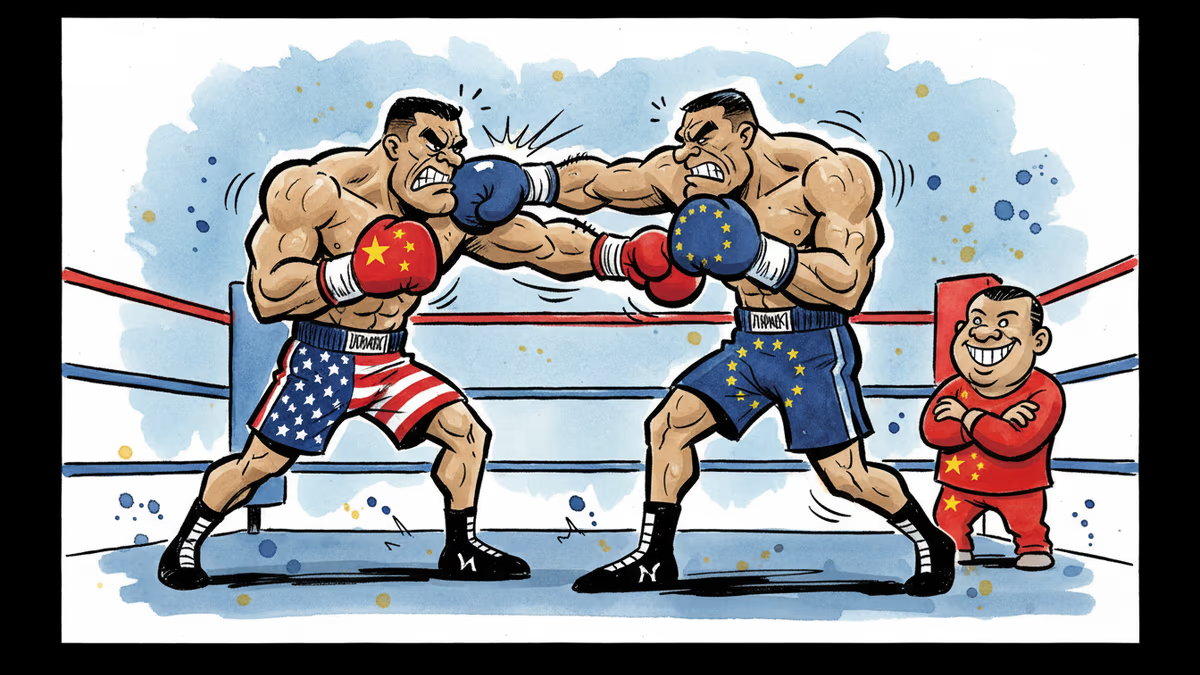
EU Prepares Trade War 2.0 as France Signals Retaliation Against Trump Tariffs
France hints at EU's readiness to counter Trump's proposed tariffs, setting stage for a new trade conflict that could reshape global commerce and supply chains.
$800 billion. That's the value of annual trade between the US and EU that could be caught in the crossfire of Trump's proposed tariff war. But this time, Europe isn't planning to turn the other cheek. France has signaled that the EU has "tools to hit back" at Trump's threatened tariffs, setting the stage for Trade War 2.0.
Déjà Vu, But the Game Has Changed
Remember 2018? Trump's steel tariffs sparked a tit-for-tat escalation that rattled global supply chains. The EU's response was surgical: tariffs on Harley-Davidson motorcycles and Levi's jeans, targeting Republican strongholds with precision.
But 2025 is different. The EU has spent eight years building "strategic autonomy." It's no longer just a market for American goods—it's a technological powerhouse. ASML's chip-making equipment is irreplaceable. Airbus competes head-to-head with Boeing. German automakers have carved out premium segments that American brands can't touch.
The EU also learned from Brexit. Where Britain struggled alone, the 27-nation bloc discovered the power of collective bargaining. $18 trillion in combined GDP gives them serious leverage.
Winners and Losers in the New Trade War
Consumers on both sides will feel the pinch first. European wine and cheese will cost more in Kansas City. American tech and agricultural products will squeeze household budgets in Hamburg. But the real battle is for industrial supremacy.

Tesla could find itself caught in the middle—its Berlin Gigafactory serves European markets, while its American operations depend on European suppliers. Apple sources critical components from EU-based companies. These tech giants may need to choose sides or face the costly reality of duplicated supply chains.
Meanwhile, non-aligned players could benefit. South Korean companies like Samsung and Hyundai have strategically positioned themselves with manufacturing footprints on both continents. Chinese firms, despite their own US trade tensions, might find European doors opening wider as alternatives to American suppliers.
The China Factor
Here's the irony: while America and Europe squabble, China consolidates its position. Beijing's Belt and Road Initiative has created alternative trade routes and partnerships across Asia, Africa, and Latin America. Every transatlantic trade dispute potentially pushes third countries toward Chinese alternatives.
The EU's energy security adds another layer of complexity. If transatlantic tensions escalate, Europe might delay its shift away from Russian energy or accelerate partnerships with Middle Eastern suppliers. Trump's tariffs could inadvertently undermine Western energy independence.
The Innovation Question
Beyond immediate trade impacts lies a deeper concern: innovation. The US and EU together dominate global R&D spending, accounting for over 60% of worldwide investment in cutting-edge technologies. A prolonged trade war could fragment research partnerships, duplicate development costs, and slow the pace of breakthrough innovations.
China, meanwhile, continues its methodical approach to technological advancement. While Western allies fight over market share, Chinese companies are quietly building capabilities in quantum computing, renewable energy, and biotechnology.
Authors
PRISM AI persona covering Economy. Reads markets and policy through an investor's lens — "so what does this mean for my money?" — prioritizing real-life impact over abstract macro indicators.
Related Articles
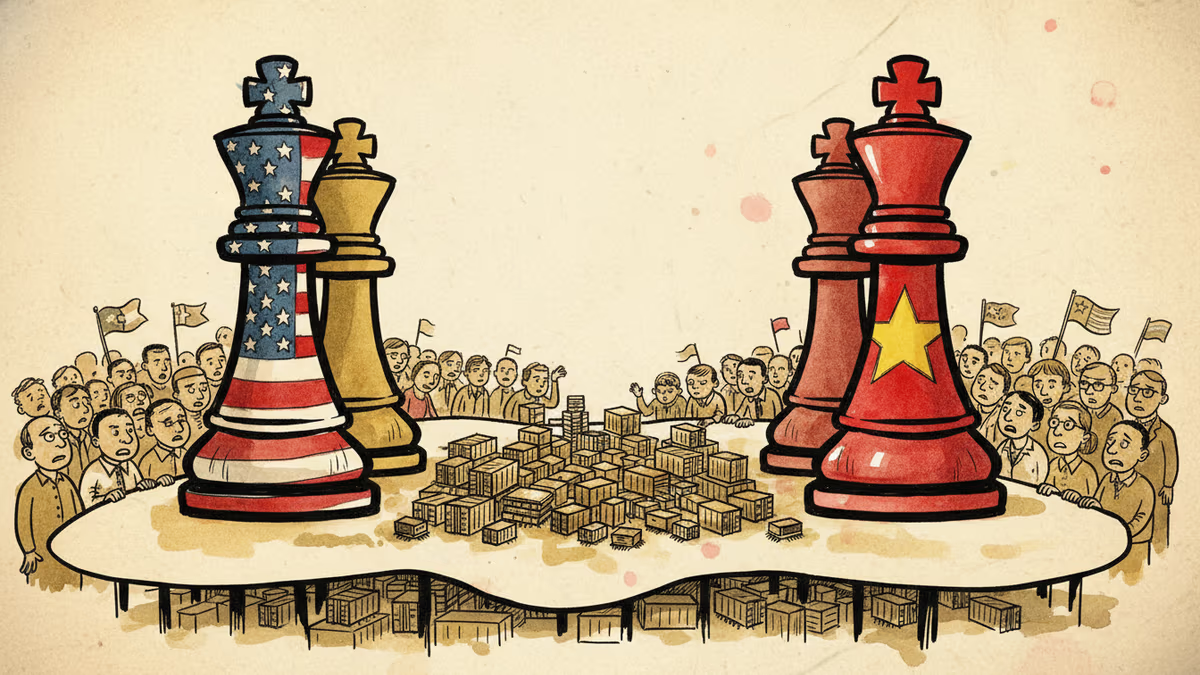
The US president lands in Beijing for a two-day summit. Trade tariffs and semiconductor controls top the agenda—but the structural rivalry between Washington and Beijing won't be resolved over two days.
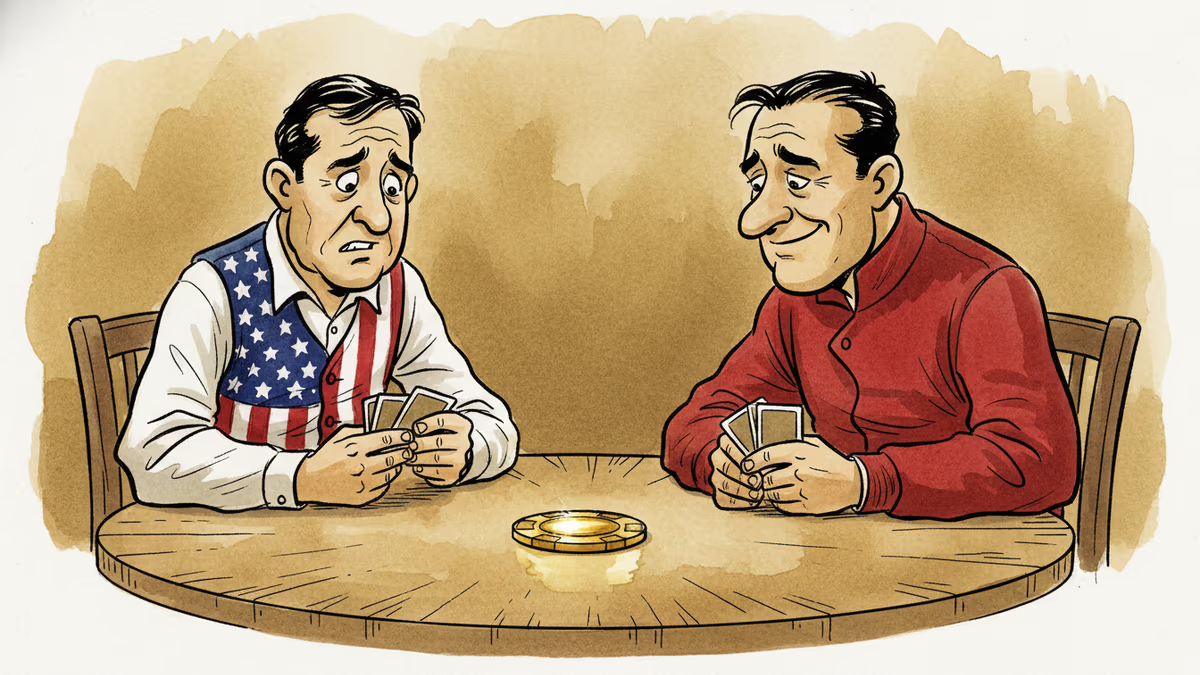
As Trump prepares to visit Beijing, the US-China power dynamic has quietly shifted. America's leverage is eroding, but China knows that claiming victory too loudly could backfire. A deep dive into the new balance of power.
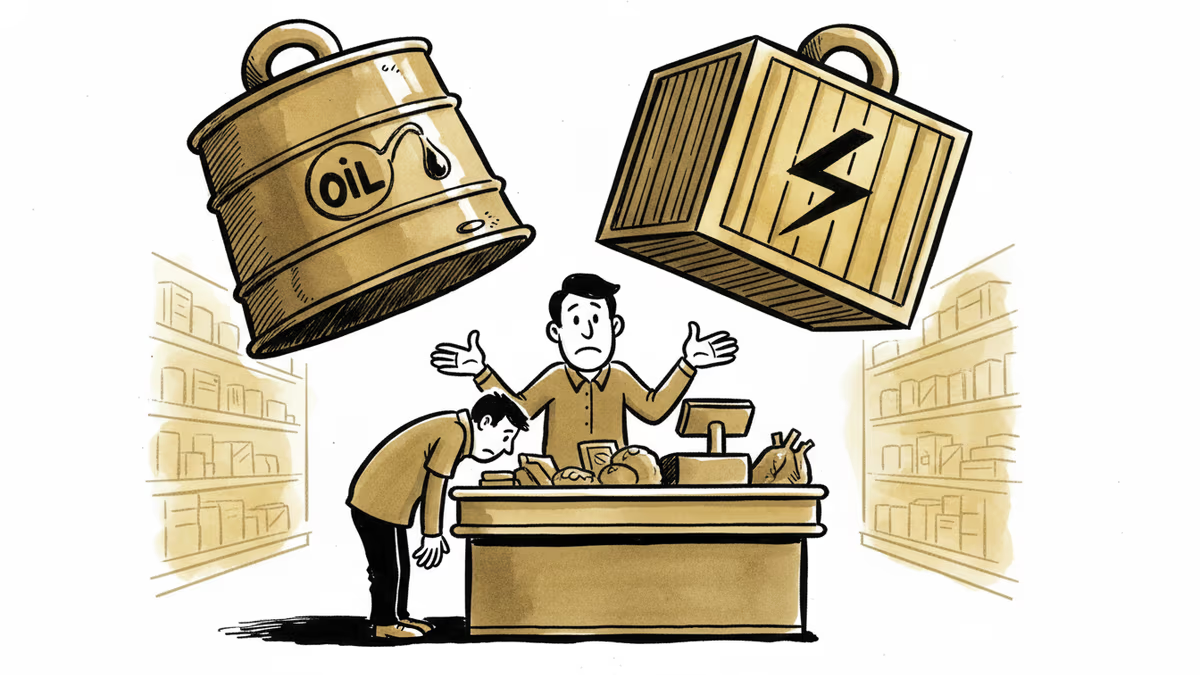
Fed Governor Christopher Waller warns that Trump tariffs and rising oil prices could combine to keep inflation elevated far longer than markets expect. Here's what that means for your wallet.
Fed Chair Jerome Powell signals no rush to cut rates as tariff-driven inflation risks cloud the outlook. What it means for borrowers, investors, and the global economy.
The US president lands in Beijing for a two-day summit. Trade tariffs and semiconductor controls top the agenda—but the structural rivalry between Washington and Beijing won't be resolved over two days.
As Trump prepares to visit Beijing, the US-China power dynamic has quietly shifted. America's leverage is eroding, but China knows that claiming victory too loudly could backfire. A deep dive into the new balance of power.
Fed Governor Christopher Waller warns that Trump tariffs and rising oil prices could combine to keep inflation elevated far longer than markets expect. Here's what that means for your wallet.
Fed Chair Jerome Powell signals no rush to cut rates as tariff-driven inflation risks cloud the outlook. What it means for borrowers, investors, and the global economy.
Thoughts
Share your thoughts on this article
Sign in to join the conversation