

Artificial Sun Goes Public: Japan Nuclear Fusion Private Sector 2026 Access Announced
Japan will open 3 national nuclear fusion research sites to private companies in 2026. This move aims to accelerate commercial fusion power by the 2030s.
The race for the 'ultimate clean energy' just entered a new phase. According to Nikkei, the Japanese government plans to grant private companies access to 3 national R&D sites dedicated to nuclear fusion starting in fiscal 2026. It's a bold move to slash the timeline for commercial fusion power, aiming for a grid-ready solution by the 2030s.
The Japan Nuclear Fusion Private Sector 2026 Strategy
By opening up state-of-the-art facilities, including a major testing site in Ibaraki prefecture, Tokyo is betting that private-sector efficiency can overcome the daunting engineering hurdles of fusion. This initiative follows Japan's recent designation of fusion as one of six strategic technology fields, alongside AI and quantum computing.
Domestic startups like Helical Fusion and international collaborations with firms like Zap Energy are already positioning themselves to leverage this new access. The goal isn't just scientific discovery; it's about building a multi-billion dollar export industry.

A Global Fusion Arms Race
Japan isn't alone in this pursuit. China recently launched a massive fusion energy firm backed by $1.6 billion in state-owned investment. Meanwhile, the UK and Japan have signed memorandums to synchronize their research efforts. The competition is fierce as nations scramble to secure the first-mover advantage in a market that could provide near-limitless carbon-free energy.
| Region | Investment/Strategy | Target Date |
|---|---|---|
| Japan | Private access to 3 R&D sites | 2030s |
| China | $1.6B SOE Investment | Not specified |
| USA (Zap Energy) | Private VC + Japanese bank funding | 2030s |
Authors
Related Articles
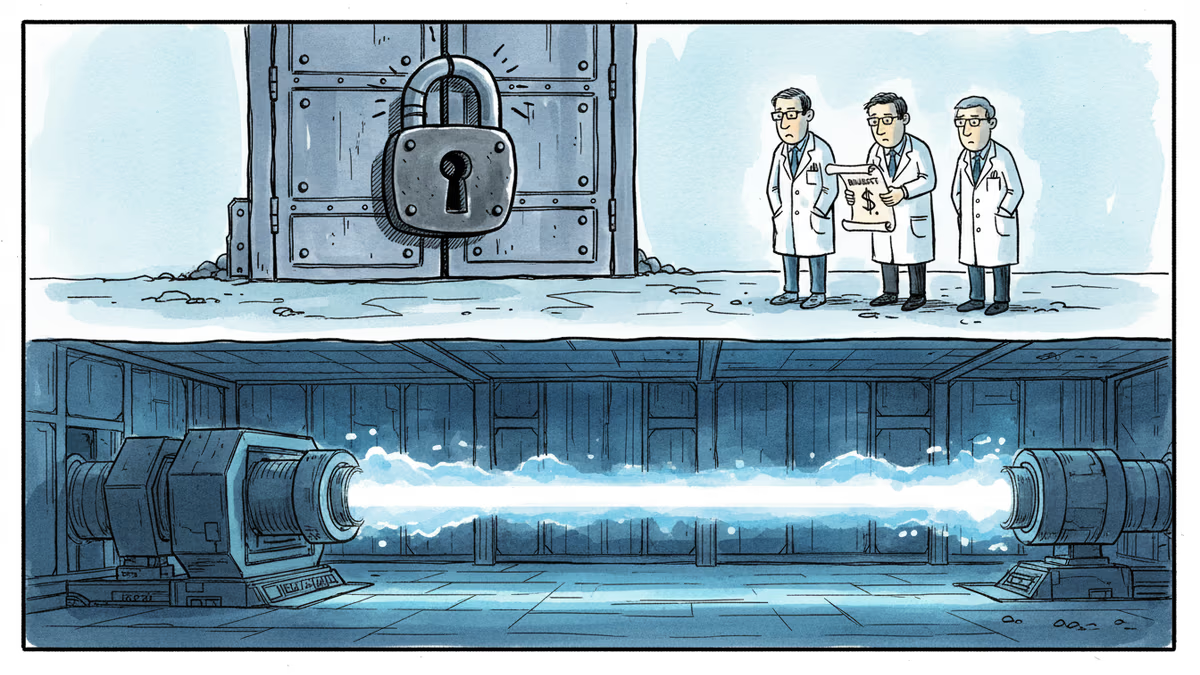
The Texas Petawatt laser—capable of outpowering the entire US electrical grid for a trillionth of a second—has shut down due to funding cuts. What does this mean for fusion energy and America's scientific future?
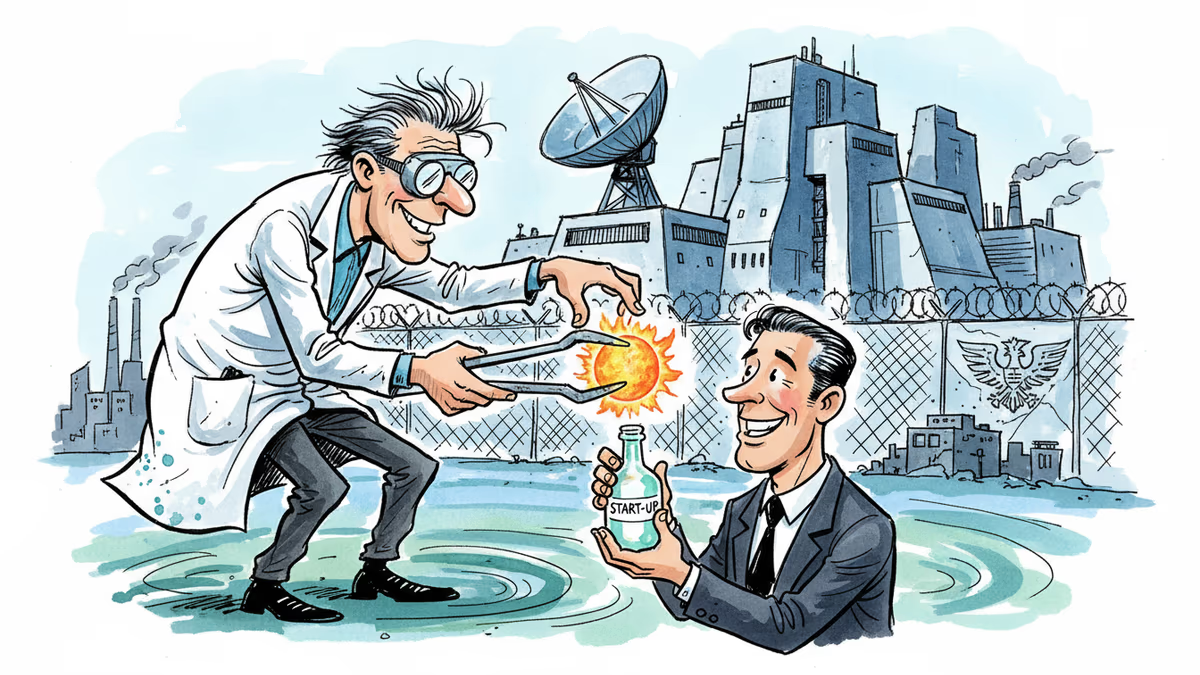
Inertia Enterprises just signed three agreements with Lawrence Livermore National Laboratory, licensing nearly 200 patents. Is this the moment laser fusion gets serious about the grid?
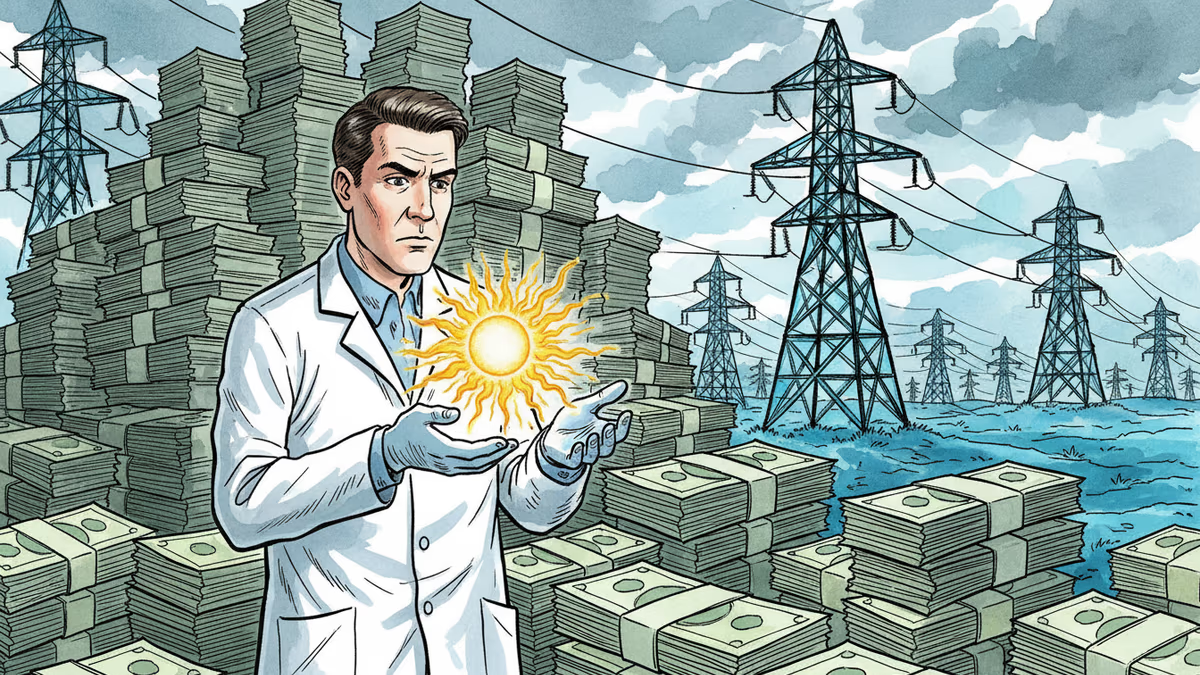
Fusion startups have raised over $10 billion as energy demand from AI data centers surges. Here's what's actually being built, which approaches are closest, and why this time might—just might—be different.
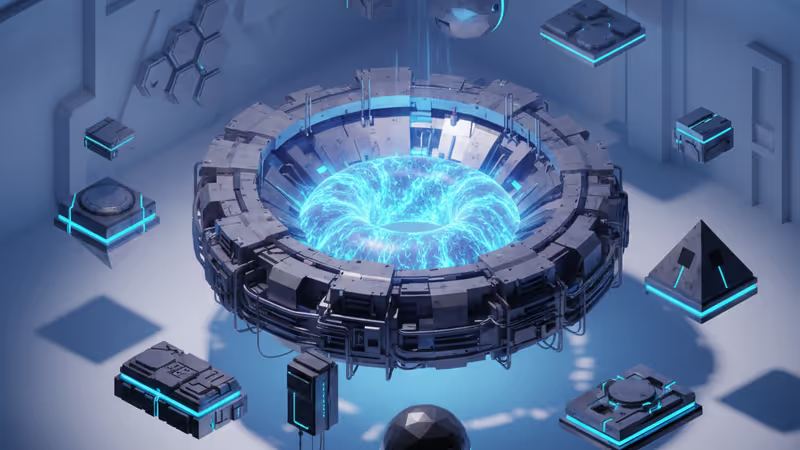
Type One Energy fusion funding reaches new heights with a $900M valuation. Learn how this startup is leveraging stellarator tech to meet the massive power demands of AI.
The Texas Petawatt laser—capable of outpowering the entire US electrical grid for a trillionth of a second—has shut down due to funding cuts. What does this mean for fusion energy and America's scientific future?
Inertia Enterprises just signed three agreements with Lawrence Livermore National Laboratory, licensing nearly 200 patents. Is this the moment laser fusion gets serious about the grid?
Fusion startups have raised over $10 billion as energy demand from AI data centers surges. Here's what's actually being built, which approaches are closest, and why this time might—just might—be different.
Type One Energy fusion funding reaches new heights with a $900M valuation. Learn how this startup is leveraging stellarator tech to meet the massive power demands of AI.
Thoughts
Share your thoughts on this article
Sign in to join the conversation