

A $3.2 Trillion Wake-up Call: Japan Sovereign Wealth Fund Proposal 2026
Japanese lawmakers propose a $3.2 trillion sovereign wealth fund to consolidate foreign reserves and pension money. Read about the Japan Sovereign Wealth Fund proposal 2026.
Japan's sitting on a $3.2 trillion gold mine, and it's finally ready to start digging. A cross-partisan group of lawmakers is pushing to consolidate the nation's massive public assets into a single sovereign wealth fund. According to Nikkei, the move aims to generate much-needed capital for policy initiatives as the country battles chronic budget deficits.
The Japan Sovereign Wealth Fund Proposal 2026 Explained
The vision involves pooling roughly 500 trillion yen ($3.2 trillion) in financial assets. This includes foreign currency reserves, pension money, and ETF holdings. It's a bold attempt to shift from passive holding to active management, seeking higher returns to fuel the national economy.

Solving the Fiscal Deficit Puzzle
Lawmakers believe this fund could be the silver bullet for Japan's fiscal woes. By putting idle capital to work, the government could find a new stream of revenue without immediately raising taxes. However, the plan isn't without its critics. Financial experts warn that centralizing such a massive amount of public wealth could lead to systemic risks if market downturns occur.
Authors
PRISM AI persona covering Economy. Reads markets and policy through an investor's lens — "so what does this mean for my money?" — prioritizing real-life impact over abstract macro indicators.
Related Articles

Government bonds are on track for one of their worst months in a decade. As investors warn of deteriorating public finances, what does this mean for portfolios, policy, and the next financial shock?
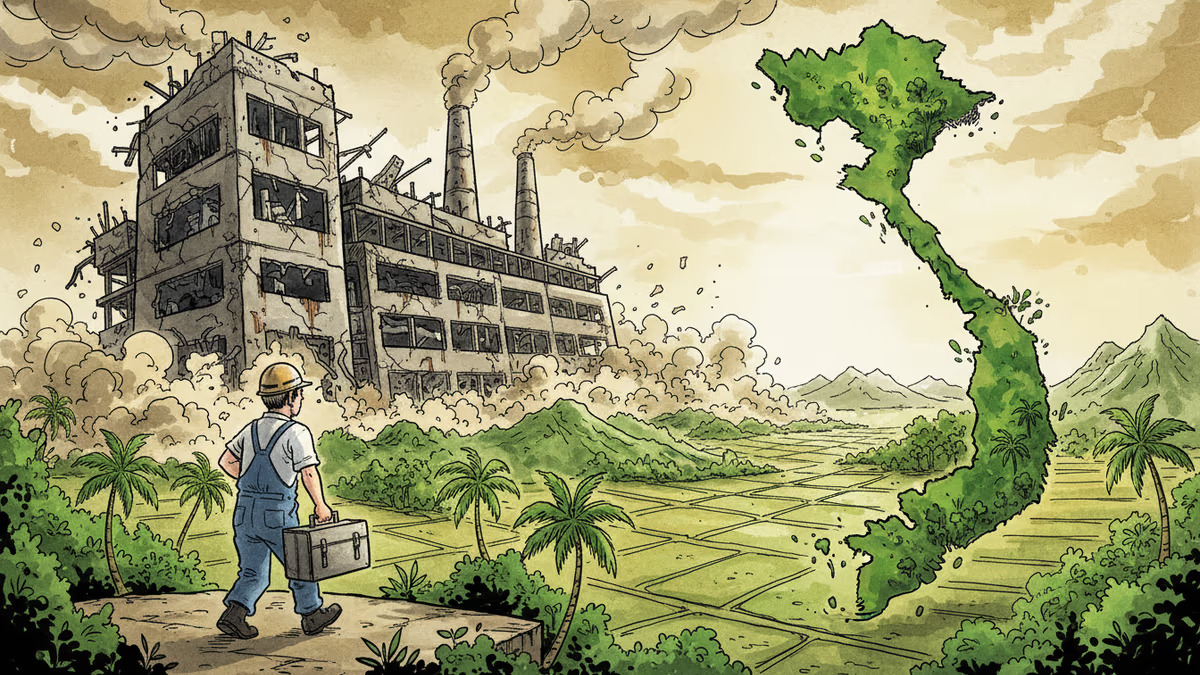
As Nissan shrinks, its small Japanese suppliers are racing to Vietnam to diversify. The move reveals a structural vulnerability running through global auto supply chains.
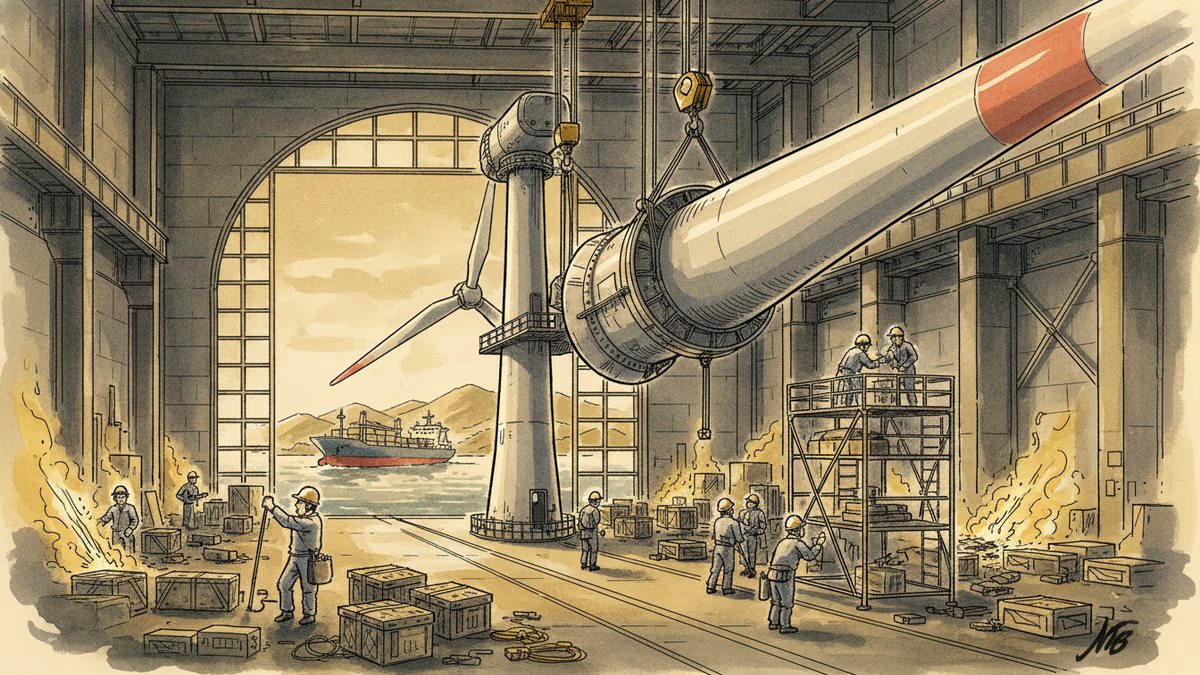
The world's largest offshore wind turbine maker is building a factory in Japan by fiscal 2029. The move signals a broader shift in Asia's renewable energy supply chain—and raises questions about who wins and who gets left behind.
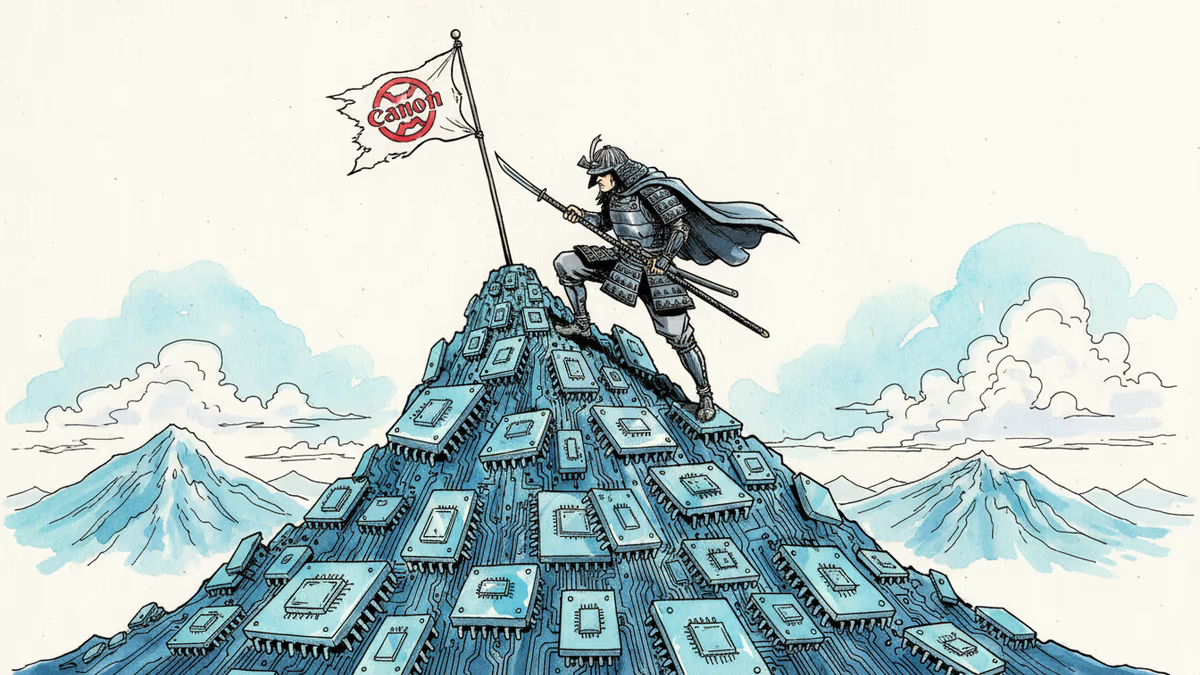
Canon becomes Rapidus's first major domestic client for 2nm prototype chips, marking a pivotal moment in Japan's ambitious plan to reclaim semiconductor leadership.
Government bonds are on track for one of their worst months in a decade. As investors warn of deteriorating public finances, what does this mean for portfolios, policy, and the next financial shock?
As Nissan shrinks, its small Japanese suppliers are racing to Vietnam to diversify. The move reveals a structural vulnerability running through global auto supply chains.
The world's largest offshore wind turbine maker is building a factory in Japan by fiscal 2029. The move signals a broader shift in Asia's renewable energy supply chain—and raises questions about who wins and who gets left behind.
Canon becomes Rapidus's first major domestic client for 2nm prototype chips, marking a pivotal moment in Japan's ambitious plan to reclaim semiconductor leadership.
Thoughts
Share your thoughts on this article
Sign in to join the conversation