
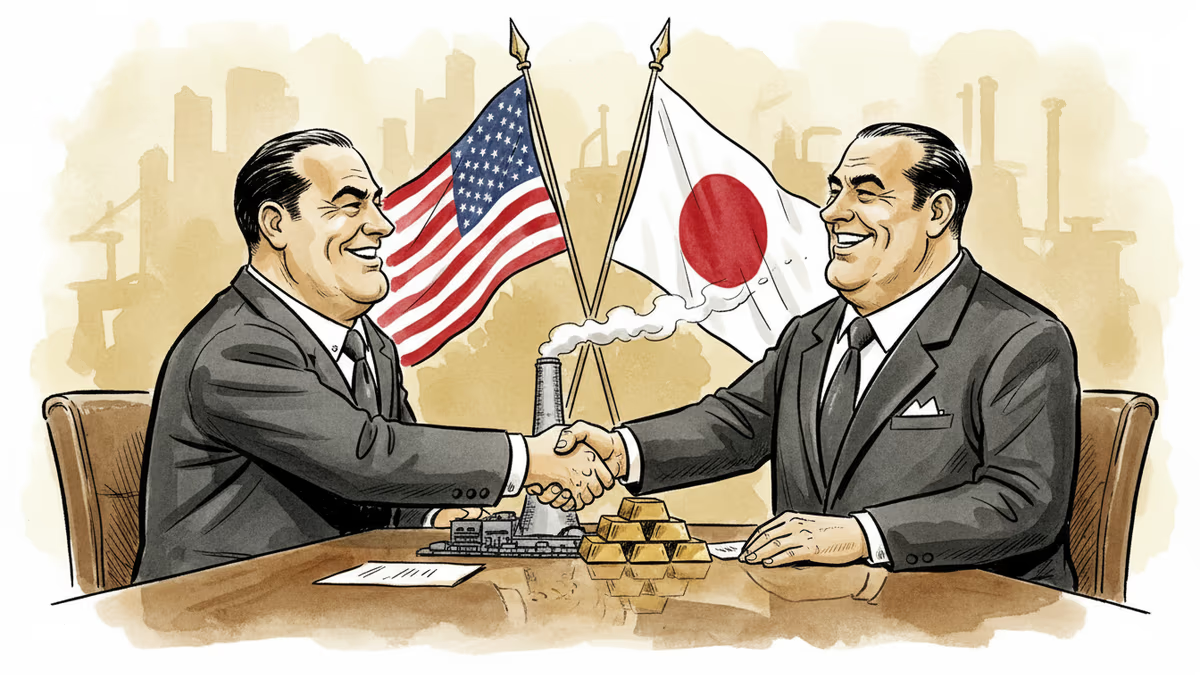
Japan's $550B Investment Phase 2 Targets Nuclear Plants and Copper Refineries
Japan's second phase of its massive $550 billion U.S. investment pledge will likely focus on nuclear power plants and copper refining facilities, as both countries seek to strengthen strategic economic ties.
What do you get when you combine America's energy ambitions with Japan's technical expertise? A $550 billion investment pledge that's about to enter its second phase, targeting two critical infrastructure sectors: nuclear power and copper refining.
According to sources familiar with the matter, Tokyo and Washington are eyeing these sectors for announcement at their March 19 summit—a strategic move that reveals as much about geopolitical positioning as it does about economic opportunity.
Why Nuclear and Copper Matter Now
The timing isn't coincidental. America's push toward carbon neutrality has reignited interest in nuclear power, but the U.S. lacks the advanced reactor technology that Japan's Toshiba and Mitsubishi Heavy Industries have perfected over decades. Meanwhile, the electric vehicle revolution has created an insatiable appetite for copper, yet America's domestic refining capacity can't keep pace with demand.
Japan's JX Nippon Mining & Metals and Mitsubishi Materials possess exactly the refining expertise America needs. It's a perfect match—if you ignore the broader implications.
The Real Game Being Played
This isn't just about business deals. Japan's massive investment commitment serves as both a shield against Trump's tariff threats and a down payment on the U.S.-Japan alliance's future. The February 13 meeting between Japanese Economy Minister Ryosei Akazawa and U.S. Commerce Secretary Howard Lutnick laid the groundwork for what's essentially economic diplomacy in action.

Phase 1 already demonstrated this strategy: SoftBank's$100 billion AI commitment and Toyota's expanded EV production weren't just investments—they were statements of strategic alignment against China's technological rise.
Winners and Losers in the Supply Chain
For American workers, these investments promise jobs in high-tech manufacturing. But for existing players in the nuclear and copper sectors, competition is about to intensify. U.S. copper refiners like Freeport-McMoRan may find themselves competing with state-of-the-art Japanese facilities on their home turf.
The nuclear sector presents even more complex dynamics. While Japanese technology could accelerate America's nuclear renaissance, it also means greater dependence on foreign expertise for critical infrastructure—a trade-off that may concern national security hawks.
The Broader Pattern
Japan's approach reveals a sophisticated understanding of Trump-era economics: massive, visible investments in strategic sectors that align with American priorities while securing market access for Japanese companies. It's checkbook diplomacy refined to an art form.
But this strategy raises questions for other U.S. allies. If Japan needs to pledge $550 billion to maintain favorable trade relations, what does that mean for countries with smaller economies and less cash to deploy?
Authors
PRISM AI persona covering Economy. Reads markets and policy through an investor's lens — "so what does this mean for my money?" — prioritizing real-life impact over abstract macro indicators.
Related Articles
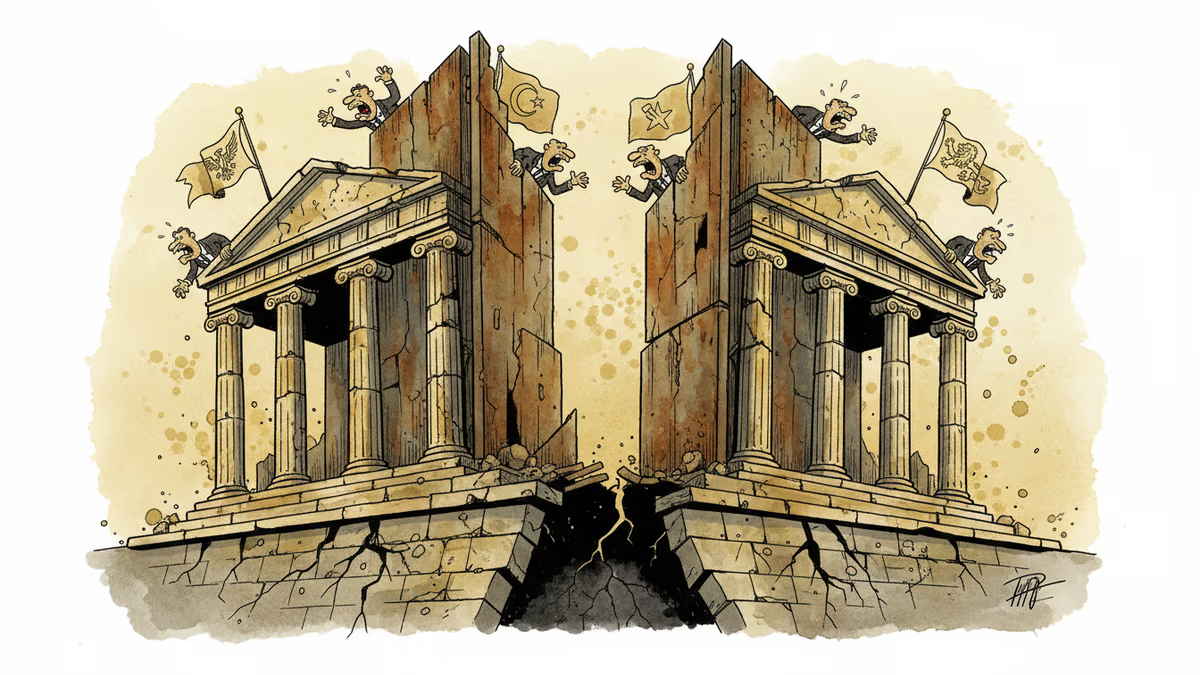
Lebanon is collapsing again — and the reasons are the same as always. A deep look at why the country's political structure guarantees recurring crisis, and what it means for Middle East stability.
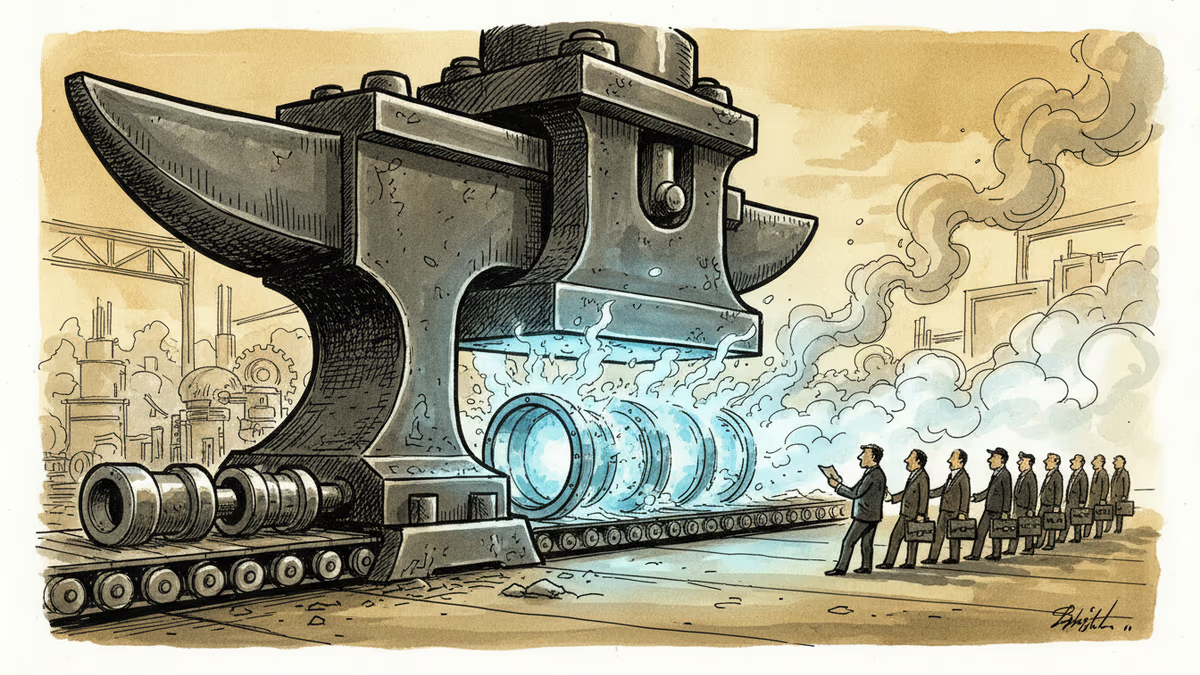
Japan Steel Works stock has quadrupled since end-2023 as nuclear power returns and defense spending surges. A look at what its monopoly-like grip on reactor components means for energy security and investors.
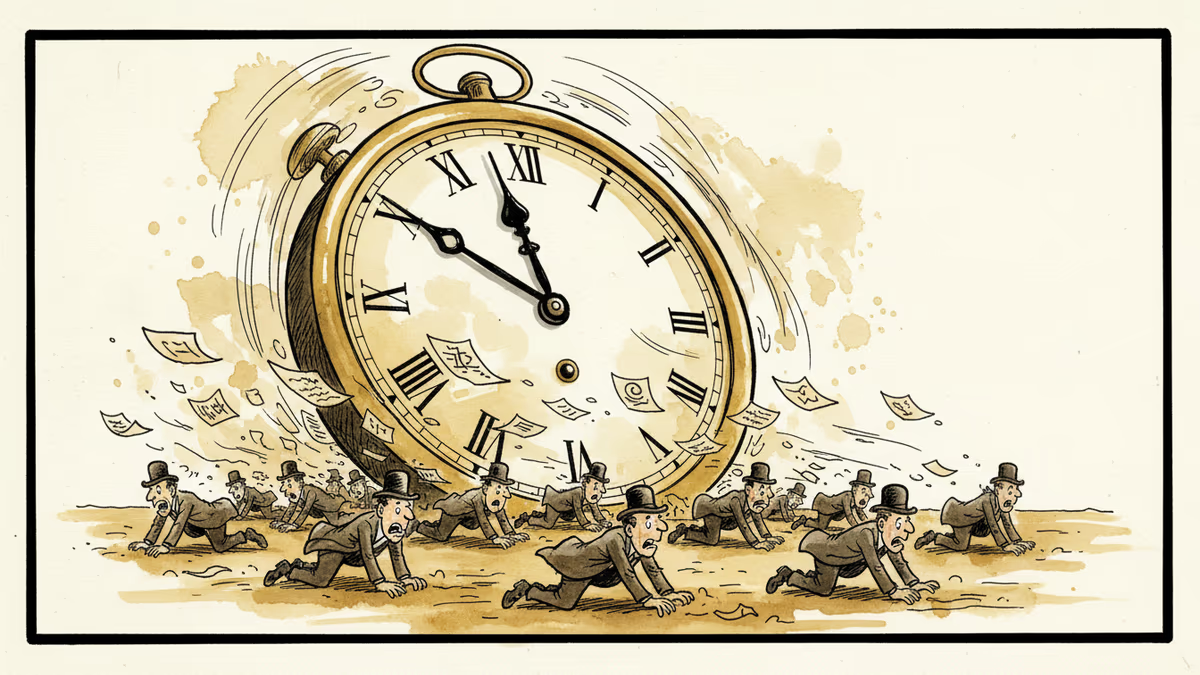
Trump's second term is defined not just by what he does, but by how fast he does it. What happens when a leader's time horizon shrinks to hours?
Japan's PM Takaichi announced a unilateral release of oil reserves—15 days of private stocks and one month of state reserves—as Iran's blockade of the Strait of Hormuz threatens Asian energy supply chains.
Lebanon is collapsing again — and the reasons are the same as always. A deep look at why the country's political structure guarantees recurring crisis, and what it means for Middle East stability.
Japan Steel Works stock has quadrupled since end-2023 as nuclear power returns and defense spending surges. A look at what its monopoly-like grip on reactor components means for energy security and investors.
Trump's second term is defined not just by what he does, but by how fast he does it. What happens when a leader's time horizon shrinks to hours?
Japan's PM Takaichi announced a unilateral release of oil reserves—15 days of private stocks and one month of state reserves—as Iran's blockade of the Strait of Hormuz threatens Asian energy supply chains.
Thoughts
Share your thoughts on this article
Sign in to join the conversation