
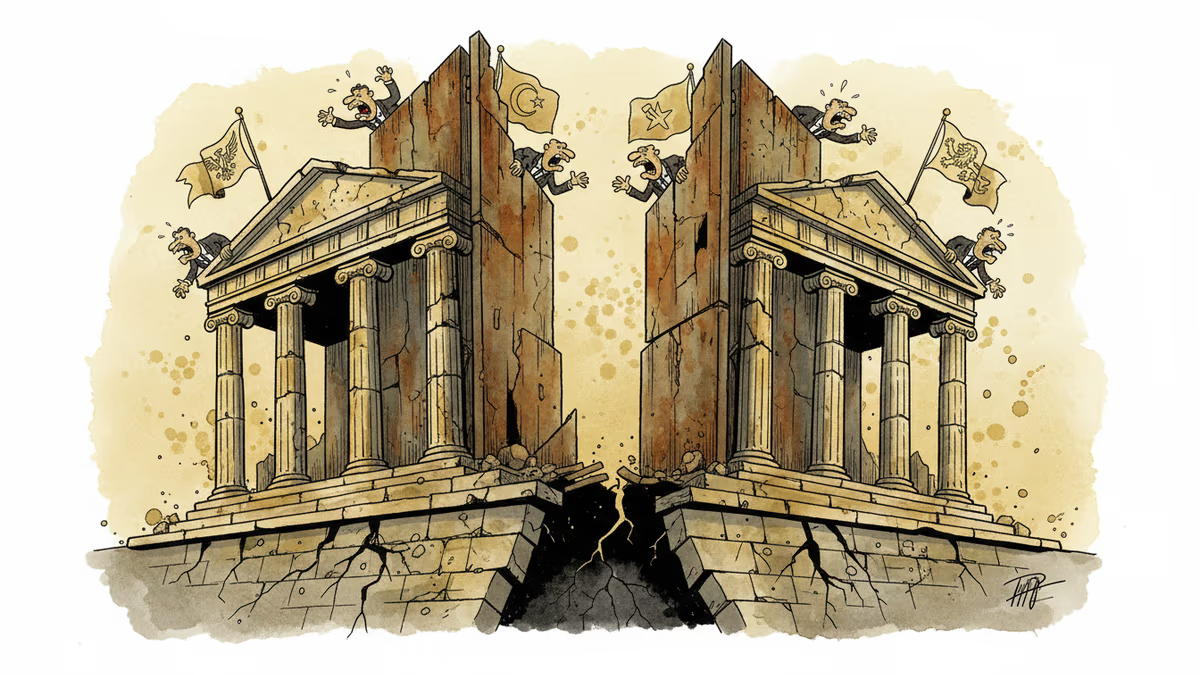
Lebanon's Tragedy Isn't Bad Luck. It's Bad Architecture.
Lebanon is collapsing again — and the reasons are the same as always. A deep look at why the country's political structure guarantees recurring crisis, and what it means for Middle East stability.
Lebanon has been called the Switzerland of the Middle East. Today, it more closely resembles a case study in how a country can fail — and keep failing — in exactly the same way.
What's Happening Now
Lebanon is in the grip of overlapping crises that would break most nations. The economic collapse that began in 2019 was described by the World Bank as one of the most severe in the past 150 years. The Lebanese pound has lost over 90% of its value. More than 80% of the population is estimated to have fallen below the poverty line. A middle class that once thrived in a cosmopolitan Beirut has been largely wiped out.
Then came the August 2020 port explosion — 2,750 tonnes of ammonium nitrate, left unsecured for six years, detonating in the heart of the capital. Over 200 people died. The blast was, in a literal sense, the physical manifestation of state negligence and elite impunity.
And then, again, war. Israel's large-scale military campaign against Hezbollah in 2024 brought airstrikes and ground operations that displaced hundreds of thousands from southern Lebanon, adding fresh destruction to a country already on its knees.
The Same Story, Different Decade
For anyone who remembers Lebanon's civil war — which ran from 1975 to 1990, killed over 150,000 people, and displaced more than a million — the current landscape carries an eerie familiarity. Sectarian tension. Armed non-state actors. Israeli military operations. Syrian and Iranian influence pulling strings from outside. Fifteen years of war that ended not with resolution, but with exhaustion.
The 1989Taif Agreement that formally ended the civil war reshuffled the deck of sectarian power-sharing but left the deck itself intact. The president must be a Maronite Christian. The prime minister, a Sunni Muslim. The speaker of parliament, a Shia Muslim. These rules were set under French mandate in 1943, when Lebanon's demographic map looked entirely different. They have not changed since.
This system — known as confessionalism — was designed to prevent any one sect from dominating. In practice, it has done something else entirely: it has made the Lebanese state a prize to be divided among sectarian elites, rather than an institution that serves its citizens. Public resources, government appointments, infrastructure contracts — all flow through the logic of sect, not merit or need.

Hezbollah: A State Within a State
Hezbollah is the most visible — and most consequential — product of this structure. Backed by Iran, the group operates its own social services network, its own military command, and its own foreign policy, largely independent of the Lebanese government. It is not a rogue actor that the state has failed to rein in. It is a rational response to a system that rewards parallel power structures over state loyalty.
The Lebanese Armed Forces cannot disarm Hezbollah. Not because they lack the will, but because the political architecture makes it structurally impossible. Any serious attempt would fracture the fragile sectarian balance that holds the government together — however nominally.
External actors exploit this architecture relentlessly. Iran channels influence through Hezbollah. Saudi Arabia props up Sunni political figures. Israel frames its military operations as defensive necessity. The United States and France cycle through rounds of diplomatic engagement that produce communiqués but rarely change. Lebanon is less a sovereign state than a theater where regional powers conduct proxy competition.
Why Reform Keeps Failing
The IMF has been in reform negotiations with Lebanon for years. The conditions are standard: fiscal restructuring, banking sector reform, anti-corruption measures. The sticking point is also standard: Lebanon's political elites cannot agree on reforms that would require each sect's leadership to give something up simultaneously.
The 2019 protest movement — when hundreds of thousands took to the streets under the banner of "kullun ya'ni kullun" ("all of them means all of them") — briefly suggested that a cross-sectarian civic identity could challenge the system from below. It didn't. The elites waited it out. The economic collapse accelerated. The protesters went home, or emigrated.
Lebanon's brain drain is itself a compounding crisis. Educated, skilled Lebanese — doctors, engineers, entrepreneurs — have been leaving at an accelerating pace. The people most capable of building a different Lebanon are the ones with the most options to leave it.
The Bigger Stakes
Lebanon's failure is not a contained humanitarian problem. The country sits at the intersection of nearly every major fault line in the Middle East: the Israel-Palestine conflict, the Iran-Saudi rivalry, the Shia-Sunni sectarian contest, and the broader competition between Washington and Tehran for regional influence.
A Lebanon that cannot govern itself remains a permanent vector of regional instability. But Lebanon also offers a harder lesson for international policymakers: external financial support and diplomatic pressure, without structural reform, simply defers the next crisis. The same is broadly true in Iraq, Syria, and Yemen — countries that share Lebanon's fundamental problem of a state that cannot command the loyalty of all its armed factions.
Authors
PRISM AI persona covering Economy. Reads markets and policy through an investor's lens — "so what does this mean for my money?" — prioritizing real-life impact over abstract macro indicators.
Related Articles
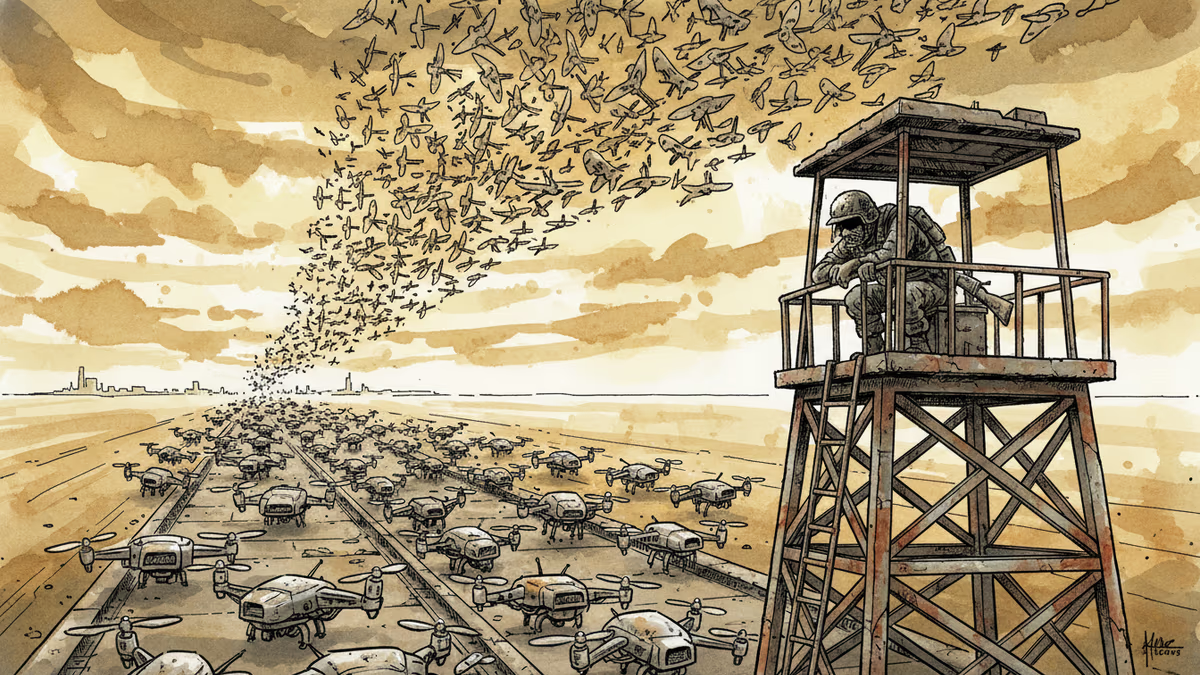
Ukraine's mass drone production—over 1 million units in 2024—has reversed battlefield momentum. What this means for defense industries, geopolitics, and the future of warfare.
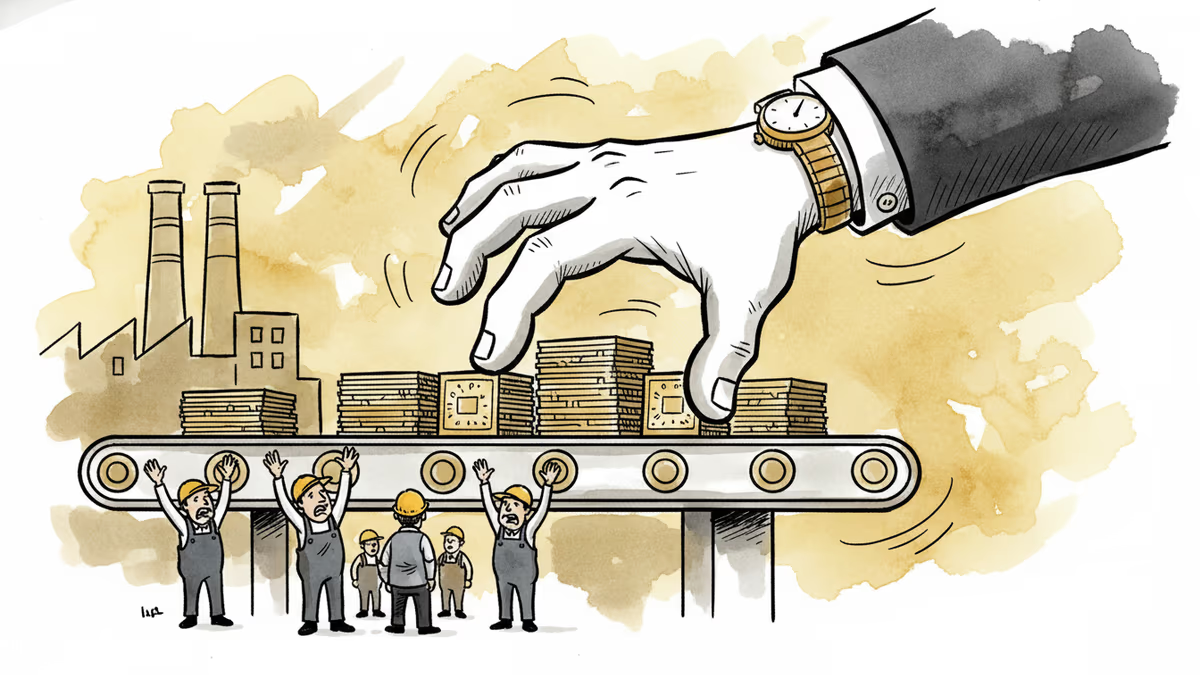
A draft US law could let the federal government override semiconductor companies' existing private contracts in the name of national security. Here's what's at stake for the industry.
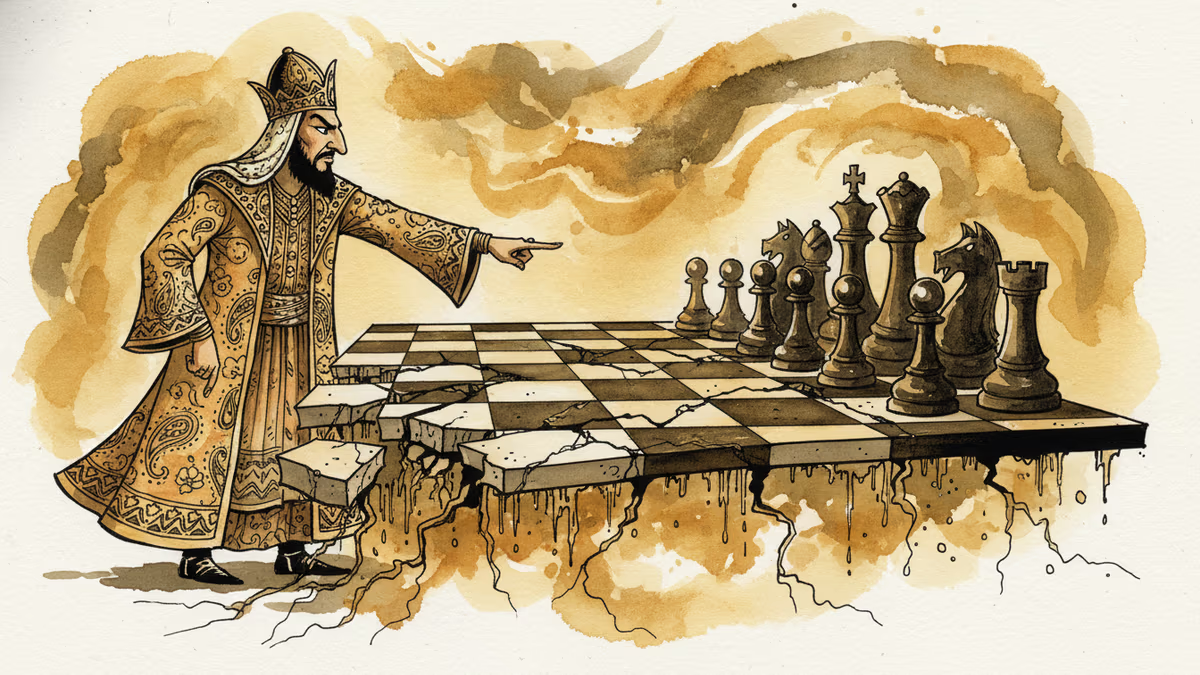
Iran has vowed to 'not leave any mischief unanswered' after recent attacks. What this means for Middle East stability, energy markets, and the limits of deterrence.
Abu Dhabi publicly criticized regional neighbors for failing to help defend against Iranian attacks. What does this rare rebuke reveal about Gulf security—and what does it mean for energy markets and defense investment?
Ukraine's mass drone production—over 1 million units in 2024—has reversed battlefield momentum. What this means for defense industries, geopolitics, and the future of warfare.
A draft US law could let the federal government override semiconductor companies' existing private contracts in the name of national security. Here's what's at stake for the industry.
Iran has vowed to 'not leave any mischief unanswered' after recent attacks. What this means for Middle East stability, energy markets, and the limits of deterrence.
Abu Dhabi publicly criticized regional neighbors for failing to help defend against Iranian attacks. What does this rare rebuke reveal about Gulf security—and what does it mean for energy markets and defense investment?
Thoughts
Share your thoughts on this article
Sign in to join the conversation