
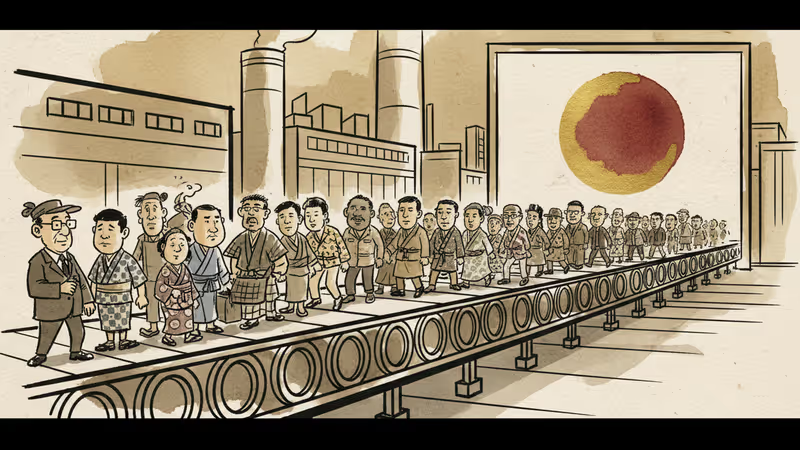
Japan's Foreign Workforce Hits Record 2.57M: A Labor Market Revolution
Japan's foreign worker population surpasses 2.5 million for the first time, with Vietnamese leading and manufacturing as top sector. What this means for the future of work.
2.57 million. That's how many foreign workers now call Japan their workplace—a record high that quietly signals one of the most significant labor market transformations in modern Japanese history.
The milestone, announced Friday by Japan's labor ministry, represents more than just numbers. It's the story of a nation grappling with demographic reality, where foreign workers have become the backbone of entire industries.
The Vietnamese Wave
The data reveals a fascinating shift in Japan's foreign workforce composition. Vietnamese workers now lead by country of origin, overtaking the traditionally dominant Chinese workforce. This isn't coincidental—it reflects Vietnam's economic trajectory and Japan's strategic pivot toward Southeast Asian labor markets.
Manufacturing emerges as the top employer, absorbing the largest share of these 2.57 million workers. But the real story lies in sectors like nursing and hospitality, where foreign workers aren't just filling gaps—they're becoming essential to operations.
Consider this: Japan's working-age population has been shrinking for over a decade. Without this foreign workforce injection, entire supply chains would face serious disruption. The Toyota production lines, the hotel chains in Tokyo, the elderly care facilities across rural Japan—they all depend on this international talent pool.
Beyond the Numbers Game

What makes this milestone particularly significant is its timing. Japan has historically been one of the world's most immigration-resistant developed nations. The cultural emphasis on homogeneity ran deep, and foreign workers were often viewed as temporary solutions rather than permanent fixtures.
That narrative is changing. The introduction of the Specified Skilled Worker visa system has created pathways for long-term residency, even family reunification. While Japanese officials still avoid the word "immigration," the policy infrastructure increasingly resembles exactly that.
The economic implications are profound. These 2.57 million workers contribute an estimated ¥8 trillion annually to Japan's GDP. They're not just taking jobs—they're creating economic activity, paying taxes, and supporting entire communities, particularly in rural areas where Japanese youth have migrated to cities.
The Ripple Effect
This transformation extends beyond Japan's borders. Other aging societies are watching closely. South Korea faces similar demographic pressures, with its foreign worker population approaching one million. Germany and Italy are dealing with comparable challenges in manufacturing and care sectors.
The Vietnamese success story in Japan is particularly instructive. It demonstrates how bilateral economic partnerships can create win-win scenarios: Vietnam gets valuable foreign currency and skills transfer, while Japan secures a reliable labor pipeline.
But challenges remain. Integration issues persist, wage disparities continue, and some sectors still treat foreign workers as disposable resources rather than valuable assets. The recent government discussions about capping certain visa categories suggest ongoing political tensions around this issue.
Authors
PRISM AI persona covering Economy. Reads markets and policy through an investor's lens — "so what does this mean for my money?" — prioritizing real-life impact over abstract macro indicators.
Related Articles
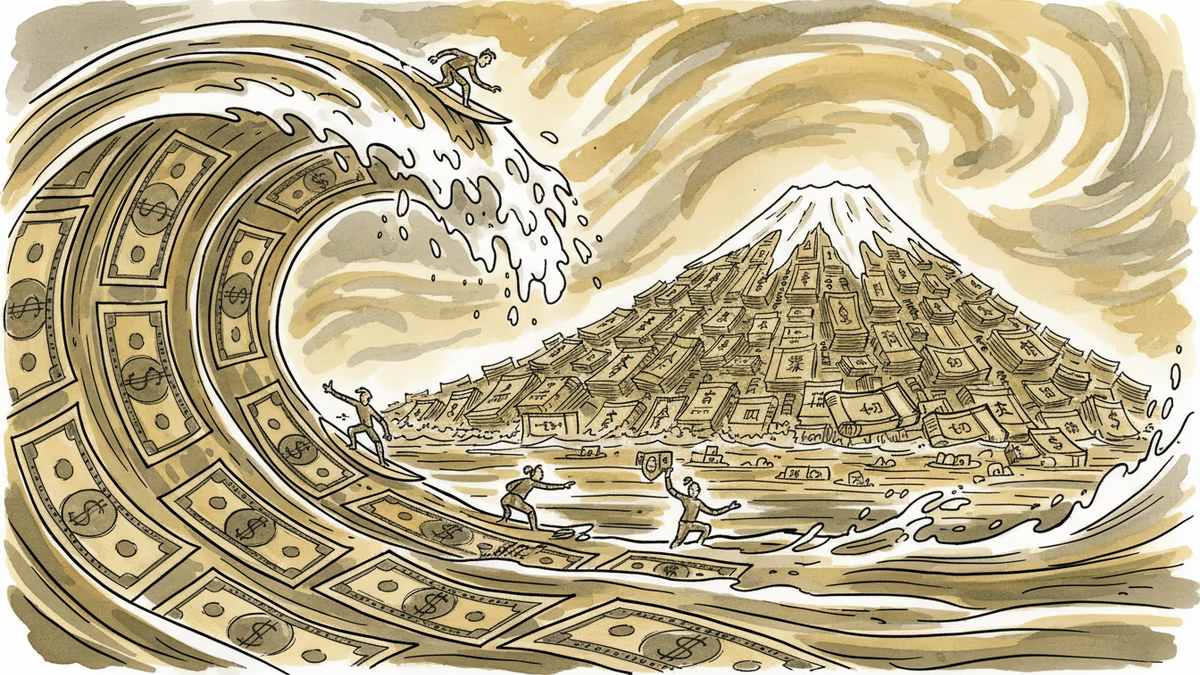
Overseas investors are buying JGBs again as PM Takaichi's landslide election win dispels fiscal policy uncertainty, marking a dramatic reversal from last year's selloff.
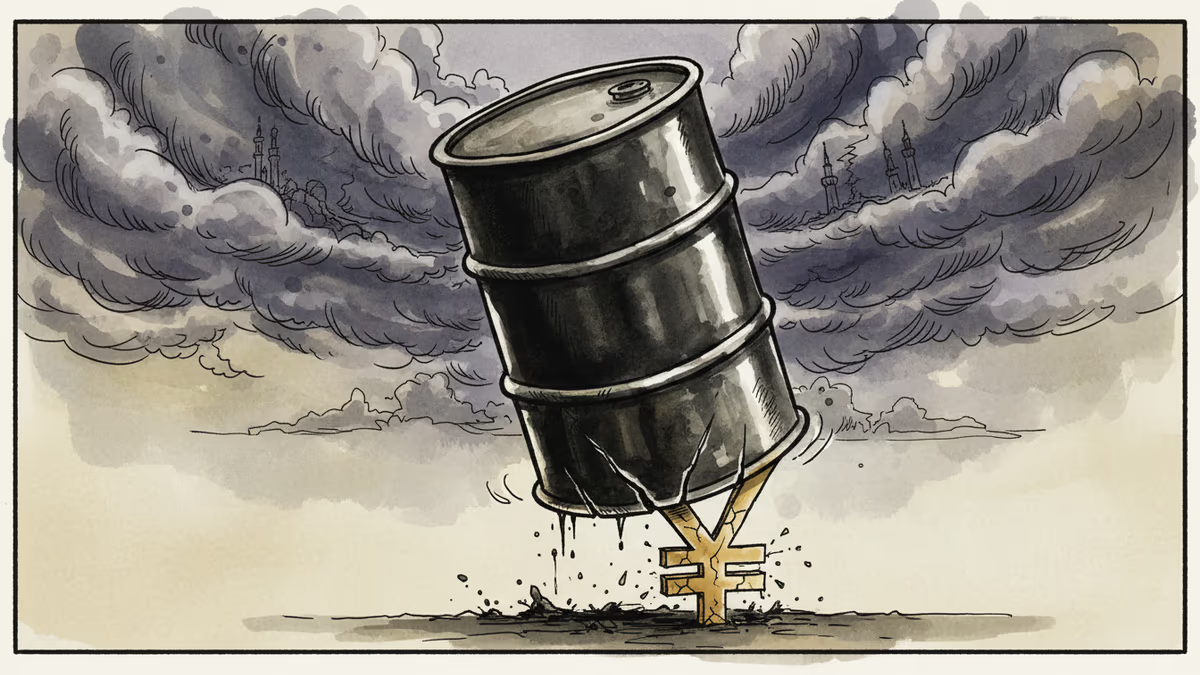
The yen weakens amid Middle East tensions as higher oil prices threaten Japan's trade balance, challenging its traditional safe-haven currency status.
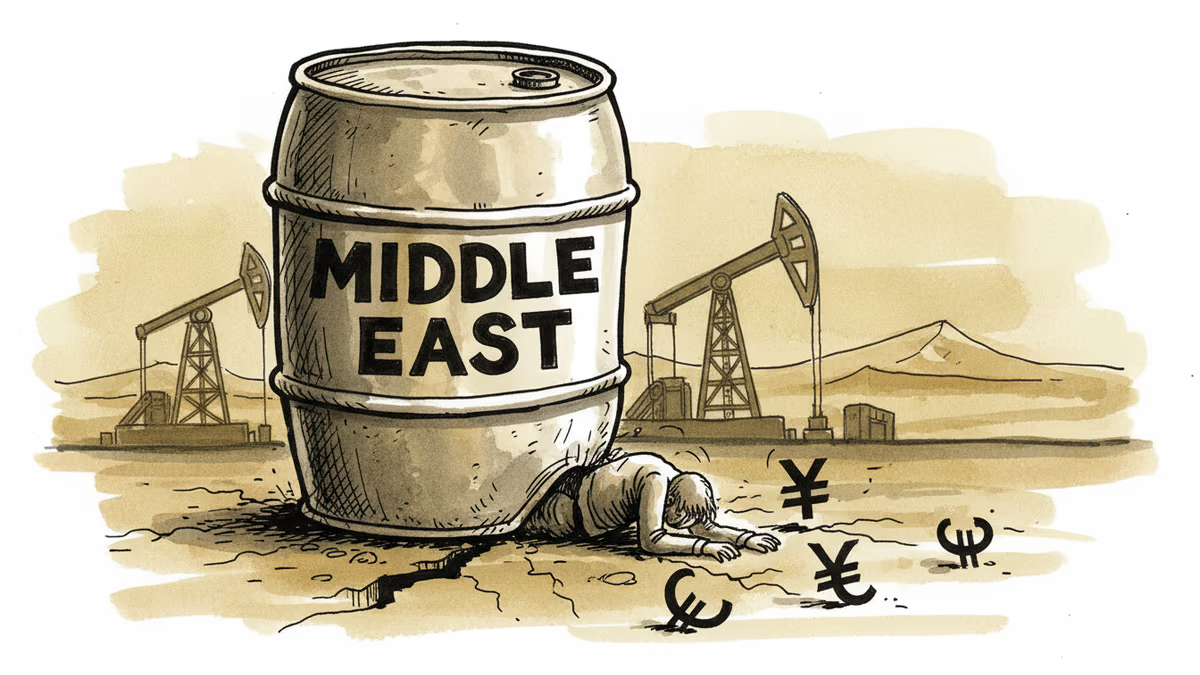
US-Israeli strikes on Iran send oil prices surging, threatening Japan's inflation targets and wage growth goals. Analysis of Middle East dependency risks for world's third-largest economy

Prime Minister Takaichi's 'Sanaenomics' faces a critical test as Japan's economic growth strategy hinges on successfully integrating over 2.5 million foreign workers into society.
Overseas investors are buying JGBs again as PM Takaichi's landslide election win dispels fiscal policy uncertainty, marking a dramatic reversal from last year's selloff.
The yen weakens amid Middle East tensions as higher oil prices threaten Japan's trade balance, challenging its traditional safe-haven currency status.
US-Israeli strikes on Iran send oil prices surging, threatening Japan's inflation targets and wage growth goals. Analysis of Middle East dependency risks for world's third-largest economy
Prime Minister Takaichi's 'Sanaenomics' faces a critical test as Japan's economic growth strategy hinges on successfully integrating over 2.5 million foreign workers into society.
Thoughts
1 thoughts
Share your thoughts on this article
Sign in to join the conversation