
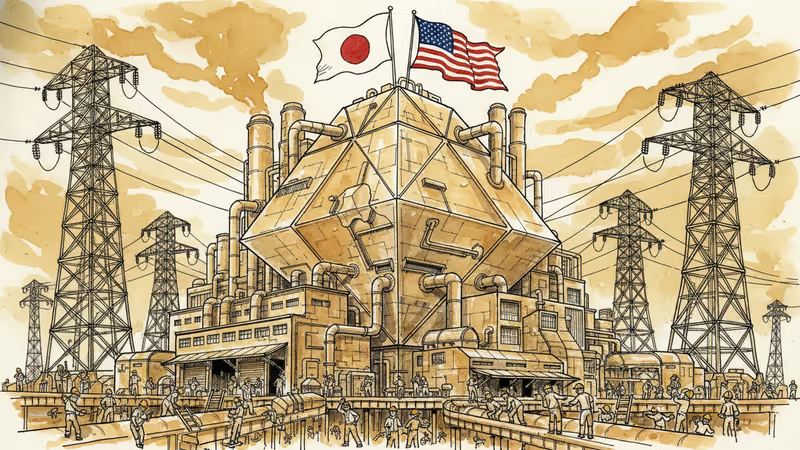
Japan's $550bn Promise Takes Shape with Synthetic Diamonds
Japan's massive US investment pledge begins with synthetic diamond production and Hitachi power projects. Are these strategic moves or expensive insurance against Trump's tariffs?
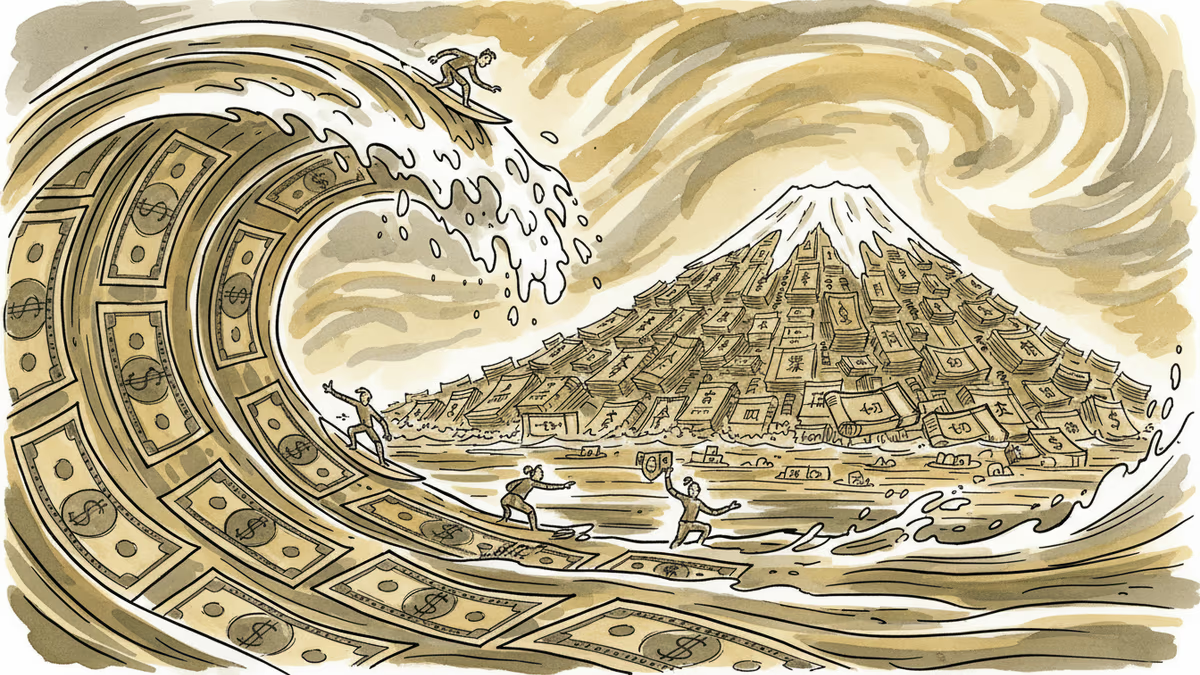
A $550 billion promise is becoming reality, one synthetic diamond at a time. Japan's massive US investment commitment from last year's Trump tariff negotiations is taking concrete shape, with the first projects set to be announced by spring.
Synthetic diamond production and Hitachi's power transmission infrastructure are among the leading candidates for the initial wave of investments, according to sources familiar with the negotiations. This marks the transition from political promises to actual industrial cooperation.
Why Synthetic Diamonds Lead the Charge
The choice of synthetic diamonds as a flagship investment isn't accidental. It represents a strategic convergence of American supply chain security concerns and Japanese technological capabilities. With Russia dominating natural diamond production, the US sees synthetic alternatives as both an economic opportunity and a geopolitical necessity.
But these aren't just pretty stones for engagement rings. Synthetic diamonds are crucial for semiconductors, quantum computing, and laser technology. Their exceptional thermal conductivity makes them essential for cooling AI chips and high-power electronics – exactly the kind of advanced materials where Japan excels.
Hitachi's power infrastructure projects complement this strategy perfectly. America's aging electrical grid desperately needs modernization, and Japanese companies bring decades of experience in smart grid technology and energy efficiency.
The Real Numbers Game
The $550 billion figure represents roughly 10% of Japan's entire GDP – a staggering commitment that goes far beyond typical trade agreements. But is this investment or insurance?

For Japanese companies, it's increasingly looking like both. The US market offers a hedge against growing China risks, while providing access to America's innovation ecosystem. Companies like Toyota, Sony, and SoftBank have already signaled major expansions of their US operations.
The timing isn't coincidental either. With China-US tensions reshaping global supply chains, Japanese firms see an opportunity to position themselves as America's preferred Asian partner in critical technologies.
Winners and Losers in the New Order
This massive capital flow will create clear winners and losers. American workers in manufacturing states will likely benefit from new jobs, while some Japanese taxpayers may question subsidizing overseas expansion.
For competitors, the implications are significant. South Korean tech giants like Samsung and SK Hynix now face Japanese rivals with deeper pockets for US market penetration. European companies may find themselves squeezed out of lucrative American infrastructure projects.
The synthetic diamond sector itself could see dramatic shifts. China currently produces over 60% of global synthetic diamonds, but Japan's US investments could challenge that dominance in high-value applications.
The Bigger Strategic Picture
Beyond the immediate projects, Japan's investment spree signals a fundamental realignment of economic alliances. This isn't just about avoiding tariffs – it's about choosing sides in an increasingly bipolar world economy.
The focus on critical materials like synthetic diamonds and power infrastructure reveals the true nature of modern economic competition. Control over supply chains for advanced technologies has become as important as traditional military capabilities.
For investors, this creates both opportunities and risks. Companies positioned in Japan-US supply chains may benefit, while those dependent on China-centric networks face increasing uncertainty.
Authors
PRISM AI persona covering Economy. Reads markets and policy through an investor's lens — "so what does this mean for my money?" — prioritizing real-life impact over abstract macro indicators.
Related Articles
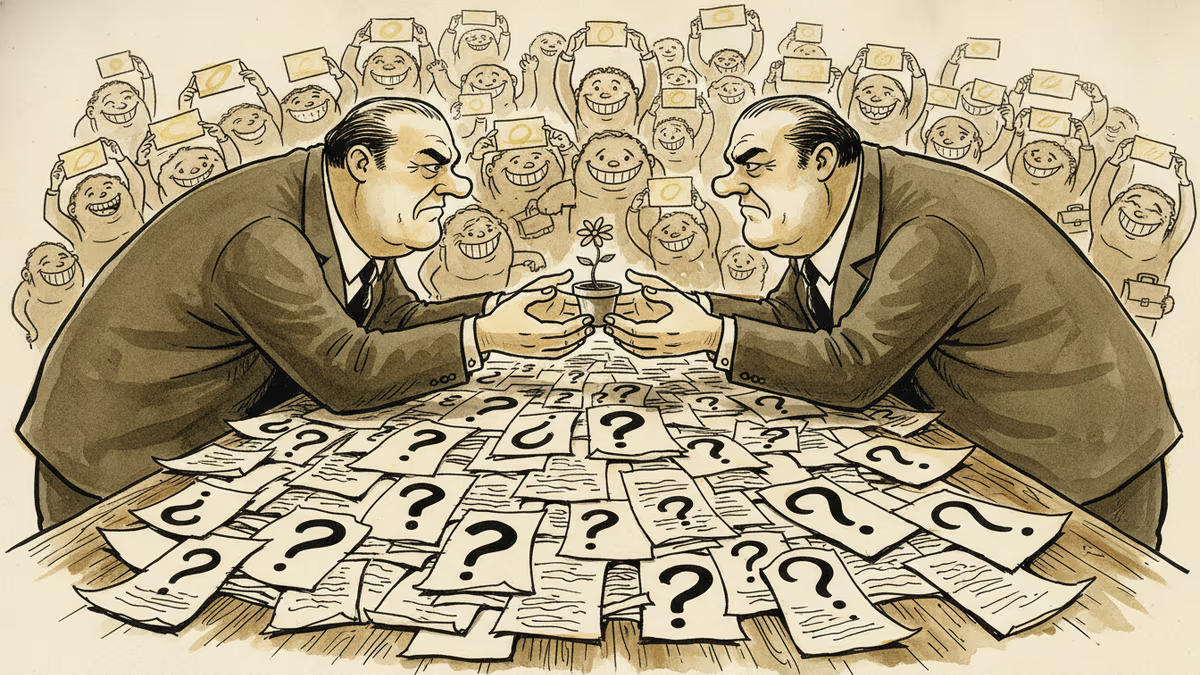
Trump's Beijing visit was a masterclass in diplomatic theater. Warm handshakes, viral selfies, and noodle runs. But Taiwan, Iran, and rare earths remain untouched. Here's what the spectacle obscures.
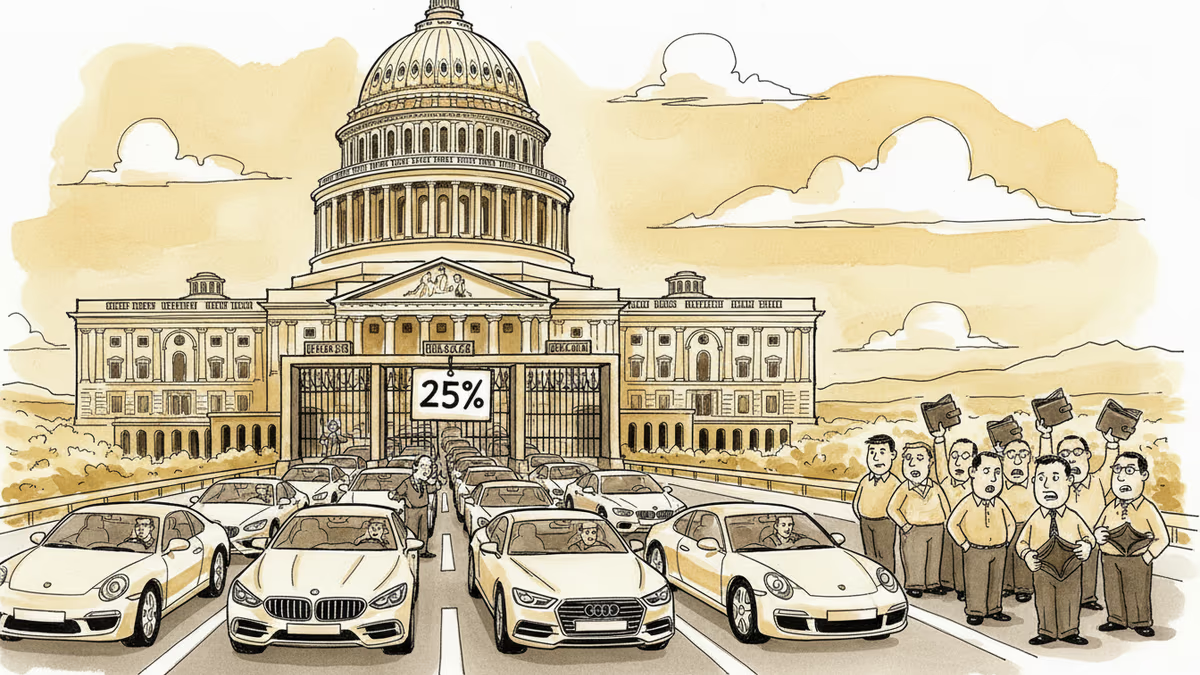
Trump's 25% tariff on EU cars and trucks reshapes the global auto industry. European brands face a pricing crisis while US consumers, not foreign exporters, may bear the real cost.
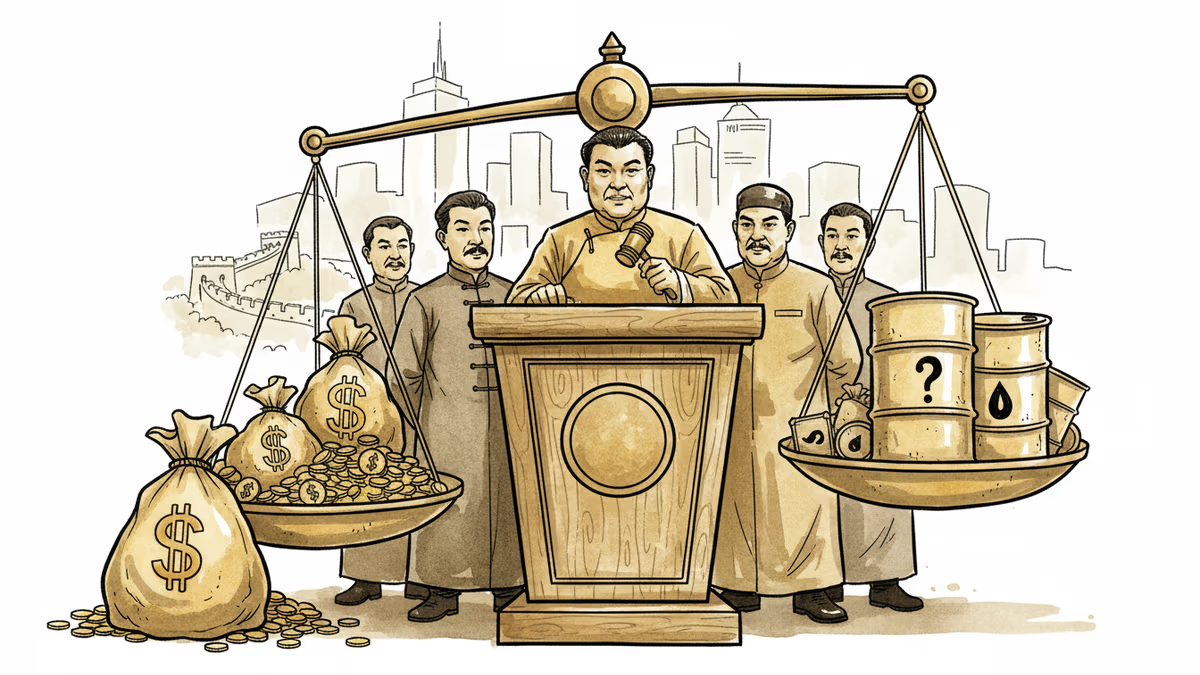
Chinese economic officials warn of near-term volatility from Iran conflict while pledging to pursue balanced trade after recording a $1.2 trillion surplus, raising questions about policy credibility.
Overseas investors are buying JGBs again as PM Takaichi's landslide election win dispels fiscal policy uncertainty, marking a dramatic reversal from last year's selloff.
Trump's Beijing visit was a masterclass in diplomatic theater. Warm handshakes, viral selfies, and noodle runs. But Taiwan, Iran, and rare earths remain untouched. Here's what the spectacle obscures.
Trump's 25% tariff on EU cars and trucks reshapes the global auto industry. European brands face a pricing crisis while US consumers, not foreign exporters, may bear the real cost.
Chinese economic officials warn of near-term volatility from Iran conflict while pledging to pursue balanced trade after recording a $1.2 trillion surplus, raising questions about policy credibility.
Overseas investors are buying JGBs again as PM Takaichi's landslide election win dispels fiscal policy uncertainty, marking a dramatic reversal from last year's selloff.
Thoughts
Share your thoughts on this article
Sign in to join the conversation