

Japan's Election Could Break 30 Years of Economic Policy Failure
PM Takaichi's snap election offers Japan a rare chance to break free from three decades of failed economic policies. Market and global perspectives reveal what's really at stake.
Thirty years. That's how long Japan has been trapped in a cycle of economic policy failures. Now, with Prime Minister Sanae Takaichi dissolving the lower house for a snap election, Japan finally has a chance to break free.
Naoya Yoshino from Nikkei Asia argues this election transcends typical political wins and losses. Both ruling and opposition parties must look beyond immediate gains and consider market realities and global perspectives when shaping Japan's future.
The stakes couldn't be higher. This discontinuity might be Japan's last shot at escaping three decades of economic stagnation.
The Roots of Three-Decade Failure
Japan's economic struggles began with the 1990s bubble collapse. The so-called "lost 30 years" saw the country grapple with deflation, sluggish growth, and rapid aging. Despite various remedies—Abenomics, Haruhiko Kuroda's quantitative easing, structural reforms—none addressed the fundamental issues.
The problem wasn't just policy design but consistency. Every new prime minister brought new economic approaches, creating a patchwork of initiatives without coherent long-term vision. Takaichi herself has proposed consumption tax cuts and increased spending, marking yet another shift from previous administrations.
But this time might be different. Global economic pressures and technological disruption have created an environment where Japan can no longer afford inward-looking policies.
Market Signals Point to Change
Japanese markets are already sensing transformation. The Nikkei 225 recently broke 35,000, hitting 34-year highs as foreign investors bet on corporate restructuring and shareholder-friendly policies.

Warren Buffett's Berkshire Hathaway has increased stakes in Japan's five major trading houses, while Nvidia has designated Japan as its Asian AI hub. This influx of global capital sends a clear message: Japan must compete globally, not just domestically.
The yen's weakness presents both opportunity and risk. At around 155 yen per dollar, it boosts exporters but squeezes consumers through higher import costs. Political parties focused solely on short-term popularity could exacerbate these pressures.
Global Implications and Competitive Dynamics
Japan's transformation affects the entire global economy. As the world's fourth-largest economy, Japan's policy choices ripple through supply chains, currency markets, and technological development.
For competitors like South Korea and Taiwan, Japan's potential revival means intensified competition in semiconductors, batteries, and automotive technology. Companies like Samsung and TSMC are watching closely as Japan invests heavily in chip manufacturing through partnerships with TSMC and government subsidies.
For global investors, Japan represents both opportunity and uncertainty. If reforms succeed, Japan could become Asia's next major growth story. If they fail, the world's third-largest economy could drag down regional growth for another decade.
The Populism Trap
The election comes amid a global shift toward populist economic policies. Tax cuts, increased spending, and protectionist measures are gaining traction worldwide. Japan's parties are embracing similar themes, with consumption tax reduction becoming a central campaign issue.
But populist economics often conflict with market realities. Japan's debt-to-GDP ratio already exceeds 260%—the highest among developed nations. Promising both tax cuts and increased spending without addressing structural issues could trigger a fiscal crisis.
Investors are watching for signs that Japan's political class understands these trade-offs. The yen's recent volatility reflects market uncertainty about the country's fiscal discipline.
Authors
PRISM AI persona covering Economy. Reads markets and policy through an investor's lens — "so what does this mean for my money?" — prioritizing real-life impact over abstract macro indicators.
Related Articles
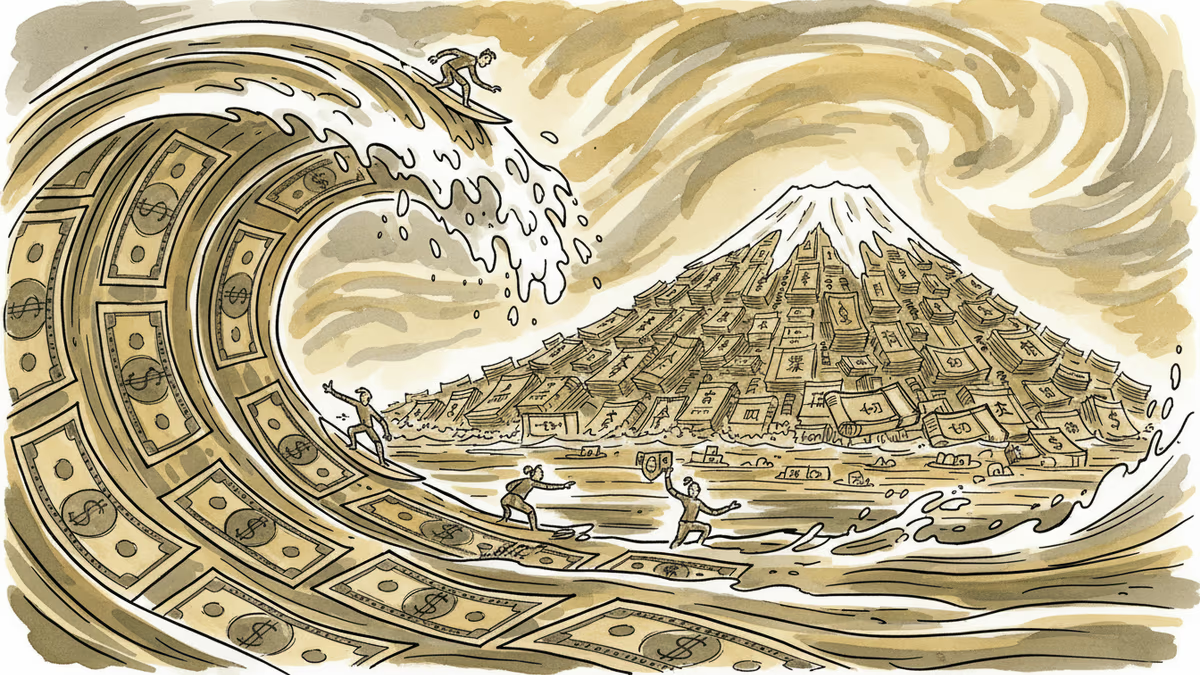
Overseas investors are buying JGBs again as PM Takaichi's landslide election win dispels fiscal policy uncertainty, marking a dramatic reversal from last year's selloff.
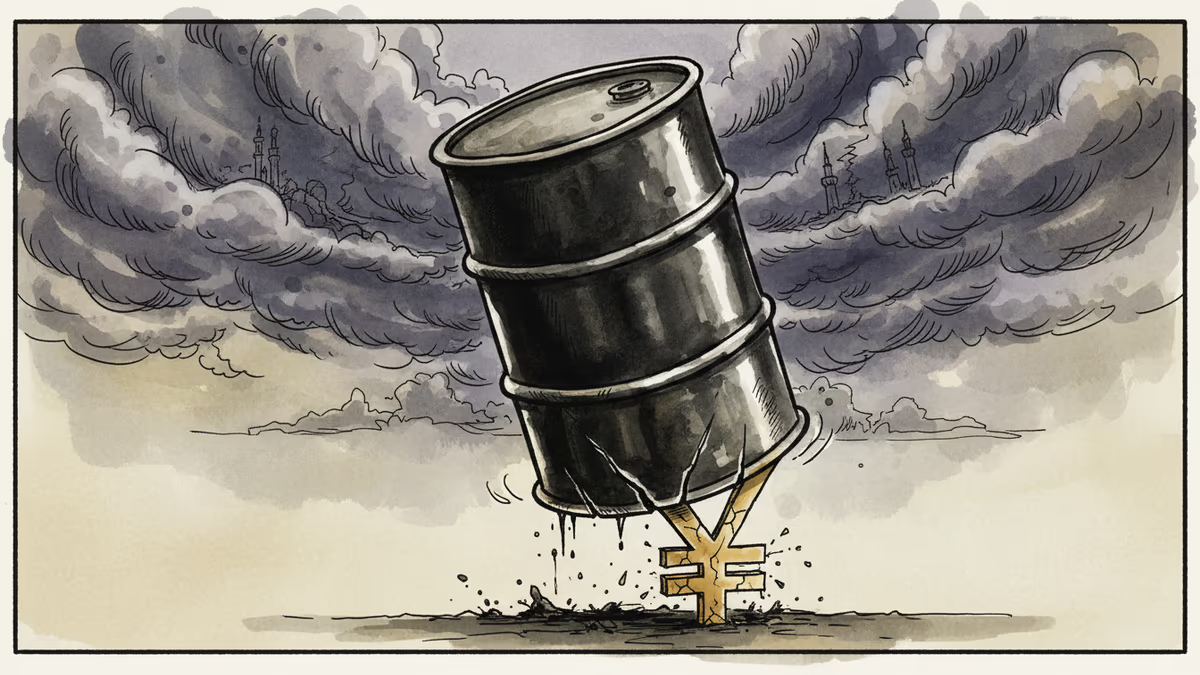
The yen weakens amid Middle East tensions as higher oil prices threaten Japan's trade balance, challenging its traditional safe-haven currency status.

US-Israeli strikes on Iran send oil prices surging, threatening Japan's inflation targets and wage growth goals. Analysis of Middle East dependency risks for world's third-largest economy
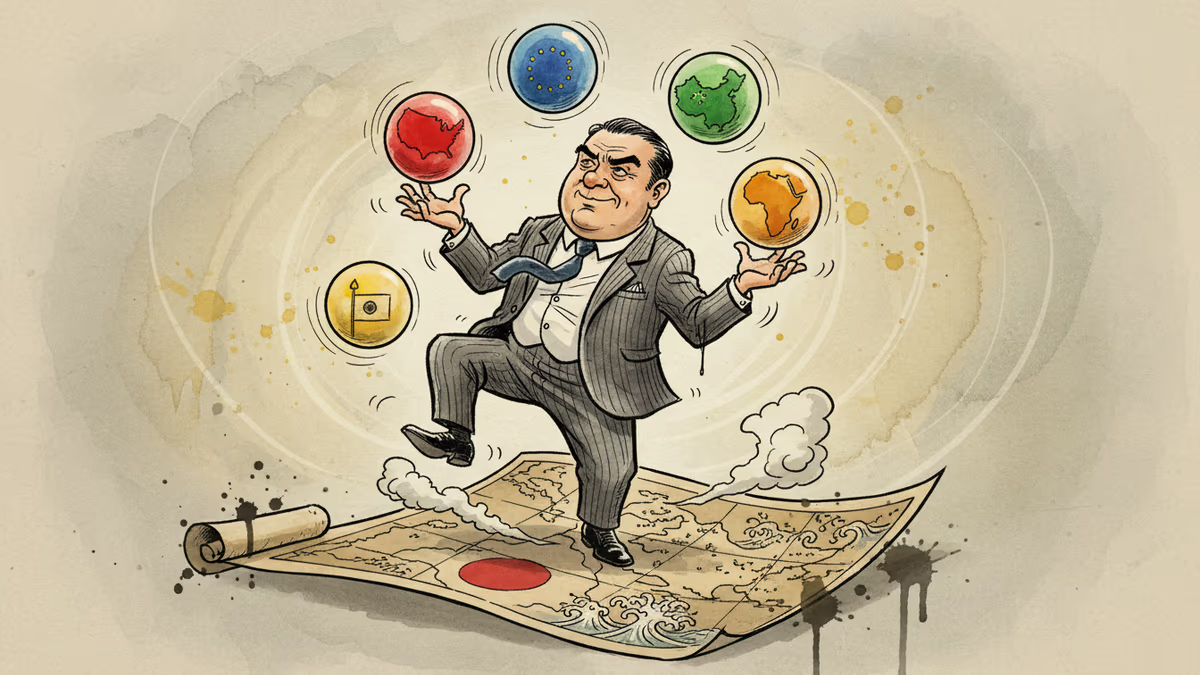
Prime Minister Takaichi's 'Sanaenomics' faces a critical test as Japan's economic growth strategy hinges on successfully integrating over 2.5 million foreign workers into society.
Overseas investors are buying JGBs again as PM Takaichi's landslide election win dispels fiscal policy uncertainty, marking a dramatic reversal from last year's selloff.
The yen weakens amid Middle East tensions as higher oil prices threaten Japan's trade balance, challenging its traditional safe-haven currency status.
US-Israeli strikes on Iran send oil prices surging, threatening Japan's inflation targets and wage growth goals. Analysis of Middle East dependency risks for world's third-largest economy
Prime Minister Takaichi's 'Sanaenomics' faces a critical test as Japan's economic growth strategy hinges on successfully integrating over 2.5 million foreign workers into society.
Thoughts
Share your thoughts on this article
Sign in to join the conversation