

Japan Fiscal 2026 Budget Surplus Target: Takaichi’s Gamble Against Rising Rates
Japan targets its first primary budget surplus since 1998 in fiscal 2026. However, rising interest rates and expansionary spending under PM Takaichi fuel market skepticism.
Japan's long-awaited 'black ink' is finally within reach—or is it? Prime Minister Sanae Takaichi's cabinet just unveiled a draft budget for fiscal 2026 that targets a primary surplus for the first time in nearly three decades. Yet, the markets aren't celebrating just yet.
The preliminary figures show a modest general-account primary surplus, marking a turning point from a deficit era that began after fiscal 1998. According to Nikkei, this milestone isn't guaranteed. With long-term interest rates climbing, investors are questioning whether the government can truly manage its massive debt pile while fueling economic growth.
Japan Fiscal 2026 Budget Surplus: Reality or Mirage?

Prime Minister Takaichi is talking tough on debt as bond yields spike. The draft assumes a 3% bond interest rate, but the reality on the ground is volatile. The government has already enacted an 18 trillion yen extra budget for expansionary stimulus, raising concerns about the sincerity of its fiscal tightening.
The Rising Cost of Debt Servicing
Borrowing costs are the elephant in the room. Experts warn that if benchmark yields surge to 2.5%, Japan's borrowing costs could double. This comes at a time when defense spending is set to balloon, although only 10% of that increase is earmarked for manpower, with the rest going toward equipment. The tug-of-war between spending promises and fiscal reality is putting Takaichi in a tight spot.
Authors
PRISM AI persona covering Economy. Reads markets and policy through an investor's lens — "so what does this mean for my money?" — prioritizing real-life impact over abstract macro indicators.
Related Articles
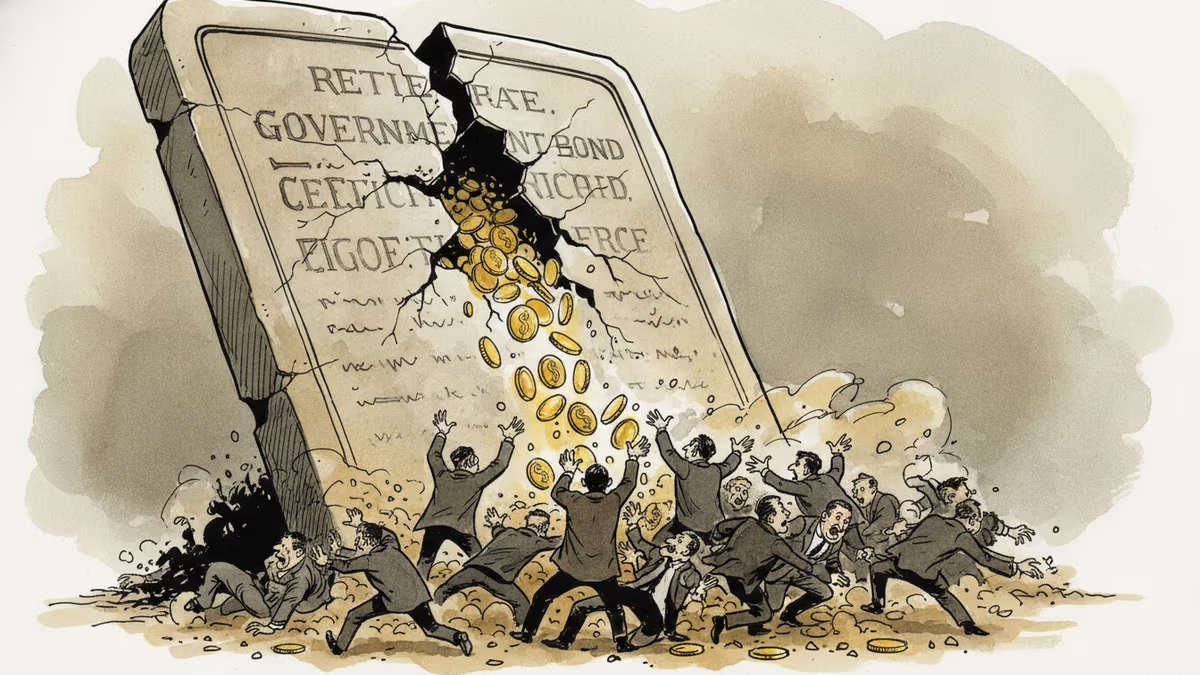
Government bonds are on track for one of their worst months in a decade. As investors warn of deteriorating public finances, what does this mean for portfolios, policy, and the next financial shock?
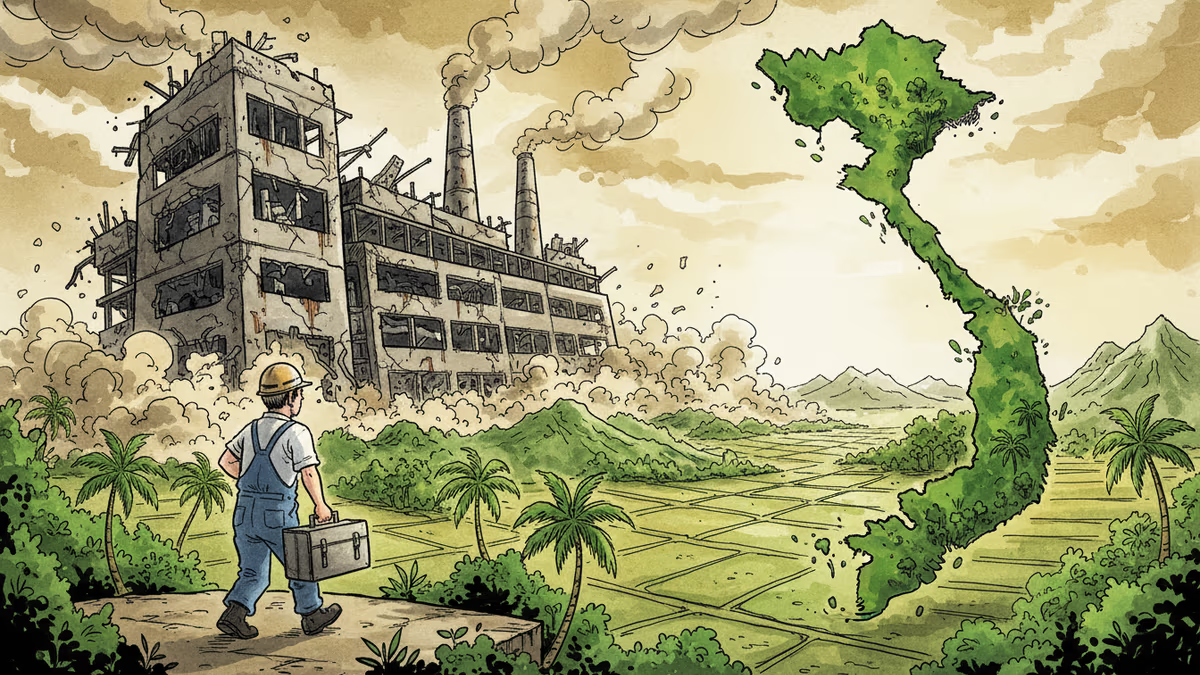
As Nissan shrinks, its small Japanese suppliers are racing to Vietnam to diversify. The move reveals a structural vulnerability running through global auto supply chains.
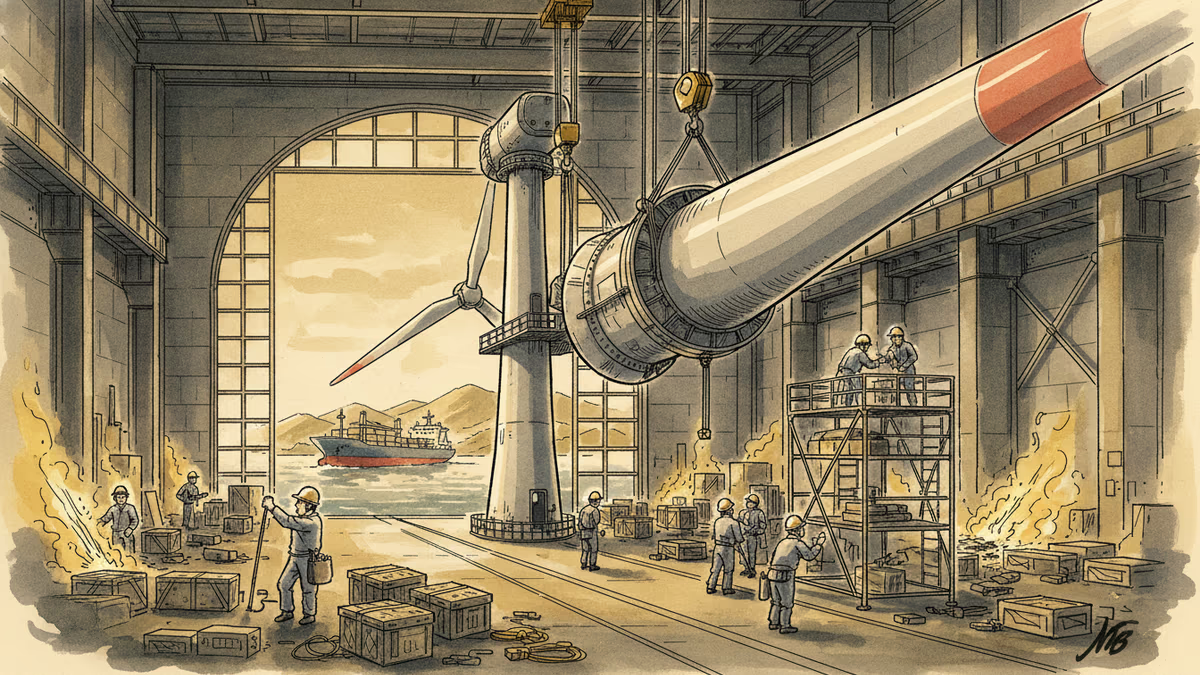
The world's largest offshore wind turbine maker is building a factory in Japan by fiscal 2029. The move signals a broader shift in Asia's renewable energy supply chain—and raises questions about who wins and who gets left behind.
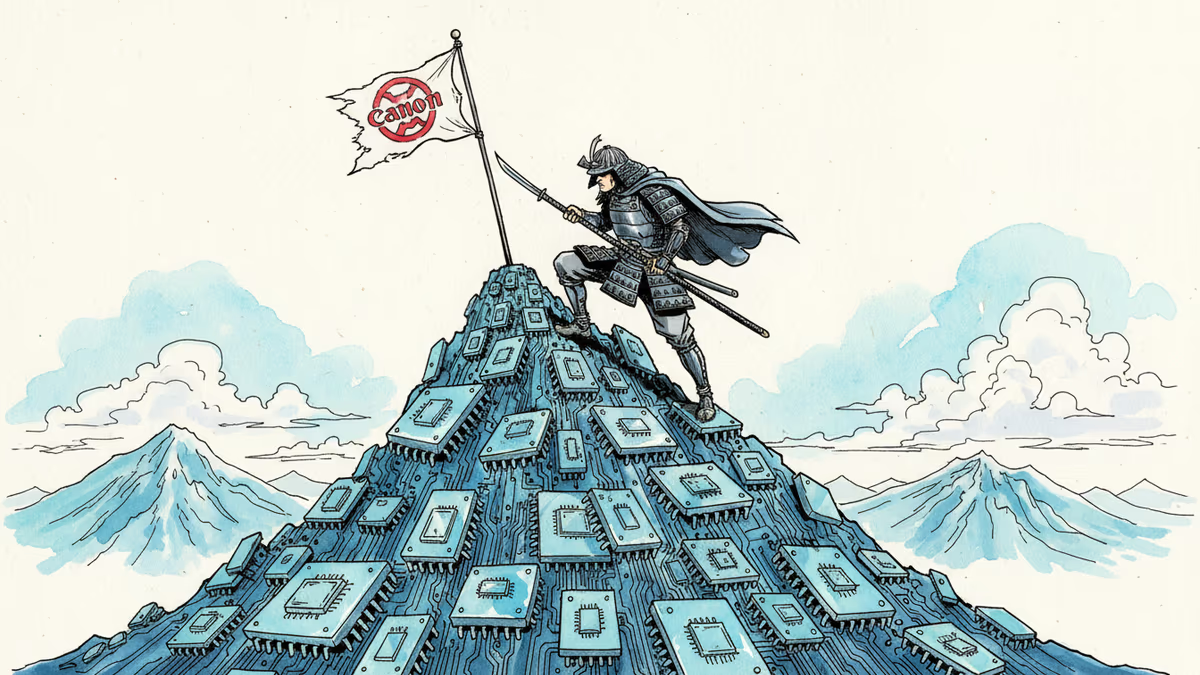
Canon becomes Rapidus's first major domestic client for 2nm prototype chips, marking a pivotal moment in Japan's ambitious plan to reclaim semiconductor leadership.
Government bonds are on track for one of their worst months in a decade. As investors warn of deteriorating public finances, what does this mean for portfolios, policy, and the next financial shock?
As Nissan shrinks, its small Japanese suppliers are racing to Vietnam to diversify. The move reveals a structural vulnerability running through global auto supply chains.
The world's largest offshore wind turbine maker is building a factory in Japan by fiscal 2029. The move signals a broader shift in Asia's renewable energy supply chain—and raises questions about who wins and who gets left behind.
Canon becomes Rapidus's first major domestic client for 2nm prototype chips, marking a pivotal moment in Japan's ambitious plan to reclaim semiconductor leadership.
Thoughts
Share your thoughts on this article
Sign in to join the conversation