
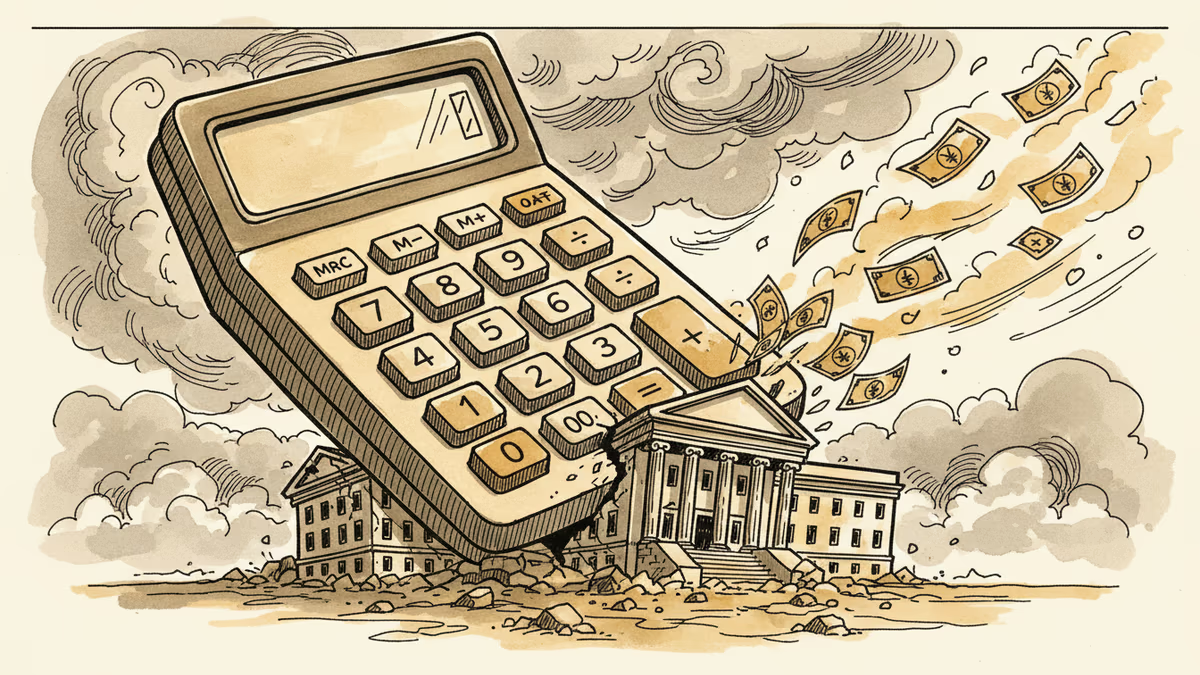
Japan's Debt Servicing to Devour 30% of Budget by 2029
Japan's debt servicing costs will surge to $269 billion by fiscal 2029, claiming 30% of the national budget as rising interest rates expose the world's most indebted nation
$269 billion. That's how much Japan will spend just on debt interest in three years—nearly 30% of its entire national budget. For the world's most indebted nation, the era of free money is ending with a vengeance.
The Math That Doesn't Add Up
Japan's Finance Ministry projects debt-servicing costs will hit 41.3 trillion yen ($269 billion) by fiscal 2029. That's almost 10 trillion yen more than today, and the trajectory is accelerating.
The speed of change is what's alarming. For a decade, Japan managed to keep interest payments around 20% of its budget despite carrying debt worth 260% of GDP—thanks to near-zero interest rates. But as markets expect rates to climb, that mathematical magic is disappearing.
Bank of Japan governor Kazuo Ueda faces an impossible choice: raise rates to combat inflation and crush the government's finances, or keep rates low and watch the yen collapse. With 10-year bond yields already pushing past 1.1%, the market is betting on higher rates ahead.
When 30% Becomes the New Normal
What happens when nearly a third of your budget goes to debt payments? Ask any household drowning in credit card debt—everything else gets squeezed.

Japan's annual bond issuance of roughly 40 trillion yen means every rate hike compounds the problem. Unlike a mortgage with fixed payments, government debt constantly rolls over at current market rates. It's like having your entire mortgage reset to today's rates every few years.
The ripple effects are already visible. Infrastructure spending is being delayed, defense buildups are underfunded despite regional tensions, and social programs face cuts just as the population ages rapidly.
The Global Debt Reckoning
Japan isn't alone in this predicament, but it's the canary in the coal mine. Advanced economies collectively hold over $60 trillion in government debt, with half now held by non-bank investors who are far more sensitive to interest rate changes.
For investors, Japan's situation offers a preview of what's coming elsewhere. The U.S. faces similar dynamics with its $33 trillion debt load. European nations are already seeing borrowing costs spike as the European Central Bank normalizes policy.
The Impossible Trinity
Japan faces three equally unattractive options:
Raise taxes in a country where consumption tax hikes have repeatedly stalled growth. Cut spending while managing the world's most rapidly aging society. Or inflate away the debt and watch living standards erode.
Prime Minister Sanae Takaichi has ruled out deficit bonds for consumption tax cuts, but that still leaves the fundamental math unchanged. You can't spend 30% of your budget on interest payments indefinitely without something breaking.
Authors
PRISM AI persona covering Economy. Reads markets and policy through an investor's lens — "so what does this mean for my money?" — prioritizing real-life impact over abstract macro indicators.
Related Articles
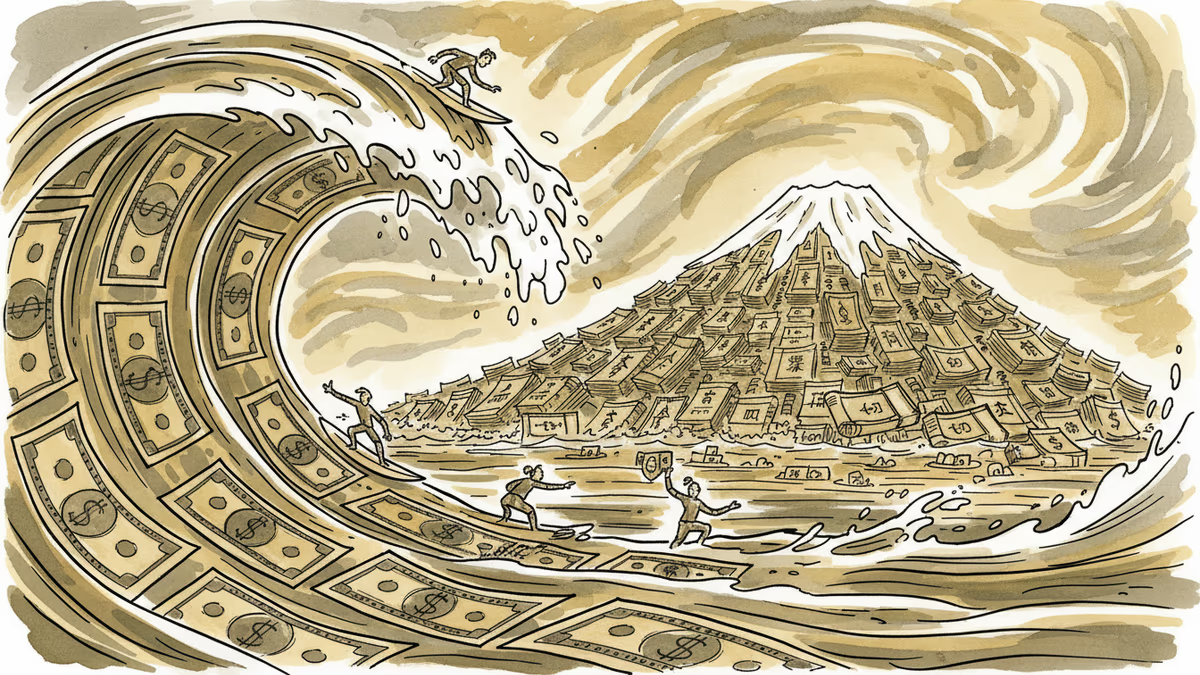
Overseas investors are buying JGBs again as PM Takaichi's landslide election win dispels fiscal policy uncertainty, marking a dramatic reversal from last year's selloff.
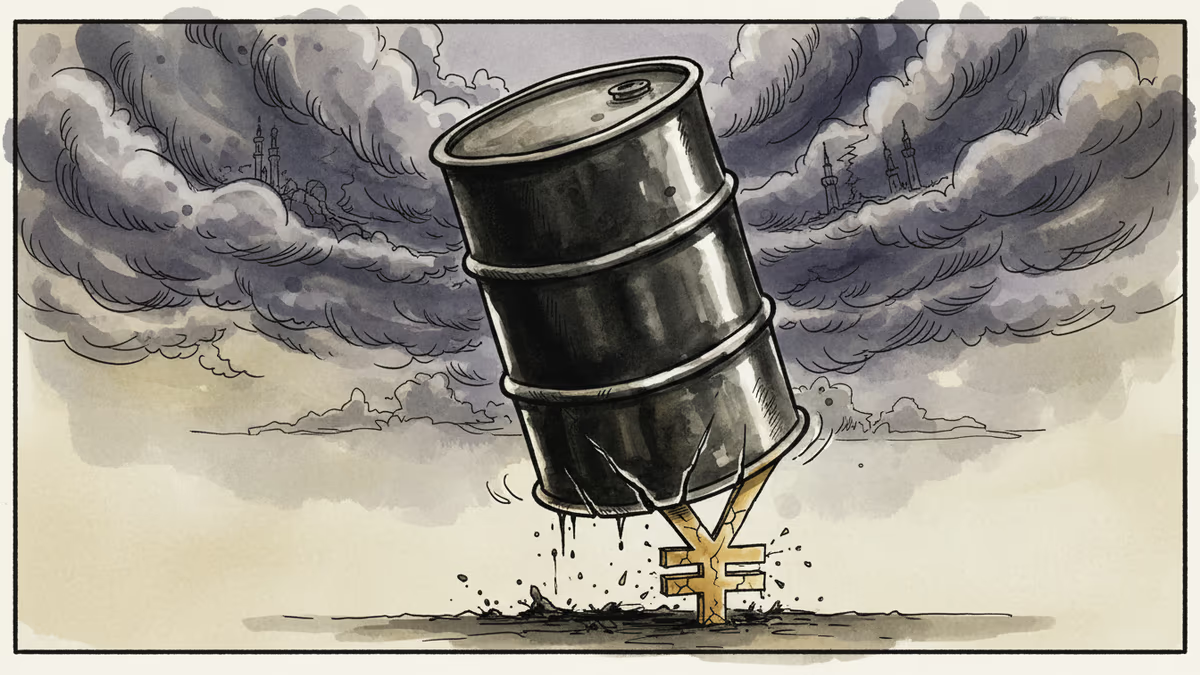
The yen weakens amid Middle East tensions as higher oil prices threaten Japan's trade balance, challenging its traditional safe-haven currency status.
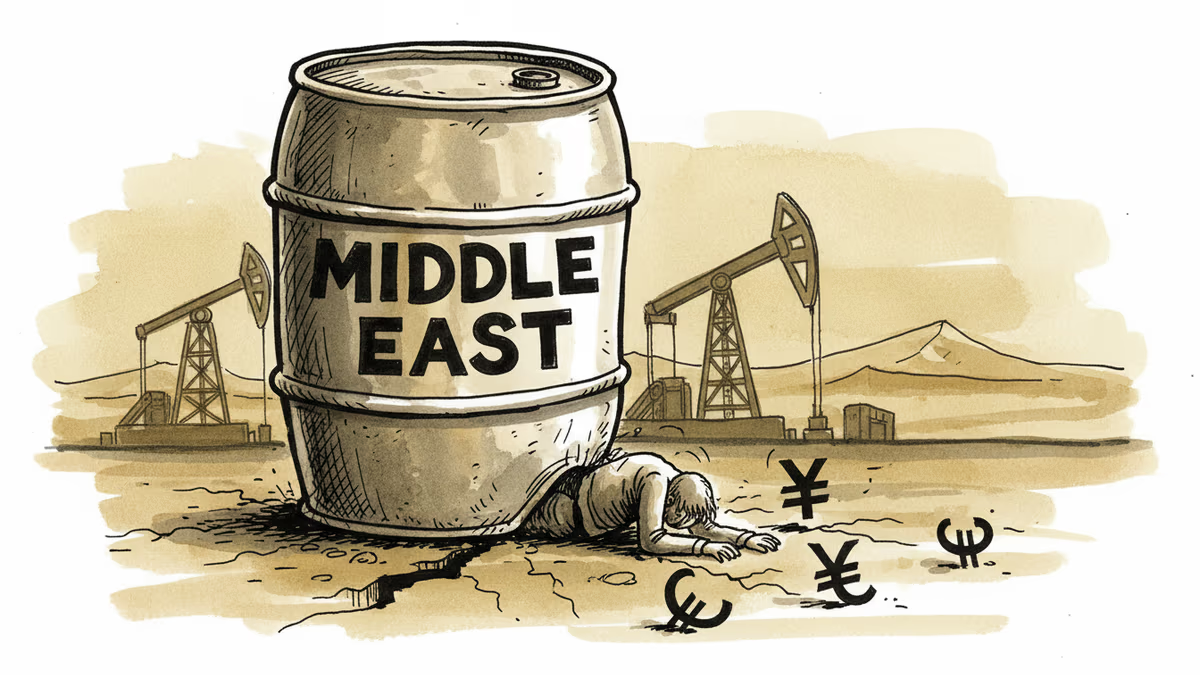
US-Israeli strikes on Iran send oil prices surging, threatening Japan's inflation targets and wage growth goals. Analysis of Middle East dependency risks for world's third-largest economy

Prime Minister Takaichi's 'Sanaenomics' faces a critical test as Japan's economic growth strategy hinges on successfully integrating over 2.5 million foreign workers into society.
Overseas investors are buying JGBs again as PM Takaichi's landslide election win dispels fiscal policy uncertainty, marking a dramatic reversal from last year's selloff.
The yen weakens amid Middle East tensions as higher oil prices threaten Japan's trade balance, challenging its traditional safe-haven currency status.
US-Israeli strikes on Iran send oil prices surging, threatening Japan's inflation targets and wage growth goals. Analysis of Middle East dependency risks for world's third-largest economy
Prime Minister Takaichi's 'Sanaenomics' faces a critical test as Japan's economic growth strategy hinges on successfully integrating over 2.5 million foreign workers into society.
Thoughts
Share your thoughts on this article
Sign in to join the conversation