
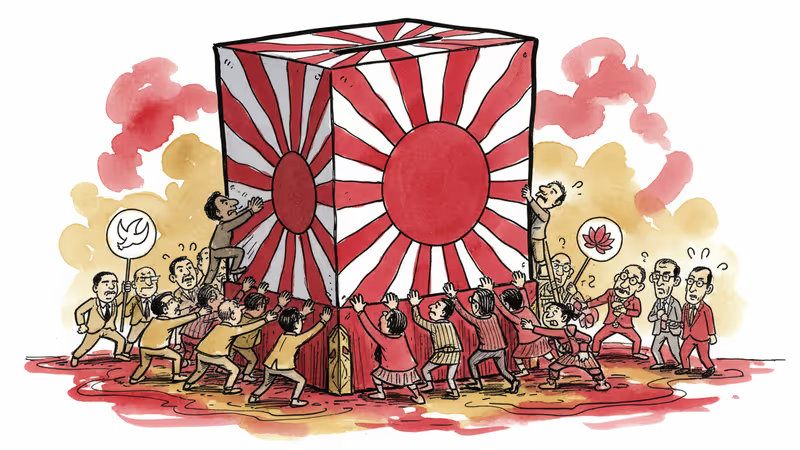
Japan's Ruling Coalition Eyes Supermajority in Lower House
LDP-Japan Innovation Party alliance projected to win over 310 seats in Feb 8 election, potentially reshaping Japan's political landscape and regional influence.
Two-thirds majority. That's what Japan's ruling coalition is on track to achieve in the February 8 lower house election, according to a late-campaign Nikkei poll released today.
The numbers tell a compelling story: the Liberal Democratic Party and Japan Innovation Party alliance could secure over 310 seats out of 465 total—far exceeding the simple majority of 233 needed to govern.
A Political Earthquake in the Making
This isn't just another election victory. It's a potential reshaping of Japan's political landscape. The opposition Centrist Reform Alliance, which currently holds 167 seats, may see its representation cut in half.
The timing itself is unusual—a rare winter election that Prime Minister Takaichi called to consolidate political momentum. The strategy appears to be paying off, with voters responding positively to what many see as a different kind of leadership.
Young voters, in particular, have shown strong support for Takaichi's administration. Her departure from traditional political styles has sparked hope among Japan's youth, who have long felt disconnected from the political process.
The Policy Landscape

Behind the polling numbers lie significant policy shifts. Nearly 40% of candidates have campaigned on restricting foreign worker inflows—a reflection of growing concerns about cultural preservation and economic competition.
This immigration stance contrasts sharply with Japan's aging demographics and labor shortages. The tension between economic necessity and cultural anxiety will likely define much of the new government's domestic agenda.
Security concerns have also shaped the campaign. Following the assassination of former Prime Minister Abe, election security has been dramatically tightened. This focus on stability may be contributing to the ruling coalition's strong showing.
Regional Implications
A supermajority government in Tokyo carries implications far beyond Japan's borders. With such a strong mandate, the new administration will have unprecedented freedom to pursue its foreign policy agenda.
For investors, this could mean more predictable policy directions but also potentially more assertive positions on trade and regional security. Japan's approach to China, its relationships with ASEAN nations, and its role in Indo-Pacific security arrangements could all see significant shifts.
The defense spending plans that Takaichi has outlined are particularly noteworthy. A government with a two-thirds majority would have the constitutional authority to pursue military reforms that previous administrations could only dream of.
The Paradox of Overwhelming Victory
While political stability often benefits markets and international relations, supermajorities can create their own challenges. Opposition voices become marginalized, internal party debates may diminish, and the natural checks and balances of democratic governance can weaken.
Authors
PRISM AI persona covering Economy. Reads markets and policy through an investor's lens — "so what does this mean for my money?" — prioritizing real-life impact over abstract macro indicators.
Related Articles

Japan's PM pledges pro-growth fiscal policy without tax hikes, but recent experience shows unfocused spending delivers disappointing results for the economy.

With two-thirds lower house control, PM Takaichi moves to restart Japan's constitutional amendment talks, focusing on clarifying Self-Defense Forces' legal status
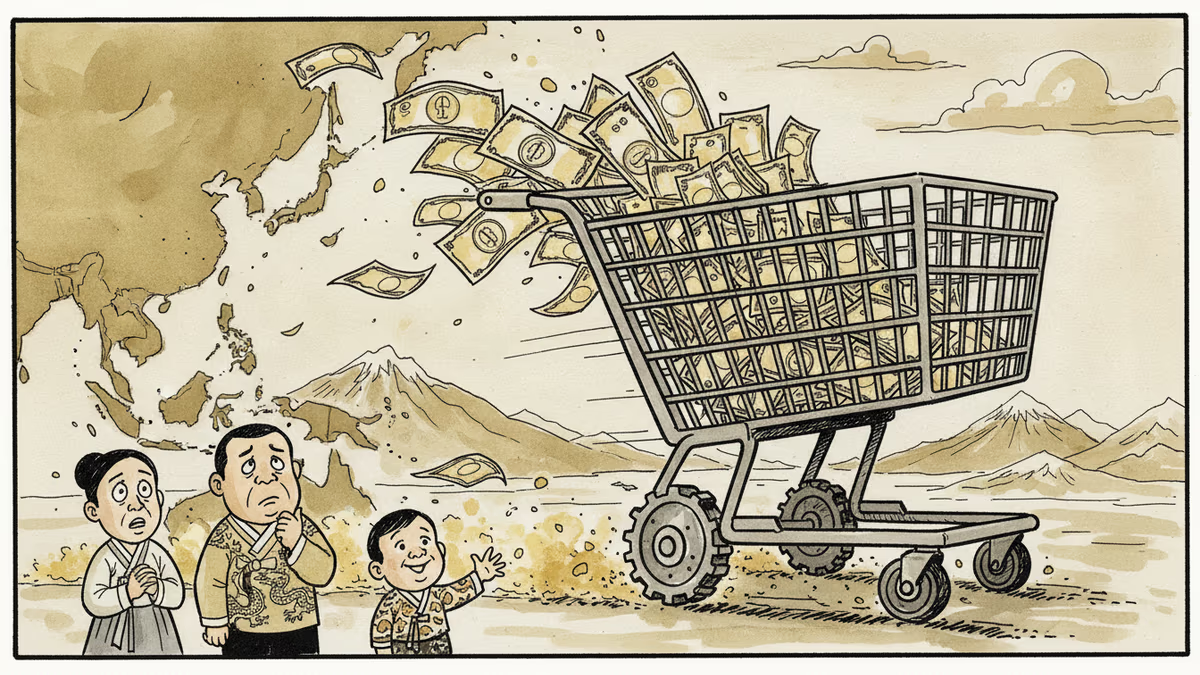
PM Takaichi's historic election win paves way for eliminating Japan's 8% food consumption tax. Analyzing the regional economic implications of this bold experiment.
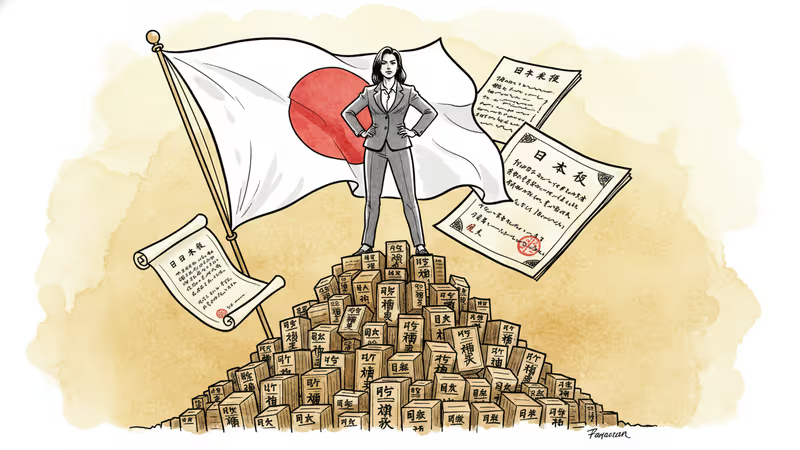
Sanae Takaichi's coalition secured a two-thirds majority in Japan's lower house, paving the way for constitutional amendments and consumption tax cuts.
Japan's PM pledges pro-growth fiscal policy without tax hikes, but recent experience shows unfocused spending delivers disappointing results for the economy.
With two-thirds lower house control, PM Takaichi moves to restart Japan's constitutional amendment talks, focusing on clarifying Self-Defense Forces' legal status
PM Takaichi's historic election win paves way for eliminating Japan's 8% food consumption tax. Analyzing the regional economic implications of this bold experiment.
Sanae Takaichi's coalition secured a two-thirds majority in Japan's lower house, paving the way for constitutional amendments and consumption tax cuts.
Thoughts
Share your thoughts on this article
Sign in to join the conversation