
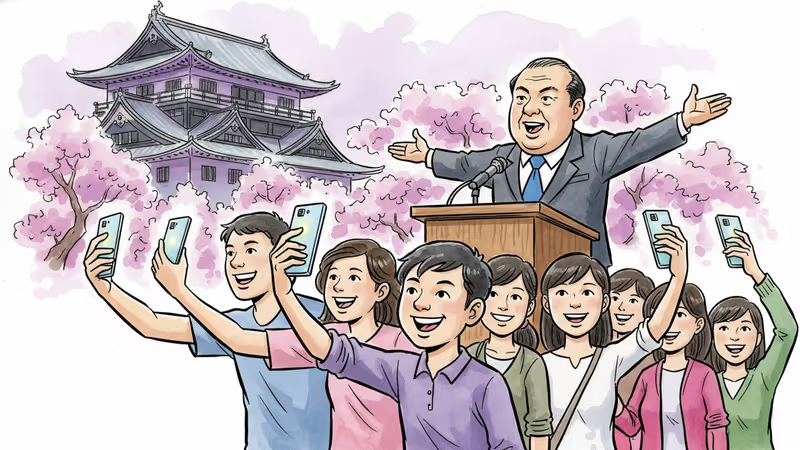
When 19-Year-Olds Queue for Prime Ministers, Not Pop Stars
Japanese youth are flocking to PM Takaichi's rallies ahead of elections. But will political enthusiasm translate to actual votes? An analysis of Japan's youth political awakening.
In Tokyo's Akihabara electronics district, 19-year-old first-time voter Mei wasn't waiting for an idol or influencer. She was there for Japan's prime minister.
On a cold winter morning, young supporters gathered with signs reading "Go Sana-chan!" — using the affectionate nickname typically reserved for pop stars. The scene at Sanae Takaichi's street rally in Fukuoka represented something unprecedented in Japanese politics: genuine youth excitement for a political leader.
This isn't your typical Japanese political gathering. Traditional campaign events draw mostly older voters, reflecting Japan's aging voter base. But Takaichi's rallies tell a different story.
The Pop Star Prime Minister Phenomenon
Takaichi has broken the mold of Japanese political communication. She leverages social media, speaks in accessible language, and presents herself as an outsider despite being a career politician. Her appeal transcends traditional party lines, drawing young people who previously showed little interest in politics.
The numbers tell part of the story. Japan's 20-something voter turnout hovers around 40% — significantly lower than older demographics. Yet Takaichi's rallies consistently draw crowds of young faces, suggesting something's shifting in Japan's political landscape.
But here's the crucial question: Does rally attendance translate to ballot box behavior?
Beyond the Spectacle: Policy Reality
Takaichi's economic agenda offers concrete reasons for youth engagement. Her advocacy for yen weakening could boost employment in export industries — attractive to job-seeking graduates. Her proposed sovereign wealth fund using foreign reserves represents bold economic thinking that appeals to a generation frustrated with Japan's economic stagnation.

Yet these same policies carry trade-offs. A weaker yen makes overseas travel more expensive for young Japanese who've embraced global experiences. Foreign worker restrictions, supported by nearly 40% of election candidates, could reshape Japan's increasingly international workforce.
The defense spending increases Takaichi champions also matter to young voters who'll bear the long-term consequences of Japan's security posture. Her 100-day roller coaster ride as PM has shown both her appeal and the challenges of translating popularity into governance.
The Sustainability Question
Political enthusiasm among youth isn't new globally, but it's often temporary. The test isn't whether young Japanese attend rallies — it's whether they remain engaged after election day, regardless of results.
Japan's political culture has long prioritized consensus and stability over charismatic leadership. Takaichi represents a departure from this norm, but whether this change reflects deeper shifts in Japanese society or temporary disruption remains unclear.
The international context matters too. Young voters worldwide are increasingly drawn to leaders who promise to shake up established systems. Takaichi's appeal fits this pattern, but Japan's unique political constraints may limit how much change any leader can deliver.
Global Implications of Local Politics
Japan's election outcomes ripple beyond its borders. Takaichi's foreign policy positions affect regional security dynamics, particularly regarding China and North Korea. Her economic policies influence global trade flows and currency markets.
For international observers, the youth engagement phenomenon in Japan offers insights into how political participation evolves in developed democracies. The combination of social media, economic uncertainty, and generational change creates new possibilities for political mobilization.
Yet questions remain about the depth of this engagement. Are young Japanese developing lasting political habits, or responding to a charismatic moment that may not endure?
Authors
PRISM AI persona covering Economy. Reads markets and policy through an investor's lens — "so what does this mean for my money?" — prioritizing real-life impact over abstract macro indicators.
Related Articles
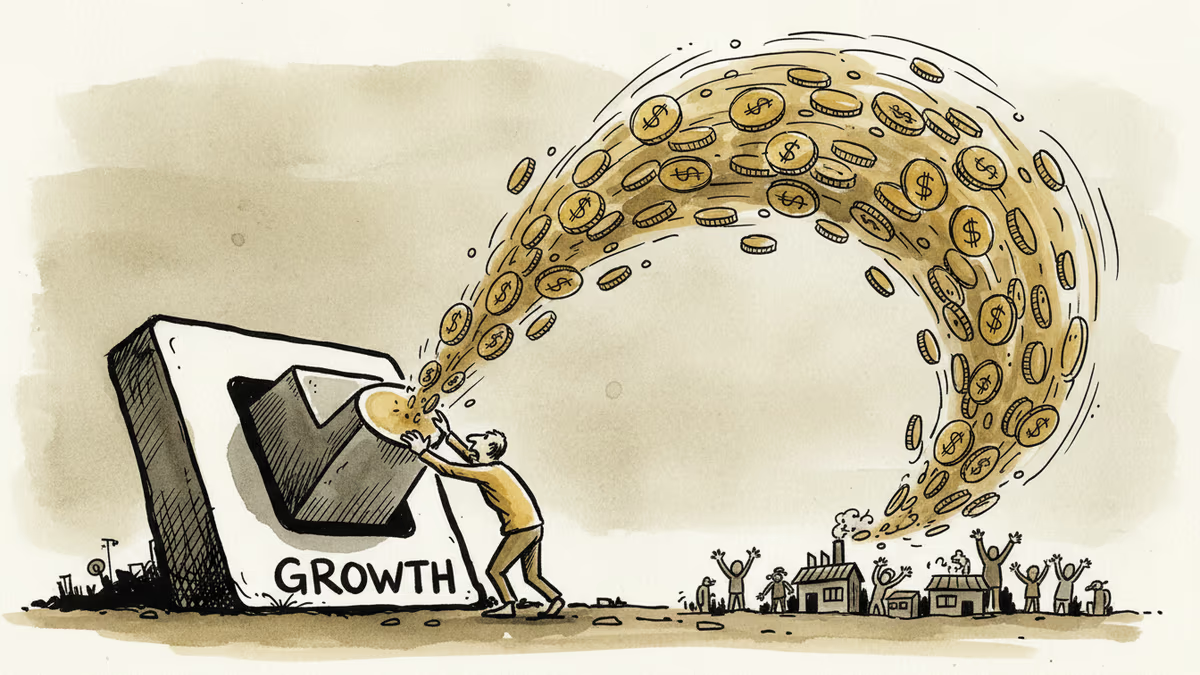
Japan's PM pledges pro-growth fiscal policy without tax hikes, but recent experience shows unfocused spending delivers disappointing results for the economy.

With two-thirds lower house control, PM Takaichi moves to restart Japan's constitutional amendment talks, focusing on clarifying Self-Defense Forces' legal status
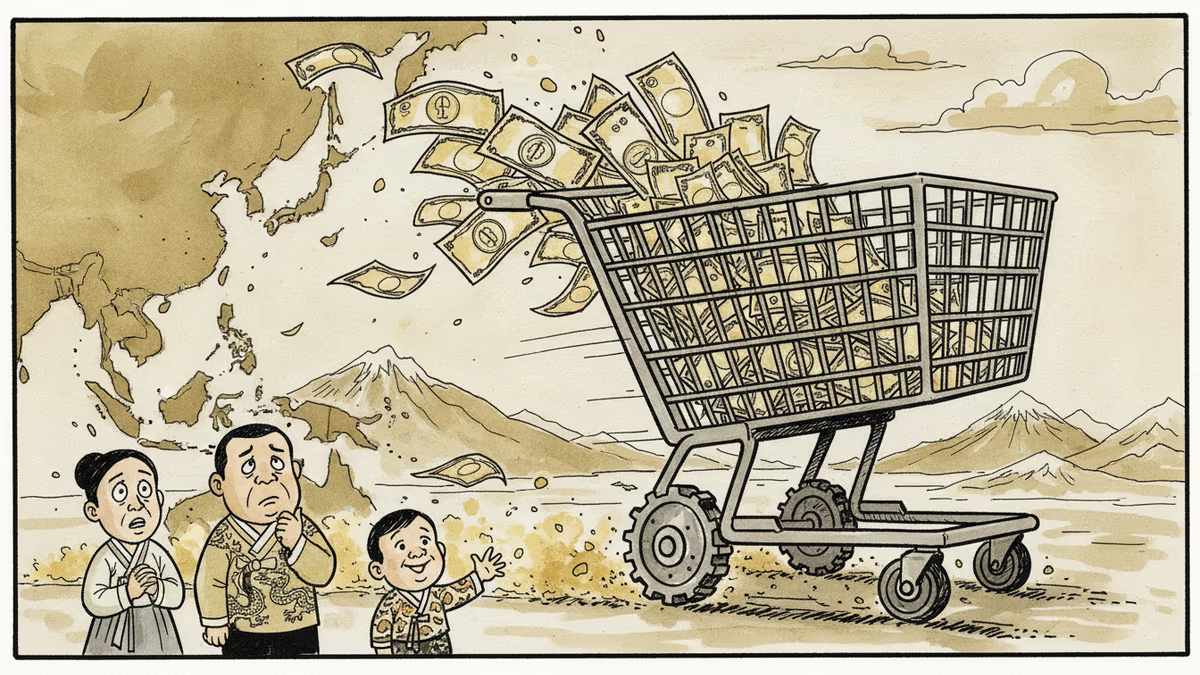
PM Takaichi's historic election win paves way for eliminating Japan's 8% food consumption tax. Analyzing the regional economic implications of this bold experiment.
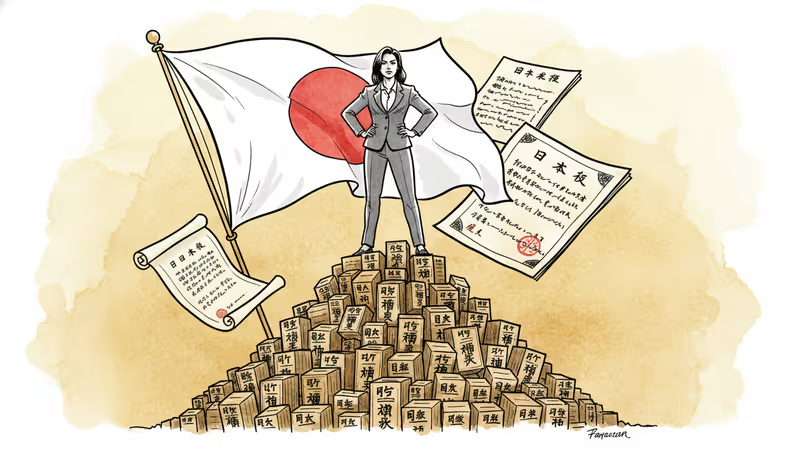
Sanae Takaichi's coalition secured a two-thirds majority in Japan's lower house, paving the way for constitutional amendments and consumption tax cuts.
Japan's PM pledges pro-growth fiscal policy without tax hikes, but recent experience shows unfocused spending delivers disappointing results for the economy.
With two-thirds lower house control, PM Takaichi moves to restart Japan's constitutional amendment talks, focusing on clarifying Self-Defense Forces' legal status
PM Takaichi's historic election win paves way for eliminating Japan's 8% food consumption tax. Analyzing the regional economic implications of this bold experiment.
Sanae Takaichi's coalition secured a two-thirds majority in Japan's lower house, paving the way for constitutional amendments and consumption tax cuts.
Thoughts
Share your thoughts on this article
Sign in to join the conversation