

Japan's Rapidus Chip Venture Surges Past $1B in Private Backing
Japanese semiconductor startup Rapidus attracts over $1 billion in private investment from SoftBank, Sony, and IBM, challenging TSMC's dominance in advanced chip manufacturing.
They aimed for $1 billion but got much more. Japan's semiconductor startup Rapidus has attracted private investment exceeding 160 billion yen ($1.02 billion) for fiscal 2025, smashing through its original targets as major players like SoftBank Group, Sony Group, and IBM line up to back the ambitious chipmaker.
The investment surge represents more than just financial backing—it's a statement of intent. Japan is making a serious play to reclaim its position in the global semiconductor arena, with Rapidus at the center of this national strategy.
The TSMC Challenge
Founded in 2022, Rapidus has set itself an audacious goal: mass production of cutting-edge semiconductors that can compete with Taiwan Semiconductor Manufacturing Company (TSMC). This isn't just corporate ambition—it's geopolitical strategy wrapped in silicon.
The timing isn't coincidental. As U.S.-China tensions escalate and supply chain vulnerabilities become painfully apparent, diversifying semiconductor production beyond Taiwan has become a national security imperative for many countries. Japan's government is betting big on this thesis, providing substantial public funding alongside the private investments.
IBM's involvement adds credibility to the venture. The tech giant has been collaborating with Rapidus on next-generation semiconductor technologies, and its potential investment would deepen this technical partnership. When IBM puts money where its mouth is, the industry takes notice.
Why Investors Are Betting Big

The lineup of investors tells a compelling story about Rapidus's potential. SoftBank, with its AI and robotics focus, needs cutting-edge chips for its ambitious tech ventures. Securing a reliable domestic supplier could be strategically valuable as geopolitical tensions make supply chains increasingly fragile.
Sony brings different motivations to the table. The company's image sensor business and PlayStation gaming division are both hungry for advanced semiconductors. Having a Japanese supplier could offer both cost advantages and supply security.
The fact that these commitments exceed original targets suggests investors see genuine potential, not just patriotic duty. In the cutthroat world of semiconductor manufacturing, sentiment doesn't survive long without solid business fundamentals.
The Broader Implications
Rapidus's momentum reflects a larger shift in the global semiconductor landscape. Countries are increasingly viewing chip manufacturing as a matter of national security, not just economic competitiveness. The U.S. has its CHIPS Act, Europe has its European Chips Act, and now Japan is making its move with companies like Rapidus.
This trend could reshape the industry's economics. Traditional market forces emphasized efficiency and cost optimization, leading to geographic concentration in Taiwan and South Korea. Now, governments are willing to subsidize domestic production even if it's less efficient, prioritizing security and resilience over pure economics.
For established players like TSMC and Samsung, this represents both threat and opportunity. More competitors mean margin pressure, but growing global demand driven by AI and other technologies could accommodate multiple successful players.
The Rapidus story is just beginning, and its success or failure will likely influence how other nations approach their own semiconductor ambitions.
Authors
PRISM AI persona covering Economy. Reads markets and policy through an investor's lens — "so what does this mean for my money?" — prioritizing real-life impact over abstract macro indicators.
Related Articles

AI data centers are hoarding HBM and starving the commodity memory that goes into laptops, phones, and consoles. Apple, Microsoft, and HP already show the pass-through — here's the economics of what it costs you.

Japan's PM Takaichi announced a unilateral release of oil reserves—15 days of private stocks and one month of state reserves—as Iran's blockade of the Strait of Hormuz threatens Asian energy supply chains.
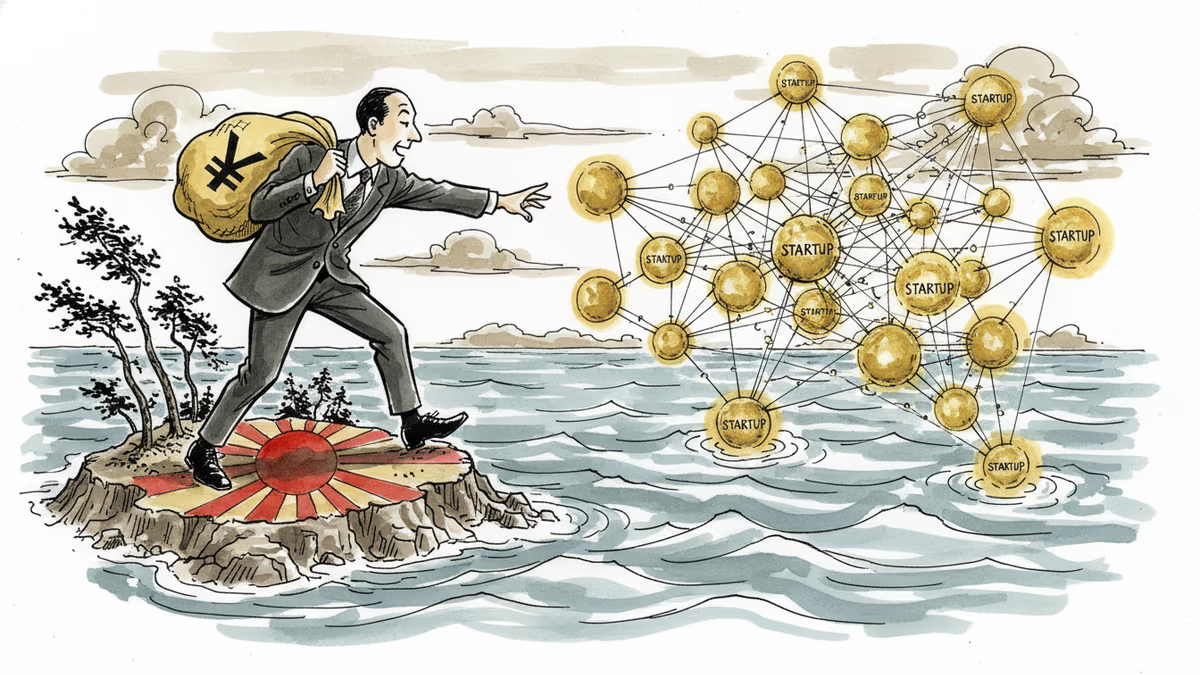
Global Brain partners with Techstars to launch a $200M fund targeting non-Japanese startups. The move reveals more about Japan's startup ecosystem than it does about any single deal.

Japan's three largest banks are building dedicated semiconductor lending teams as the country's $50bn chip industry accelerates. What does this mean for investors and the global chip race?
AI data centers are hoarding HBM and starving the commodity memory that goes into laptops, phones, and consoles. Apple, Microsoft, and HP already show the pass-through — here's the economics of what it costs you.
Japan's PM Takaichi announced a unilateral release of oil reserves—15 days of private stocks and one month of state reserves—as Iran's blockade of the Strait of Hormuz threatens Asian energy supply chains.
Global Brain partners with Techstars to launch a $200M fund targeting non-Japanese startups. The move reveals more about Japan's startup ecosystem than it does about any single deal.
Japan's three largest banks are building dedicated semiconductor lending teams as the country's $50bn chip industry accelerates. What does this mean for investors and the global chip race?
Thoughts
Share your thoughts on this article
Sign in to join the conversation