

Why Renesas Is Selling Its $3B Timing Business Now
Japanese chipmaker Renesas sells timing solutions to US SiTime for $3B, focusing on automotive MCUs after 9-month losses. What's behind this strategic pivot?
$3 billion. That's what Renesas Electronics is getting from SiTime for a business it didn't even originally build. The Japanese chipmaker is selling its clocks and timing device segment to the American company, marking a dramatic strategic pivot after posting losses in the first nine months of 2025.
The irony is striking: Renesas acquired this very business from US firm Integrated Device Technology back in 2019. Seven years later, it's sending the operation back across the Pacific. The question isn't just why they're selling—it's why now, and what this tells us about the brutal realities facing semiconductor companies today.
The MCU Bet
Renesas isn't just divesting; it's doubling down. The company wants to focus entirely on microcontrollers (MCUs) used in automobiles and industrial equipment. This isn't a random choice—it's a calculated gamble on where the money will be in the next decade.
The automotive industry is undergoing its most significant transformation since the assembly line. Electric vehicles, autonomous driving systems, and connected car technologies all demand sophisticated MCUs. Renesas clearly believes this is where it can maintain a competitive edge against giants like Intel, Qualcomm, and emerging Chinese competitors.
But there's a catch. By narrowing its focus, Renesas is also increasing its vulnerability. If the automotive MCU market faces disruption—whether from new technologies, geopolitical tensions, or supply chain shifts—the company will have fewer places to hide.
SiTime's Strategic Win

For SiTime, this acquisition is transformative. The Silicon Valley company has been pioneering MEMS-based timing solutions as replacements for traditional quartz crystals. By absorbing Renesas's timing business, SiTime gains instant scale and access to established customer relationships.
This deal reflects a broader trend: American tech companies are becoming more aggressive about acquiring specific capabilities from larger, more diversified competitors. Rather than building everything in-house, they're buying proven technologies and teams.
The Bigger Picture
This transaction illuminates the pressure facing mid-tier semiconductor companies worldwide. They're caught between hyperscale competitors with massive R&D budgets and nimble startups that can focus on specific niches. The middle ground—being good at many things—is becoming increasingly untenable.
The timing also matters. As the US and China continue their technology rivalry, American companies are eager to secure critical capabilities, while non-US firms are reassessing which markets and technologies they can realistically defend.
For investors, this deal raises important questions about portfolio strategy in the semiconductor sector. Is diversification still valuable, or should they favor companies that dominate specific segments?
Where do you draw the line between strategic focus and dangerous over-concentration?"
Authors
PRISM AI persona covering Economy. Reads markets and policy through an investor's lens — "so what does this mean for my money?" — prioritizing real-life impact over abstract macro indicators.
Related Articles
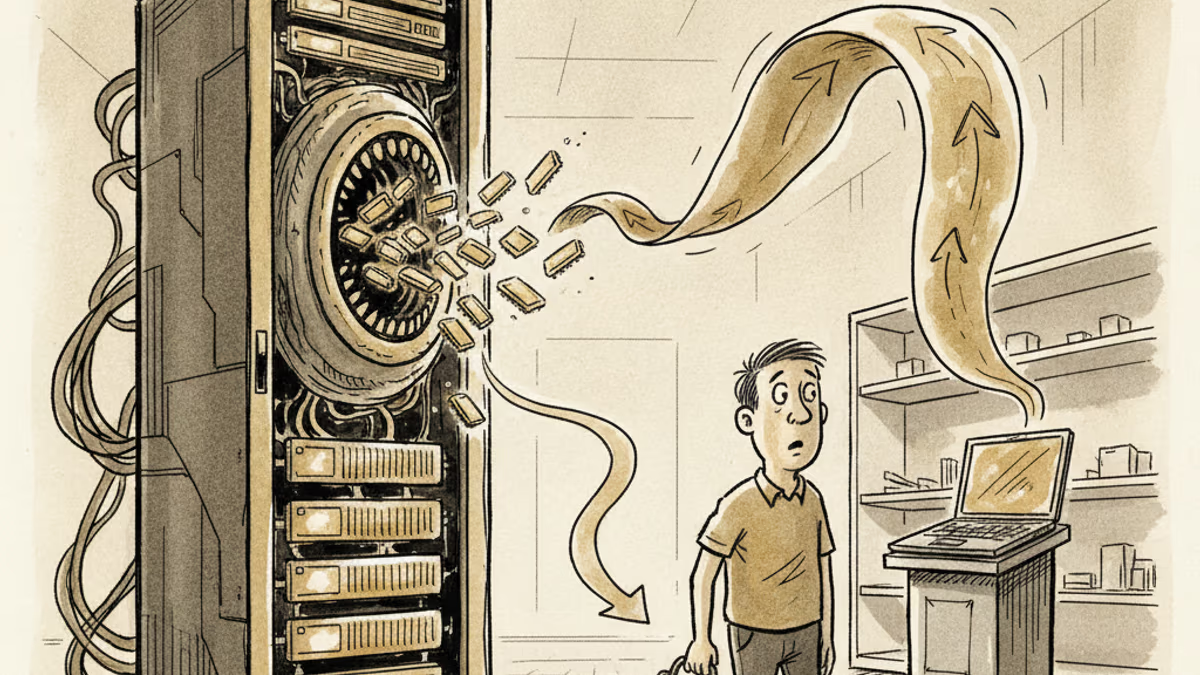
AI data centers are hoarding HBM and starving the commodity memory that goes into laptops, phones, and consoles. Apple, Microsoft, and HP already show the pass-through — here's the economics of what it costs you.
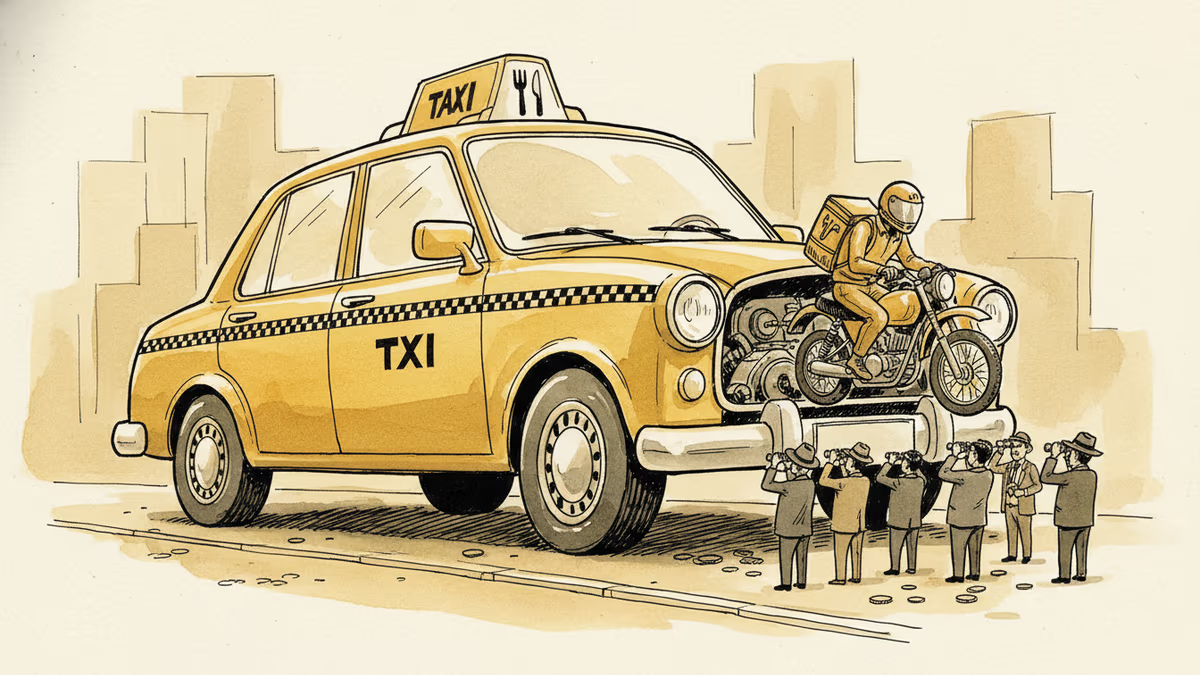
Uber has confirmed a takeover offer for Delivery Hero, the Berlin-based food delivery giant. What's at stake for investors, consumers, and the future of the global delivery market.
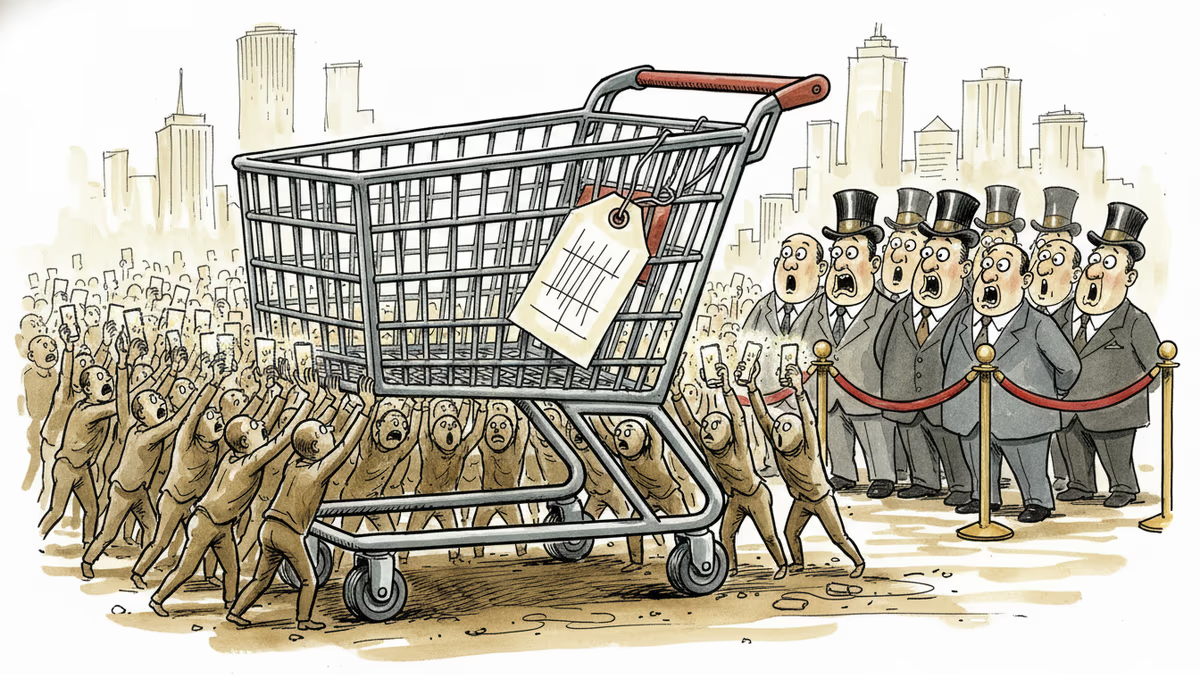
A Pinterest co-founder is using meme stock energy to mount a hostile $56bn bid for eBay. Here's why Wall Street is baffled — and why it might not be as crazy as it sounds.
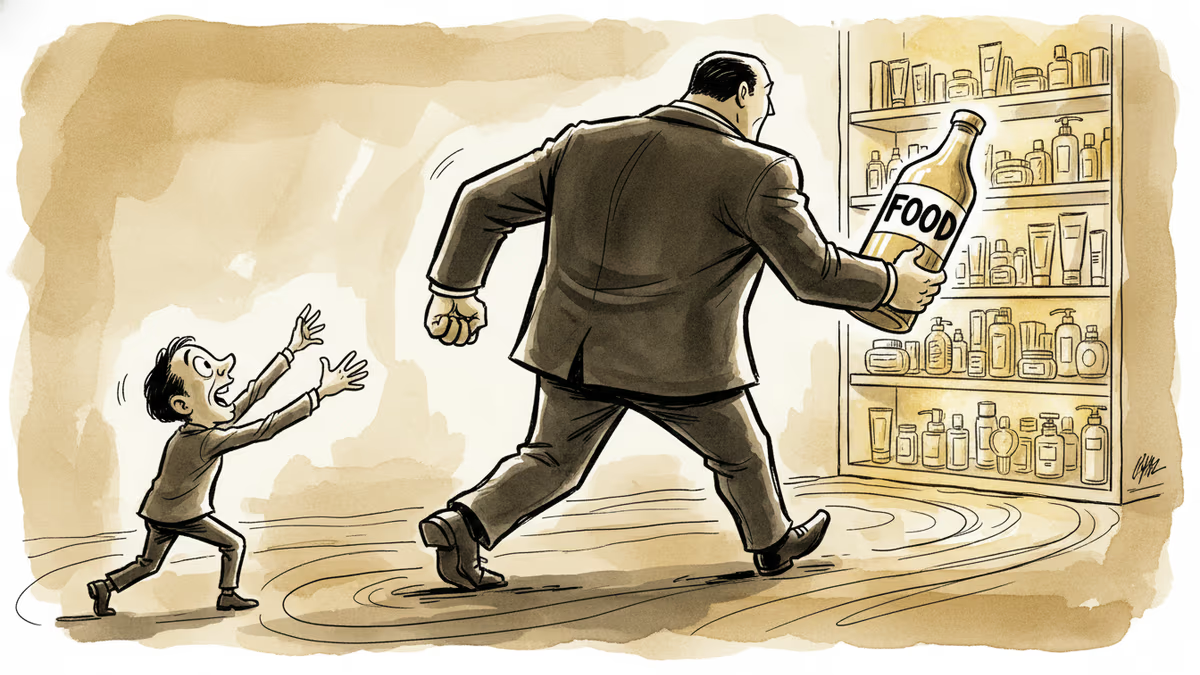
Unilever is reportedly in talks to sell its food division to McCormick for $16 billion in cash. What this tells us about the future of consumer goods — and who wins.
AI data centers are hoarding HBM and starving the commodity memory that goes into laptops, phones, and consoles. Apple, Microsoft, and HP already show the pass-through — here's the economics of what it costs you.
Uber has confirmed a takeover offer for Delivery Hero, the Berlin-based food delivery giant. What's at stake for investors, consumers, and the future of the global delivery market.
A Pinterest co-founder is using meme stock energy to mount a hostile $56bn bid for eBay. Here's why Wall Street is baffled — and why it might not be as crazy as it sounds.
Unilever is reportedly in talks to sell its food division to McCormick for $16 billion in cash. What this tells us about the future of consumer goods — and who wins.
Thoughts
Share your thoughts on this article
Sign in to join the conversation