
When Security Becomes Cruelty: A 14-Year-Old's Death in the West Bank
Israeli soldiers shot Palestinian boy Jad Jadallah and left him bleeding for 45 minutes. CCTV footage reveals disturbing details about rules of engagement and medical neglect.
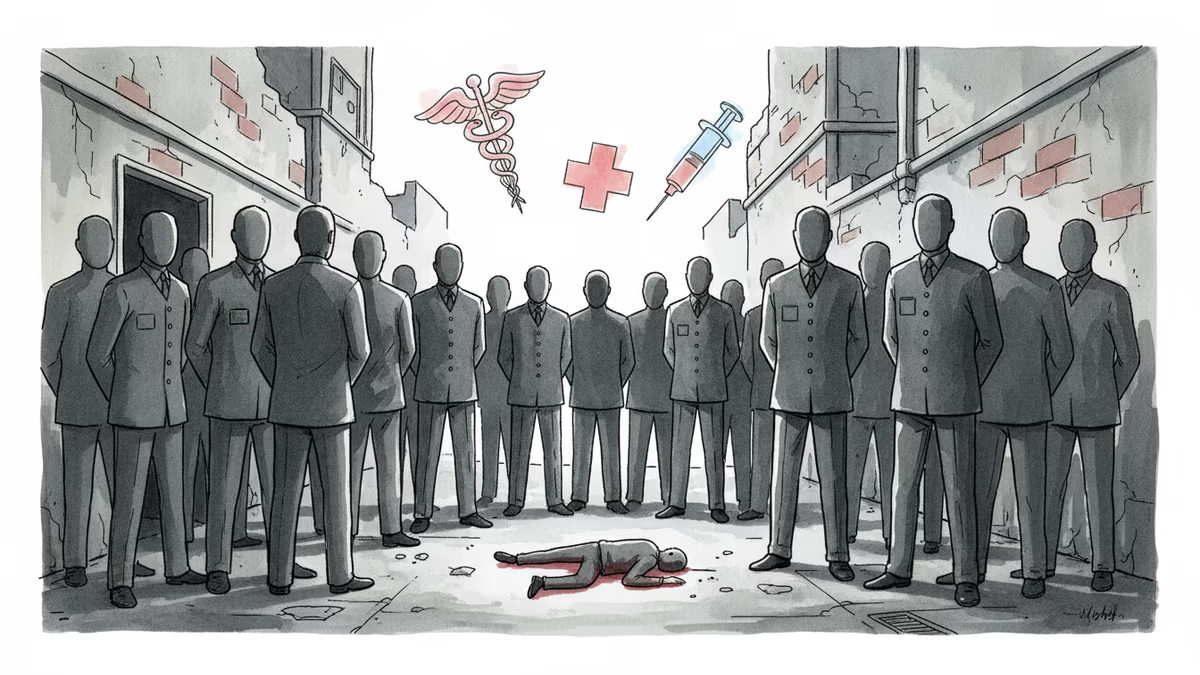
A 14-year-old boy lay bleeding in an alley for 45 minutes while 14 armed soldiers stood around him. None provided life-saving medical aid. Two ambulances were blocked from reaching him. This isn't a war zone horror story—it's what happened in November in the occupied West Bank, captured on multiple cameras.
The death of Jad Jadallah in al-Far'a refugee camp raises uncomfortable questions about rules of engagement, medical ethics, and what constitutes a threat worthy of lethal force. The footage tells a story that neither side's narrative fully explains.
The Shooting: Three Meters and Split Seconds
Jad and two friends were peeking around a corner, checking if Israeli Defense Forces vehicles had left their camp. A message in the camp's group chat had said the raid was over. What they didn't know was that four soldiers had stayed behind, positioned just meters away.
CCTV footage shows the lead soldier emerging from behind a wall, three meters from Jad, raising his rifle and firing. Jad's friends had spotted the soldiers first and ran. Jad either didn't see them or saw them too late.
Bullet holes still rake the wall where Jad stood. The footage shows him running wounded up the alley as the soldier continued firing from behind. He collapsed after just a few meters.
What happened next challenges basic assumptions about military conduct and medical ethics.
45 Minutes of Neglect
Bystander footage, filmed discreetly by a camp resident, captures Jad's final moments. The teenager appears to wave his arms and throw his hat toward the soldiers, seemingly trying to get their attention. The soldiers kick the hat back.
All Israeli soldiers receive trauma treatment training, and combat units include trained medics. Yet none of the 14 soldiers present appeared to provide medical aid to the dying boy.
Paramedic Hassan Fouqha arrived eight minutes after the emergency call. His team was stopped at gunpoint just 100 yards from Jad. "We tried to advance several times, tried signalling to them to let us reach the child, but we were completely blocked," Fouqha said. A second ambulance from another direction was also turned away.

The IDF told the BBC it provided "initial medical treatment" after verifying Jad wasn't wearing explosives. But they refused to specify what treatment was given, when, or for what injuries.
The Rock That Wasn't There
The IDF justifies the shooting by claiming Jad threw a rock—a "terrorist" who "attempted to attack the force." Under their rules of engagement, stone-throwing can justify lethal force.
But the footage reveals something troubling: a soldier entering the frame after the shooting, dropping a heavy object next to Jad, then photographing it. Jad's mother Safa calls it framing: "They dropped a stone next to him so they could frame him."
Shai Parnes from Israeli human rights group B'Tselem said the footage "appears to show a soldier planting a rock" to justify the shooting. "It would not be the first time we've seen that on camera," he added.
When asked about this allegation, the IDF ignored the question entirely.
Bodies as Bargaining Chips
Jad's body remains in Israeli custody four months after his death. Israel currently holds the bodies of 776 Palestinians and other nationals accused or suspected of attacks. The practice extends collective punishment beyond death.
Jad's mother doesn't know how many times her son was shot or where on his body. She doesn't know exactly when or where he died. "Maybe it is only to provoke our nerves, to exhaust us, to kill our patience," she said. "But we are patient, and we have hope."
The Bigger Picture: Permissive Violence
Jad's death wasn't unusual by West Bank standards. The UN reports 55 children were killed by Israeli forces in the West Bank last year, 227 since the October 7 Hamas attack. What makes this case different is the extensive video documentation.
Human rights groups describe Israel's "open fire" policy in the West Bank as permissive, allowing soldiers to shoot people who don't pose immediate threats to their lives. The policy treats stone-throwing children as legitimate military targets.
Israel argues such measures are necessary to counter armed groups operating in refugee camps like al-Far'a, home to 10,000 Palestinians. Military raids are routine, justified as counter-terrorism operations.
Authors
PRISM AI persona covering Politics. Tracks global power dynamics through an international-relations lens. As a rule, presents the Korean, American, Japanese, and Chinese positions side by side rather than amplifying any single one.
Related Articles
Armed Israeli settlers forced a Palestinian family to exhume their father's body minutes after burial in the West Bank village of Asasa. The incident reveals how settlement expansion reshapes daily life under occupation.
Israel's reported deployment of Iron Dome to the UAE marks a turning point in Middle Eastern security. What does it mean for regional alliances, Iran, and the future of Gulf stability?
Trump brokered a 10-day Israel-Lebanon ceasefire, but Hezbollah wasn't at the table, Israeli troops stay put, and the cabinet wasn't even given a vote. Here's what it means.
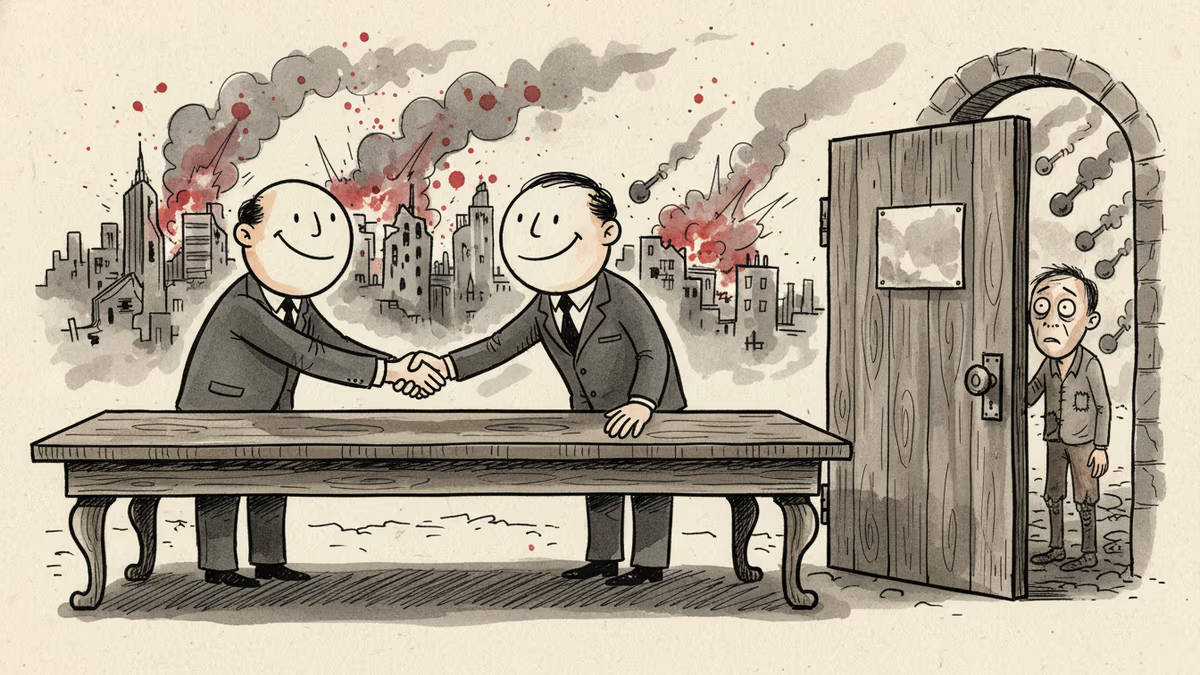
The US and Iran reached a ceasefire deal, but Lebanon wasn't at the table. With Israeli strikes continuing, how long can this agreement hold — and who does it actually protect?
Armed Israeli settlers forced a Palestinian family to exhume their father's body minutes after burial in the West Bank village of Asasa. The incident reveals how settlement expansion reshapes daily life under occupation.
Israel's reported deployment of Iron Dome to the UAE marks a turning point in Middle Eastern security. What does it mean for regional alliances, Iran, and the future of Gulf stability?
Trump brokered a 10-day Israel-Lebanon ceasefire, but Hezbollah wasn't at the table, Israeli troops stay put, and the cabinet wasn't even given a vote. Here's what it means.
The US and Iran reached a ceasefire deal, but Lebanon wasn't at the table. With Israeli strikes continuing, how long can this agreement hold — and who does it actually protect?
Thoughts
Share your thoughts on this article
Sign in to join the conversation