
They Buried Their Father. Settlers Made Them Dig Him Up.
Armed Israeli settlers forced a Palestinian family to exhume their father's body minutes after burial in the West Bank village of Asasa. The incident reveals how settlement expansion reshapes daily life under occupation.
Mohammed Asasa had done everything right. He'd even asked the nearby Israeli military base for permission before his father's funeral could proceed.
It didn't matter.
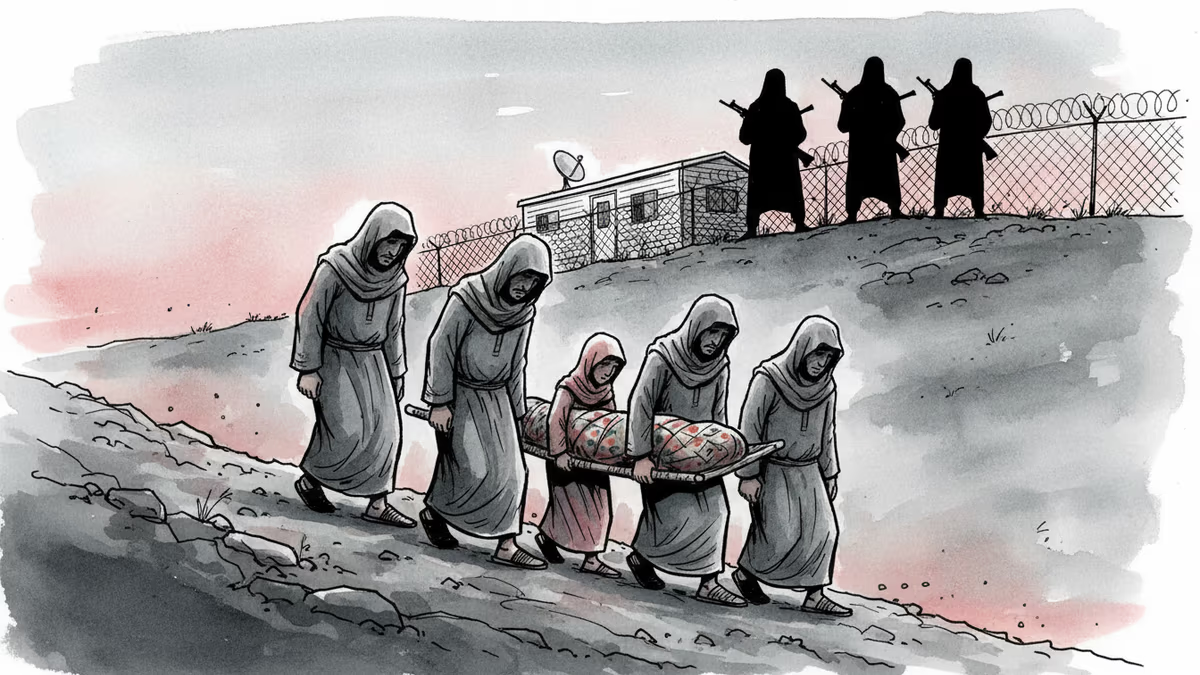
Less than thirty minutes after burying Hussein Asasa—an 80-year-old former livestock trader, father of ten, and a respected figure in the small West Bank village that bears his family's name—Mohammed was back at the cemetery gate, watching armed Jewish settlers hack apart his father's freshly laid grave with heavy tools.
The settlers' ultimatum was blunt: "Either you exhume the body, or we will."
So the sons dug up their father themselves.
What Happened in Asasa
The village of Asasa sits near Jenin in the northern West Bank. Above the village cemetery, on a hilltop, lies the recently re-established Israeli settlement of Sa-Nur. Under international law, all Israeli settlements in occupied Palestinian territory are illegal. The Netanyahu government nonetheless authorized Sa-Nur's reoccupation as part of a broader push to expand and create new settlements across the West Bank.
When settlers from Sa-Nur descended on the cemetery last Friday, they claimed Hussein's burial plot was too close to their settlement. Mobile phone footage captured what followed: Mohammed and his brothers, under the watchful gaze of settlers carrying automatic rifles, digging up their father's grave and carrying his shrouded body down the hill to find somewhere safer to bury him.
The Israel Defense Forces later said they intervened to confiscate digging tools from the settlers and prevent further escalation. In a statement to the BBC, the IDF said it "condemns any attempt to act in a manner that harms public order, the rule of law, and the dignity of the living and the deceased." The family says soldiers stood by and watched while it happened.
Hussein Asasa was eventually reburied in a cemetery in a neighboring village.

The UN human rights office called the incident "appalling and emblematic of the dehumanisation of Palestinians" in the Occupied Territories. Ajith Sunghay, the local head of the Office of the High Commissioner for Human Rights, added: "It spares no-one, dead or alive."
A Single Grave in a Larger Pattern
This is not an isolated incident. It is a particularly stark data point in a pattern that has been intensifying.
The New York Times reported that between the start of the US-Israeli military campaign against Iran and the end of April, 13 Palestinians were killed in settler attacks, hundreds more were injured, and many others were driven from their homes. Human rights organizations say settler violence across the West Bank has surged, even as international attention has been drawn elsewhere by other conflicts.
Since Sa-Nur was reestablished, much of the surrounding area has been designated a "closed military area." In practice, this means Asasa's residents can no longer reliably access their olive groves, their farmland, or—as the family learned last Friday—their own cemetery. Villagers told the BBC that even when access is carefully coordinated with the IDF, settlers, many of them now openly armed, are far more aggressive and threatening than before.
"They think they own the whole area, now that they've moved back in," one guest at the mourning tent said.
Another sibling described how a relative's land had recently been cleared of olive trees by settlers and soldiers together, without explanation.
Empowered by support from far-right ministers inside the Netanyahu coalition, settlers are operating with a confidence that human rights groups say is qualitatively different from previous years. The armed presence, the open confrontations, the encroachment on agricultural land and now burial sites—these are not random provocations. They are, critics argue, the practical mechanism through which settlement expansion becomes irreversible.
Who Sees What, and Why
For the Israeli government and its far-right coalition partners, West Bank settlement expansion is framed as a matter of historical right and national security. Ministers like Itamar Ben Gvir and Bezalel Smotrich have openly advocated for annexation and have pushed to arm settlers and expand their legal protections. From this vantage point, settler presence on the hilltop above Asasa is not an intrusion—it is a claim being asserted.
For Palestinians, the violation at the cemetery cuts deeper than property or access. In Islamic tradition, the sanctity of burial is not a formality. To disturb the dead is to deny the community its most basic continuity—the right to grieve, to remember, to claim a place in the land through the bodies of those who came before. That this happened to a family that had sought military permission, that had tried to do everything correctly, makes it feel less like a breakdown and more like a demonstration.
For the international community, the response has followed a familiar rhythm: condemnation without consequence. The United States has criticized Israeli settlement policy in principle while maintaining military and diplomatic support in practice. European governments issue statements. The UN documents. On the ground in Asasa, none of it changed what happened to Hussein's grave.
There is a genuine tension worth sitting with here. The IDF's condemnation of settler behavior is not nothing—there are Israeli soldiers, officials, and citizens who find this conduct indefensible. But the gap between institutional statements and on-the-ground reality is wide enough that a family had to carry their father's body down a hillside while armed men watched.
This content is AI-generated based on source articles. While we strive for accuracy, errors may occur. We recommend verifying with the original source.
Related Articles
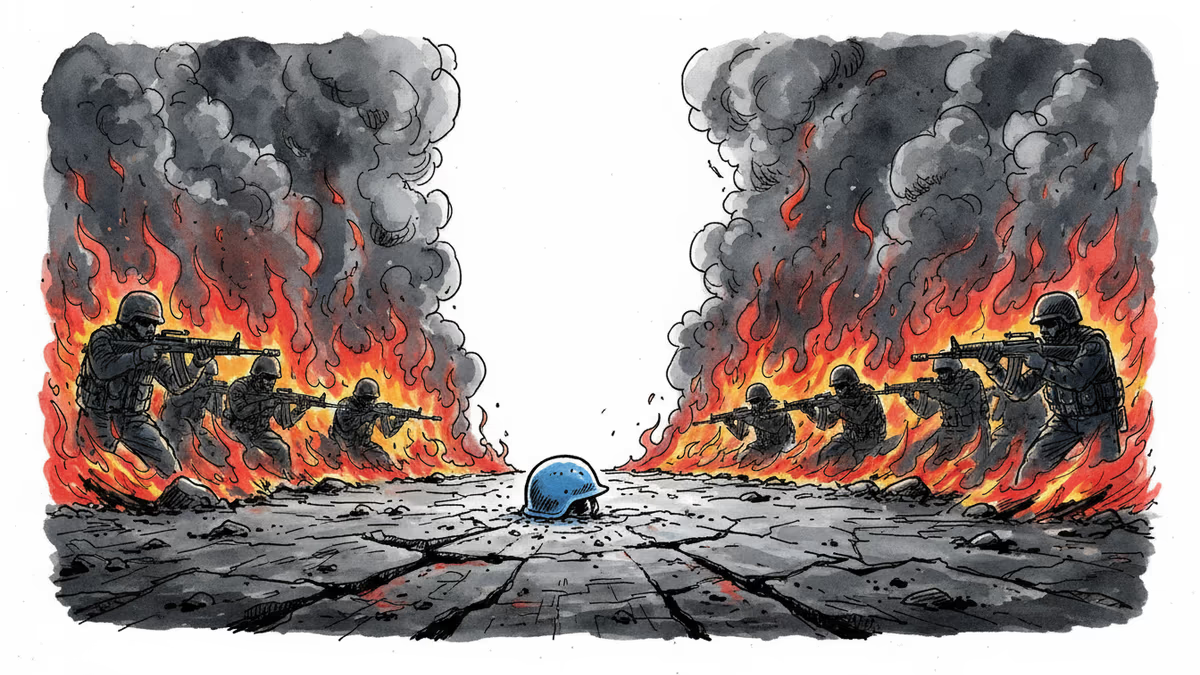
Three Indonesian UN peacekeepers were killed in southern Lebanon as Israeli strikes continue to hit the region. The new Israel-Hezbollah war, now one month old, is testing the limits of international law.
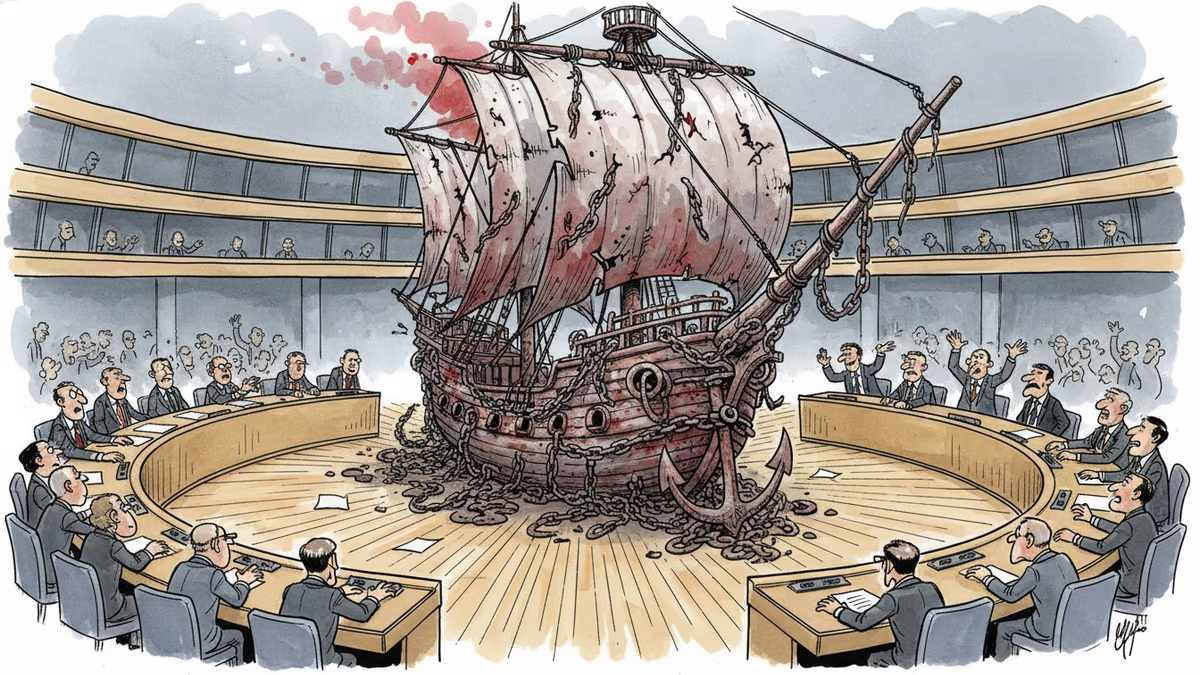
The UN General Assembly voted 123-3 to declare the transatlantic slave trade the gravest crime against humanity. But with no legal teeth, what does the resolution actually change?
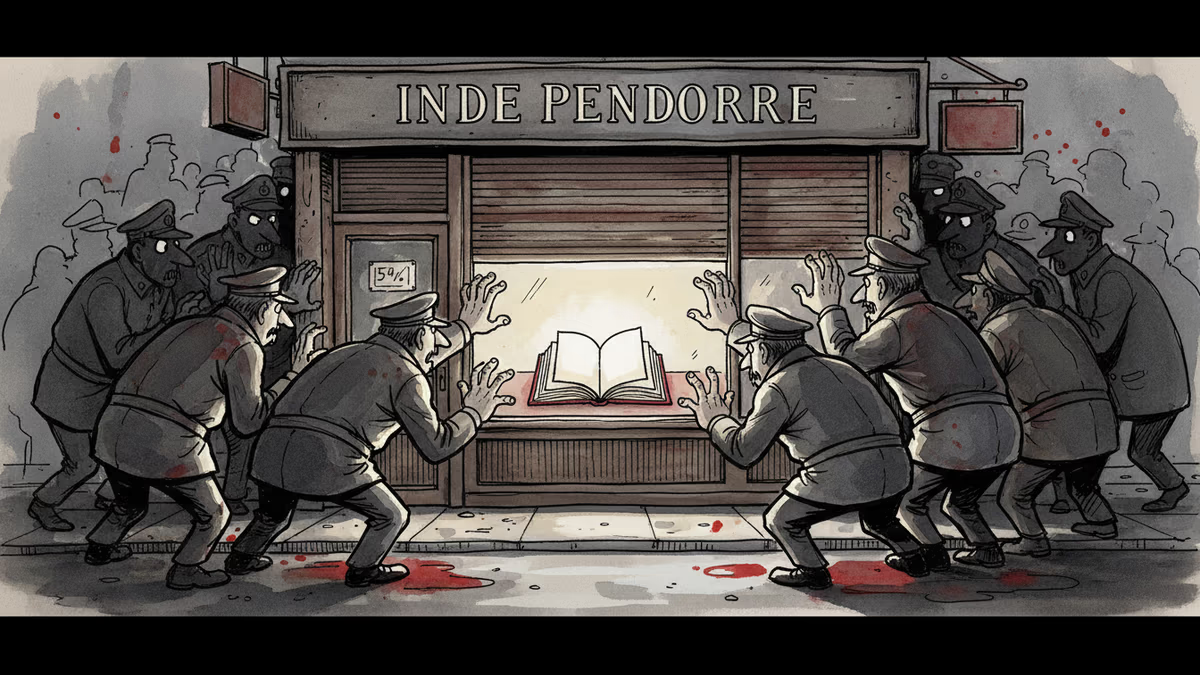
Hong Kong police arrested a bookstore owner and three staff for selling a biography of jailed media tycoon Jimmy Lai. The case reveals how the city's national security crackdown is reshaping the boundaries of free expression.
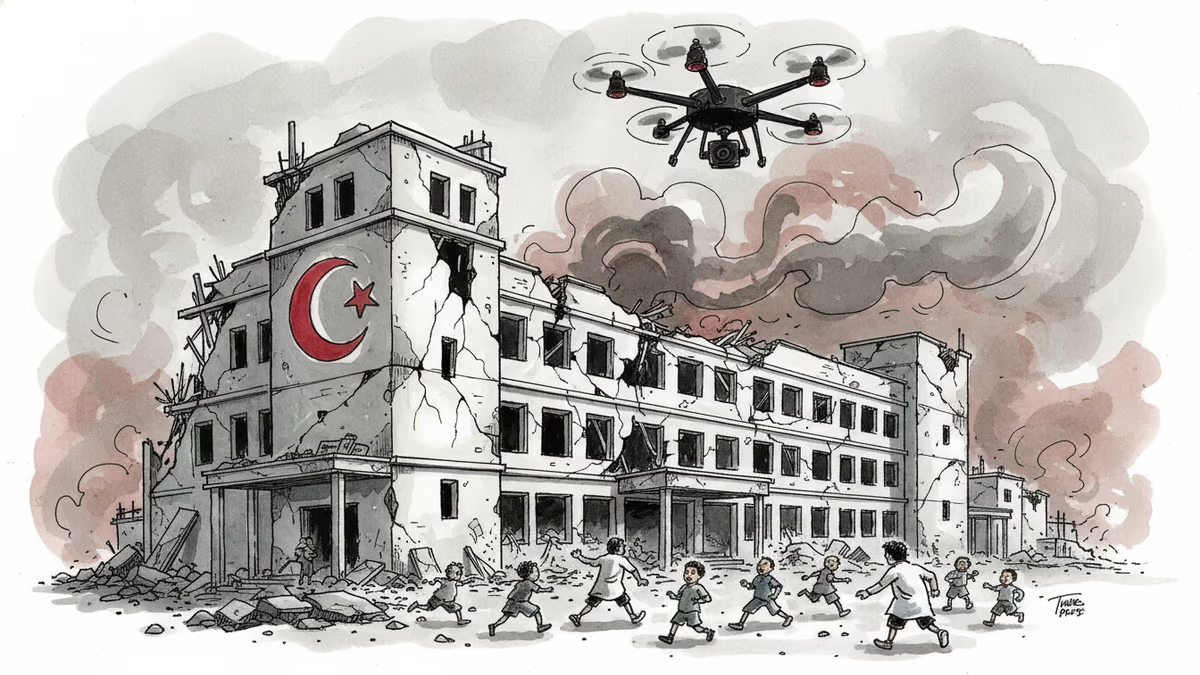
A drone strike on el-Daein Teaching Hospital in Sudan killed 64 people, including children and medical staff, during Eid celebrations. WHO confirms 213 attacks on healthcare in Sudan's civil war.
Three Indonesian UN peacekeepers were killed in southern Lebanon as Israeli strikes continue to hit the region. The new Israel-Hezbollah war, now one month old, is testing the limits of international law.
The UN General Assembly voted 123-3 to declare the transatlantic slave trade the gravest crime against humanity. But with no legal teeth, what does the resolution actually change?
Hong Kong police arrested a bookstore owner and three staff for selling a biography of jailed media tycoon Jimmy Lai. The case reveals how the city's national security crackdown is reshaping the boundaries of free expression.
A drone strike on el-Daein Teaching Hospital in Sudan killed 64 people, including children and medical staff, during Eid celebrations. WHO confirms 213 attacks on healthcare in Sudan's civil war.
Thoughts
Share your thoughts on this article
Sign in to join the conversation