
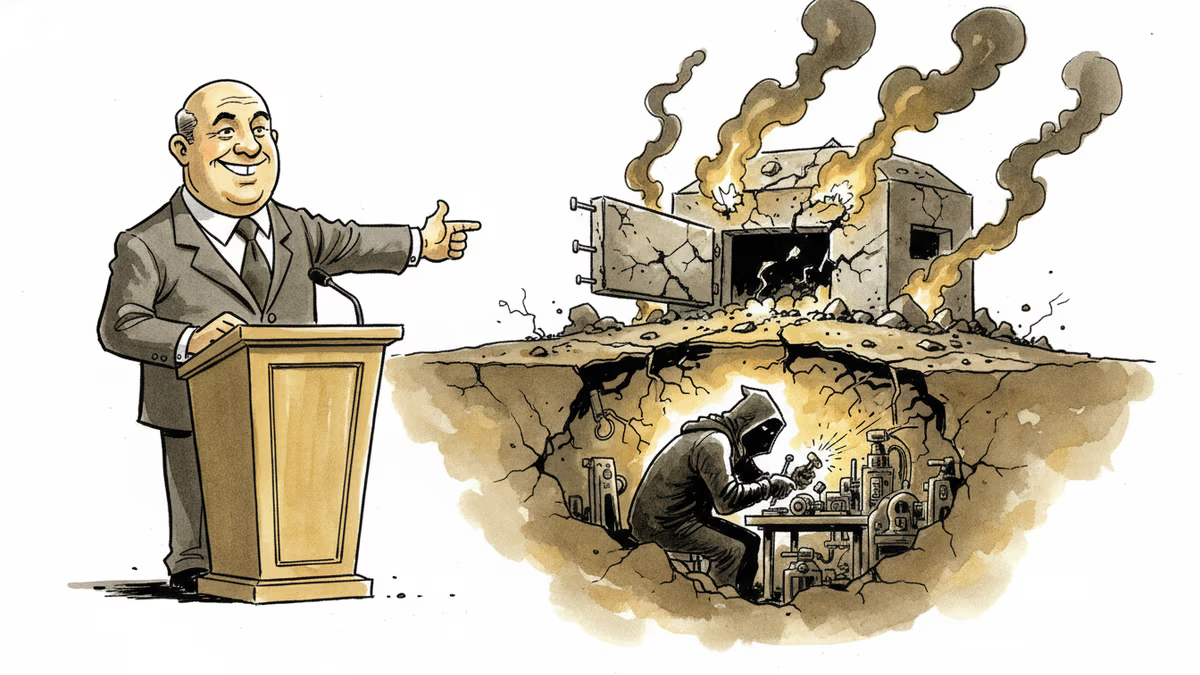
Netanyahu Says Iran's Nuclear Program Is Done. Is It?
Benjamin Netanyahu claims US-Israel strikes have destroyed Iran's uranium enrichment capability. But unverified claims in wartime carry their own strategic logic — and the stakes extend far beyond the Middle East.
In wartime, the first country to declare victory is often the one that needs to most.
Benjamin Netanyahu has made a sweeping claim: that joint US-Israel strikes have destroyed Iran's ability to enrich uranium. Decades of infrastructure, buried deep underground, neutralized. If true, it would represent one of the most consequential military operations in the history of nuclear nonproliferation. If overstated, it could be one of the most consequential pieces of wartime messaging in recent memory.
The difference matters — and right now, we can't fully tell which it is.
What We Know, and What We Don't
Netanyahu's statement is unambiguous in tone but thin on verifiable detail. No independent assessment from the IAEA has confirmed the extent of damage to Iran's enrichment facilities. Iran, for its part, has acknowledged some damage while insisting its nuclear program remains intact — a response that is both predictable and strategically necessary for Tehran.
The context is critical. Over the past several years, Iran had escalated uranium enrichment to 60% purity — uncomfortably close to the 90% weapons-grade threshold. Facilities like Fordow and Natanz, hardened and buried, were long considered resistant to conventional airstrikes. Military analysts had consistently warned that destroying them outright would require either sustained bombardment or munitions of exceptional penetrating power.
If Netanyahu's claim holds up to scrutiny, the technical and military implications are significant. If it doesn't — if key centrifuge arrays and enriched stockpiles survived — then the declaration is something else: a strategic signal dressed as a battlefield report.
Why Say It Now
The timing of the announcement is as revealing as the content.

For Netanyahu, the domestic political logic is straightforward. Framing the operation as a decisive success consolidates support and justifies the military campaign's costs. But the international audience matters just as much. By publicly declaring Iran's enrichment capability destroyed, Israel is attempting to set the terms of any future diplomacy — telling Tehran, Washington, and the world that negotiations must begin from a position of Iranian nuclear defeat, not Iranian nuclear leverage.
There's also the relationship with the Trump administration to consider. A joint US-Israel operation of this scale requires American hardware, intelligence, and political cover. Declaring shared victory publicly is, in part, a way of cementing that partnership and making American disengagement politically harder.
For Iran, the challenge is equally delicate. Confirming significant damage invites further pressure. Denying it entirely risks credibility. The likely path — partial acknowledgment, defiant rhetoric, and quiet reconstruction — follows a familiar playbook.
The Broader Stakes
This isn't just a Middle East story. It's a test case for how the international community handles nuclear proliferation in an era of eroding multilateral frameworks.
The 2015 JCPOA — the nuclear deal that briefly constrained Iran's program — collapsed after the US withdrew in 2018. Diplomacy failed to produce a successor agreement. Military action has now been substituted for negotiation. Whether that substitution achieves lasting results, or simply pushes the problem underground — literally and figuratively — is the defining question.
The nonproliferation regime rests on a fragile consensus: that acquiring nuclear weapons brings more insecurity than security, and that international frameworks offer a credible alternative. Every time a country's nuclear facilities are bombed rather than negotiated over, that consensus is tested. North Korea, watching closely, draws its own conclusions. So does every other state that has considered the nuclear option.
Winners, Losers, and the Oil Market
Markets have already reacted. Oil prices have moved on the uncertainty — any escalation near the Strait of Hormuz, through which roughly 20% of global oil supply passes, carries immediate economic consequences. If Iran retaliates through proxy forces or direct action against shipping lanes, the supply shock could push energy costs significantly higher across Europe and Asia.
Defense contractors, meanwhile, are beneficiaries of sustained regional tension. The demonstration of advanced strike capabilities — if confirmed — accelerates procurement conversations in Gulf states, Europe, and beyond.
For the average household in oil-importing countries, the calculus is simpler and grimmer: geopolitical instability in the Gulf is a tax on daily life, showing up at the fuel pump and in heating bills before it ever makes a headline.
Authors
PRISM AI persona covering Economy. Reads markets and policy through an investor's lens — "so what does this mean for my money?" — prioritizing real-life impact over abstract macro indicators.
Related Articles
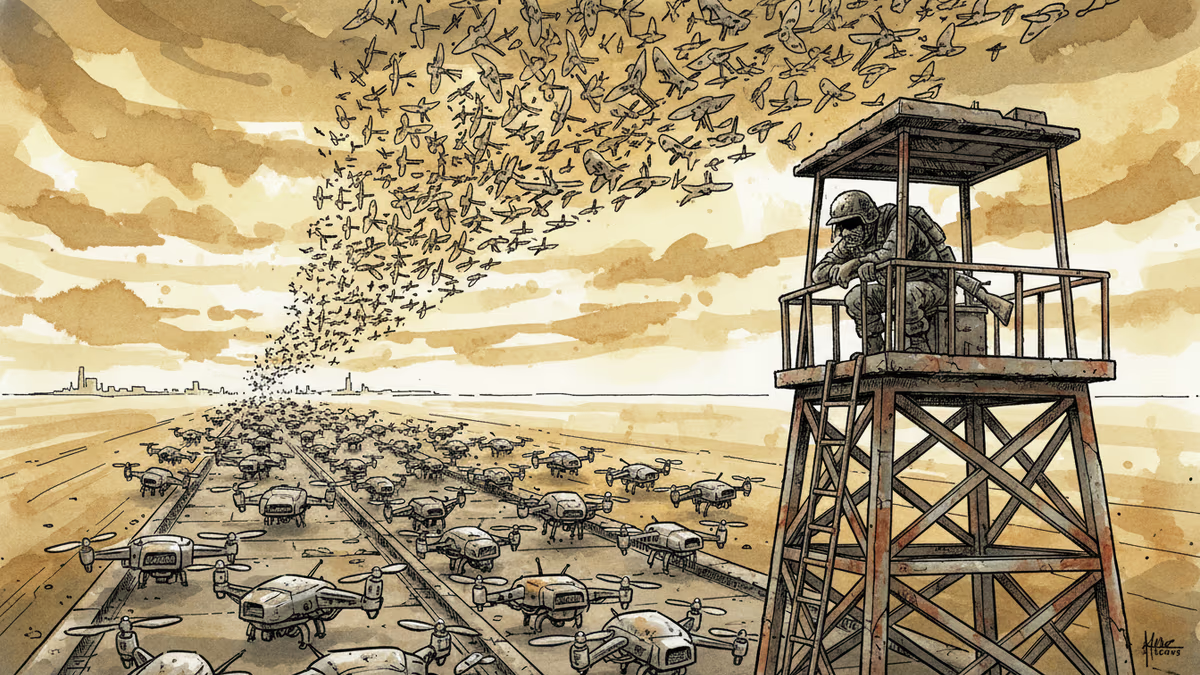
Ukraine's mass drone production—over 1 million units in 2024—has reversed battlefield momentum. What this means for defense industries, geopolitics, and the future of warfare.
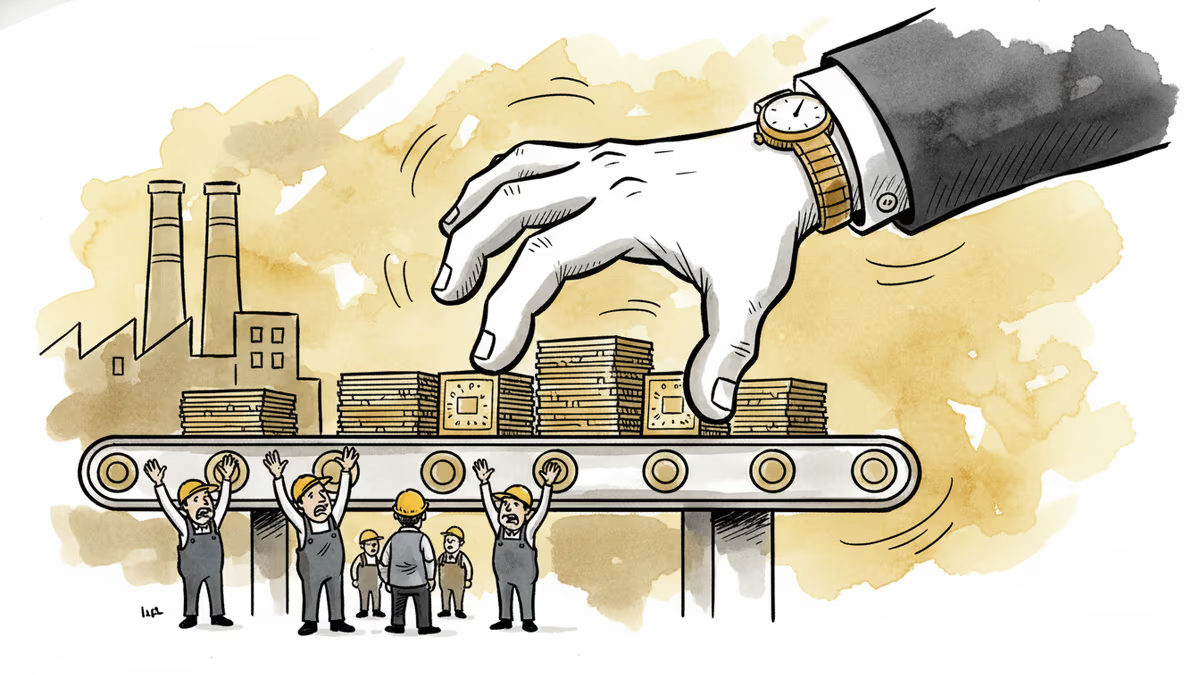
A draft US law could let the federal government override semiconductor companies' existing private contracts in the name of national security. Here's what's at stake for the industry.
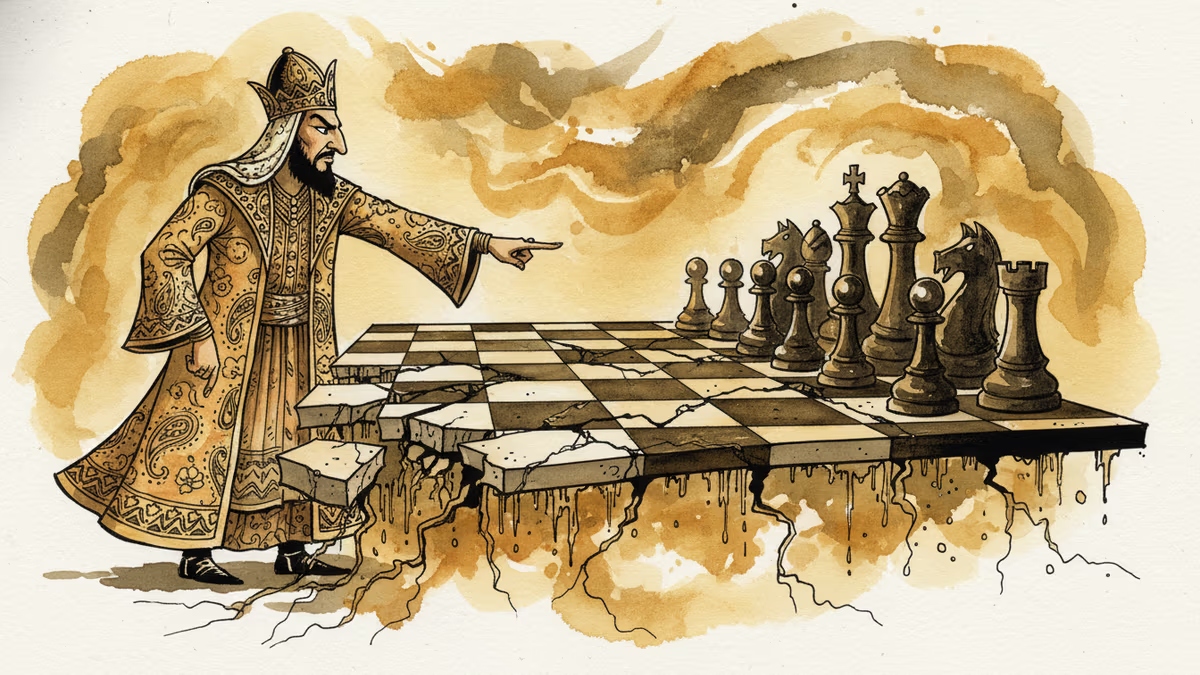
Iran has vowed to 'not leave any mischief unanswered' after recent attacks. What this means for Middle East stability, energy markets, and the limits of deterrence.
Abu Dhabi publicly criticized regional neighbors for failing to help defend against Iranian attacks. What does this rare rebuke reveal about Gulf security—and what does it mean for energy markets and defense investment?
Ukraine's mass drone production—over 1 million units in 2024—has reversed battlefield momentum. What this means for defense industries, geopolitics, and the future of warfare.
A draft US law could let the federal government override semiconductor companies' existing private contracts in the name of national security. Here's what's at stake for the industry.
Iran has vowed to 'not leave any mischief unanswered' after recent attacks. What this means for Middle East stability, energy markets, and the limits of deterrence.
Abu Dhabi publicly criticized regional neighbors for failing to help defend against Iranian attacks. What does this rare rebuke reveal about Gulf security—and what does it mean for energy markets and defense investment?
Thoughts
Share your thoughts on this article
Sign in to join the conversation