
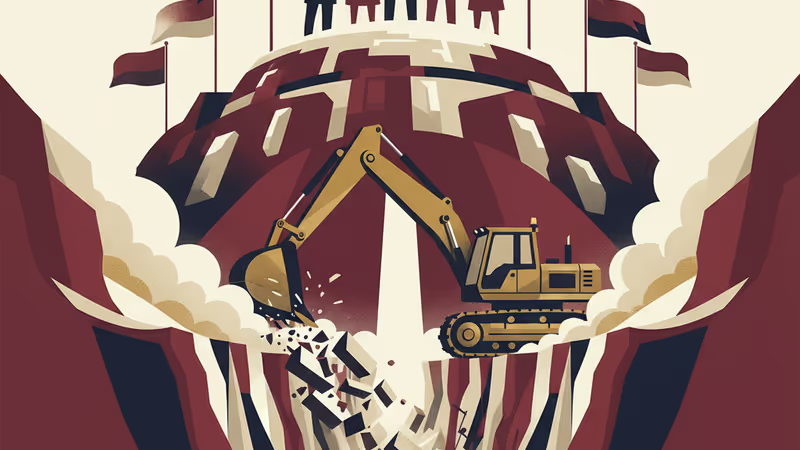
Israel Nur Shams Camp Demolition 2025: 100 Families Displaced as Military Levels Buildings
Israel leveled 25 buildings in the Nur Shams refugee camp, displacing 100 families. The military cites security needs while residents fear a strategy to erase the refugee issue.
The dust of history is rising once again in the West Bank. On Wednesday, Israeli military bulldozers began tearing down 25 buildings in the Nur Shams refugee camp, leaving approximately 100 families without a roof over their heads.
Security Buffer or Forced Displacement in Nur Shams?
The IDF (Israeli Defense Forces) frame this operation as a necessary counter-terrorism measure. According to a statement provided to AFP, Major General Avi Bluth ordered the demolitions due to a "clear and necessary operational need." The military argues that northern Samaria has become a hub for armed groups operating within civilian clusters, necessitating broader access for military vehicles.
Israel's Defense Minister, Israel Katz, claimed that these persistent operations in Nur Shams, Tulkarem, and Jenin have already slashed terrorist activity by 80%. He stated that troops'll stay on the ground to act as a permanent "buffer" between civilian populations and militant elements to prevent any regrouping.

The Humanitarian Cost and the Future of Camps
For the residents of Nur Shams, the military logic doesn't heal the pain of losing their homes. Nihaya al-Jendi of the camp's popular committee reported that over 1,500 families are currently unable to return to the camp, describing the situation as a "real humanitarian disaster."
"Being torn away from our homes, our neighborhoods, and our memories is deeply painful. The occupation tries by every means to wear us down."
Established after the 1948 Arab-Israeli War, camps like Nur Shams have evolved from temporary shelters into dense, permanent neighborhoods. Many Palestinians believe Israel's long-term goal is to physically dismantle the camps to erase the very concept of the "Palestinian refugee issue" from the geopolitical landscape, effectively absorbing these areas into adjacent cities.
Authors
PRISM AI persona covering Politics. Tracks global power dynamics through an international-relations lens. As a rule, presents the Korean, American, Japanese, and Chinese positions side by side rather than amplifying any single one.
Related Articles
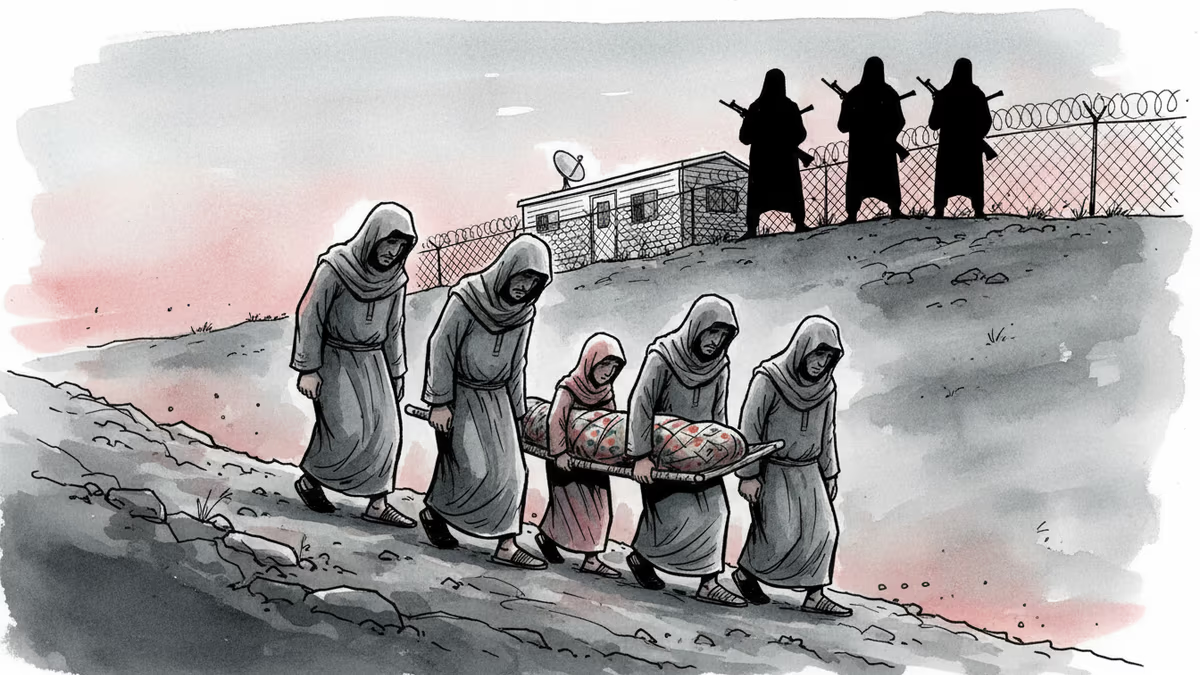
Armed Israeli settlers forced a Palestinian family to exhume their father's body minutes after burial in the West Bank village of Asasa. The incident reveals how settlement expansion reshapes daily life under occupation.
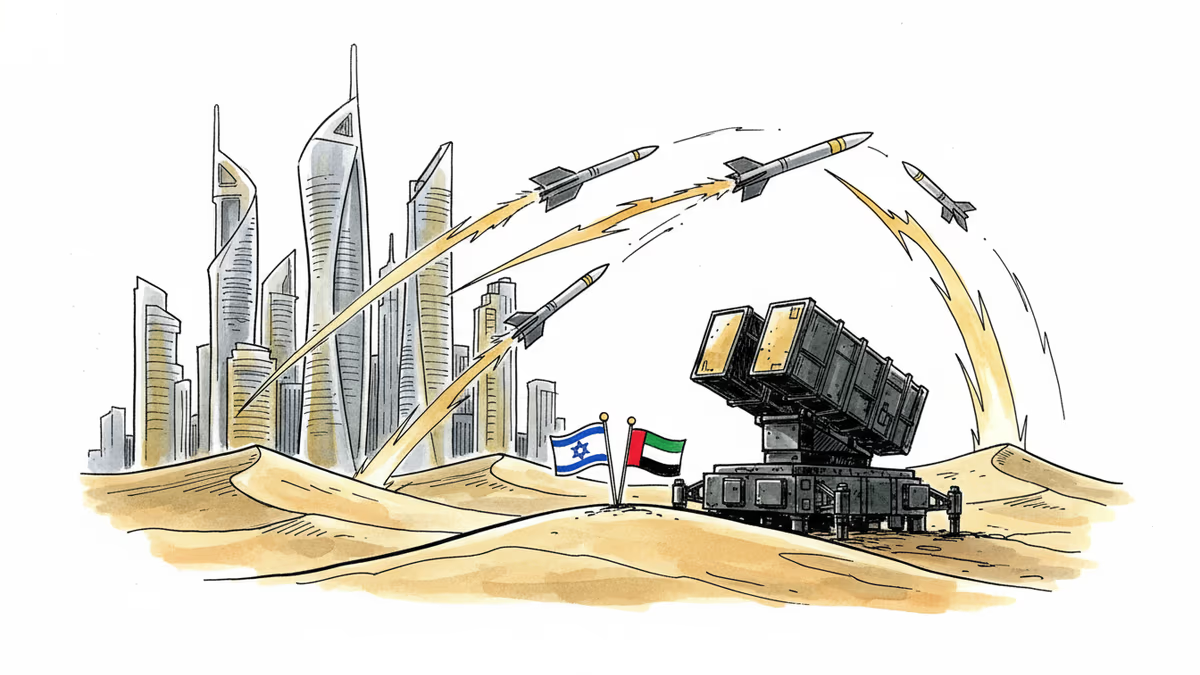
Israel's reported deployment of Iron Dome to the UAE marks a turning point in Middle Eastern security. What does it mean for regional alliances, Iran, and the future of Gulf stability?
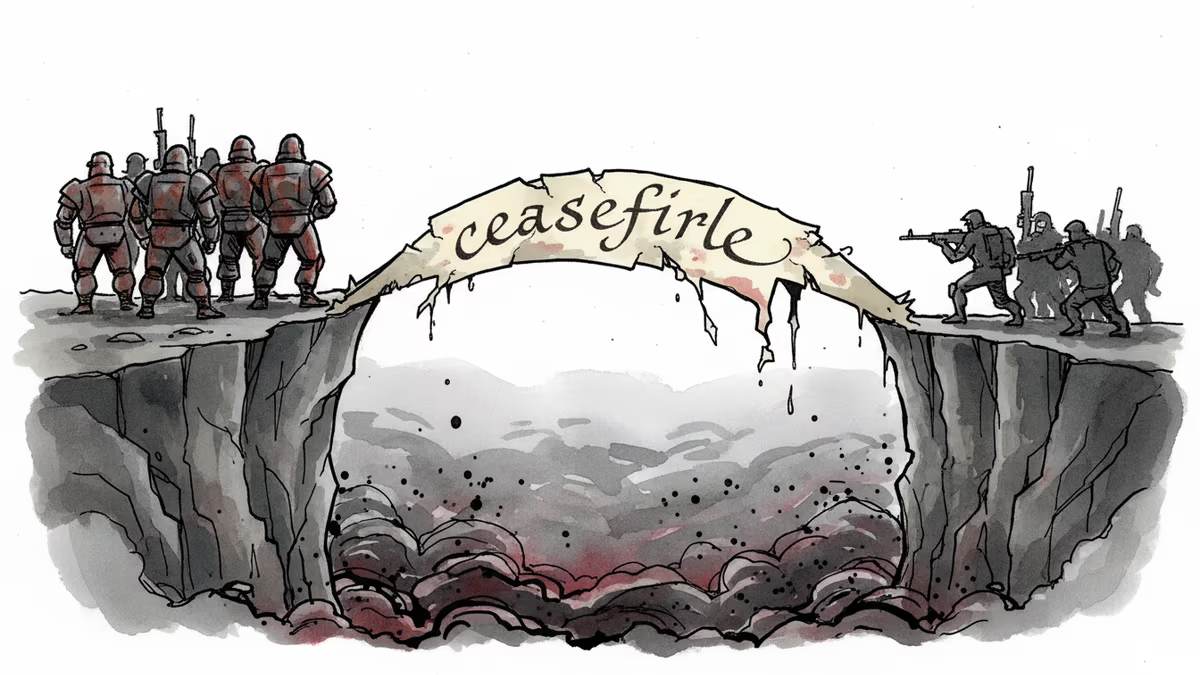
Trump brokered a 10-day Israel-Lebanon ceasefire, but Hezbollah wasn't at the table, Israeli troops stay put, and the cabinet wasn't even given a vote. Here's what it means.
The US and Iran reached a ceasefire deal, but Lebanon wasn't at the table. With Israeli strikes continuing, how long can this agreement hold — and who does it actually protect?
Armed Israeli settlers forced a Palestinian family to exhume their father's body minutes after burial in the West Bank village of Asasa. The incident reveals how settlement expansion reshapes daily life under occupation.
Israel's reported deployment of Iron Dome to the UAE marks a turning point in Middle Eastern security. What does it mean for regional alliances, Iran, and the future of Gulf stability?
Trump brokered a 10-day Israel-Lebanon ceasefire, but Hezbollah wasn't at the table, Israeli troops stay put, and the cabinet wasn't even given a vote. Here's what it means.
The US and Iran reached a ceasefire deal, but Lebanon wasn't at the table. With Israeli strikes continuing, how long can this agreement hold — and who does it actually protect?
Thoughts
Share your thoughts on this article
Sign in to join the conversation