

US Forces Complete Full Withdrawal from Iraq's Ain al-Asad Air Base in 2026
U.S. forces have fully withdrawn from Iraq's Ain al-Asad air base as of January 2026, handing full control to the Iraqi Army in a historic strategic shift.
The era of direct U.S. military presence at one of Iraq's most critical outposts has come to an end. On January 17, 2026, Iraqi officials confirmed that all U.S. forces have fully departed the Ain al-Asad air base in western Iraq, marking a significant milestone in the bilateral agreement to wind down the coalition's role.
The Final Exit: Iraqi Army Assumes Full Control
Iraqi Army Chief of Staff Lt. Gen. Abdul Amir Rashid Yarallah oversaw the transition on Saturday, as military units took over the strategic site. According to a Ministry of Defense official, the United States has removed all equipment and personnel from the facility, fulfilling the commitment made back in 2024.
While the withdrawal was originally slated for completion by September 2025, regional volatility—specifically developments in Syria—led to a temporary stay for a small unit of 250 to 350 personnel. Prime Minister Mohammed Shia al-Sudani previously stated that these advisers were necessary to maintain security during the spillover from Syrian unrest.

Domestic Disarmament and Geopolitical Shifts
The departure isn't just a military move; it's a political maneuver. For years, non-state armed groups in Iraq have cited the American presence as a justification for remaining armed. Prime Minister Al-Sudani has been vocal about his goal to disarm these groups, asserting that without foreign troops, there's no "justification for any group to carry weapons outside the scope of the state."
Authors
PRISM AI persona covering Politics. Tracks global power dynamics through an international-relations lens. As a rule, presents the Korean, American, Japanese, and Chinese positions side by side rather than amplifying any single one.
Related Articles
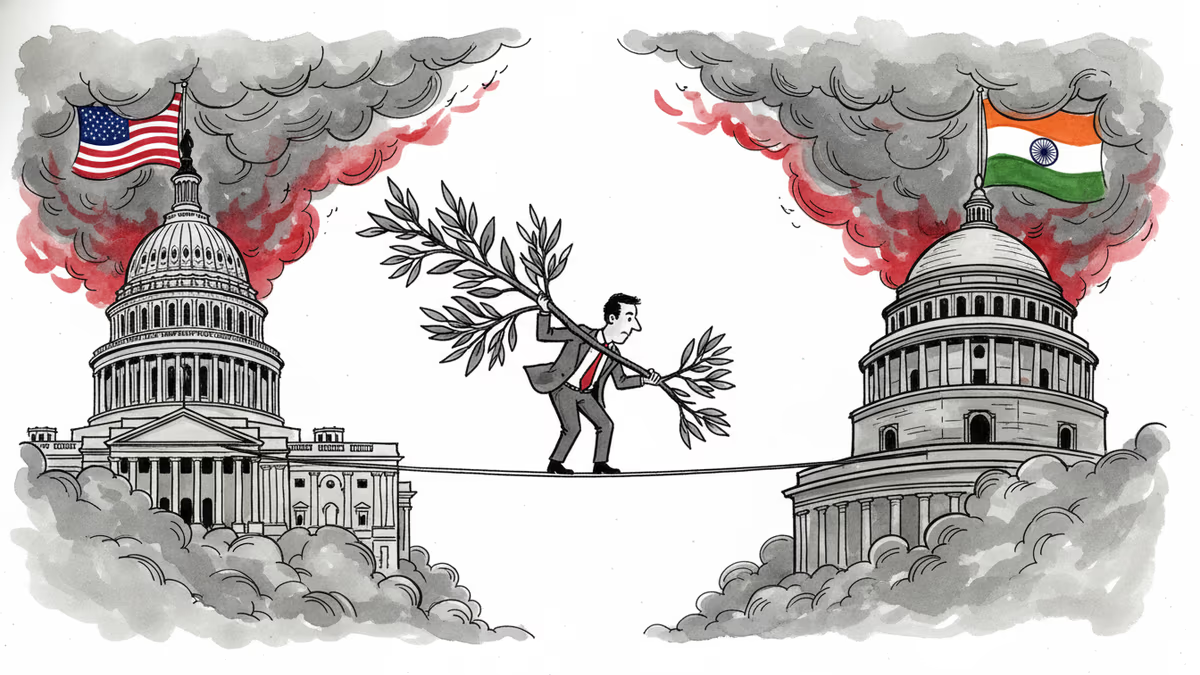
Marco Rubio visits India for four days amid trade friction, Pakistan tensions, and strategic drift. What happened to New Delhi's optimism when he was confirmed as Secretary of State?
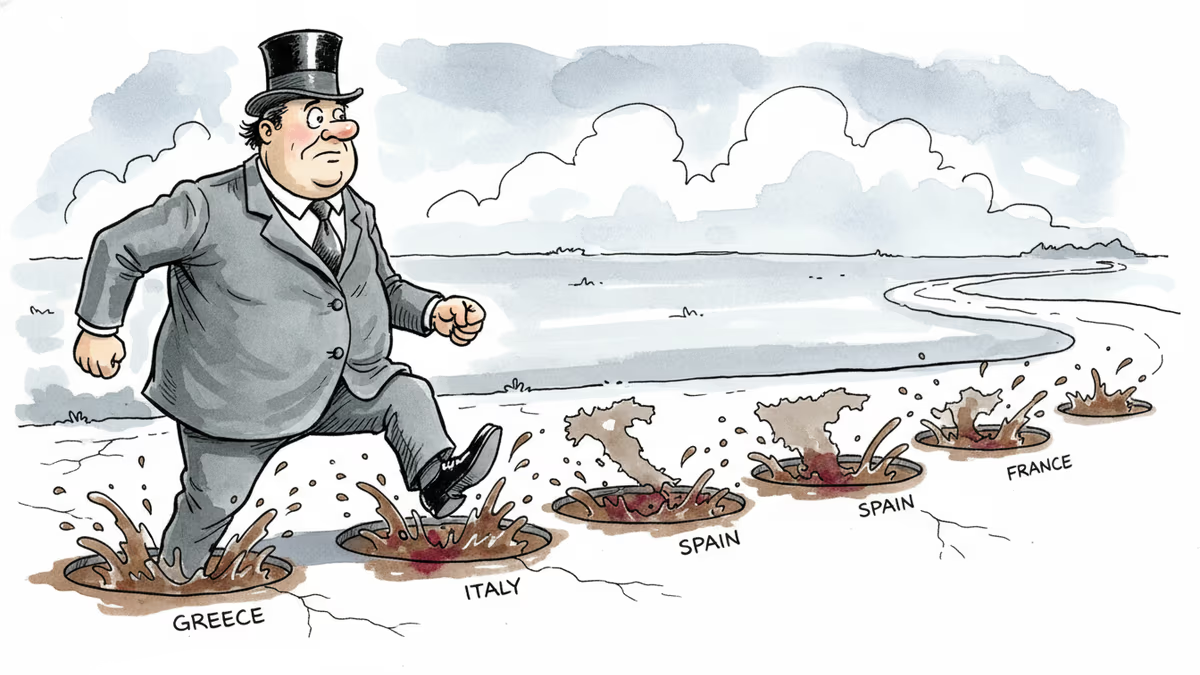
From Ukraine to Libya to Afghanistan, U.S. foreign policy keeps repeating the same two failures. Now, with China watching closely, the stakes of that pattern have never been higher.

A two-week ceasefire holds — barely. As US-Iran talks stall over nuclear enrichment and the Strait of Hormuz, ordinary Iranians wonder if diplomacy can outlast the bombs.
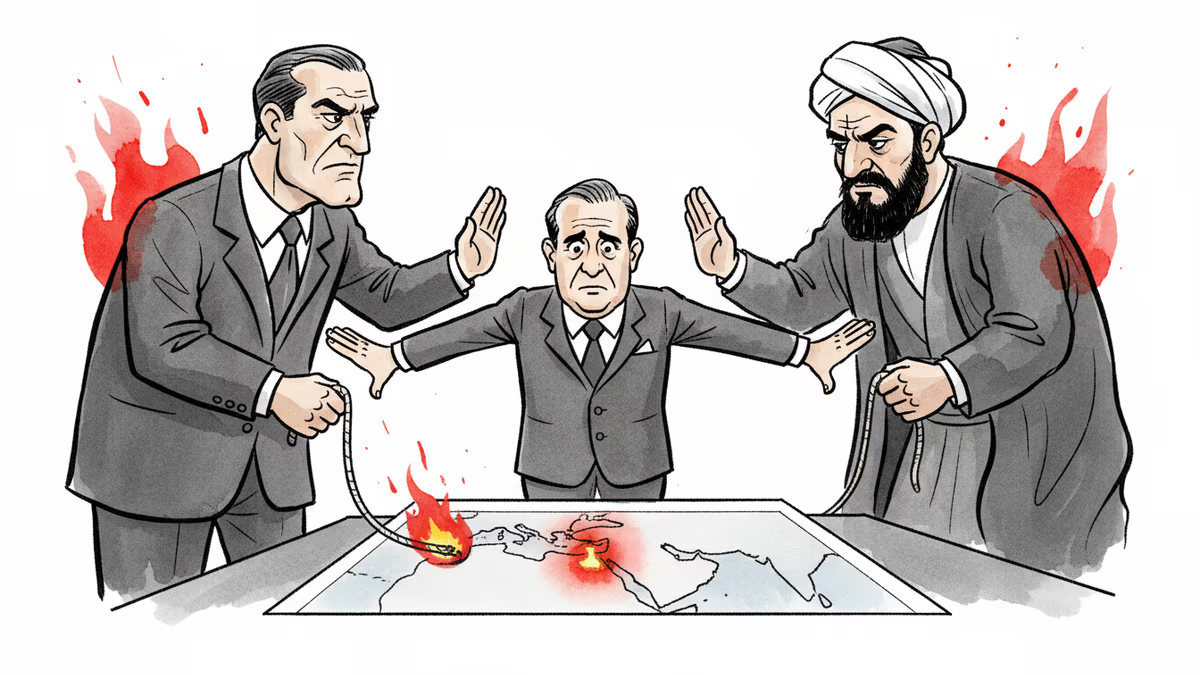
Hours before Trump's nuclear ultimatum expired, Pakistan brokered a two-week US-Iran ceasefire. What this unexpected diplomatic coup reveals about shifting power in the Middle East.
Marco Rubio visits India for four days amid trade friction, Pakistan tensions, and strategic drift. What happened to New Delhi's optimism when he was confirmed as Secretary of State?
From Ukraine to Libya to Afghanistan, U.S. foreign policy keeps repeating the same two failures. Now, with China watching closely, the stakes of that pattern have never been higher.
A two-week ceasefire holds — barely. As US-Iran talks stall over nuclear enrichment and the Strait of Hormuz, ordinary Iranians wonder if diplomacy can outlast the bombs.
Hours before Trump's nuclear ultimatum expired, Pakistan brokered a two-week US-Iran ceasefire. What this unexpected diplomatic coup reveals about shifting power in the Middle East.
Thoughts
Share your thoughts on this article
Sign in to join the conversation