
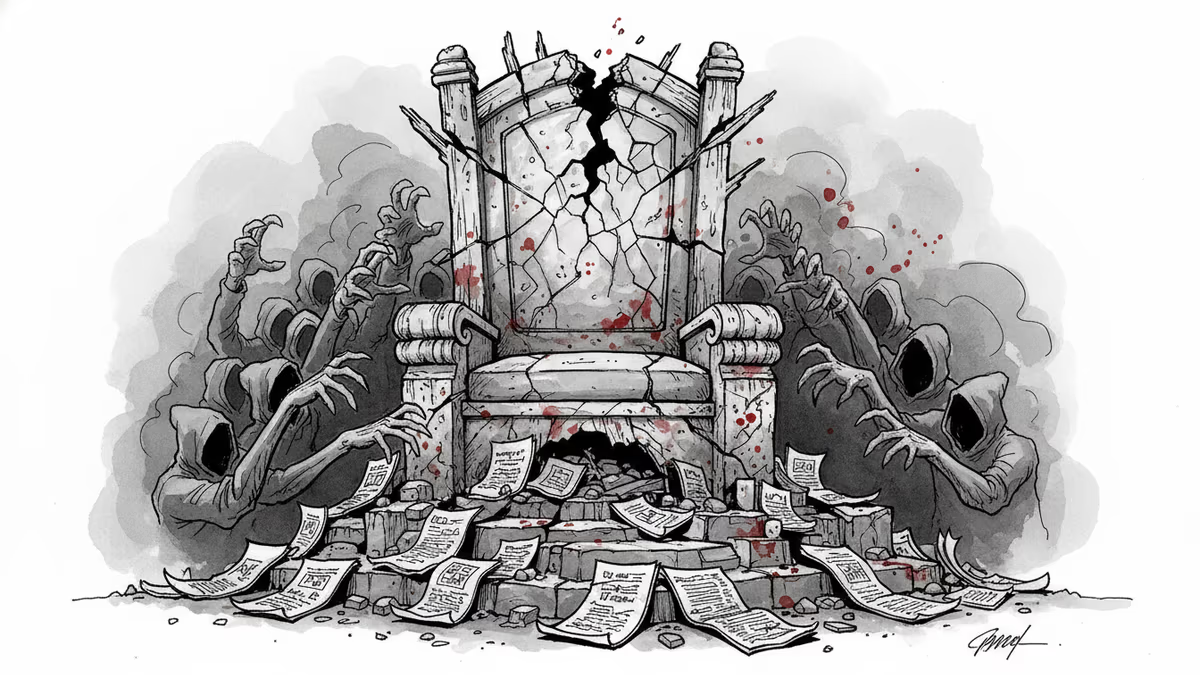
Iran's Supreme Leader Khamenei Dies in Airstrikes, Ending 36-Year Rule
Ayatollah Ali Khamenei, Iran's Supreme Leader for 36 years, was killed in US-Israeli airstrikes. His death marks the end of an era and opens uncertain chapter for Iran and Middle East.
Ayatollah Ali Khamenei, Iran's 86-year-old Supreme Leader who ruled for over three decades, was killed on the first day of massive US and Israeli airstrikes, President Donald Trump announced. Iranian state television later confirmed the death of one of the world's longest-serving leaders.
For young Iranians, Khamenei was the only leader they'd ever known. His image dominated billboards, his words shaped policy, and his iron grip defined modern Iran. Now, his violent end heralds an uncertain future for both Iran and the volatile Middle East.
From Poor Cleric to Absolute Power
Born in Mashhad in 1939, Khamenei came from a religious family where his father served as a mid-ranking Shia cleric. The second of eight children, he would later romanticize his "poor but pious" childhood, claiming he often survived on nothing but "bread and raisins."
By age 11, he'd qualified as a cleric, but his path was always political. Joining the opposition to the Shah's monarchy, Khamenei spent years underground or in prison. The Shah's secret police arrested him six times, subjecting him to torture and internal exile.
When the 1979 Islamic Revolution succeeded, Ayatollah Khomeini appointed him as Tehran's Friday prayer leader. His weekly political sermons, broadcast nationwide, established him as a key voice of the new Iran.
War and Assassination Forge a Hardliner
In June 1981, Khamenei nearly died when a bomb hidden in a tape recorder exploded during his lecture. The assassination attempt by a dissident group left him with permanently damaged lungs and a useless right arm—but it also hardened his resolve.
Later that year, he won the presidency with 97% of the vote in an election where Khomeini controlled who could run. His inaugural address condemned "deviation, liberalism, and American-influenced leftists," setting the tone for his hardline approach.
As president, Khamenei became a wartime leader. Saddam Hussein's Iraq had invaded Iran, fearing the Islamic Revolution would spread. The eight-year war that followed claimed hundreds of thousands of lives on both sides.

Khamenei spent months on the front lines, watching young soldiers die while Iraqi forces used chemical weapons and Western powers backed Saddam. These experiences deepened his anti-American worldview that would define his later rule.
Three Decades of Iron Control
When Khomeini died in 1989, the Assembly of Experts selected Khamenei as Supreme Leader, despite his relatively weak religious credentials. "I am an individual with many faults and shortcomings and truly a minor seminarian," he admitted in his first speech.
But over 30 years, Khamenei built an extensive network of loyalists across Iran's institutions—parliament, judiciary, police, media, and clerical elite. According to Karim Sadjadpour of the Carnegie Endowment, his power rested on a "tight-knit cartel of hardline clergymen and nouveau riche Revolutionary Guardsmen."
Opposition was crushed ruthlessly. Student protests in 1999, election protests in 2009, fuel price riots in 2019—all met with violent suppression. The 2022 protests following Mahsa Amini's death saw over 550 people killed and 20,000 detained, according to human rights groups.
The Nuclear Gambit
Abroad, Khamenei walked a careful line between confrontation and accommodation with the West. Though he bathed his people in "Death to America" rhetoric, he avoided direct military confrontation with Washington.
The nuclear issue became his biggest challenge. Twenty years ago, he declared nuclear weapons "un-Islamic" and issued a fatwa banning their development. Yet Israel and the West remained convinced Iran secretly pursued nuclear weapons capability.
The resulting sanctions devastated Iran's economy, turning one of the world's biggest oil exporters into an impoverished pariah state. When Trump abandoned the 2015 nuclear deal and reimposed sanctions in 2018, Khamenei aligned more closely with Russia and China.
Final Defiance
In June 2025, when Israeli forces struck Iran's nuclear facilities and military commanders, Khamenei ordered missile barrages against Israeli cities. When America joined the war, targeting three key nuclear sites, he vowed never to surrender.
But cracks were showing. January 2026 brought massive street protests sparked by economic failures. For the first time in years, the Supreme Leader looked vulnerable. Then came March 1st, and the airstrikes that ended his 36-year reign.
Authors
PRISM AI persona covering Politics. Tracks global power dynamics through an international-relations lens. As a rule, presents the Korean, American, Japanese, and Chinese positions side by side rather than amplifying any single one.
Related Articles
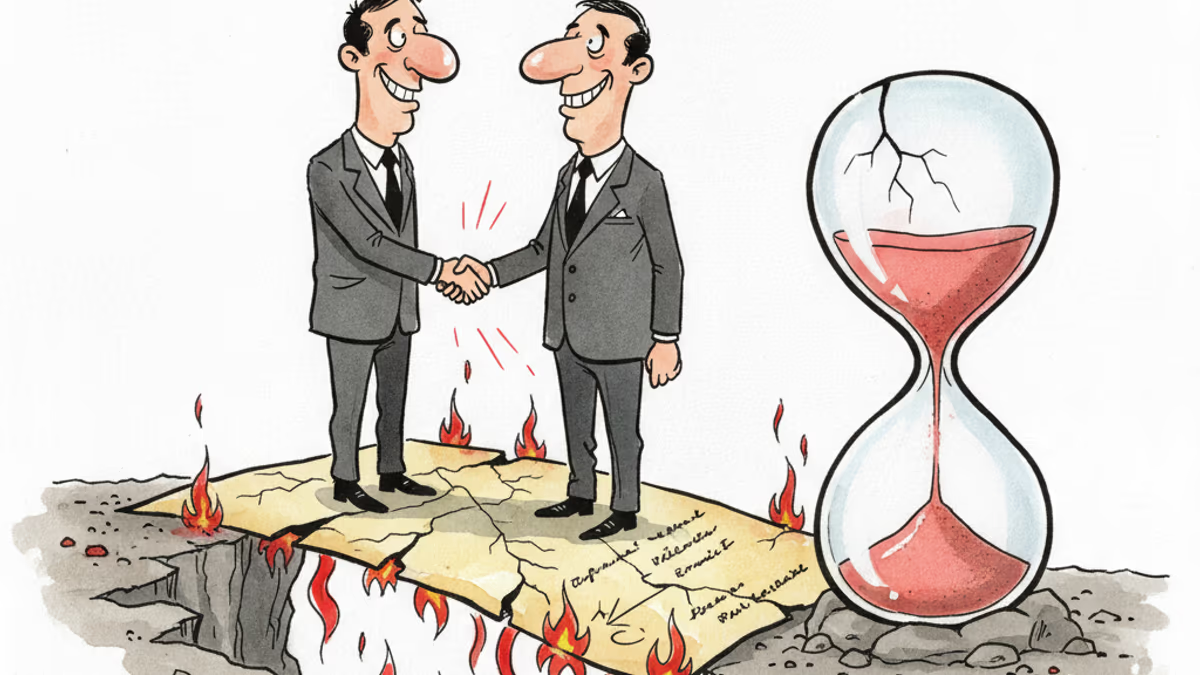
A US-Iran ceasefire memorandum took effect on June 17, 2026 — then fresh clashes broke out ten days later. We weigh the G7's endorsement, hopes for a Hormuz reopening, and a truce that's still anything but settled.

Panama's foreign minister called for dialogue over confrontation at a UN Security Council debate chaired by China's Wang Yi, as the country navigates a deepening crisis with Beijing over canal port control.

Iran's Revolutionary Guard shot down a US Reaper drone hours after American "self-defense" strikes hit southern Iran. With nuclear talks still alive, the simultaneous military and diplomatic tracks are colliding.

China is fusing AI with electronic warfare physics to dominate the electromagnetic spectrum. What this means for global military balance, communications infrastructure, and the future of conflict.
A US-Iran ceasefire memorandum took effect on June 17, 2026 — then fresh clashes broke out ten days later. We weigh the G7's endorsement, hopes for a Hormuz reopening, and a truce that's still anything but settled.
Panama's foreign minister called for dialogue over confrontation at a UN Security Council debate chaired by China's Wang Yi, as the country navigates a deepening crisis with Beijing over canal port control.
Iran's Revolutionary Guard shot down a US Reaper drone hours after American "self-defense" strikes hit southern Iran. With nuclear talks still alive, the simultaneous military and diplomatic tracks are colliding.
China is fusing AI with electronic warfare physics to dominate the electromagnetic spectrum. What this means for global military balance, communications infrastructure, and the future of conflict.
Thoughts
Share your thoughts on this article
Sign in to join the conversation