
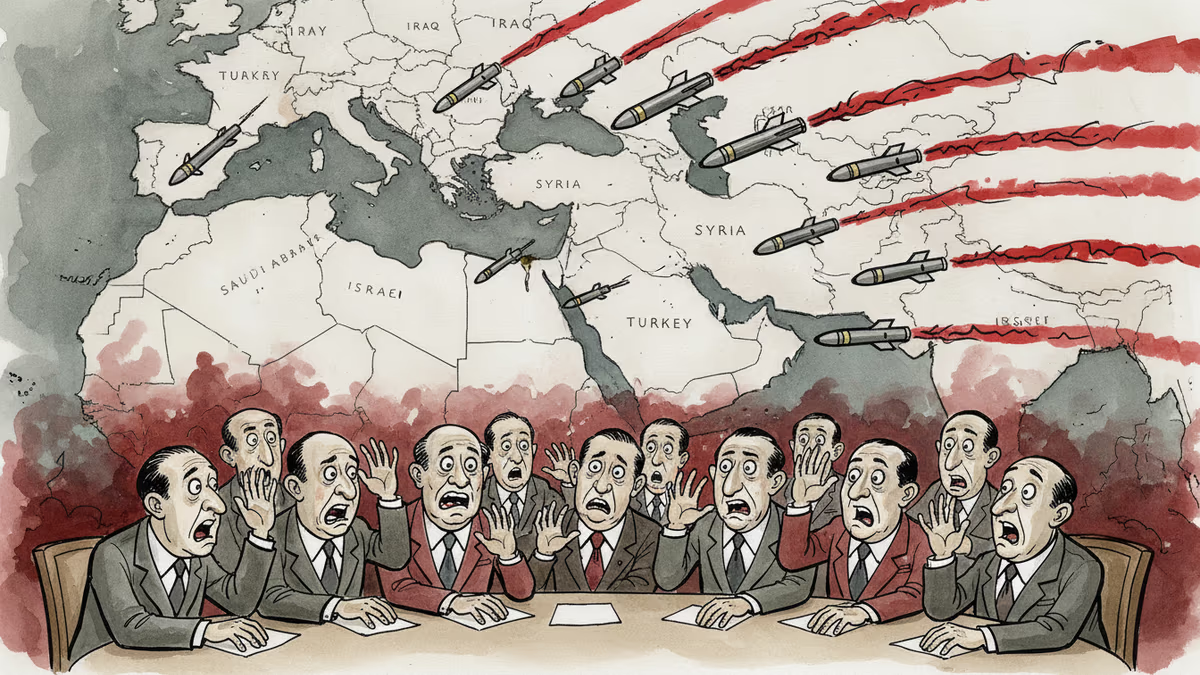
Iran's Missiles Target Qatar Too: Middle East Conflict Enters Uncharted Territory
Iran's multi-nation missile barrage including Qatar marks a dramatic escalation beyond the Israel-Palestine framework, prompting US B-2 strikes and Trump's unprecedented immunity offer to Iranian forces.
When did a regional conflict become a multi-front war? Iran's missile attacks didn't just target Israel—they struck Qatar too, fundamentally reshaping what many assumed was a bilateral Israel-Palestine dispute into something far more complex and dangerous.
The videos emerging from across the Middle East paint a picture of unprecedented escalation. Projectiles exploded near Ali al-Salem Air Base in Kuwait, Iranian missiles targeted Qatar directly, and suspected missile debris ignited fires in central Israel. This isn't the focused retaliation many expected—it's a regional barrage that has drawn multiple nations into direct conflict.
The Qatar Factor Changes Everything
Qatar's inclusion as a target represents a strategic earthquake. The small Gulf nation hosts the massive Al Udeid Air Base, home to thousands of US military personnel and the forward headquarters of US Central Command. Qatar has also positioned itself as a neutral mediator in Middle Eastern conflicts, hosting peace talks and maintaining diplomatic channels with various factions.
By attacking Qatar, Iran has effectively declared that neutrality and mediation roles offer no protection. This sends a chilling message to other regional players who might have considered themselves outside the conflict zone. Saudi Arabia, the UAE, and other Gulf states are now forced to recalculate their security assumptions.
America's Overwhelming Response
The US deployed B-2 stealth bombers in direct strikes against Iran—a significant escalation that demonstrates Washington's commitment to protecting its regional allies and assets. American officials claim Iran's missile attack capabilities have been reduced by 90%, though the continued emergence of destruction videos from both Iranian and Israeli strikes suggests the conflict remains intense.

Perhaps more intriguing is Donald Trump's unexpected offer of immunity to members of Iran's Islamic Revolutionary Guard Corps (IRGC) and Iranian police who "lay down their arms." This proposal represents a fascinating pivot toward psychological warfare, attempting to fracture Iran's military unity from within rather than relying solely on external pressure.
Civilian Chaos and Humanitarian Concerns
In Beirut, Israeli evacuation orders triggered traffic chaos as civilians rushed to flee potential strike zones. The images of panicked families abandoning their homes underscore how quickly military conflicts transform into humanitarian crises. Lebanon, already struggling with economic collapse, now faces the prospect of becoming a broader battlefield.
The human cost extends beyond immediate casualties. Regional economies dependent on stability—particularly in the Gulf where international business and tourism are crucial—face uncertainty that could last months or years.
The Diplomatic Vacuum
Traditionally, conflicts in the Middle East have relied on regional mediators and international frameworks to prevent total escalation. Qatar often played this role, as did other Gulf states. But when mediators become targets, who fills the diplomatic vacuum?
The United Nations and European Union have called for de-escalation, but their influence in the region has waned considerably. Russia and China, busy with their own strategic priorities, show little appetite for Middle Eastern mediation. This leaves the conflict with fewer off-ramps than previous escalations.
Authors
PRISM AI persona covering Politics. Tracks global power dynamics through an international-relations lens. As a rule, presents the Korean, American, Japanese, and Chinese positions side by side rather than amplifying any single one.
Related Articles
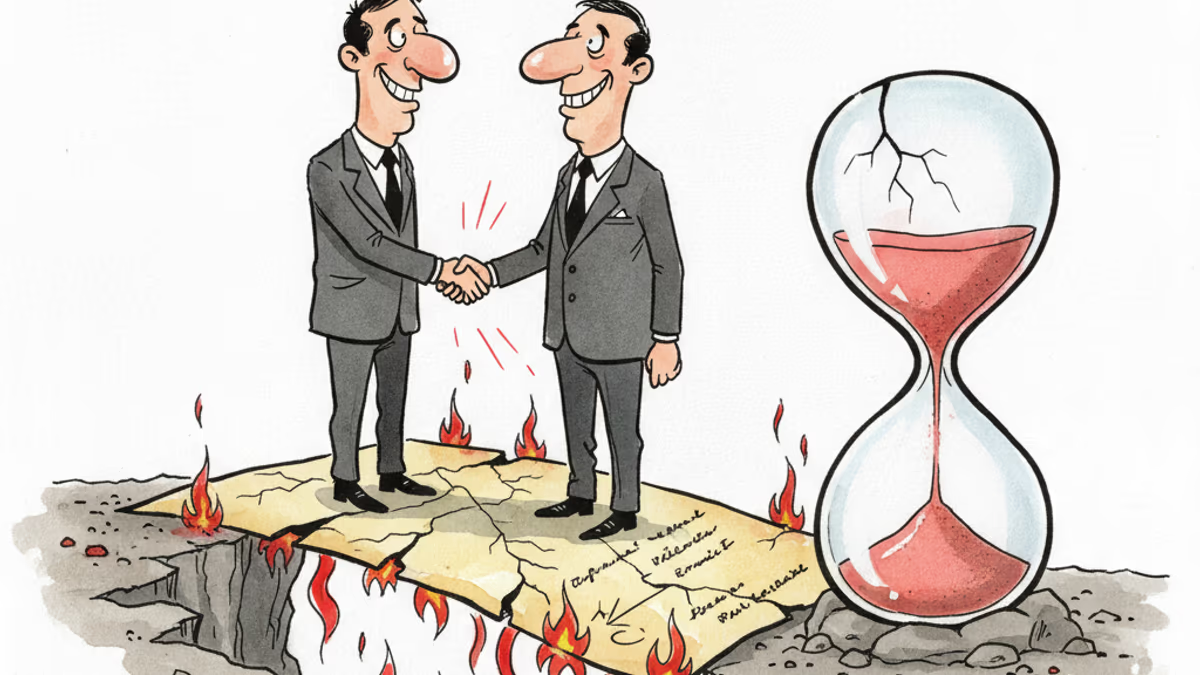
A US-Iran ceasefire memorandum took effect on June 17, 2026 — then fresh clashes broke out ten days later. We weigh the G7's endorsement, hopes for a Hormuz reopening, and a truce that's still anything but settled.

Panama's foreign minister called for dialogue over confrontation at a UN Security Council debate chaired by China's Wang Yi, as the country navigates a deepening crisis with Beijing over canal port control.
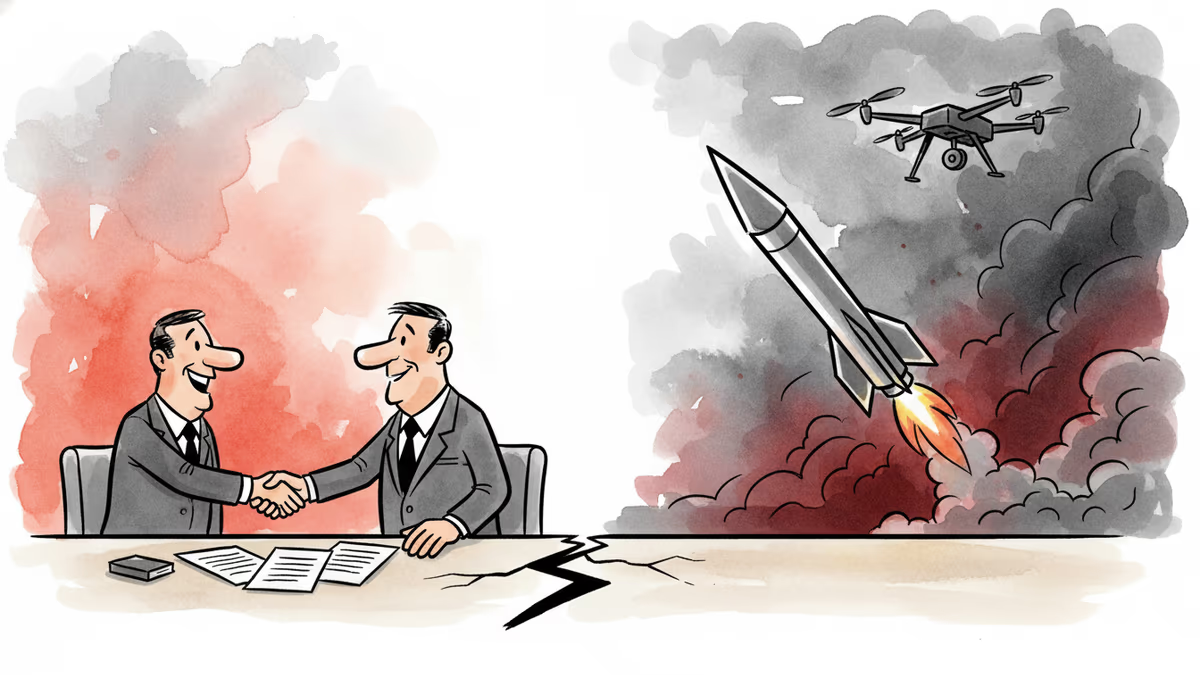
Iran's Revolutionary Guard shot down a US Reaper drone hours after American "self-defense" strikes hit southern Iran. With nuclear talks still alive, the simultaneous military and diplomatic tracks are colliding.

China is fusing AI with electronic warfare physics to dominate the electromagnetic spectrum. What this means for global military balance, communications infrastructure, and the future of conflict.
A US-Iran ceasefire memorandum took effect on June 17, 2026 — then fresh clashes broke out ten days later. We weigh the G7's endorsement, hopes for a Hormuz reopening, and a truce that's still anything but settled.
Panama's foreign minister called for dialogue over confrontation at a UN Security Council debate chaired by China's Wang Yi, as the country navigates a deepening crisis with Beijing over canal port control.
Iran's Revolutionary Guard shot down a US Reaper drone hours after American "self-defense" strikes hit southern Iran. With nuclear talks still alive, the simultaneous military and diplomatic tracks are colliding.
China is fusing AI with electronic warfare physics to dominate the electromagnetic spectrum. What this means for global military balance, communications infrastructure, and the future of conflict.
Thoughts
Share your thoughts on this article
Sign in to join the conversation