

92 Million Silenced: Analyzing the Iran Internet Shutdown 2026
Iran's nationwide internet shutdown in January 2026 has surpassed 170 hours, affecting 92 million people. Discover the impact and international response to this historic digital blackout.
92 million people have vanished from the digital world. Iran's leadership has enforced a nationwide internet blackout that's now entering its second week, marking one of the longest digital suppressions in history.
The Iran Internet Shutdown 2026: A Historical Blackout
As of January 15, 2026, the disconnection has surpassed 170 hours. According to NetBlocks, this already exceeds the previous records set in 2019 (163 hours) and 2025 (160 hours). Isik Mater, director of research at NetBlocks, noted that this is the third longest shutdown ever recorded, trailing only the historic disruptions in Sudan (2021) and Mauritania (2024).

| Region/Event | Year | Duration |
|---|---|---|
| Sudan | 2021 | 35 days |
| Mauritania | 2024 | 22 days |
| Iran (Current) | 2026 | 170+ hours |
| Iran (Previous) | 2019 | 163 hours |
Geopolitical Fallout and the Starlink Factor
While the government has restored access to limited banking and gas station systems, the general population remains offline. A small number of Iranians are reportedly using smuggled Starlink terminals to bypass the blockade. In response, President Donald Trump has threatened military intervention if the violent crackdown—which has already claimed an estimated 2,000 lives—continues.
Authors
Related Articles
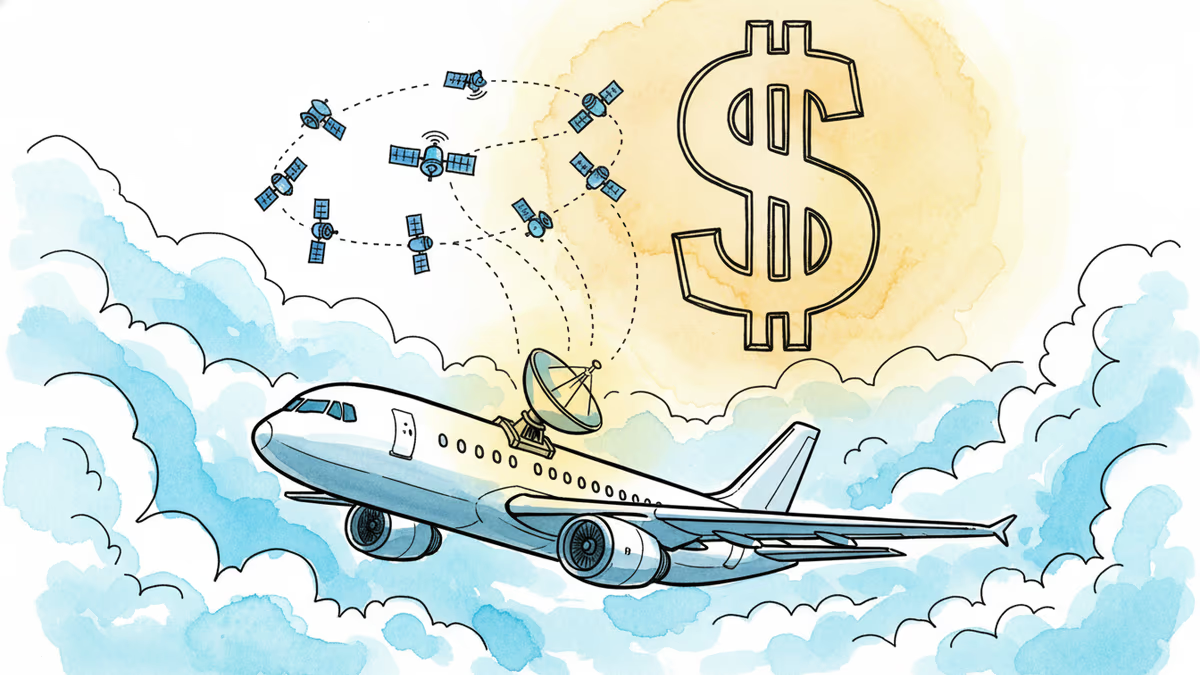
American Airlines just signed Starlink for 500+ aircraft. It's not just about faster inflight internet — it's a calculated move in the run-up to what could be the largest IPO in history.
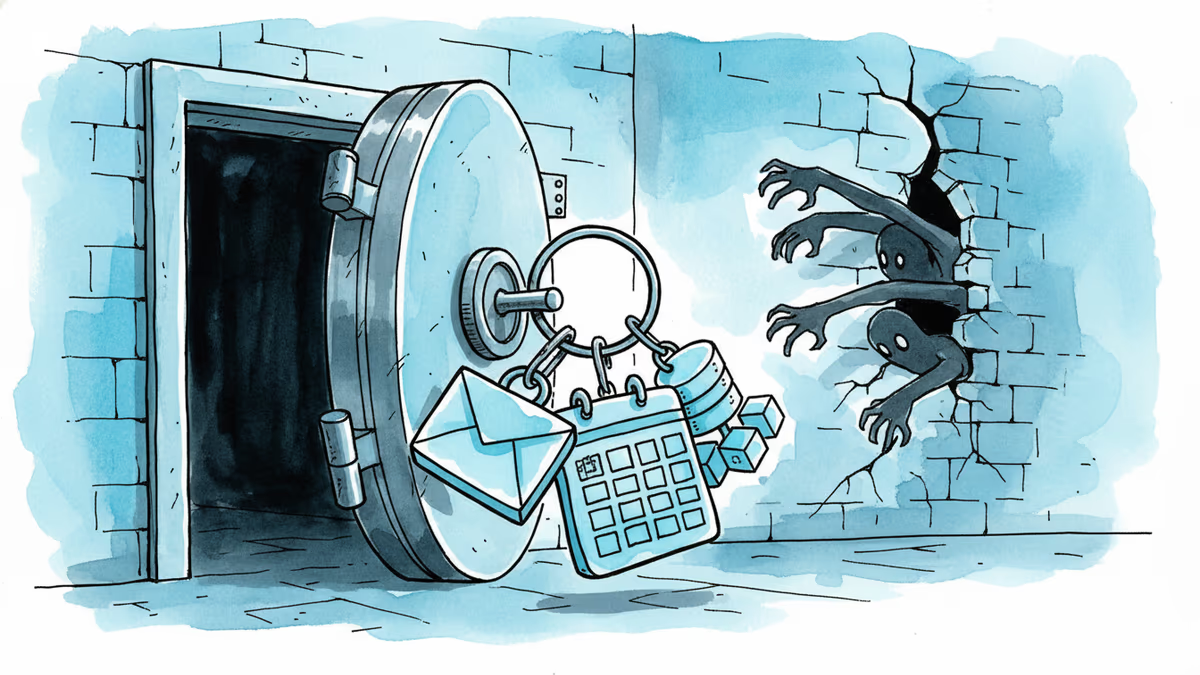
A critical vulnerability in Starlette—downloaded 325 million times per week—puts millions of AI agent servers at risk, exposing stored credentials for email, databases, and third-party services.

SpaceX's upgraded Starship V3 completed its first test flight, deploying 20 Starlink simulators but losing the Super Heavy booster. With an IPO weeks away, the stakes just got higher.
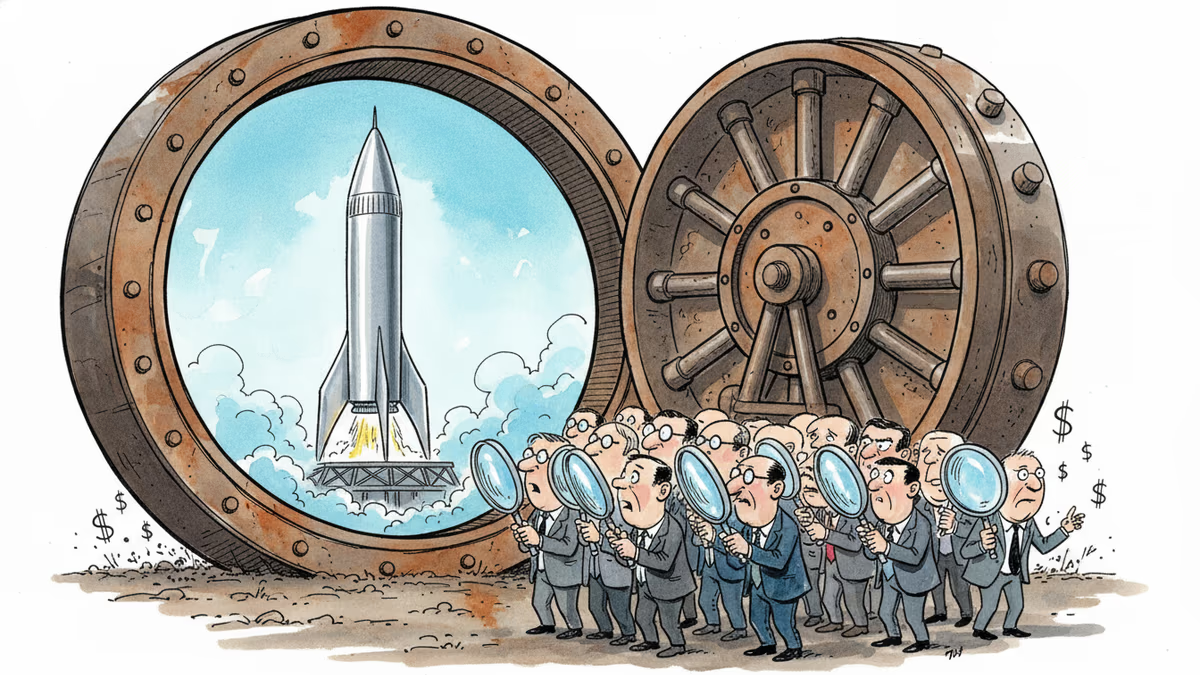
SpaceX filed a nearly 400-page S-1 with the SEC, targeting an IPO as early as June 12. Here's what the filing reveals—and what it doesn't.
American Airlines just signed Starlink for 500+ aircraft. It's not just about faster inflight internet — it's a calculated move in the run-up to what could be the largest IPO in history.
A critical vulnerability in Starlette—downloaded 325 million times per week—puts millions of AI agent servers at risk, exposing stored credentials for email, databases, and third-party services.
SpaceX's upgraded Starship V3 completed its first test flight, deploying 20 Starlink simulators but losing the Super Heavy booster. With an IPO weeks away, the stakes just got higher.
SpaceX filed a nearly 400-page S-1 with the SEC, targeting an IPO as early as June 12. Here's what the filing reveals—and what it doesn't.
Thoughts
Share your thoughts on this article
Sign in to join the conversation