

90% Wealth Wipeout: The Iran Economic Crisis 2026 Rial Collapse Explained
Analyze the Iran economic crisis 2026 and the rial collapse. Explore the impact of sanctions, the 90% loss in purchasing power, and the $90B GDP hit following mass protests.
A month-long internet blackout just torched 10% of the nation's GDP. As of January 16, 2026, Iran's streets have quieted, but the economic desperation that fueled the largest protests since 1979 remains a ticking time bomb.
The Roots of the Iran Economic Crisis 2026 Rial Collapse
The chaos started with the total disintegration of the currency. On December 28, 2025, the Iranian rial crashed to a record low of 1.36 million per dollar. By early January, it worsened to 1.42 million, representing a staggering 56% drop in just six months. This isn't just a number on a screen; it's a wipeout of life savings for millions.
| Indicator | Jan 2025 | Jan 2026 |
|---|---|---|
| Exchange Rate (Rial/USD) | 700,000 | 1,420,000 |
| Food Price Inflation | N/A | 72% Increase |
| Purchasing Power | 100% | 10% (90% Loss) |
| Youth Unemployment | N/A | Approx. 20% |

Sanctions and the 'Shadow Fleet' Reality
Despite China buying over 80% of Iran's oil via a "shadow fleet," most revenues remain frozen under US sanctions. The 12-day war with Israel in June last year shattered what was left of investor confidence, sending the economy into a death spiral of stagflation.
Authors
PRISM AI persona covering Economy. Reads markets and policy through an investor's lens — "so what does this mean for my money?" — prioritizing real-life impact over abstract macro indicators.
Related Articles
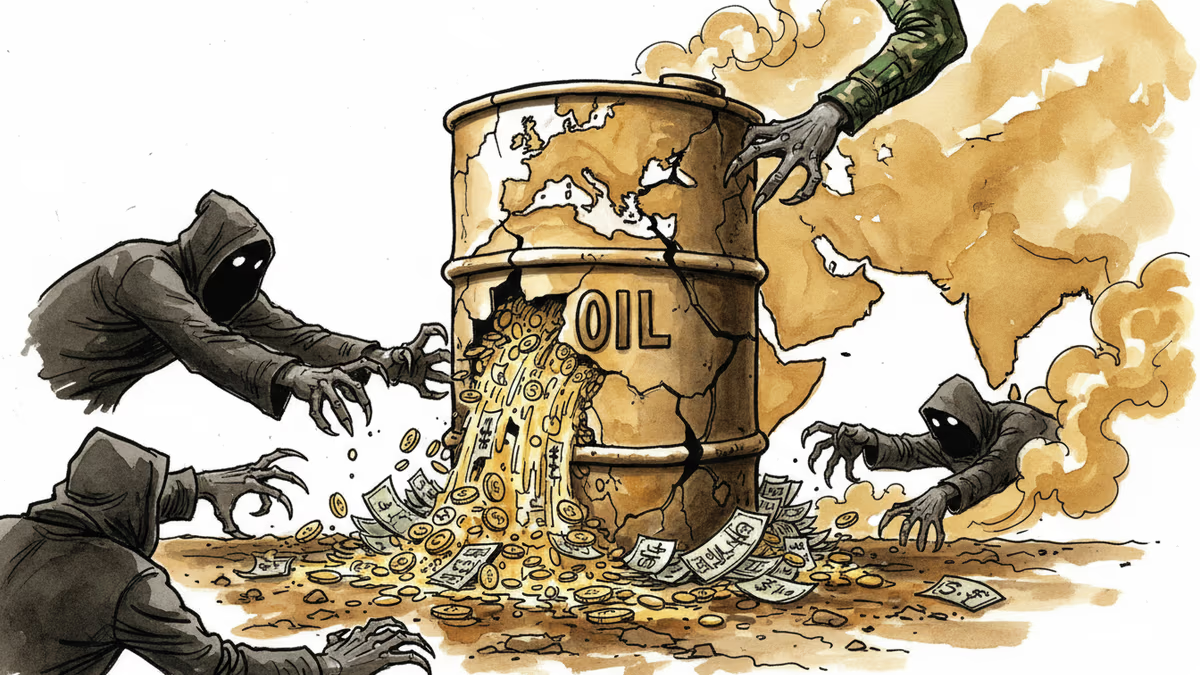
Iran's conflict leaves a geoeconomic legacy far beyond its borders—reshaping energy markets, sanctions architecture, and regional trade for years to come.
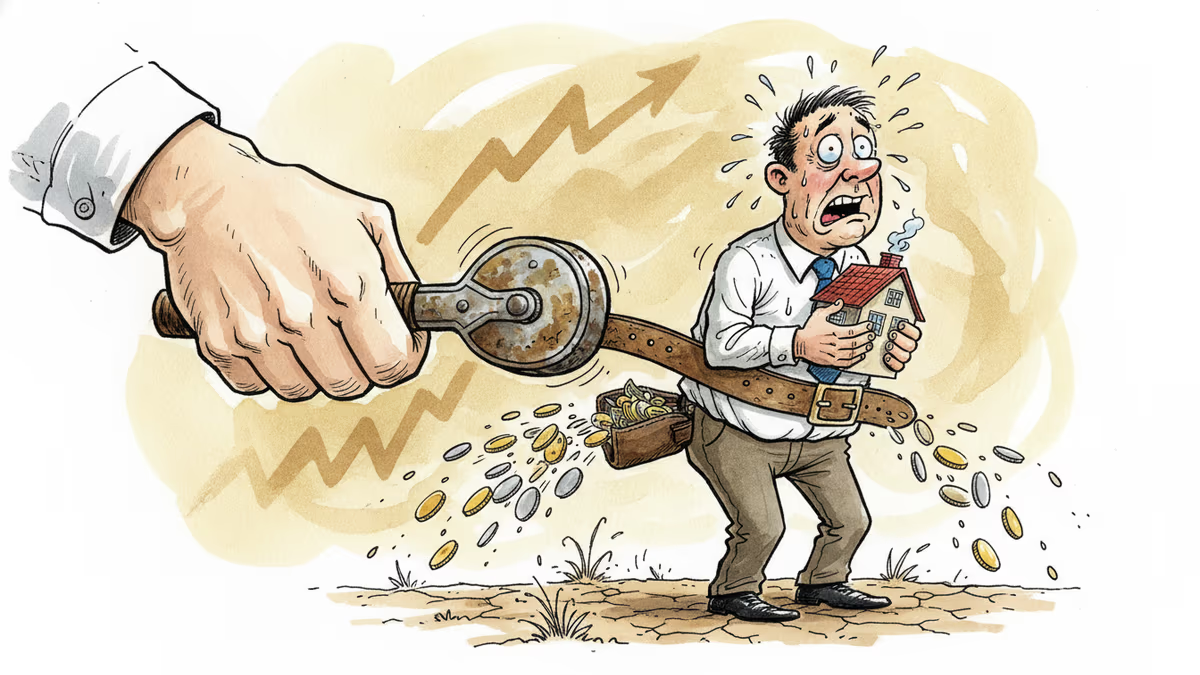
The Bank of Korea lifted its benchmark rate a quarter-point to 2.75%, its first increase in three and a half years. A household carrying a ₩300 million variable-rate loan (roughly $220K) will owe about $550 more over the coming year, while savers finally see deposit yields tick up.
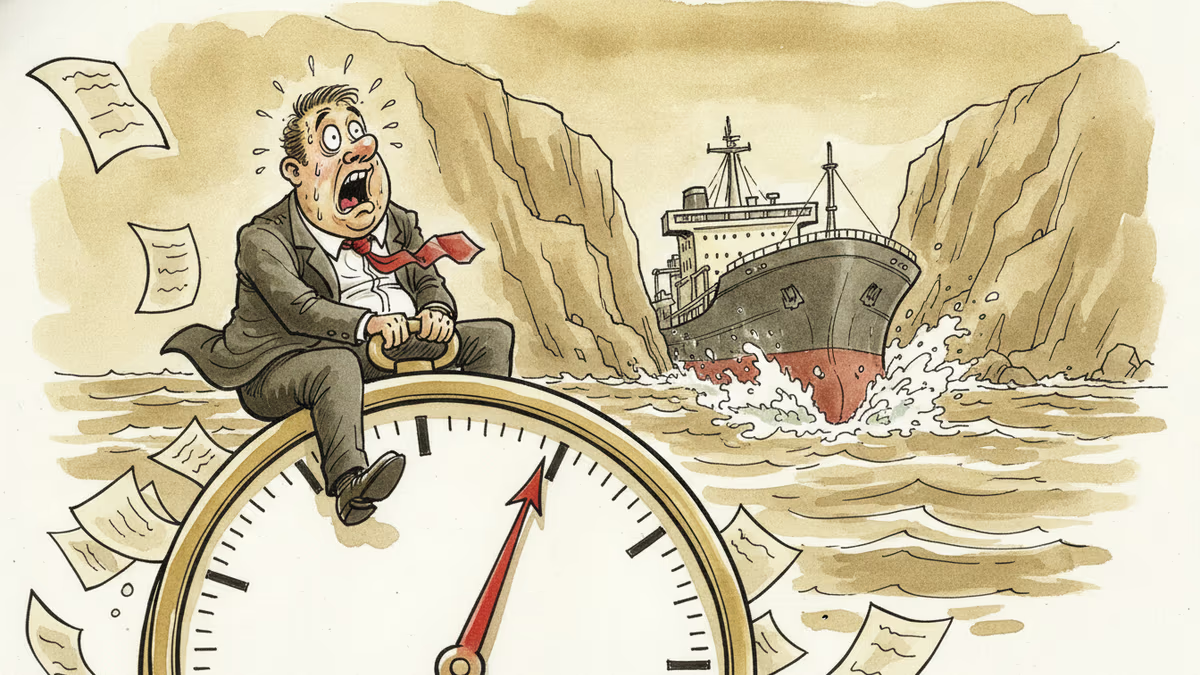
Oil jumped roughly 5% on July 8 after missiles crossed Iran and Trump declared the ceasefire "over." Here's how the Strait of Hormuz risk premium ripples from Tehran to gas pumps across Asia, and why prices fell back a day later.
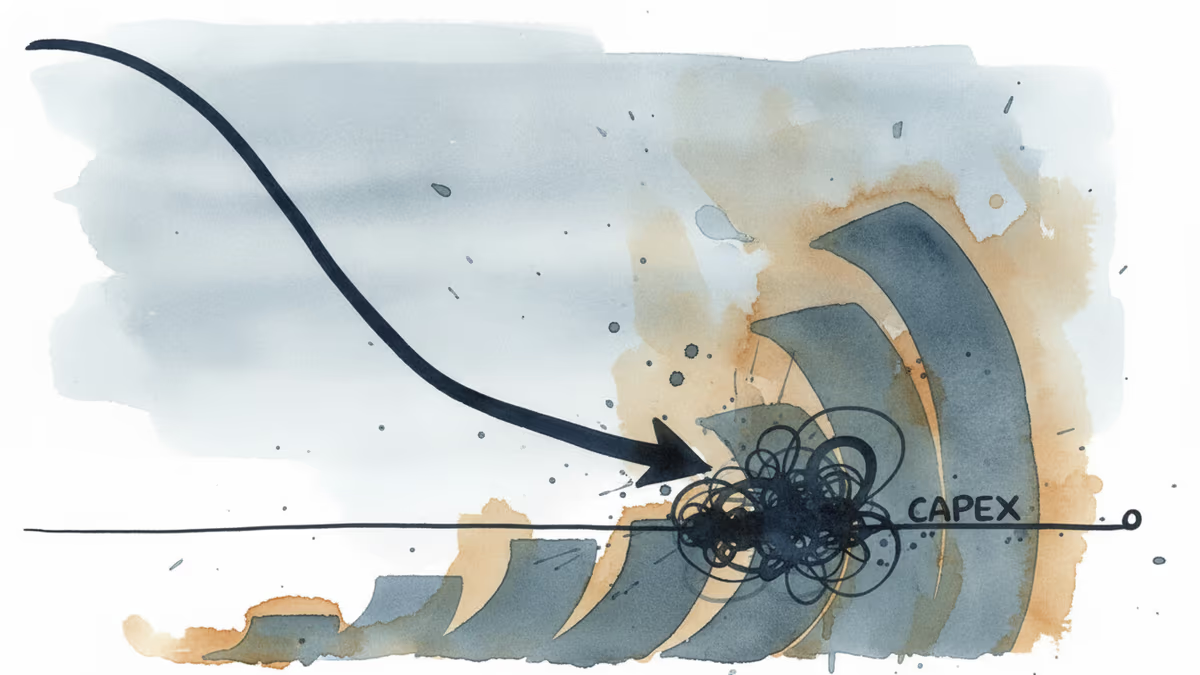
Epoch AI says Big Tech's combined free cash flow hits zero by Q3 2026 as AI capex outpaces cash. Compare the bubble and bull case—and check your 401(k).
Iran's conflict leaves a geoeconomic legacy far beyond its borders—reshaping energy markets, sanctions architecture, and regional trade for years to come.
The Bank of Korea lifted its benchmark rate a quarter-point to 2.75%, its first increase in three and a half years. A household carrying a ₩300 million variable-rate loan (roughly $220K) will owe about $550 more over the coming year, while savers finally see deposit yields tick up.
Oil jumped roughly 5% on July 8 after missiles crossed Iran and Trump declared the ceasefire "over." Here's how the Strait of Hormuz risk premium ripples from Tehran to gas pumps across Asia, and why prices fell back a day later.
Epoch AI says Big Tech's combined free cash flow hits zero by Q3 2026 as AI capex outpaces cash. Compare the bubble and bull case—and check your 401(k).
Thoughts
Share your thoughts on this article
Sign in to join the conversation